
One of my highlights in the writing community is catching up on a regular basis with this amazing indie author. Michael Lajoie has three books out that you’ll want to read. His latest is Street Signs & Shaded Goodbyes. You can get signed copies on his website. Here is a snippet of what one reader says about Michael’s writing:
While this story takes place in a post-war Maine in 1950, it really could’ve taken place during any time or any where (that is something Michael does an incredible job at – painting a picture of a world that could be yesterday, today or tomorrow.)
Lexi Kruse


The most delightful part about meeting Michael was finding an old soul in a young heart and seeing how that comes through as a writer. You can get a sense of it when you visit his Instagram and when he says in his bio that he’s a “faithful coffee drinker, jazz listener, and local history lover,” you get a good idea of what to expect when you stop by for a visit.
I’m super happy to have Michael drop by my Spotlight, so he can share more of his chill vibes and inspiration.
So good to have you here, Michael! You’ve written and published three amazing books since 2020 starting with The Summit by the Sea. I’ve only dipped into the beginning and I’m already captivated by Abilene. I’m including the following excerpt from one of your many reviews because it captures what I sensed right from the beginning. (I love the lessons drawn from the traveling snail). For a novella, it seems to be theme rich. Is that your preferred style, reflections on life and self-discovery? Can you tell us about the book and what inspired the story?
There are gifts given between these pages, the ones passed from generation to generation: the lessons learned by suffering and shared in hopes of its prevention.
Gillian dowell
ML. Thanks so much for that introduction! And for that quote from Gillian. She’s an excellent writer herself. My stories are definitely theme rich. For me, storytelling is a way of spreading a message and encouraging people to think about it. It’s about raising questions and yeah, like you said, reflecting. It’s about connecting, too. It’s a super cool thing.
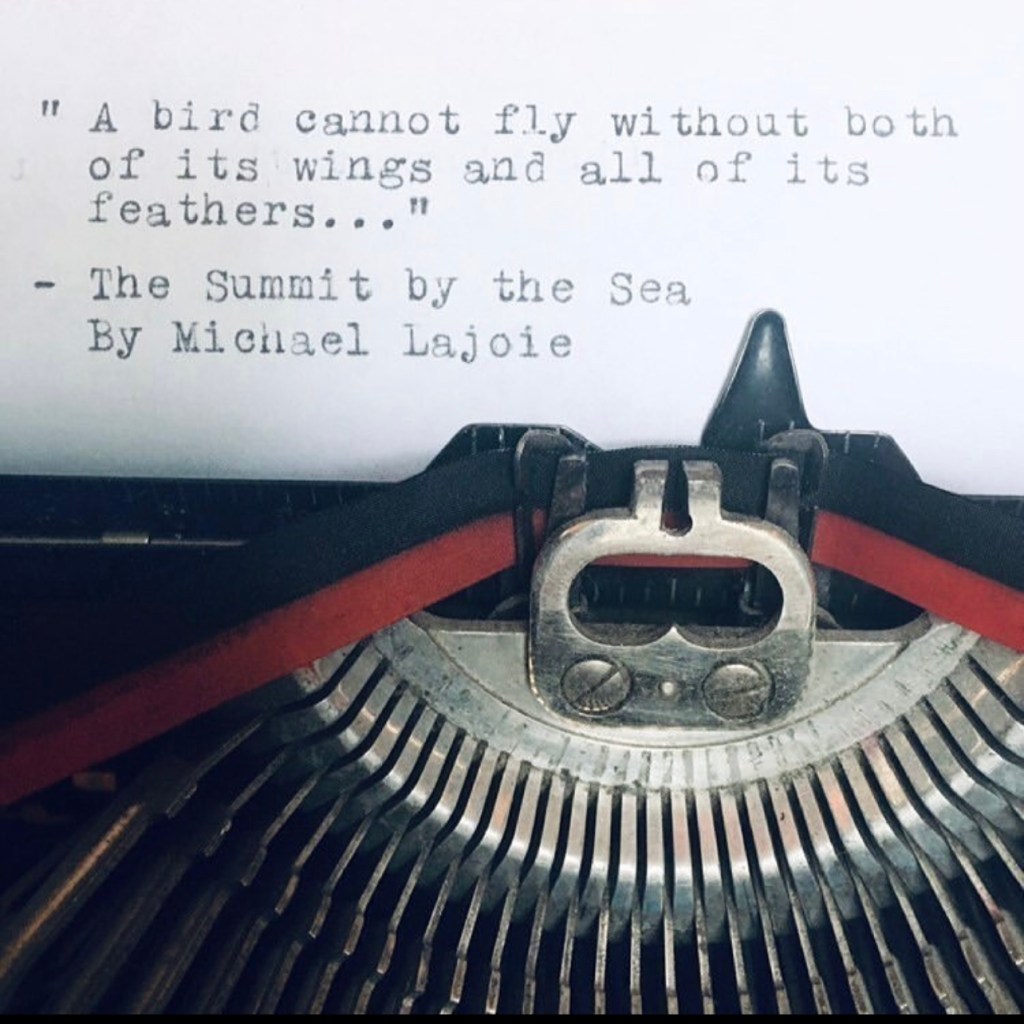
The Summit by the Sea explores an unexpected friendship between a Native American girl and a colonial Christian outcast. It takes place in colonial New England, in the woods and in the mountains and along the sea. It delves a lot into the power of open-mindedness and how important that is, regardless of the time period. It’s full of symbolism, meaningful dialogue, and many double entendres. Think The Alchemist or The Little Prince. It almost reads like a fable, but there’s so much more to it.
Abilene, the main character, is one of my favorite characters to date. It’s probably because she’s the first character I wrote, but she’s journey-driven and determined. I’ll always smile about that.
One of the first lines I ever wrote was a description of her: “She was the sea in all of its nuances. In times of strife, she stormed. In times of peace, she mellowed. But she was always moving. For the ocean, even in its calmest moments, is never still.”
DLL. It’s easy to see how Abilene still resonates in you and what a beautiful description. Thank you!


How about A Way Leads Onto Way? I love this title. One reviewer calls it “atmospheric.” Can you tell us about this story and what readers will find?
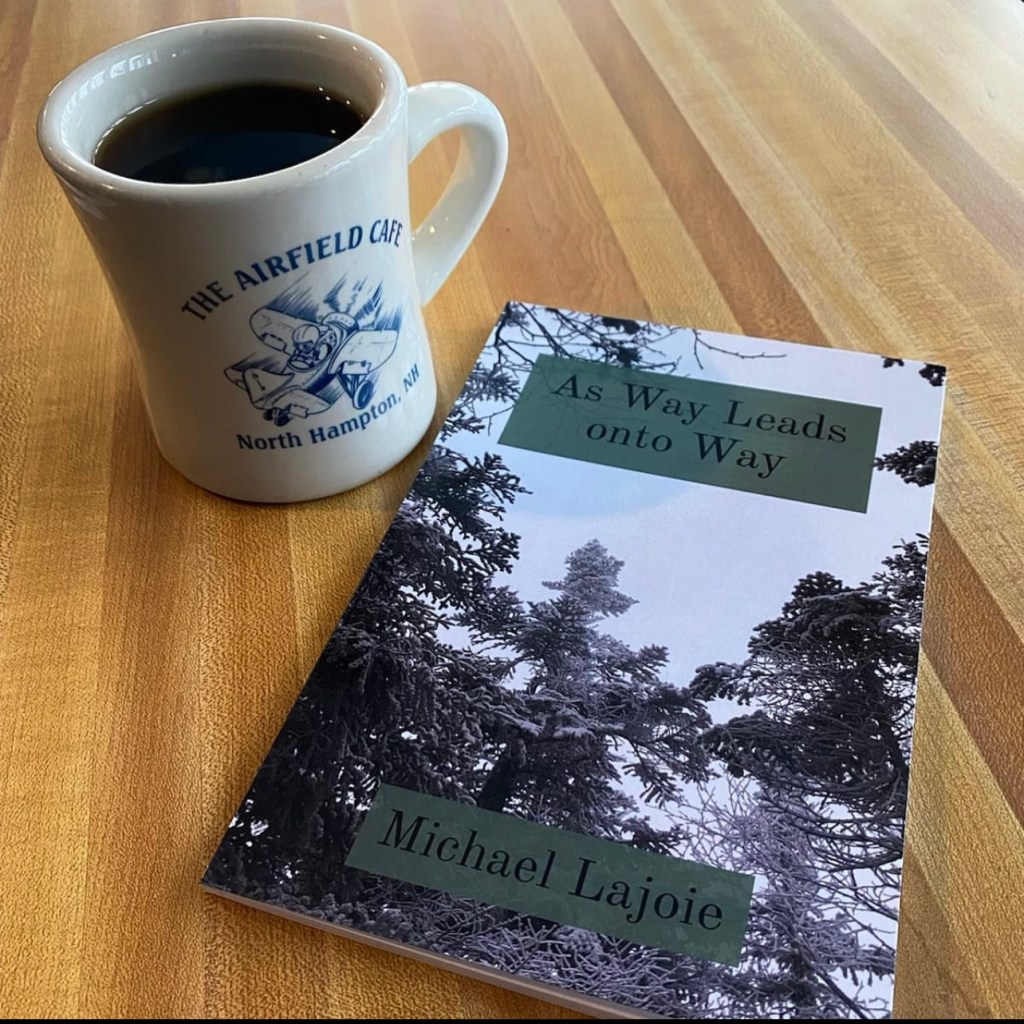
ML. As Way Leads onto Way is my Covid story. I wrote it during lockdown. The title comes from a line from that famous Robert Frost poem about taking the path less traveled by. It takes place during the Great Depression and showcases the power of resilience and optimism in hard times. It follows a college student, Silas, as he searches for peace in a snowy mountain valley. It’s the shortest story I’ve written, but hopefully it’s just as meaningful. It’s full of just as much symbolism as The Summit by the Sea.
DLL. I love hearing about the positive outcomes many creatives experienced during a difficult period. I’m happy you found a story for yourself while offering a peaceful and meaningful escape for your readers.
Since we are still wading through the changes brought about by Covid, much like our country did for so long after the Depression, pick up a copy of Michael’s book and find that moment to escape into peace and optimism.


You incorporate settings you know and love, and I can relate to that with my writing. Even as a fantasy writer, my preference is to mingle my fantasy worlds with contemporary settings, mostly rural or small towns. The benefit is drawing from familiarity, which is a lot of fun when working on scenes; a way to put a little of myself into the story. Do you find that to be the case for you? What other enjoyment do you get from immersing your stories in the environments that surround you?
ML. New England is central to all three of my stories—especially in terms of its connection to nature and history. There are countless forests to explore, mountains to hike, and shores to ramble alongside. It’s an outdoor-lover’s paradise. The White Mountains serve as the backdrop for my first two books. I was raised on the New Hampshire coast, so the Atlantic Ocean shows up quite a bit, too. Nature has a healing, grounding quality to it—and my characters tend to find peace there. That’s a pretty consistent theme, through all my stories.
DLL. It sounds absolutely lovely and what a gift to have all of those things seep into your stories to add to your writer’s voice.
As a historical fiction writer, how important is the history in your stories? Is it a matter of having an interesting backdrop to pluck from the past, or are you a history buff who creates stories so you can spend time walking around in earlier times? I’ve talked to many people who tell me they were born in the wrong era. Would that include you?
ML. History’s always been something that fascinates the heck out of me. In the context of storytelling, it’s great because the time period that a story takes place in can have larger implications for the plot. It doesn’t have to, but it can. For my stories, it usually does. For example, As Way Leads onto Way takes place during the Great Depression. That works to the story’s advantage because of the parallels I was trying to draw between how depressing the world was back then and how depressing it was when I was writing. Or sometimes it’s a matter of aesthetics. Street Signs & Shaded Goodbyes is a melancholy story, and the 1950s can have a vintage melancholy feel. It’s all a matter of taking a time period and telling a story within it that has present-day relevance.
DLL. From your reviews, I think you are achieving that relevance.
What set you on your path to being a writer? Along with that question, what or who was your biggest inspiration?
ML. I started seriously writing in 2018, following a conversation I had with a good friend. We had been driving along the New Hampshire coast, talking about our lives and our futures and our dreams. My friend asked me what I would do for the rest of my life, if I could do one thing and only one thing. Immediately, writing was the answer that came to mind. I had wanted to be a writer for a while, but I had never pursued it because I knew I wouldn’t be able to do it full-time. I deferred my dream to pursue something more conventional—but I was unhappy, and eventually I couldn’t ignore it anymore. I allowed myself to focus fully on my writing, and it’s the best decision I ever made.
I don’t write full-time—but I am writing, and that makes me happy. I cook five days a week at a restaurant and write my stories on the side. I write with hopes that my stories will make people feel spoken to and heard. I write for the purpose of writing, and for the purpose of connecting with readers. Having the opportunity to do both is an extremely humbling thing.
DLL. Thank you for sharing that, Michael. You’ve given us a wonderful glimpse into the possibilities.
As an indie author, can you tell us about your journey into self-publishing, or hybrid publishing, which I believe you employ? What are the benefits of a hybrid method? Have you considered going fully traditional? Do you have any other tips to share or lessons learned regarding publishing?
ML. Hybrid publishing is great because you get the resources of traditional publishing with the benefits of self-publishing. There’s a lot that goes into publishing a story, so it’s nice to not have to do it alone. There’s a lot of learning involved, but that’s part of the process. I’m grateful for it, every step of the way.
I’ve thought about going fully traditional, but I think it all comes down to what you want from your writing journey and how you define your success. I’m trying to tell stories that make people feel spoken to. I don’t want to chase trends or sell myself out. It’s about the writing for me. That’s what it really comes down to.
DLL. A very good reminder for us all. I look forward to checking back with you in a year and seeing how it’s all working.
I’m so impressed with your Instagram aesthetics. Same with your website. I think they are a great reflection of you and your stories, and inspired marketing. Do you have marketing in your background, web design? If not, how did you go about creating your brand and imagery? Do you have people on your team, or do you handle everything yourself?
ML. I appreciate that! I don’t have a background in marketing or web design. I kind of just wing it. I feel like a lot of people do. I have a lot of friends who write and wing it, too. That definitely helps.
I’ve had the pleasure of working with Phitted Media as I’ve worked on building my brand. They do photography, videography, you name it. I’ve been extremely pleased with how they’ve taken my vision and captured it with a camera. They’ve done my branding photos, promotional videos, everything. They’re freaking awesome. Definitely check them out.
DLL. Fantastic recommendation. Thank you and well done!
Three novellas in three years is a great pace. Do you have a project in the works? What are your goals as a writer?
ML. Yeah, thanks! It’s been so freaking cool. No plans on stopping, either. I’m in it for the long haul.
Street Signs & Shaded Goodbyes came out this past March, so right now I’m still working on promoting that. As far as what I’m working on right now, there’s always something. It’d be cool if that something was a novel, but we’ll see. I’ve only written novellas. Maybe this next one will be something longer.
My main goal as a writer is to connect with the people who experience my work. If I can write a story that makes someone feel heard and seen and spoken to, then I’ve done what I set out to do. Getting feedback from readers is one of the most rewarding parts of being an author. The strength of that reader-writer connection is intimate and international. The fact that a reader from Europe or Australia can be just as impacted by my stories as a reader from New England is absolutely mind-boggling to me. It’s an extremely humbling thing.
DLL. So many great points here. First, I wish you well on Street Signs and I’m excited to see what you come up with next! And I love the idea of being both intimate and international when reaching readers. What a quote! Congratulations on crossing the oceans with your stories.
I find the different writing techniques authors employ to get the words flowing fascinating to compare. You enjoy writing by hand and using notebooks and journals. Is that a purposeful method to stimulate your reflective writing style? How else does putting pen to paper benefit your life as a writer, or life in general?
ML. Yeah, so I write all my drafts out by hand. There’s something so organic about putting pen to paper, and the freedom that comes with being able to scribble and scrawl and cross things out. I’ve always sort of done it that way. I write in spiral notebooks or honestly, on looseleaf paper. The ideas just flow better that way. Usually, there’s a cup of coffee nearby and some jazz playing. That’s if I’m at my desk. If I’m not, then there’s still probably coffee nearby. I’m kind of addicted.
The pen to paper part is more peaceful to me than the typing stage. Once my drafts are finished, I’ll type them up and go from there. But writing, the physical act of writing, helps my stories flow.
DLL. Awesome. I hope this might inspire others to try it out. I’ve found a lot of variations to this, from your end of the spectrum to those who might type up a manuscript but handwrite all their notes or outlines. I jot notes in my vast collection of notebooks, but my story must flow through my fingers onto the keyboard, which to me is also a tactile connection that primes my imagination.
Once you get things down on paper, what are your next steps? For instance, what are your editing techniques and steps to prepare a manuscript for publishing?
ML. After my drafts are finished, I type them up and start revising. The revision stage lasts the longest for me. I’m very deliberate with my writing, so getting the words right and the scenes right and the dialogue right are all very important to me. I’ll revise until I feel like I’ve gotten my point across. There’s no telling how long that’ll take. Then there’s editing and more revision, usually with help. The formatting part typically comes last. From there to the actual publishing, there’s a lot more revision in store. A whole lot of revision…
DLL. This is great. Thank you, Michael.
To those of you out there who think this sounds like a lot of work, that might be true but it’s also where a lot of joy and satisfaction can be found in the writing process. Here’s to all the hard working writers that double the workload with meticulous editing!
I can picture you in cafes with your coffee and notebook (thanks in large part to your amazing posts). Other than getting out on the town to write, do you have a favorite place where you have things around you that get your creativity flowing? How about favorite tools or techniques?
ML. If I’m not out at cafes, I’m usually at my desk. I’ve written pretty much all of my stories at that desk. It’s not old or handsome or anything, but it’s always done the job. Its drawers are full of my notebooks and papers and spare pens. I’m pretty organized but there’s usually something spread out on top that I’ve been working on. There’s a lamp and a little owl statue that watches me work.
While I write, I usually drink coffee or water. Wine is great but it can make things foggy. I drank peppermint tea while I wrote The Summit by the Sea. Coffee and water are best.
More times than not, I listen to jazz. Silence is nice, too, but jazz gets my creativity flowing. I like John Coltrane and Bill Evans and Frank Sinatra and Chet Baker. I listen to their records or put them over my speaker from my phone. They have some really great stuff.
DLL. I love it. Thanks, Michael!
Along with favorite workspace tips, do you have favorite resources you can share?
ML. There’s a lot you can find around where you live. I’m a big fan of writing at restaurants and cafes, or out in nature. I guess the best creative resources are the ones right at home.
DLL. I totally find that to be true.
Do you have local writing communities in addition to online communities that you tap into? How would you advise writers just starting out about community engagement?
ML. The Instagram community has been great and so supportive. As far as starting out, it’s really about making connections. Look into people and see how their work speaks to you. Pick up on their creative vibe. Reach out! You never know how you could connect. That’s how artist networks are built.
DLL. And I for one appreciate how you reach out. It’s inspiring and encouraging. Thank you, Michael.
This has been so fun! Thank you again for visiting, Michael. Do you have any parting words of advice for those who seek the writer’s life?
ML. Thanks so much for having me!
Write on and read on. The rest will fall into place.
DLL. Awesome!
Feel free to leave any questions for Michael in the comments and don’t forget to check out his Instagram, which is where all these amazing images came from.


I had some creative fun with Photoleap using Michael’s evocative photo below. Of course, nothing compares to these real café vibes.


 By D. L. Lewellyn
Comments welcome!