Selena’s story in its romantic and thrilling conclusion!
Find it Here! Plus Free books to celebrate!
Thank you for your support!!
No comments on I want to cry, laugh, and shout at the same time! Tigris Vetus is on Preorder!

A pioneering aeronaut takes on an unlikely passenger and reflects on life and loss as he floats above a gasworks to test his latest invention.
I floated a thousand feet over the Point Breeze Gas Works. From this vantage, one could imagine it was a Gothic cathedral, complete with crenelated turrets, sprawling majestically along the Schuylkill River.
The industry below, illustrated by billowing towers of black smoke, was muted in absolute silence from this height, adding to the impression of divine tranquility. Even the Monarch butterfly that stowed away when I fueled our ride with hydrogen appeared to appreciate the stillness as it fluttered in random arcs around the ropes, landing intermittently on the lip of the basket.
The slow beating of its wings seemed to speak to me in its need for companionship on our isolated journey among the clouds. Today’s flight was meant to test my invention, but I welcomed the opportunity to escape up here, relishing the freedom and solitude to mourn the life of an extraordinary woman that had ended too soon.
My wife would have been proud of my latest patent, which involved a water gas process that increased the production of hydrogen. She was always fascinated when my ideas resulted in record-breaking efficiencies and conveniences for modern living. The smile that would light her face when I shared my results was so clear in my mind that she could be standing in this basket with me.
A fluttering movement caught my eye.
The more I watched the hypnotic orange wings, the easier it was to believe we were the only beings existing on or above the Earth. Not even a bird disturbed us. The crowds bustling along the streets of Philadelphia might not even be imagined, let alone the 485 men directly below us engaged in shoveling coal relentlessly into hellish, hungry boilers, just one task among many equally laborious ones that resulted in lighting an entire city.
I had to admit that while my inventions might make life easier for the average city dweller, they only made it harder for these men. Still, each of them, called by a piercing whistle, had gathered for a break from their labors to watch me take flight today, and each grimy, sweaty face wore a look of pride as the gas they helped produce filled my balloon.
The absence of sound heightened the rhythms of life: the men shoveling, the butterfly’s wings beating, my wife at my side, celebrating each milestone of my career, and then my pumping heart emptying of all that gave life meaning when she took her last breath. I began to feel closer to my small, winged stowaway, having arrived myself at the end of a cycle of birth, growth, and metamorphosis.
Though the cycle now seemed too brief, I marveled that I might have ceased to exist well before this day of testing another achievement if not for the bravery of my life’s chosen companion during a dramatic period in our lives—the lives of the whole country, for that matter.
Absorbing the profound silence, I cast my mind back twenty years. The glimmering river, billowing gasworks, and even the surrounding clouds faded away, replaced by a vivid memory of the time I was stranded on the wrong side of enemy lines.
Two decades ago, President Lincoln appointed me Chief Aeronaut of the Union Army Balloon Corps, and I was proud to operate the first telegraph aerial station to report on the enemy’s position. My maiden assignment was the Battle of Bull Run under General Irvin McDowell. It went well, but balloons do not always cooperate when they come down.
I exited my basket in a hurry so I could finish stowing away what had become a beacon pointing to a spy in the rebels’ midst. I took a wrong step and sprained my ankle. Fortunately, I had landed the balloon near a thicket, which allowed me to stay out of sight while I hoped for rescue.
My fortune persisted when a Union troop came upon me, but I couldn’t walk with them owing to my injury, and they reluctantly left me behind. Still, my luck continued because they reported my position after arriving at Fort Corcoran.
It wasn’t the army that came for me.
The days and nights that followed, worrying over who might appear next in my little clearing, filled me with a case of nerves worse than anything I’d yet experienced when flying an object fueled by a volatile gas. Then, sounds I both dreaded and wished for made my heart thud as they drew closer to my hiding spot. I braved peeking over a fallen tree where I crouched in the shadows and took in the unlikely sight of an old woman driving a horse and buckboard stacked with canvas covers.
The traveler wore a pendant, and at its glint, a jolt shot straight to my heart. I knew that topaz butterfly, and I looked closer at the face set above shoulders hunched beneath a matronly shawl. The blue eyes peering out from the bonnet were those dearest to my soul. I stood and raised my arm in a greeting.
Familiar dulcet tones, sounding anything but old, whispered across the clearing. “Do you need a ride, brave aeronaut?”
“No one who has ever set foot on this battlefield is braver than you, my dear.”
Orange caught my eye, and my mind returned to the silent sky and a world devoid of the soul who had been my partner in every way.
It was time to descend.
Butterfly wings beat in time with the hiss of venting hydrogen, and the giant gasworks loomed closer, its booming, wheezing, and banging sounds displacing our peace.
I peered closer at the tiny creature, then at its topaz-encrusted likeness I had pulled from my vest pocket.
Maybe this lofty place was not so empty after all… And suddenly, neither was my heart.

If you would like to support an independent author who loves to share her stories, this story along with an eclectic anthology of more fun tales is available for 99 pennies at your favorite bookstore. Thank you!
Thank you for reading. All comments are welcome.
Note: Story inspired by the real-life story of Thaddeus S. C. Lowe.
Check out the fabulous anthologies by Dragon Soul Press. There are so many great stories and authors and for the third time, I get to be part of the group. This week Pinpricks: An Adult Fairy Tale was published in Magick & Mystery. Fate Sent Her Two, a 20,000 word short story, was accepted just today for Digital Love! Presales for that are coming soon and it will publish in February. I’m pretty danged excited!
In May, Beneath the Prismed Light was included in DSP’s Song of the Siren anthology. That story has been expanded and is now my gift to subscribers. Thank you for subscribing and sharing my newsletter. Your support means everything!
Here is an excerpt for Pinpricks.
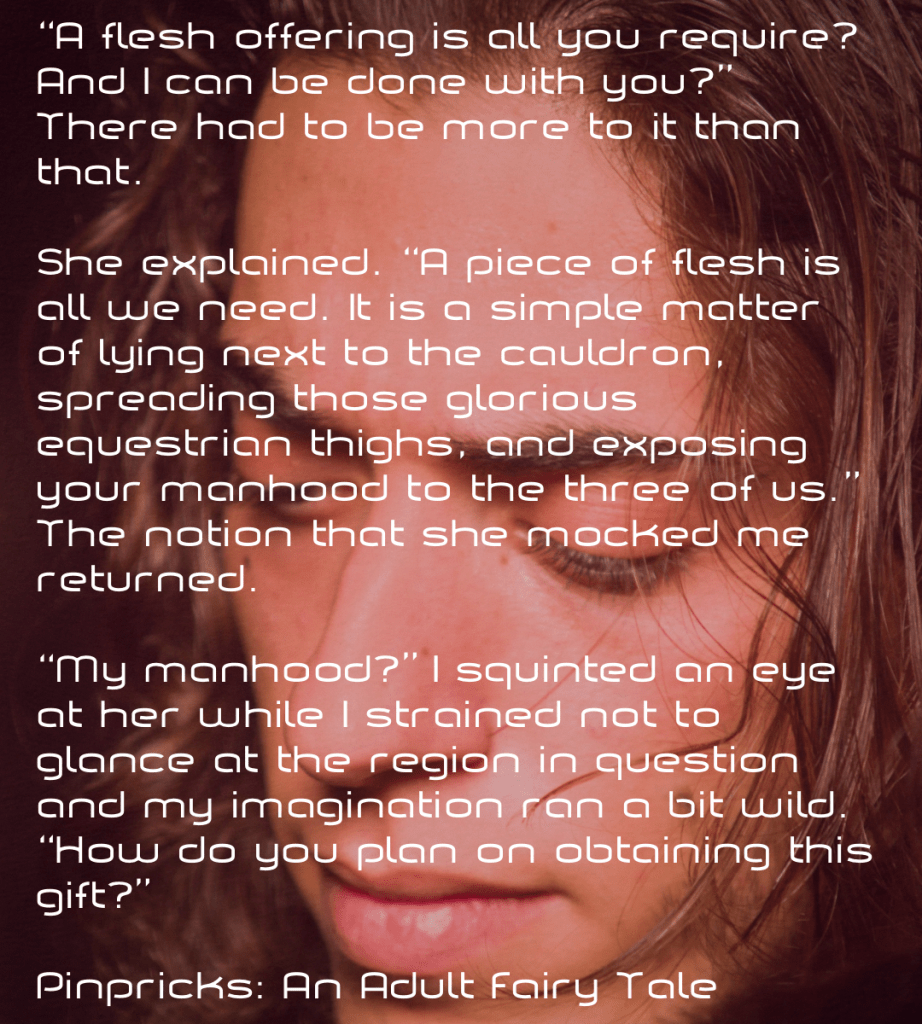
A prince finds himself one morning deep in the Shangthorn forest, facing three foul and warty hags who peer at him with purpose in their eyes. When they pose probing questions and offer him peculiar choices requiring intimate sacrifices, everything he’s certain of—everything he knows about himself—flies in the face of mystery, magic, and these creatures who are more than what they seem.
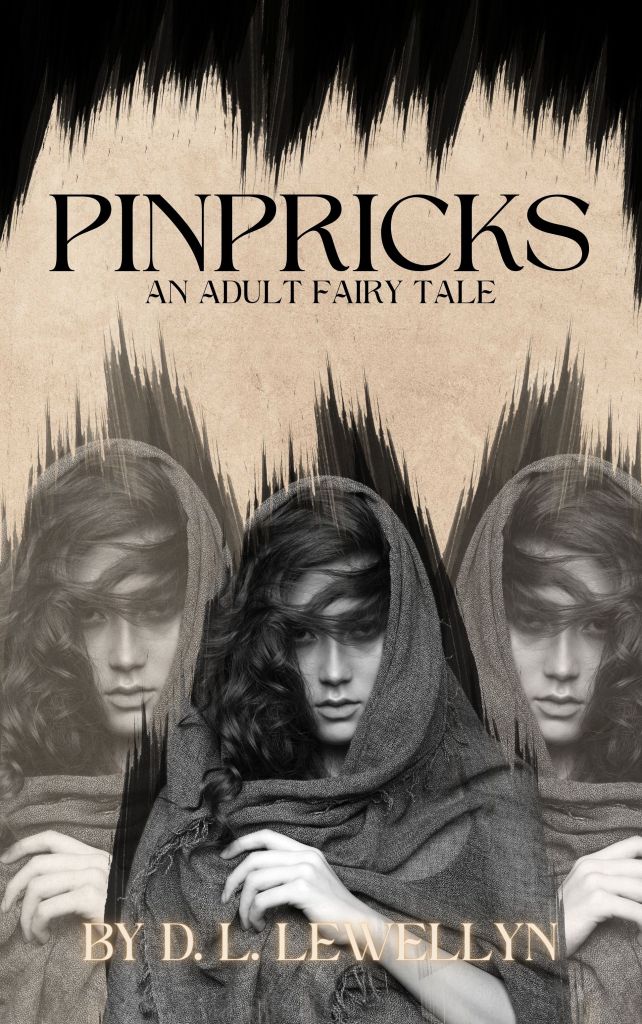

Get your copy of Magick & Mystery featuring Prinpricks: An Adult Fairy Tale

A prince finds himself deep in the Shangthorn forest one morning, facing three foul and warty hags who peer at him with purpose in their eyes. When they pose probing questions and offer him peculiar choices requiring intimate sacrifices, everything he’s certain of—everything he knows about himself—flies in the face of mystery, magic, and these creatures who are more than they seem.

To celebrate adding my books to Google and my relaunch this month for Books One and Two, I’m offering all three books free on Google through August 1 !! Click here or on image for my Linktree!
This has been a great month for me writing-wise, not only for the Relaunch, but I’ve made huge progress on Book Three, which I am only too happy to share by way of a cover reveal! Scroll down… Yay!
Thank you so much for your support. 💚💙💜💙💚

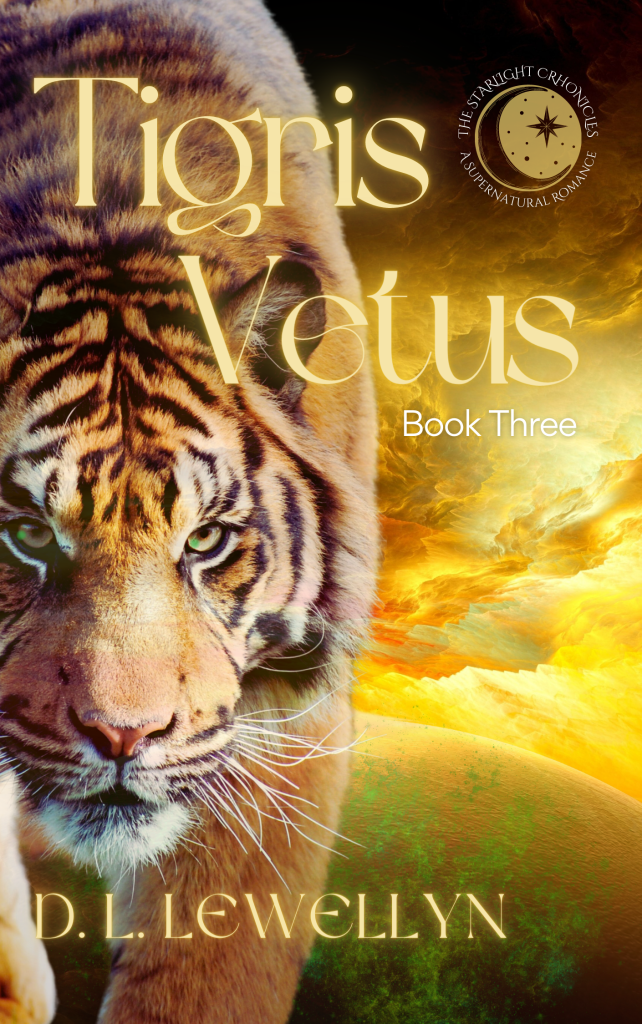
You can still get my books free on Smashwords Books during its Summer/Winter Sale!

The recent death of Hannah Pick-Goslar, a childhood friend of Anne Frank, serves as a reminder that living survivors of the Holocaust are fast …
Remembering The Holocaust
I’m beyond excited to be part of this gorgeous anthology! A truly fantastic collection of dark fantasy and romance immersed in the lore of the sea brought to you by Dragon Soul Press.


She dreamed all her life about the man in the whitewashed tower beneath the prismed light. He dreams of an impossible love with a mythical creature. What happens when one steps from the sea and offers him not just a dream, but an astonishing solution? ~ Beneath the Prismed Light by D. L. Lewellyn


 By D. L. Lewellyn