Yes, this is about murder mysteries that make us feel good—a paradoxical genre, if there ever was one. Stories that have us curling up with a hot cup of cocoa on a chilly day to solve a crime alongside our favorite quirky, clever, and often reluctant hero. Someone sort of like ourselves—but not quite—who lives in a sleepy seaside town (with an inexplicably high crime rate), owns a charming shop, or runs a cozy home business that puts them in the path of murder, prompting them to develop a heretofore unknown knack for solving crimes. Or maybe, they come with a background perfect for the job.
For all those feels we crave, there’s usually a bestie or group of besties, a clever or goofy pet, or a sexy detective on the way to becoming a lover—either helping things along or making life more complicated, or both—and a backdrop involving something we’ve wanted to try but never found the time for. Okay, so we make the time to read. Why not kill two birds with one stone?
Here are some of my favorites: knitting, crocheting, needlework, antiquing, baking, catering, bed-and-breakfast hospitality, a witch hosting a secret vampire book club in an attic above her shop, K-9 search and rescue, dog shows, dog sledding, and even a sentient cat and corgi detective duo who adore their clever human and life on a farm. Then there are the historical periods, and more exotic pursuits like Egyptology or archaeology. Have I intrigued you enough yet?
If you happen to be a person who hasn’t read a cozy mystery, here’s a list to get you started including many of those I alluded to above. You might also enjoy this brief blog on the history of the cozy genre and how it filled a niche.
Richie Billing covers the cozy genres in a conversation with authors Jami Albright and Sara Rosett, where they also talk about marketing a series, author branding, and book launches on The Fantasy Writer’s Toolshed. I hope you find it as enjoyable and informative as I did.
Thank you for visiting and supporting an indie author. For more cozy reading, check out my paranormal romance novels at bydllewellyn.com.
I’m a big fan of pulp fiction—noir, westerns, horror, sci-fi, and fantasy. You know, hardboiled stories with gritty characters. I’m working on one that blends these genres. The idea was inspired by a ’90s rock video by The Toadies and my collection of Edgar Rice Burroughs paperbacks, which I received from a thoughtful boyfriend way back when I was 19. I’d like to share the opening scene.
Let me know if it grabs you. I might just serialize the story in installments for you and subscribers of my newsletter. After all, that’s how pulp fiction is meant to be shared.
Visit this awesome Pinterest Board for more fabulous pulp magazine covers.
Meetings at the Edge
Detective Charlie Driver knelt among the charred beams on the blackened stone floor, a cigarette unlit and dangling from his lips as he examined the scene. Ash and smoke were all that remained of the old boathouse at the edge of Stem Pond, which had a dark history of burning down and then rising again from the ashes. Each time, people died in the blaze, just like now.
As with previous incidents, there was no sign that anyone besides the victim had entered or been near the abandoned building when it caught fire, nor was there any evidence of how the fire started or why it only affected the small structure before burning out, despite witnesses a mile away describing flames shooting above the trees like Roman candles. It was as if it had taken place in a vacuum.
His department and the fire investigator officially cleared the scene the day before, and the remains were with the coroner. Every piece of evidence had been collected and sent to Charlie’s understaffed but capable crime lab, and he’d returned to the scene alone.
After the yellow tape came down, there was no one around to crowd his thoughts or question his methods. He would draw a cigarette, brush it beneath his nose before setting it between his lips, and let the ritual stir the instincts he trusted more than evidence. It often helped him get a bead on the victim.
His methods weren’t working today.
While the victim’s presence felt tangible in the lingering scent of smoke and damp earth, their voice remained as silent as the surroundings.
A crow had been lurking nearby for the past hour, occasionally shifting branches as if to remind him it was there. When it finally cawed overhead, Charlie nearly bit off the tip of his cigarette. He palmed it, squinting at the bird, then let the silence settle back in. Was the nosy creature reminding him that he was the only human on this Sunday afternoon, left in this cold, neglected 20-acre park? A gust whipped up unexpectedly, finding its way down the back of his fleece-lined coat, and Charlie stood, pulling his collar tighter.
Feeling as if the pond somehow held answers, Charlie took one last look around. The water wasn’t very deep, and beneath the frost lay a thick layer of moss. Centuries-old ash, oak, and elm trees stretched upward from its shore like twisted skeletons, interspersed with ghostly stands of fir, creating a dense, somewhat gloomy woodland. Frost covered the branches and glittered on the charred ruins beneath his feet—all signs of winter in this rangeland county. Yet, one detail puzzled him: all the green stalks poking through the snow. The park was overrun with wild onions.
He couldn’t shake the feeling that something was very strange about it, not because they grew in winter (onions can tolerate cold temperatures), but because this proliferation was unusually early. And why this place? He rolled his shoulders. Strangeness was increasingly the theme of this investigation, but what that meant for the victim…
Another blast of cold air swept over him, but this one carried something more—something inexplicable—making him want to light up his smoke and take a deep drag. The crow let out another loud caw as it took flight. Clenching his jaw, Charlie slipped the cigarette into his breast pocket and headed for his car. It was time to meet with his partner and go over the facts she’d been gathering.
Want to find out who died in the mysterious fire in a park overgrown with wild onions? Let me know in the comments.
Linda led an engaging and informative short story workshop at a writing retreat I recently attended in Virginia City, Nevada, that truly inspired me to dive into my next small tale with a new perspective. Check out the highlights and photos of the retreat on my blog. That very day, I invited Linda to my Spotlight for a chat so that you can benefit too.
Let’s Meet the Author
Linda Kay Hardie is a freelance writer in Reno, Nevada. She writes short stories in many genres, including horror, dark fantasy, and crime. She also writes recipes and is the reigning Spam champion for Nevada (yes, the tasty treat canned mystery meat).
Her writing has won awards dating back to fifth grade, with first place for an essay on fire safety. In 2022, she was honored with the Sierra Arts Foundation Literary Arts Award for fiction. Linda makes a living as a writer, writing coach, teddy bear builder, and as staff working for purebred rescue cats.
Let’s Get Started
Thank you so much for joining me on my Spotlight, Linda. How did you become a writer, and what or who was your biggest inspiration?
LKH: Books in general were my initial inspiration. I remember looking at books, seeing the little black squiggles that held the magic of the story, and being determined to figure out that mystery. I had to learn all the mysteries, and I was full of questions. When I was 4, I followed my mom around the house as she cared for my 2yo brother, asking her questions. She finally sent me to kindergarten (not very common in those days), where I bothered the teacher. We had coloring time, recess, nap time, and storytime. I couldn’t nap because I was too excited for storytime. Finally, the teacher taught me how to read and asked me to read quietly on my nap pad on the floor. I wrote my first story soon after that.
DLL: That is definitely the youngest budding writer story ever shared with me on my Spotlight. Fantastic!
How did you find your genre in Crime Fiction? What other genres do you like to write?
LKH: When I was a teenager back in the 1970s, I devoured science fiction. Those were the days of the US Apollo space missions, and science was huge. Science fiction took me to all sorts of amazing places. I’ve always read almost every genre, as long as the writing was good. I still read middle grade novels, and that’s one of my favorite genres. That’s the age when we’re beginning to realize we need to become our own person, to look beyond what we’ve grown up with, and to plan for the future.
I discovered short crime fiction when I stumbled across a submission call for crime stories involving or inspired by collective nouns for animals. You know, like a gaggle of geese, a clowder of cats. Or a Murder of Crows, as the anthology was called, edited by Sandra Murphy.
I had just done research on what a group of jellyfish was called (that’s a long story involving a strange photo a friend posted on social media), and a crime story that used that research unfolded in my mind.
I also write horror, science fiction/fantasy, historical fiction, and literary fiction. I don’t write romance. I tried once, and everyone died. Tragic.
DLL: Haha. Death, for sure, puts the kibosh on the required Happily Ever After in a romance. Writing short stories is a great way to explore multiple genres. I’ve been able to experiment by participating in writing contests, where you don’t know what you’ll be called upon to write until the prompts are revealed. Writing Battle is the place to go for a wide range of genres and a fun competition. My favorites were ‘cannibal comedy’ and ‘inanimate romance.’
LKH: Ooo, that sounds very cool. A great challenge!
[You can meet the delightful creators of Writing Battle on my Sunday Spotlight.]
I thoroughly enjoyed your story in ‘A Killing at the Copa,’ stories inspired by Barry Manilow’s songs. ‘Rain as Cold as Ice’ (inspired by Mandy) drew me directly into the fascinating mind of the main character from the first paragraph, and as a local, I loved the downtown Reno setting. Even if I weren’t familiar with it, your world-building was incredible, and any reader could picture themselves on the streets of the seedy yet fascinating side of the Biggest Little City. Is writing local scenes your go-to?
LKH: Yes, I love to bring location into my stories as a character of sorts. In “Rain,” I was struggling with the story because (as I realized later) it wasn’t grounded anywhere. I mean, I had it set in a bus station, but it took me a while to see that I was writing a pair of “head on a stick” characters. My mentor, writer and former university professor Susan Palwick, calls it that when the writing is flat with just indistinct paper dolls saying words. The reader isn’t engaged because the writer is just lecturing and not showing a well-rounded story.
So, I knew what was wrong, but I couldn’t get a handle on how to flesh it out until I was in a workshop taught by my friend Suzanne Morgan Williams, who writes wonderful middle grade and young adult novels. This class–a part of Mark Twain Days in Carson City–focused on journeys to tie in with that author’s exploration of Nevada and the West.
In an exercise in the class, I was playing around with Suzy’s prompts, doing stream of consciousness writing to tease out my ideas. I take classes from Suzy every chance I get, because she’s a super teacher, and I always learn something new from her. She always pushes for writers to use more senses than just sight.
Here she’d asked us to think of five sensory words. I ended up with a long paragraph that became the beginning of “Rain as Cold as Ice.” The smell of the rain, the sound of bus brakes, the touch of the wind, the cursing of a drunk man. These specifics anchored my characters into a place and gave them room to be themselves.
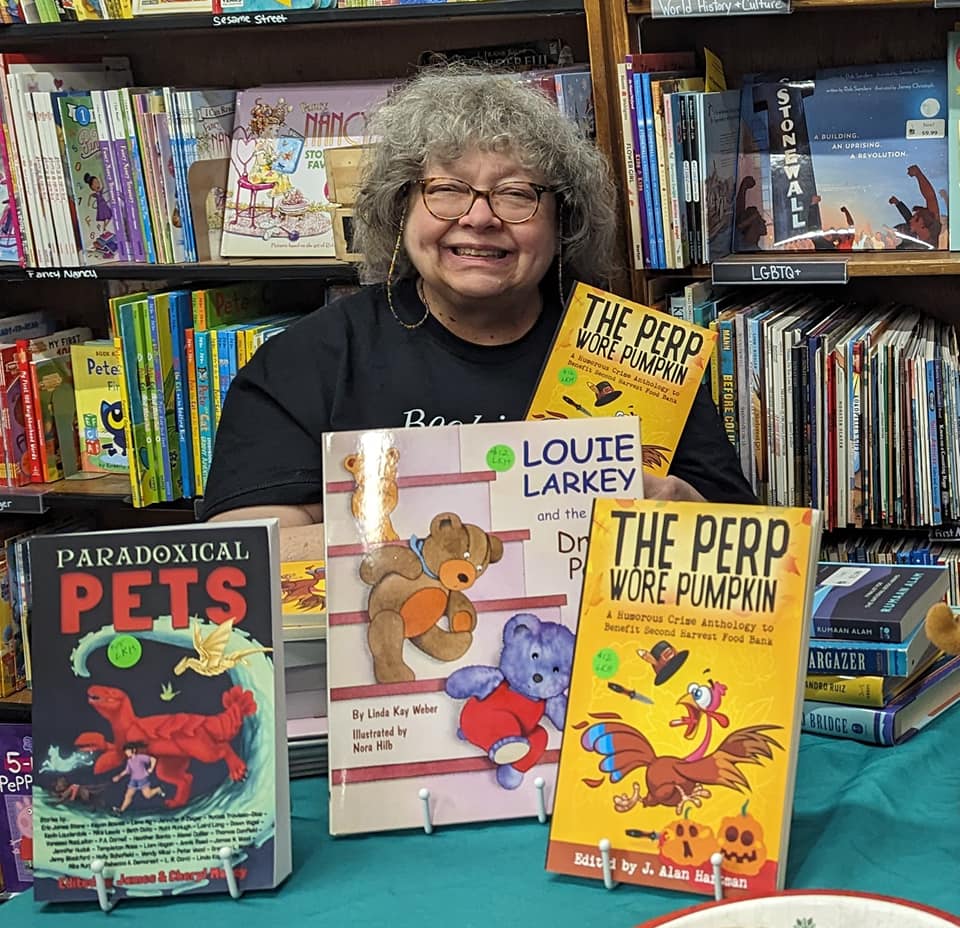
DLL: I love hearing how stories get their start, and this is fantastic, especially how it speaks to that compelling opening. It looks like Mark Twain Days are coming up in October! [That’s my signed copy in the photo! Available on Amazon.]
You told us in class that writing short stories is a great way to excise those annoying thorns in life, a true catharsis, which gave me a whole new perspective on developing story ideas. I sensed the axe being wielded in ‘Rain as Cold as Ice.’ Are we seeing parts of you come through? Can you share how real-life inspiration enhances your short story writing and how we can experience catharsis more directly in this format compared to our novel projects?
LKH: Writers are always told we should “write what you know.” As a journalist, I found many flaws in that cliche, mainly because my job was writing about stuff I DIDN’T know about and communicating these new ideas and situations to my readers and listeners. (I worked in newspaper and radio news for many years. My undergrad degree is in journalism from the University of Oregon.)
I came to realize that the admonition could better be written as “write what you emotionally know.” The answer to your question about whether you and other readers are seeing parts of me in my writing is “absolutely, yes.” Not necessarily the physical details, but definitely the emotional ones. For example, I haven’t been in a physically abusive relationship, but I’ve been in emotionally and verbally abusive ones, so I know the emotional blueprints.
None of my characters are ever me. First, I’m a born storyteller, and I go where the story needs to go. I get this quality from my dad, who loved telling great anecdotes about events and people. He always embellished the stories with exaggerated details and often stretched the truth because these flourishes made the story better. “Never let the facts get in the way of a good story,” Dad always said. That’s become my motto, too.
Of course, Dad never actually said that, but that just makes the anecdote more emotionally truthful. Besides, “Never let truth get in the way of a good story” is attributed to Mark Twain, who famously and wonderfully wrote that way.
So I mine bits of me and my emotions, digging for the precious gems that will make a character sparkle and come alive for the reader. Of course, the first reader is me, and I’m picky and hard to please when I’m reading.
DLL: I love this advice and your dad’s inspiration, and of course, Mr. Twain’s. “Write what you emotionally know” is getting tacked up on my pegboard. I hope I’m doing that, tapping into my emotions, as I get to know my characters. You can feel the magic when it happens.
I enjoy writing short stories that come out of those contests I mentioned, but I’ve had a hard time finding places to submit them once they’re released back to me. When I do, they often get rejected, which many of us cope with until we find the right fit. I eventually published them in a collection, and I offer many for free on my website. That’s two ways to get them out there. But the anthologies where your stories are accepted are so appealing in their design, clever themes, and content that they must attract a wonderful audience and just seem fun to write for. Tell us about the path you took to find the right publisher(s) and about writing stories that fit those engaging anthologies.
LKH: I think I fell into a couple of good opportunities by luck. I first got into writing for anthologies, as I mentioned above, with a crime story inspired by the name for a group of jellyfish. Since that anthology, I’ve worked closely with editor Sandra Murphy on two others. No, wait. More. There’s another one coming out soon, and I’m sure I’m forgetting another one. While I don’t recall for sure how I found the call for stories for the collective animal group names book, it was probably through Erica Verrillo or Authors Publish.
I also keep an eye out for the small publishers that are popping up like mushrooms after a rain. And I use that analogy in a totally respectful way (being a lover of both fruiting bodies of certain fungi and delightful showers of precipitation). Writers and Publishers Network is a great resource for keeping up with this. I write columns, opinion pieces, and other articles for them occasionally. I was recruited by my favorite editor Sandy Murphy, who coordinates the newsletter and more of the writing on the site. Sandy is the editor of several anthologies that I’m in, and I continue to work closely with her.
One of my award-winning stories was initially rejected for the anthology whose call I’d written it for, but some time later I thought it fit a different anthology call with a similar post-apocalyptic theme. I was correct. The editors accepted it, and later I won an award for it.
DLL: Again, so much great stuff, Linda! I have been way too sheltered in my recluse writing world. My eyes have been opened! Thank you for all the resources. I found a fun interview with Sandy Murphy, our visitors might enjoy at cam-writes.com
Can you also talk about building those publisher relationships and the awards you’ve won?
LKH: Yes! I have stories in four of the five volumes of From the Yonder: A Collection of Horror From Around the World, published by War Monkey Publications, a small publisher based in Utah. (I missed the deadline for Volume 5 because I was too busy writing other stories.) I enjoyed working with publisher/editor Joshua Sorensen. I got to meet with him when he came through Reno on vacation with family members. At that meeting, he helped me zone in on the story I was creating for Volume 3.
I met Sandy Murphy when she edited the collective animal names anthology for one small publisher, and I followed her over to another small publisher with another project, an anthology of stories inspired by songs of the 1960s, then to Misti Media, a new small publishing company, home of White City Press, which published my most recent stories. I work a lot with publisher and editor Jay Hartman, and he has invited me to contribute to some of his anthologies. It’s an honor to be invited to submit because it means the editor likes your writing style and feels they can count on you to submit something publication-ready. And they know you’re someone they can work with. That’s always important, because word gets around about writers who criticize every single comma that’s edited in their “perfect” work and refuse to do any promotion of the finished book. Many anthologies are invitation-only.
Last year (2024), I won a certificate of excellence from the Cat Writers Association for my SF/mystery story “Grenade Blows Up,” which is in Tales of the Apocalypse from Three Ravens Publishing. (Cats feature significantly in the story.)
My writing awards date back to fifth grade, when I won first place for fifth graders for an essay about fire safety that I wrote on my first day in a new school. My military dad had been transferred, and I walked into the classroom late, just as the teacher was explaining the writing assignment. I received a trophy, and the fire chief treated me and the other first-place winners to lunch and all the penny candy we wanted. In 2022, I was honored with the Sierra Arts Foundation’s Literary Arts Award for fiction here in Reno. That came only with a check. No candy.
DLL: Darn, candy always makes a great prize. Way to go, Linda. Truly inspiring.
You have stories published in 19 anthologies. Who is your favorite character you’ve written so far, the one you still think about the most?
LKH: Ooo. That’s a hard one. I’m not sure it’s even fair. Do you ask parents which is their favorite child? I like the narrator of “Smack” because I love her determination and kind heart. Then there’s Grenade (nee Renee) in “Grenade Blows Up,” who’s doing her best to get by after the apocalypse. Also, the narrator in “Rain as Cold as Ice” touches me deeply because she’s trying to survive in a harsh world, the best way she can.
I think Sarah and Sally, my married main characters in the story in the upcoming anthology edited by Sandy Murphy, might be the answer to your question. I had trouble getting into that story, so I did a lot of stream-of-consciousness freewriting about who these two older women are, why they were in Reno, how they reacted and thought, and why they were the best ones to solve this particular crime. Then, when I was having trouble with a novella I’d been invited to write, I realized that Sarah and Sally were exactly the people to fix my problems there. (Sorry that I can’t yet reveal any details about these projects.)
DLL: You did great with my zinger question. I love hearing the glow when authors talk about their children, um, I mean their characters.
I noticed that some of the anthologies edited by J. Alan Hartman benefit charities. Can you talk about that?
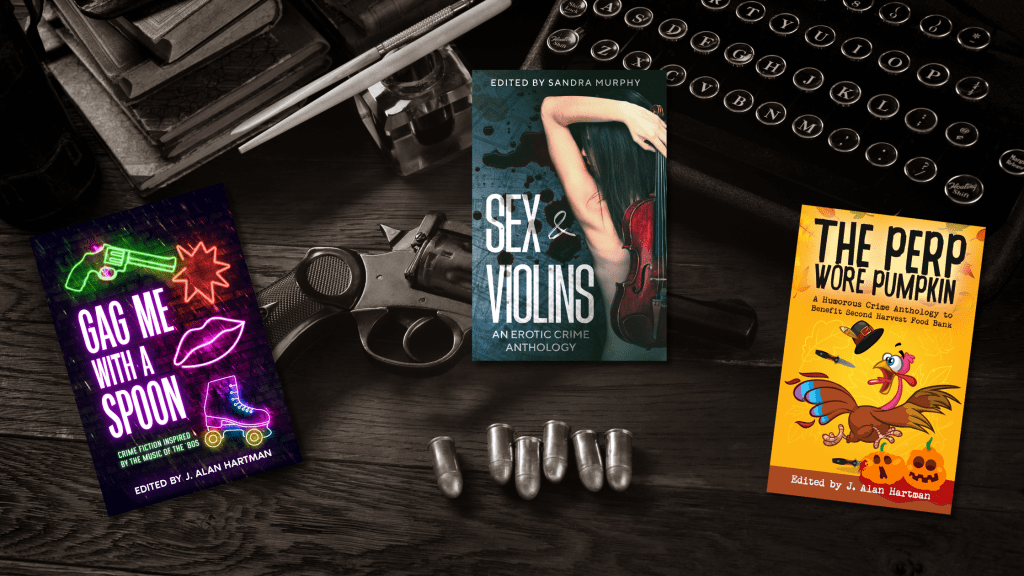
LKH: Definitely! At a previous small publishing company, Jay created and edited a series of Thanksgiving-related humorous crime anthologies, and when he formed Misti Media, he couldn’t use those ideas, so he created The Perp Wore Pumpkin, which carries on the spirit.
Proceeds from the editor and authors go to Second Harvest Food Bank locations. I turned in my story for volume 2 of this series a couple of weeks ago, and it will be released well before Thanksgiving this year to raise more money and awareness of food insecurity in America.
Plus there’s my poem in Under Her Eye: a Women in Poetry Showcase, vol. II, from Black Spot Books. Edited by Lindy Ryan and Lee Murray, this anthology partnered with The Pixel Project, a global non-profit organization focused on ending violence against women worldwide.
DLL: Fantastic organizations to support, and a fun way to support them!
Can you share your tips and techniques on staying productive and keeping that creativity flowing? Where is your favorite place to write? What’s your writing schedule like? Do you journal ideas as they come to mind, or do you otherwise note them down?
LKH: I journal every day, and I write about anything and everything. I write ideas or the seeds of ideas, often freewriting until my subconscious informs me there’s some great potential there, and then I copy and paste that into its own story file. I write diary-type stuff where I take a deep dive into my emotions and figure out why something made me feel and/or react how it did. I’ll write anywhere and everywhere. I even journal while riding the bus, typing emails to myself with a stylus into my phone.
I strongly believe that you need to write as much and as often as is possible for yourself in order to keep your skills healthy and ready. For me, that’s daily and usually many times each day. It’s often 1,000 words in a day. This does NOT have to be polished writing – it doesn’t even have to make sense! I play around with words. I mean that literally. But also figuratively. I’m a kid squishing the clay to see what it can look like, or coloring outside the lines because why should the coloring book artist get to have ALL the fun? Dancing and singing with the words.
DLL: My smile is huge right now. I love this! Great advice.
What are your writing goals? Do you have any novels in the works?
LKH: Yes. I’m trying to write a mystery novel. I’ve got so much of the idea work done on it, but I need to make time for the writing work. Plus the novella I alluded to earlier. I do have two finished middle grade novels, one of which is making the rounds on submission.
DLL: Your volume of work is truly inspiring, Linda.
Any other best practices for writing in the crime fiction genre, and/or writing short stories?
LKH: Don’t try to follow a trend. I would rather write what I love and let others follow me.
DLL: Ooh, yes! Learning about market trends proved to be a hitch in my stride. I started writing without any prior experience (other than legal writing in my career), learning as I went, including the publishing process and all the business behind it. In the beginning, my writing was raw, but my voice came through, my characters engaging (according to my readers). I was uninhibited, you might say. But in all that learning, I got caught up in all the endless rules (some I liked, some I discarded) and the admonitions about writing to market trends, even if it’s not the story you want to tell. Yuck! I love my readers, and I don’t think they need catering to.
LKH: Exactly!
DLL: It stymied me for a time, but I’m back to focusing on reading and hearing my favorite and newly discovered authors’ voices, honing my writing skills, and listening to my own writer’s voice. That, in turn, helps me find my audience, a small but growing one of which I am very grateful to have now. Thank you, Linda, for the great advice!
What is your parting advice for aspiring writers?
LKH: Write all the time. Whatever that means to you. Don’t follow anyone else’s advice unless your heart says, “Hey, that’s a good idea.” And read in your genre. That’s absolutely essential. When I was part of an annual writers conference in Fresno, I used to have wannabe writers show me their children’s book manuscripts for advice. I would read it. Most of the time, it was awful, with no sense of who their audience was. “What’s your genre?” I would ask. “I don’t know. I think everyone will love it,” they invariably answered. “What genre do you read?” I would follow up with. “Oh, I’m too busy writing. I don’t read,” they would answer. That’s when I would paste a fake smile on my face (anyone who has ever worked in retail knows this one) and make vague but helpful-sounding noises about their project. Because I knew they were never going to get published. Of course, that was decades ago, and now those people run off and self-publish.
That’s not to say self-publishing is not a valid way to go these days. I know many people who publish their own books, market them, and along the way, they work with professional editors and artists to make the books the best they can be. These writers get their work out to readers. But if the only thing you want is to be published and you don’t want to learn or to pay for professional editors and artists to make your work great, that’s fine for you! I want to be read. I want to touch people’s lives. That means I want to work with talented people who can help me improve.
DLL:Beautiful! Thanks again, Linda, for dropping by and sharing your inspiration, as well as all the fabulous tips and resources!
Let’s conclude by sharing where we can find you and your works. What events can we attend to hear you speak in person, book signings, or other ways to get out and meet you and our fabulous local authors?
LKH: I attend most of the monthly meetings of the Sierra Arts Literary Community, also called SALC. [Find Linda here] It’s generally the first Sunday of each month at the Sierra Arts Foundation’s Riverside Gallery on Virginia Street in downtown Reno. Feel free to approach me and say hi if you come! I’m always glad to meet new writers, prepublished authors, and other writers. No membership needed (although there are resources available to people who are artist members of Sierra Arts).
When I speak in person or have book signings, I publicize them on the Northern Nevada Writers group on Facebook, as well as on my own social media feeds [Facebook], plus on White City Press’s website.
I’m working on possibly having some writing classes through Sierra Arts Foundation, which is a great supporter of all arts, including literary ones.
DLL:The Sierra Arts Literary Community sounds wonderful. I would love to see you there, catch one of your classes. Thank you!
Here are links where you can buy the anthologies featuring Linda’s stories directly from the publisher.
Who of you struggle like me with “keeping it simple, stupid,” and not waxing too literary? The complaint I hear most often… I love your prose, but I had to reread it. Well, I’m writing romance novels. No one should struggle anywhere at any time reading any scene or dialog. I believe I’m making strides these days and that is thanks in part to short insightful articles from Writers Write like this one.
Check it out. After you mull over the idea of distilling your writing into statistics like the ones provided in this blog, investigate subscribing to a platform like AutoCrit, which is the one I use, or an equally popular competitor like ProWritingAid. You won’t believe how much and how quickly you can tweak your weak spots and hone your strengths.
In the early days, I scoffed at the readability statistic category. “I have to dumb down my writing?” I grumbled to myself. This article really helped me understand what readability is all about. There’s always poetry when I have the urge to play with pretty words, which I’ve been dabbling in this year and enjoying more than I imagined I would.
If you’d like to learn more about the Dame herself, the image links you to an excellent article about her life, and PBS has a marvelous documentary, Inside the Mind of Agatha Christie.
Check out my books and sign up for my newsletter for more writer’s life musings, story snippets, and fun facts.
Here is a recent Writing Battle short story that I hope you will enjoy reading as much as I did writing it! – My first Whodunit. Writing a mystery was one of those daunting dark tunnels in fiction that I never thought I would travel down but super glad I did thanks to a contest prompt. I had five days and 2000 words to work with, and that included research! Hopefully, I succeed in stumping you! But if not, have fun anyway.😊
Little Shop of Honeybees
By D. L. Lewellyn
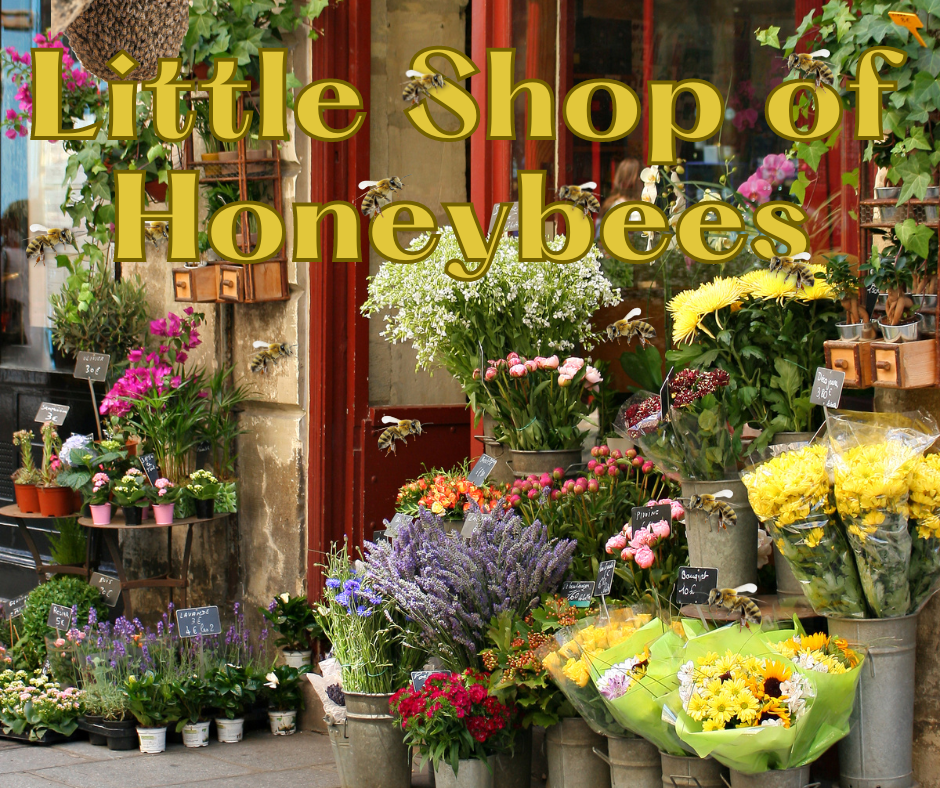
Honeybees and a shop full of bright gladiolas, much too cheery a setting for such a dark tragedy unfolding in this twisty whodunit.
###
Detective Orin Denton knelt over the body of the florist and sniffed. Lemons. The smell was predominant despite the flowers filling this charming shop in Old Towne. The deceased, known as Audrey Seymour, a female, age twenty-eight, five-foot-two, one hundred twelve pounds, lay prone by the front door, phone in hand, and covered in angry welts. Her lips distended in a grotesque smile, her swollen tongue protruding beyond them.
It wasn’t hard to pinpoint her killers. Dead bees surrounded her, and more of the little honey beauties buzzed around the shop. He shook his head and glanced again at her ID. Their victim had been a beauty herself, and today was her birthday.
“Charlie, you got the pest guy coming?” he called out.
“Any minute, sir.”
“The one I suggested?”
“None other.”
“Thanks, Charlie. Will you let Mrs. Appleby know the honeybees will be rehomed along with the rest of the hive?”
“You bet, boss.”
Mrs. Appleby lived above the shop. Her balcony was loaded with flower boxes to attract her pets. She’d been the one to show him the large hive constructed by the bees inside the crumbling brick wall by the back door. Further deterioration on the inside of the shop seemed to be how the bees suddenly gained access to the banquet of floral delights.
Denton flipped his notebook while he knelt by the body and scanned the room. The decent-sized space was packed with buckets of flowers, shelves of plants, and a myriad of tasteful decorations. The shop was nestled between a bookstore and a restaurant. Main Street edged the front, an alley ran along the back, and generous windows graced both sides. A wall lined with refrigerated shelves had a vestibule on the other side, which the florist used for an office and where the backdoor and hive were located.
When the first responders arrived an hour earlier, the shop was locked. There were no signs of a break-in.
The elderly Mrs. Appleby had seen no one but the bee victim and her frequent visitor, the ex-boyfriend, the entire day. She’d heard nothing unusual except when Vincent Stubbs, in her words, “Pitched a fit because Audrey continued to resist his charms.” She was horrified to think her babies had done wrong. “I never thought for a minute they would invade her store. I don’t understand how they broke through. Still, the lemongrass should have kept them away.” Good questions, and why Denton’s sleuth senses vibrated.
“Do you know if she had any family?”
“She told me once she was all alone.”
Not quite, he thought. She had her flowers.
The alley-side windows were designed as a greenhouse because Audrey Seymour raised much of her own stock, including lemongrass, which she distilled into essential oils. A search on his phone pulled up a contradiction. Beekeepers touted lemongrass oil for attracting swarms to new locations, while other sites pointed to the home remedy benefits Mrs. Appleby mentioned. A repellent. The oil was also used to preserve cut flowers, especially gladiolas, which the shop had in profusion.
Denton’s gaze rested on the sunny boxes. Gladiola was his wife’s favorite. He pictured the sparkle in her eye if he were to bring home a mixed dozen and imagined all the creative ways she would thank him. He sighed. Thinking of his wife always centered him… letting him listen to the voice of his victim.
Audrey Seymour smelled citrusy. She wore a pretty new dress—new shoes. She’d tried to call for help… and died alone. There had to be more to this than a series of misfortunes.
“Charlie. Is the Coroner on the way?”
“I’m here, Denton,” said a florid, breathless man stepping through the jangling door.
The detective gave the medical official time to examine the body.
“Well?” Charlie prodded.
“The majority of the bites are around her neck. Note the colors of her dress. Bees attack dark colors because they signify a marauder, and necks are a favorite vulnerable target. Her heart gave out from anaphylactic shock.”
“Another reason to admire bees,” Charlie said under his breath. The doc’s eyebrows shot up. “Sorry, I was referring to their incredible defense arsenal. Her death was tragic,” Denton said with feeling. “Was she allergic?”
“Severely. Have you found her EpiPen? She had to have one.”
“Charlie?” Denton called over his shoulder.
“Desk drawer,” he called back. “Unused. I also found a torn-up gift box that might belong to the dress. It’s got a store label.”
“Good work, Charlie.”
###
The evidence binder was expanding pretty fast for accidental death, and Denton was flipping through it again as he sat at his scarred, coffee-stained desk—his home away from home.
His junior detective partner sat across from him and handed him one of the three donuts he had on a napkin before eating half a maple bar in one bite.
“Boss, I know that look,” Charlie said after swallowing his doughy breakfast with an impressive amount of coffee. “You’re convinced this wasn’t an accident. What’s spiking that uncanny crime radar off the charts?”
“Her EpiPen, for one, Charlie. We have a sharp business owner who’s deathly allergic to bees working in a shop full of plants that draw them.
“Let’s say lemongrass attracts, though she thinks it repels. Let’s say she had no idea about the beehive outside her door and was careful about inviting insects into her shop. Audrey Seymour had an EpiPen to rely on if the worst happened. People with EpiPens keep them on their person at all times, regardless of the care they take to limit the risks—not in a desk so far out of reach.
“I also think she was waiting for someone to meet her besides Stubbs. Have you tracked down the dress?”
“That’s why I’m here. You’re going to love this.” Denton raised a bushy eyebrow, and Charlie delivered his gift. “A person named Miriam Greene bought that outfit… and another exactly like it.”
“Two sets of identical clothes? What does that suggest to you?”
“Someone wanted to look like our victim.”
“Are the security tapes downloaded yet?”
“Just finished.”
“Let’s take a look, and then we need to track down Greene.”
Charlie cleared his throat.
“I was saving the best for last because I wasn’t sure where your head was at. Vincent Stubbs was picked up on a domestic disturbance six months ago. Audrey never pressed charges.”
###
Denton set a paper cup full of sludgy liquid in front of Vincent Stubbs. The handsome dentist had bags under his red-rimmed eyes that could float a boat.
The detective took his seat, sipped his coffee, and grimaced at the cup as he set it down and cleared his throat.
“According to Mrs. Appleby, you had a habit of showing up at the shop and campaigning loudly for Ms. Seymour to go on a date. Is that a fair assessment?”
“It’s fair,” Stubbs said as he raised his downcast eyes. “I loved Audrey, and she loved me, but I messed up. I’ve been trying to fix it for months. Audrey is… was independent, sassy, and stubborn. I craved every minute with her.” His brow furrowed. “Am I here because you think I killed her? Because I thought it was the bees.”
“No sign of honeybees when you helped her lock up before leaving?”
“Not a single bee buzzed around the shop that day or any other day I was there.”
“Why did you stay so long if you weren’t getting anywhere?”
“I believe I answered that. Being with Audrey was everything to me, even when she was preoccupied with her flowerbeds… She could grow anything. Audrey was the embodiment of life.”
“So, she gardened while you pitched dinner out?”
“Audrey’s hands were always busy with her plants.”
“Did you buy her that dress?”
“No. I asked her about it, though.” Stubbs let Denton see his resentment before adding, “I wanted to know if I should expect someone else to show up because there was something secretive about her that day, and she grew more insistent about me leaving when she closed up.”
“Why were you reported for causing a domestic disturbance?”
Stubbs winced, picked up his coffee, smelled it, and set it down.
“I worked myself up after a few too many when she went out with another guy. Our wires were crossed. I thought we were more committed.”
“Hmmm. It seems you still believe that. Does that shop always smell of lemons?”
“Lemons? She loved her lemongrass. But it was never overwhelming. I… I don’t… What does that signify?”
“Maybe nothing. Did you know it was her birthday that day?”
“Of course, I knew. That’s why I wanted to take her to dinner.” His eyes sank deeper. “Shit! Twenty-eight is too young!” He dropped his head into his hands.
###
“You’ll want to buy me at least two beers for this,” Charlie said as he barreled up to Denton’s desk and waved a thumb drive at him. Denton gave Charlie an expectant grin.
“Greene was messaging Audrey’s phone. They’re cryptic, but one mentions sending Audrey a gift on their special day. I’ve got more. Greene is an alias. She used a burner phone. She wasn’t so careful with the dress receipt. We’re tracking down her fake identities to get to the real name, but…” he paused and waggled his brows in his version of a drumroll, “under one name, she’s wanted for elder abuse… on a large scale. She’s a con artist, boss.”
“Well done, Charlie. We just need to put Greene inside that locked shop and prove she messed around with the hive, and we’ve got murder instead of an accident.” Denton cocked his head. “I’d say from the height of the bounce in your step, you have an address?”
“You ready to take a drive to New Towne?”
Denton glanced again at the enlarged image from the security camera he’d been examining and grabbed his jacket.
The car rolled to a stop in front of a grungy Seventies tract home. The blinds were closed, and the place looked lifeless. “It kills me that New Towne is rundown, and Old Towne is the lively side,” Denton mused. Charlie snorted and opened his door. They approached with caution. Dead places were the most dangerous. Denton knocked, and they waited.
“Ms. Greene?” He called out, using his best cop voice to penetrate the door. “I’m Detective Orin Denton. My partner and I would like to ask a few questions.”
Seconds ticked by. Then footsteps, followed by clicking deadbolts. The door cracked open on a chain. Denton flashed his badge, though he couldn’t see her face. The house was dark, and she hovered in the shadows. He watched for suspicious movements, then laid it on her.
“I’m sorry about the death of your sister, Ms. Greene. Can we talk?”
Charlie’s breath hitched, and his eyes bored into Denton, but Denton had eyes only for the woman who, to his relief, opened the door wider.
It was their victim come to life. Healing stings covered her face, neck, and arms.
“I’ll be damned,” Charlie breathed. “A twin.”
###
After sitting across from Janet Seymour, aka Miriam Greene, Denton spent a full minute staring at her. She stared back.
“So… you thought becoming Audrey would get you out of trouble?”
She shrugged. “I gambled on an opportunity.”
“You were a perfect match on the security cameras.”
“Took weeks of planning, but worth it to confront the sister who made our dying mother send me to Juvie.” Her eyes turned flat. “Once I discovered the beehive, the rest was easy. I dowsed her with a homemade lemongrass lure, pickpocketed her EpiPen, and pretended to need the toilet so I could use the heel of my shoe to open the hole in the brick the bees had started.
“But it all went wrong,” Denton concluded. “My sister didn’t want me to die. Go figure.” Janet snorted and sat back. “She shoved me out the door and locked it even as she succumbed. I used my EpiPen while I watched through the window.” Her eyes gleamed. “How did you know there was a twin? Was killing her on our birthday over the top? Because I wondered about that.”
If you would like to support an independent author who loves to share her stories, this story along with an eclectic anthology of more fun tales is available for 99 pennies at your favorite bookstore. Thank you!






 By D. L. Lewellyn