I am aware that we have a whole month to go until fall starts. But it’s my favorite time of year, so I get a little excited about this time in August, especially as the heat finally got knocked down yesterday by some lovely (albeit blustery windy) rainy weather.
That meant it was a day for binge-watching Hitchcock movies featuring Grace Kelly (thank you TCM) and working on an old Diamond Painting WIP that keeps calling me from my craft table. Three years and nearly 65% finished! Ouch.
Yes, that’s what happened to my avid crafting after I discovered the joy of writing fiction. But I manage to have days like this on occasion when I bring out my dozens of cross stitch, knitting, and crochet WIPS and enjoy Audible or TCM while I craft away. Those days increase in the fall because well, the days get cozier for couch potatoes like me.
Still, my pod people (aka my story characters who I like to say were seeded in my brain by aliens because what else explains their takeover) are with me. Some kicking back and relaxing like I am, some hatching their next scenes or new chapters, and many clamoring for a finish. If the truth be told, these days of mindful crafting unleash my pod people like nothing else can. I just need to keep reminding myself to take these breaks from writing their stories.
Our brains are a remarkable thing.
What’s your favorite time of year or way to relax?
I wrote this for my Bookbub tagline when I first started writing fantasy.
If there are not hidden supernatural races living among us, I must create them so we can meet them.
I’ve been exploring fantasy worlds ever since, creating supernatural races and characters facing exciting challenges who I like to call my pod people because I’m convinced they were planted in my brain by aliens. My pod people notion illustrates my hope that there are magical beings living parallel lives with humans on this planet, whether they were originally from outer space or not. We humans can’t be alone in this struggle for survival, can we? And it’s comforting to think this planet might survive by other lifeforms stepping in to manage its care if humans fail in that task. This is often the premise in my fantasy stories.
Art created with Photoleap using my bio pic
The idea that fantasy fiction allows an author to diverge into so many alternate realities has come up in several recent conversations with fellow writers. I love picking the brains of creative minds, which is one reason I enjoy interviewing authors on my Sunday Spotlight. So often, the same topics or ideas crop up in batches, which never fails to astonish me.
Where I’m going with this question is that while writers’ imaginations know no bounds when creating endless elements in endless possible realities in fantasy fiction, it’s all inspired by tweaks to reality, making me wonder which is real. Just ask anyone who’s gone to see a magic show or had their fortunes read, or scientists who explore the galaxies and life in all its known and possible manifestations.
Even explorers of time in quantum physics dance along the twisting path of theory, which to me is another word for imagination. While most of us experience time as a quantifiable reality as we check our clocks and calendars, there are alternate versions (realities?) people live in around the globe. This was illustrated for me this morning in a CNN article and why I started thinking about this question. Take a look at The Country Where it’s Still 2016.
My conclusion? Keep and open mind and have faith in the imagination.
Art created with Photoleap
Even my pod people manifest in my brain in endless variations, which I explored today in digital art.
Let me know your thoughts about the world we live in and all its wonders in the comments below.
As I sit here laboring over a story trying to find the perfect word, I remembered my favorite moment in Throw Momma From the Train, which is all about words, that I forgot to mention! [Head smack!]
Writers, take heart, and readers, you might appreciate the struggle, too.
The opening scene has writer, Larry Donner (Crystal), struggling with the first line of what he hopes is a new novel, and in particular the last word of the first line. “The night was… humid…” Paper ripped from that amazing vintage Selectric. “The night was…moist,” head drooping over the keys… or something like that. You get the idea. Even better here’s a clip. My above-mentioned moment follows if you want a bit of a spoiler.
This mini sub plot trails through the movie with both Larry and Owen (DeVito) struggling for the right word. They carry on with their problem on the train with Momma sitting next to Owen. After listening to them go on, she grumbles out, “Sultry.”
That was my biggest laugh out loud moment, which probably wouldn’t have been the case in the days when I wasn’t a writer.
One last thing, the Hemingway six word story image in the original blog now has a link to the source. Yay! Thanks for prodding my memory, Leon, and for letting me borrow your piece.
It was supposed to be stars, but bears were an awesome second when it came to sighting things in nature this weekend. The family gathered at one of my favorite scenic places, Lake Tahoe, for my mother’s milestone birthday. The world class destination also just happens to be an hour away from me.
While stargazing was one of the weekend goals from our woodsy Air B&B, and the telescope and binoculars were present and ready, the skies didn’t cooperate. Still, the rousing card games and never dull nature watching made up for it. Enjoy these images, and I hope you get out in nature this summer for your own adventures.
While I primarily write fantasy romance, I can’t help but explore other genres. I’m endlessly curious about what elements readers expect to get lost in when they pick up a thriller, for example. Is it all about the cleverest plot twist? What makes a satisfying horror story? Experiencing nightmares from the comfort of your armchair?
What do readers want in historical fiction… to compare life to better times, worse times? What keeps them swiping pages in a steamy, emotional romance novel, besides the steam? Okay. My last one. What is it about traveling to a future world here or out there that draws readers to sci-fi? For me it’s the idea of having a future of any kind.
Then, there are all the sub-genres.
Within the sub-genres—even within a single novel—are the myriad of tropes that change constantly depending on what’s popular.
Where do you go to get inspiration before you even get to the genre you want your story to live in?
Do you prefer writing in one genre? What’s your go-to style?
If you have a favorite style and genre, how do you come up with fresh story ideas inside that genre?
Do you feel your way through the mechanics of a story, and let it tell itself? Or do you establish your structure and all the rules first?
This excerpt is from an article I found after Googling the subject question.
…This [looking for compelling interests] might take the form of research, conversations, looking through ephemera, or journaling. If you follow the trail of that preoccupation, you’re bound to come across the engine of a story.
The idea of being “bound to come across the engine of a story” totally resonated with me. When I started writing, I had no idea about the mechanics of the craft, or that fiction writing was… well… mechanical. Don’t get me wrong. I was an admin assistant and paralegal for decades. Proper grammar, editing, and the efficient conveying of words in sentences and paragraphs were my bread and butter. In other words, mechanics. But when I started my writing journey, I was focused on the artistic side of things—the creative outlet just like all my previous downtime activities in arts and crafts. The “feel good” aspect.
Creativity for me is all about the organic flow of imagination and ideas, letting one thing build onto another, applying different mediums until it feels right under your hands. That’s how I write. I feel my story through the keyboard as I type. But three years into the journey, I’m learning there is much more to it. Feeling the words might get those ideas flowing, but to craft a good story takes the study of and dedication to the mechanics.
So, after plowing through writing my first novel using my decades of voracious reading and acquired business writing sense, and all the grammar fluidity I honed along my career path in combination with my imagination, I’m now digging deeper into the mechanics of fiction, especially as I try my hand at a different genre.
I love reading and watching good horror. Now, I want to write one.
Short story anthologies are a great way for writers to try out the mechanics of a whole new device. I’m currently challenging myself to write a horror story under 20,000 words. Thanks to articles like the one above (and I recommend reading the short piece with quotes from great writers about finding their story ideas) and folks like Dave Chesson, the Kindlepreneur, who generously share resources like Horror Writing Prompts: 50+ Ideas to Get You Started, I’m on my way.
My problem is that I have a real tough time writing scary, bad people, doing scary bad things. That’s where examining the technical aspects of the craft might help. So, I’m off on a whole new tangent. But hey! That’s my joy.
Here’s a link to one of my side trips, aka articles, that you might find helpful. Writing Evil Characters. Packed with great memorable nuggets like this.
…evil characters are heroes in their own stories and in the stories of their minions and countless supporters. And as heroes, it’s important to see how the plot of your story or novel is affecting them and forcing them to grow. ~ Naomi D. Nakashima
However, what I’m learning about the horror genre is that the antagonist doesn’t have to be a person. It could be an entity, an urban legend, the protagonist’s own mind… So off I go, tripping further down the tangent highway of horror.
I would love to get your ideas on how you find ideas. Leave your comments below.
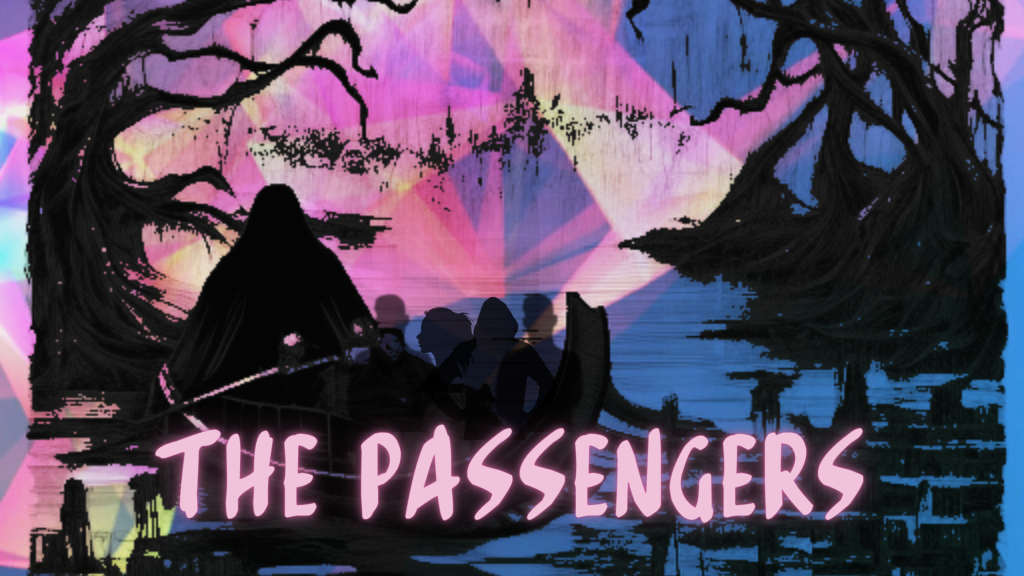
I’ll leave you with this cover and link to one of my short stories where I did venture down the path of horror to a degree, dabbling in a totally fun sub-genre—one I’d never heard of until entering a writing contest with Writing Battle. Cannibal Comedy.
Ride through a swamp in a gondola full of serial killers on their way to a banquet in The Passengers. Their grim pilot? He wears a dark cloak and carries a scythe. The story is also part of my collection of short stories for 99 pennies on Amazon.
This isn’t even mine, but my husband’s photograph. He was out on his ebike 30 minutes away from us. But his enjoyment is my enjoyment. Pretty fabulous to crest a trail and see this.
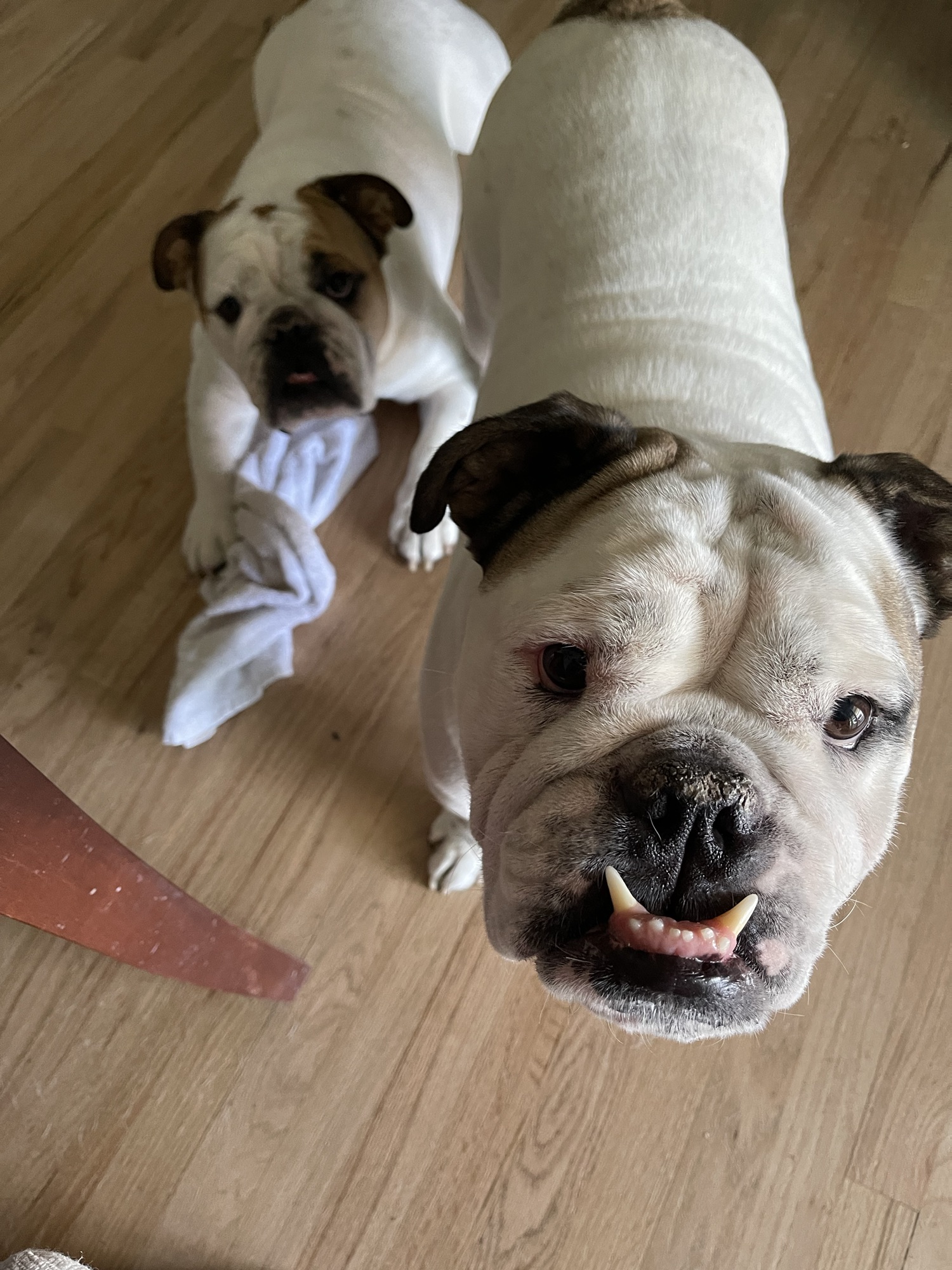
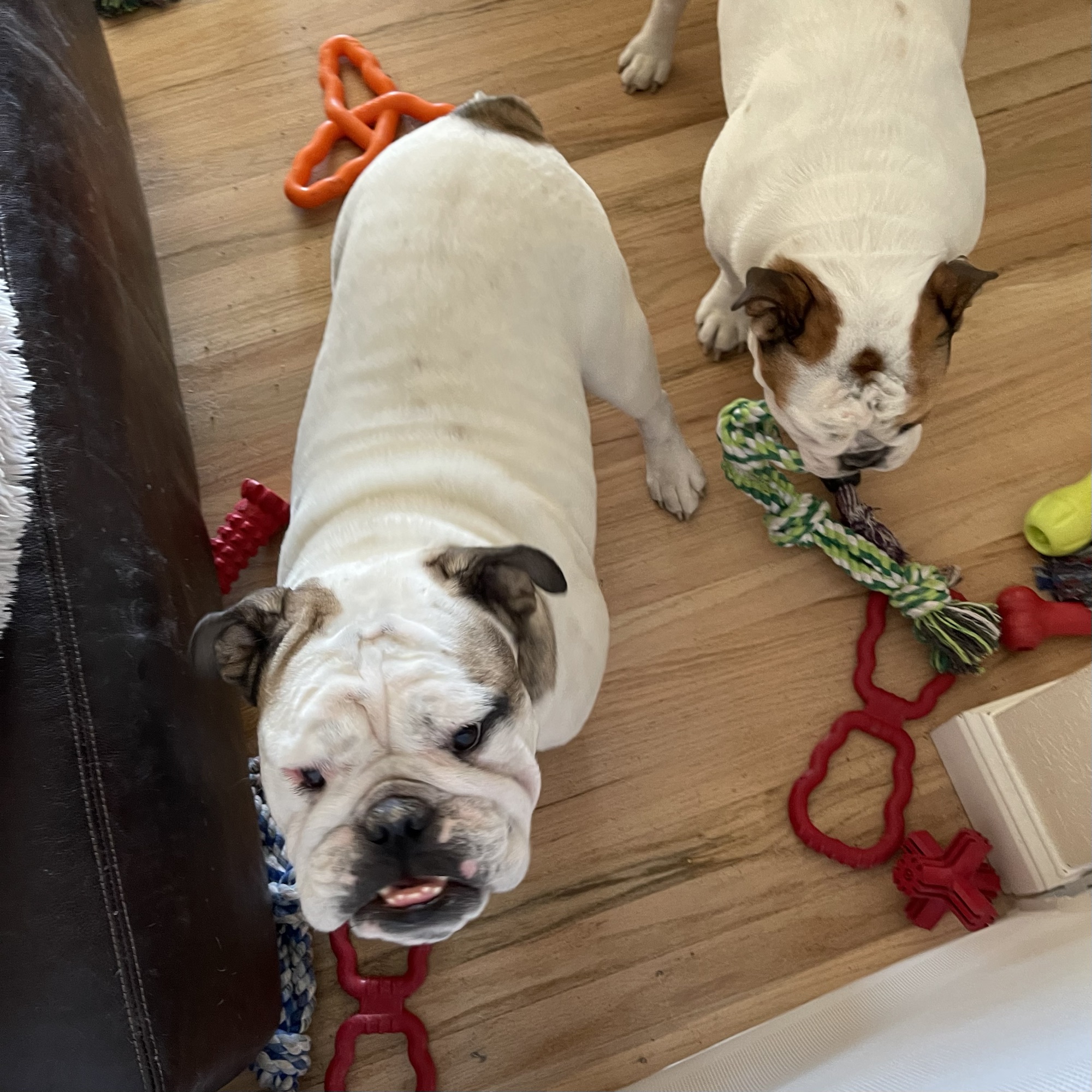
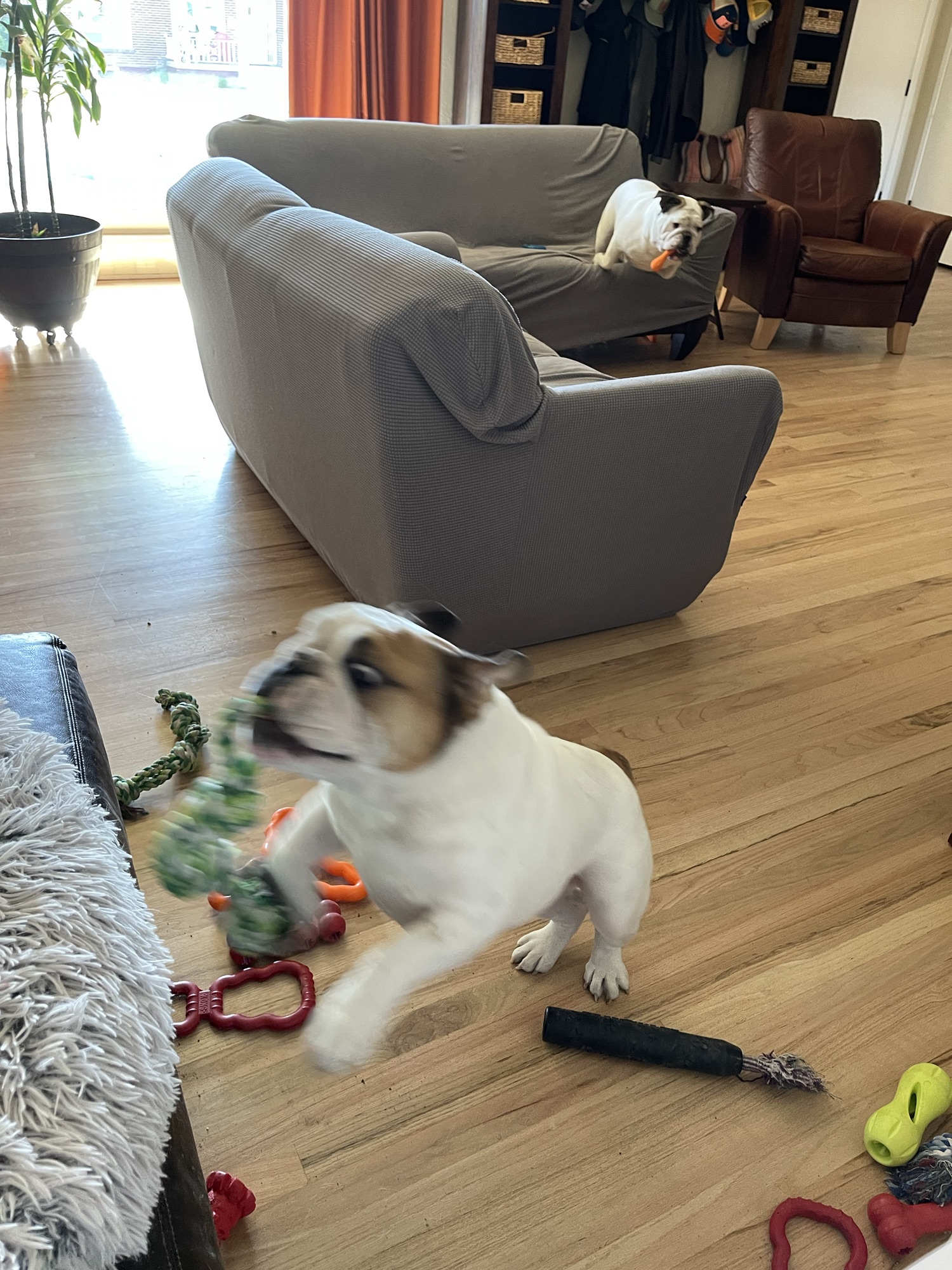
I so enjoy pet sitting for Mack and Elway. Wouldn’t you? We had a lovely week together though I missed my own two fur faces.
While pet sitting, I got out for a girlfriends day. Always nice since I’m staying in Midtown where there’s lots of fabulous eateries. We went for gyros. Tori brought me gifts. She loves getting me Kodiak/Grizzly bear cards because she’s in love with Andras Johns, my alpha shifter in The Starlight Chronicles, and aren’t the mug and stickers awesome!
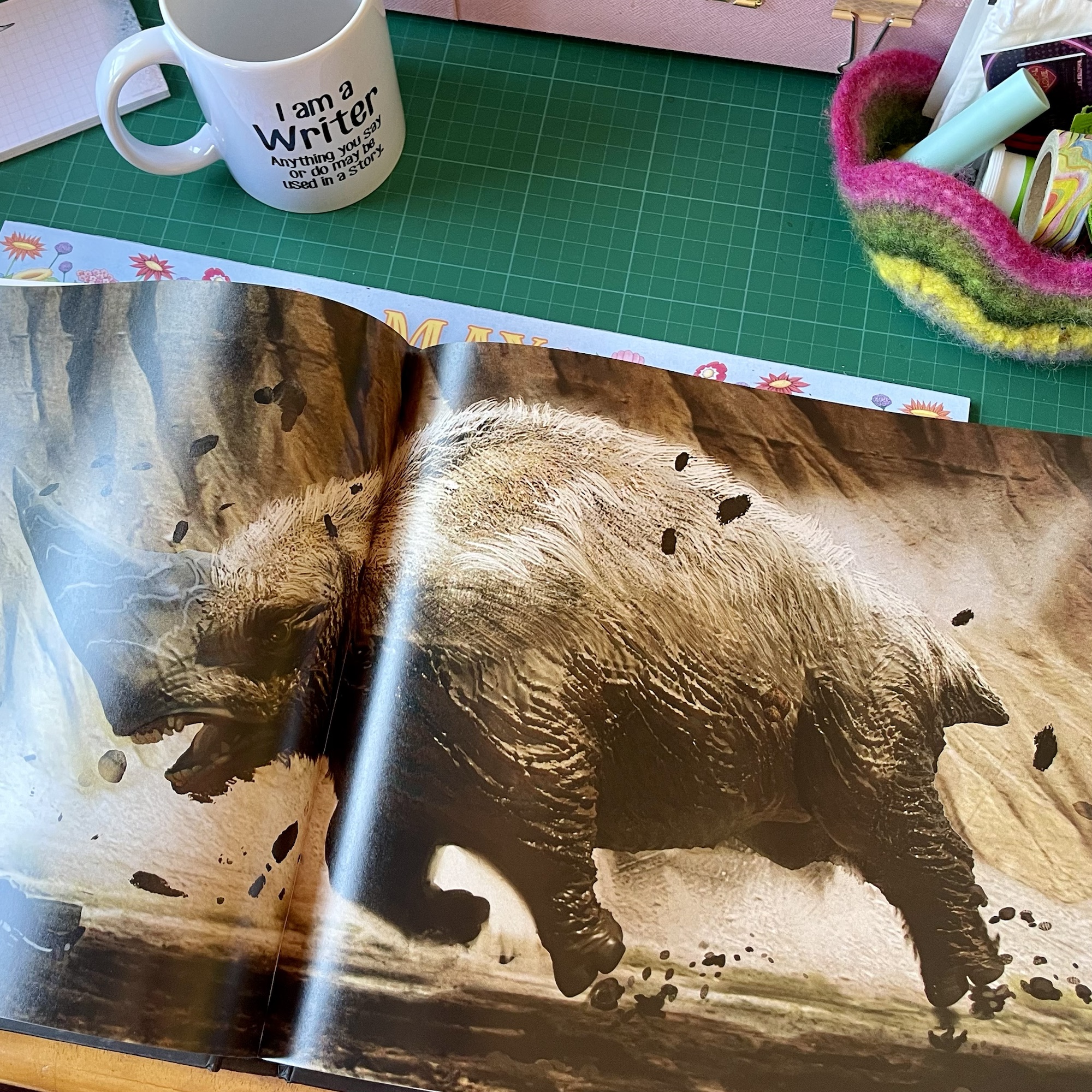
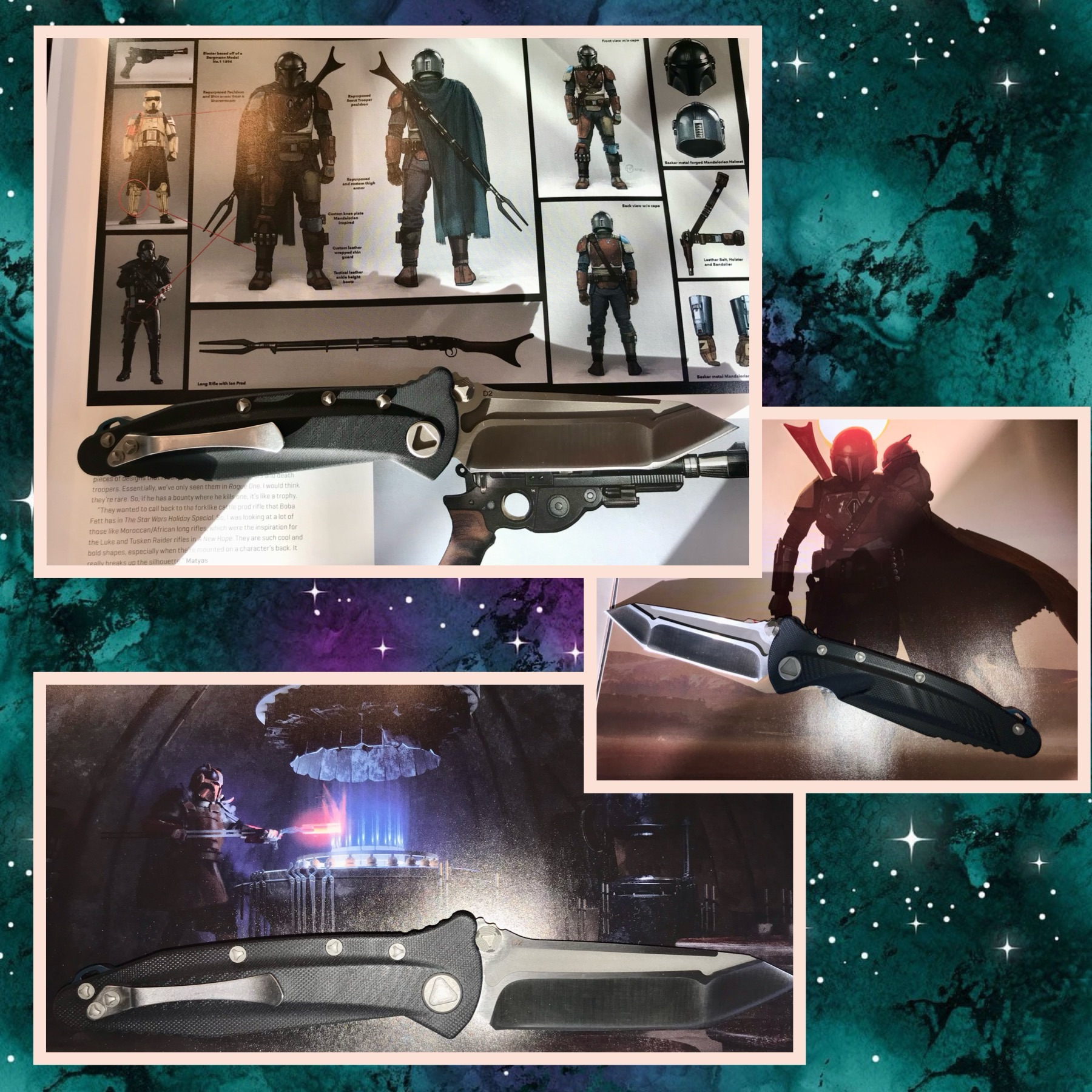
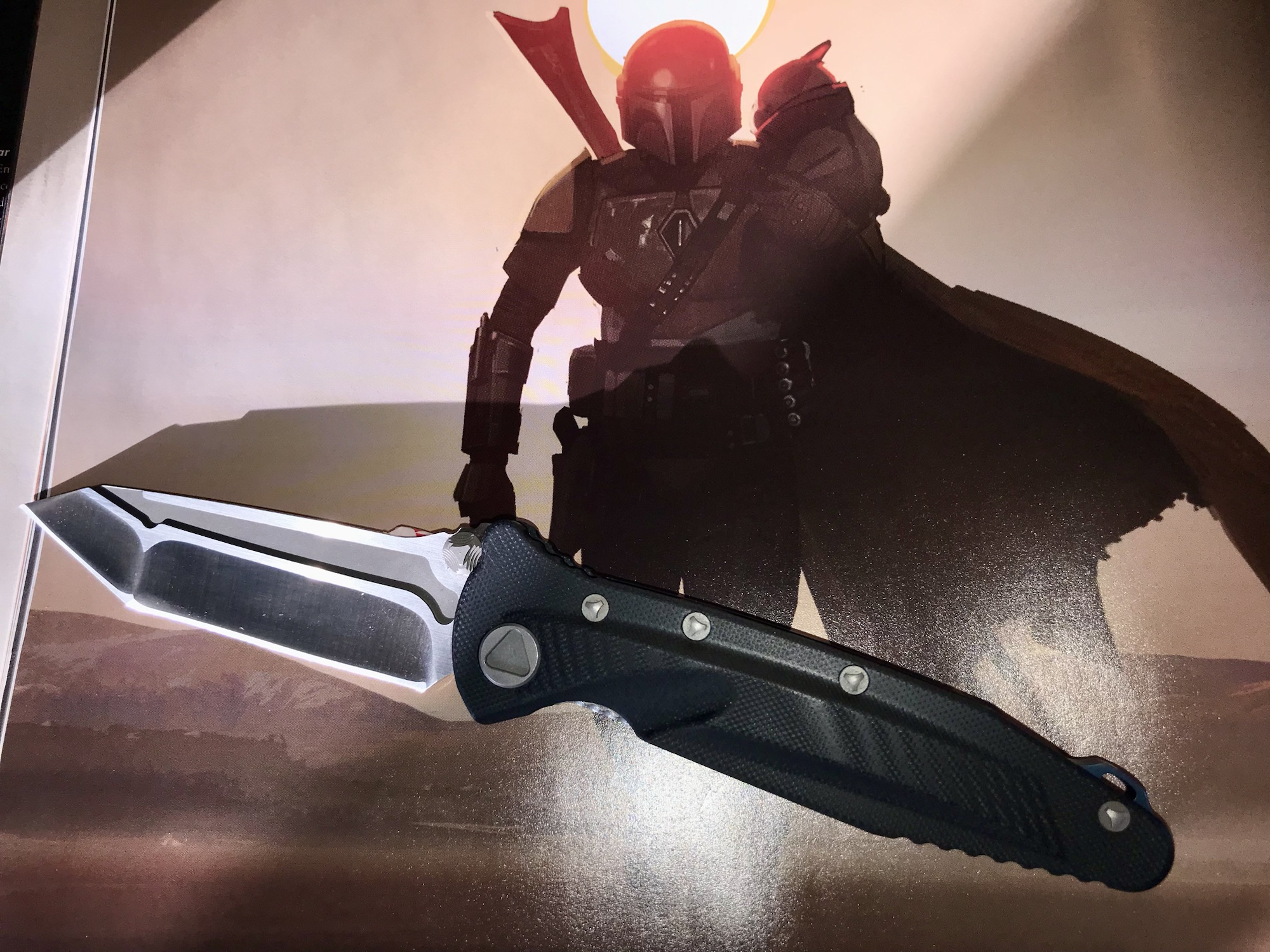
More fun things from my hubby this month. He found this coffee table book for a steal on eBay where he also sells knives. Doesn’t this knife scream Mando! Think Beskar and blue triangles.
Last but not least, I’m digging on my May WIP! This novel has been in the works for a couple of years and my current focus. Toxic Friends Can be a Good Thing is a YA Urban Fantasy. Shifters, ninja brothers, hidden places beneath Long Beach, CA, an unhoused teen girl, and her stray Aussie Shepherd companion are a few of the elements.
Stay tuned!
Thanks for catching up with me!
For news and progress, feel free to sign up for my newsletter.
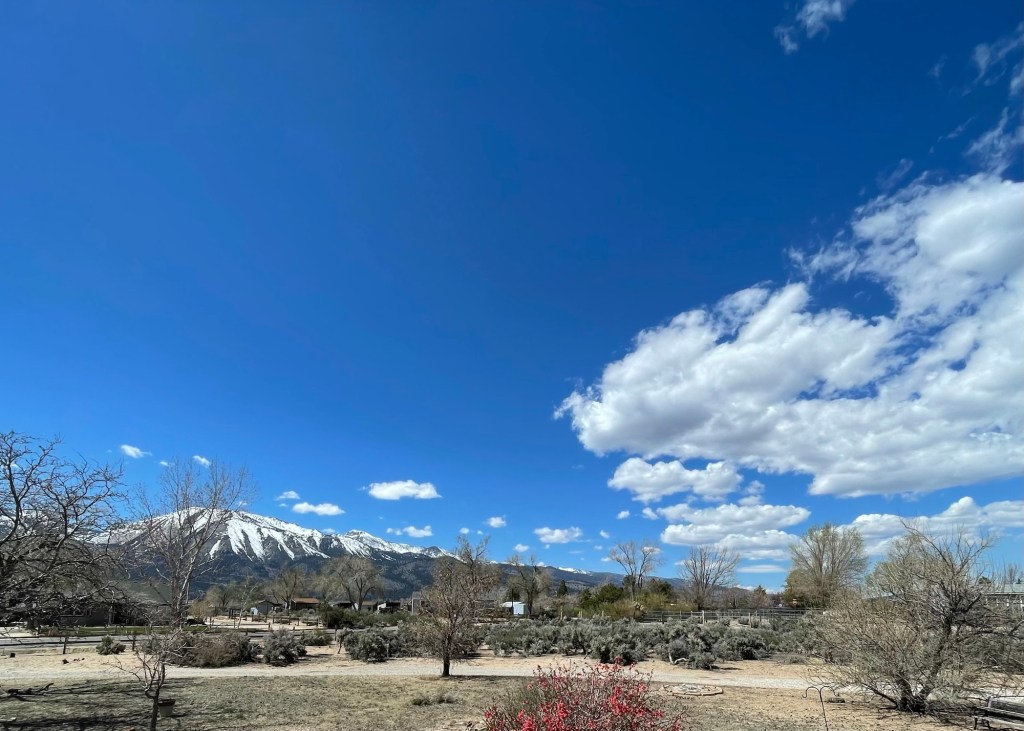
May in the high desert is a crap shoot. Will it be hot? Will it be cold? Will there be snow on the mountain top? Will a freeze crush all the blooming plants? Will I need my allergy medicine? This May, all of that is happening and more.
I love my home environment for that very reason. You never know what kind of day it will be when you wake up. Roll the dice and get any combination of the above-mentioned scenarios in one day! That’s exciting in my book. If I take a walk in the morning, I might need a jacket and will see my breath in front of my face. If I walk at noon, I’ll need a hat and sunglasses to guard against the hot sun while I inhale all the wonderful-smelling natural blooms. If I walk in the afternoon, the high winds will push me and the huge puffy clouds along for the ride, and I’m back in my jacket.
The high today was 58, the low 36–Fahrenheit. But the sun is oh so warm… until the wind blows. We had snow last weekend. No one in my 5,000-foot elevation valley plants anything until June.
Views from my place
May brings other things to enjoy besides the mercurial weather. It’s MerMay for one. I love checking out the creative output during MerMay and have been doing so for the last five years, ever since I got embroiled in my mixed media phase of life. It’s primarily about sketching and art, but we writers get inspired too.
At the end of the month, I’m participating with five indie authors in a MerMay Selkie Take Over giveaway. You can follow me on Instagram if you would like to participate. We’ll be posting the event instructions and the drawing results. There’s more about the event and selkies in my May newsletter going out soon.
What’s MerMay you ask? A Disney creator back in 2016 posted an illustration of two mermaids chatting on their “shell phones” and the craze was born. Every May, artists follow daily prompts to draw something mermaid-inspired throughout the month. Check out MerMay.com and this NPR piece for the scoop.
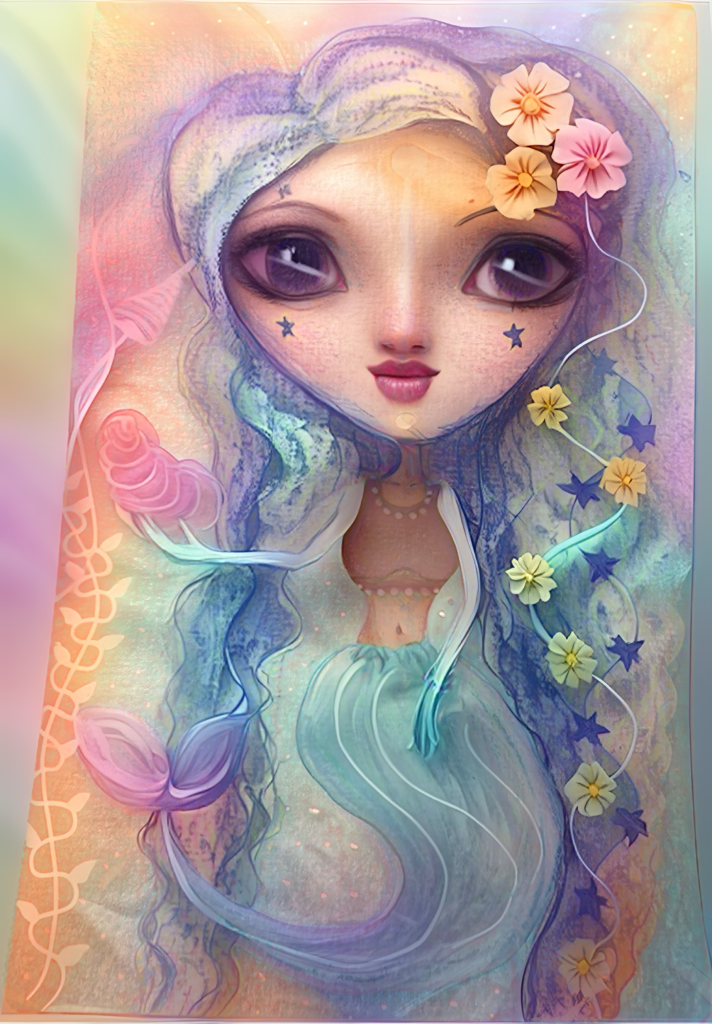
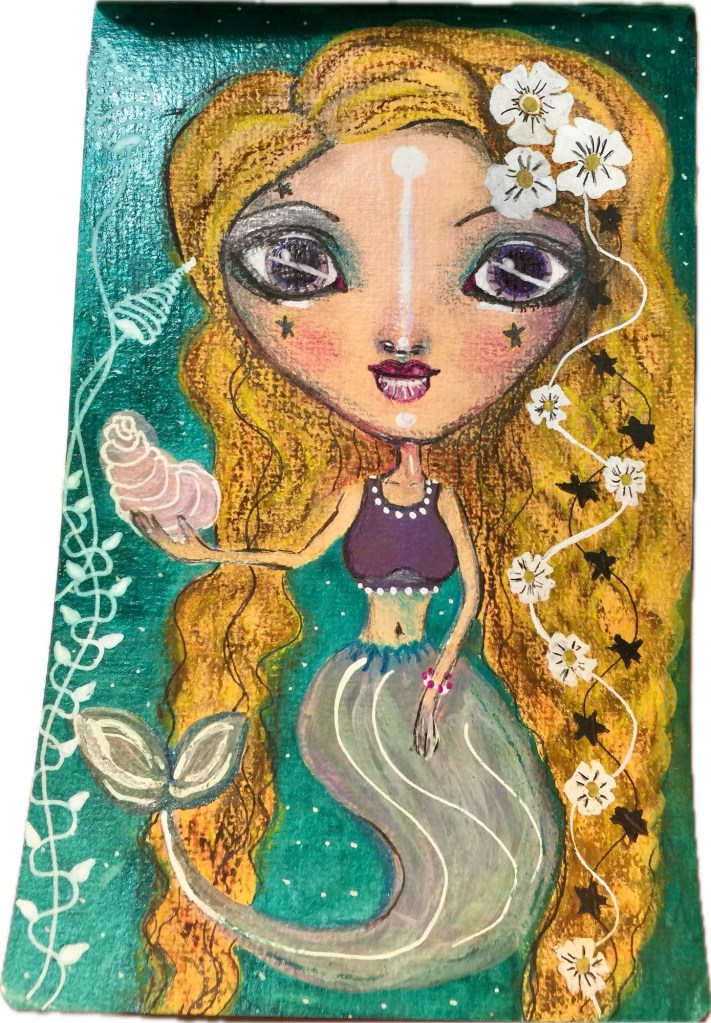
Here is my MerMay gift to you. It’s humble, I know, but she’s sort of cute. She was inspired by a class at Willowing.org and has lived in an art journals for a while now. I recently ran her through a couple digital backgrounds (side images. I know… duh) to explore color alternatives.
My other big happening coming up is a pet sitting gig. I don’t pet sit for just anyone. Okay, so I only have one client–because I adore her dogs–and it’s like going on vacation–and when they do what they do the cutest, which is sleep side by side, it even becomes a writing retreat.
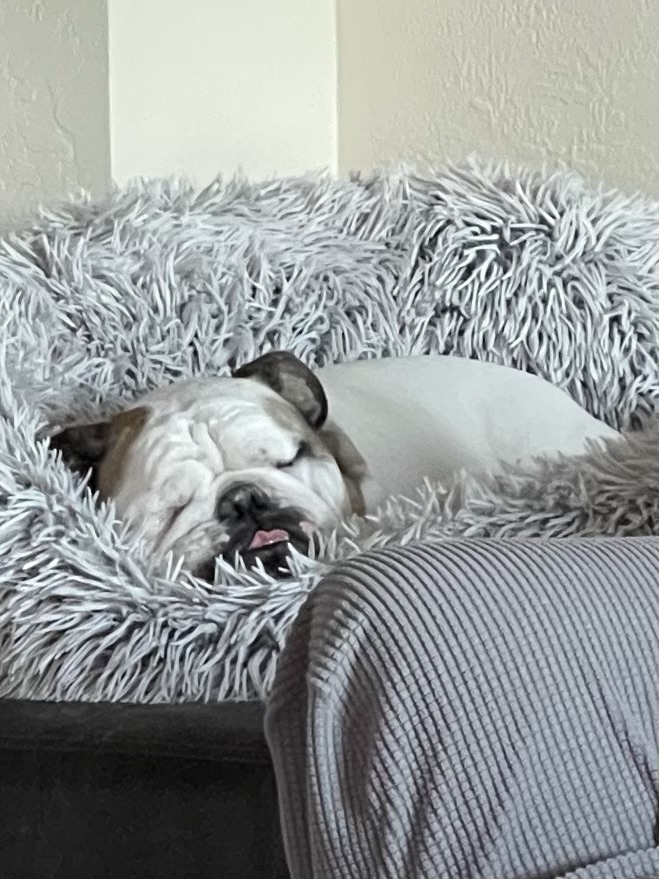
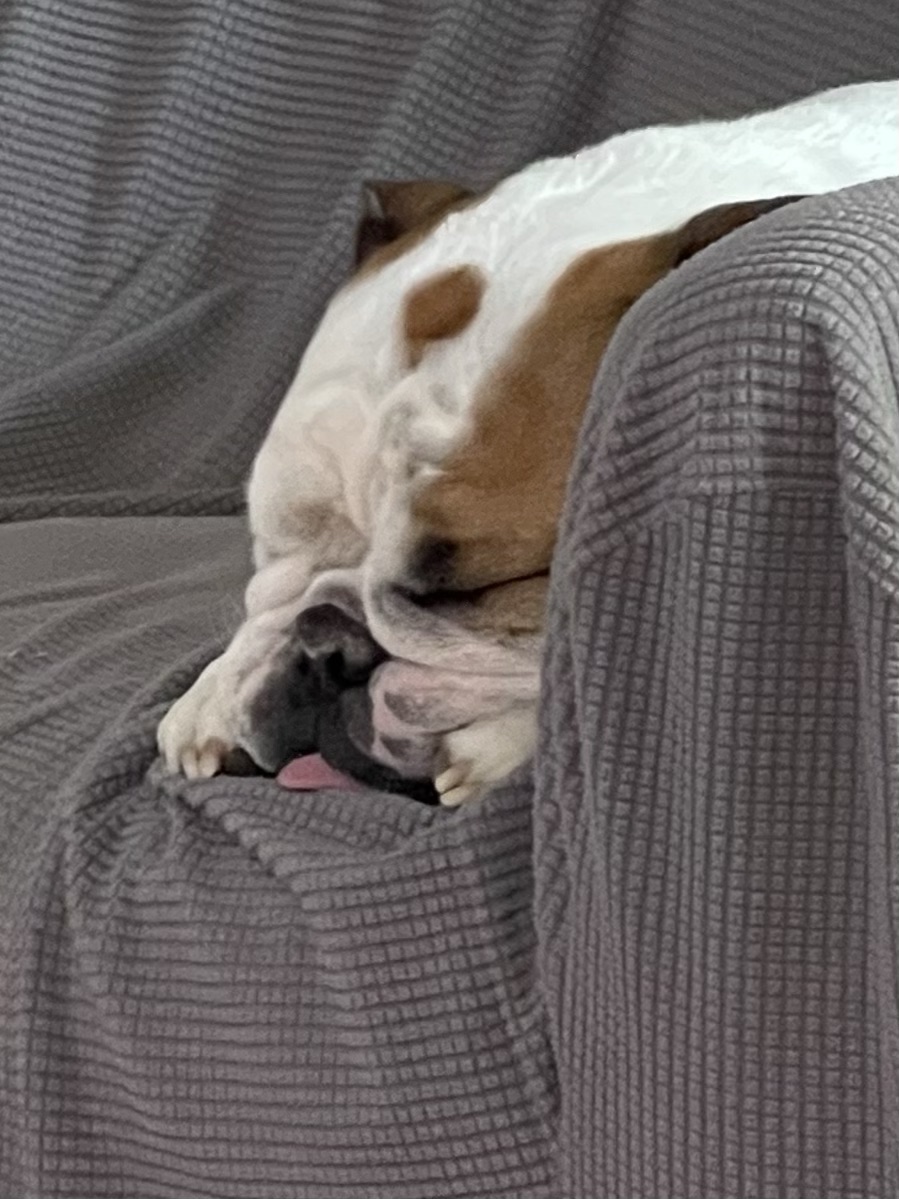
Meet Bully brothers Mack and Elway. They’re actually quite active a good portion of the day, but I love listening to them snore. Can’t you hear it?
I had a rare week to myself in my small home set on a rural two acres. It’s a quiet spot normally, very little traffic, quiet neighbors, and the music of nature surrounding us. Inside, the place is occupied by one person besides me and two canine kids. Not a big family as families go. But my three are active and keep my home lively. I didn’t realize how much until the human went on an ebike excursion with a friend.
So, after cleaning the house to my satisfaction (also a rare treat), I rolled up my sleeves and got busy writing. I was certain that it would be the most productive week of my writer’s life… Until I kept pausing to listen to the silence. It called to me–needed me to break it up–to liven up my surroundings… like I was used to.
Recently, I interviewed an author who talked about her writing space being in the corner of her game room, the hub of her family. Her advice to other writers was to learn how to tune things out. Coincidentally, as I prepared for the interview I came across a Medium blog that provided famous writers’ advice on daily writing routines. Completely different writers from different eras and backgrounds all had similar advice when it came to sticking to a daily routine. Tune out distractions.
My favorite was from E. B. White, the author of Charlotte’s Web, my most adored book as a child.
This was the edition in my extensive childhood library, too. Isn’t that the best title you’ve ever seen on a cover?
I never listen to music when I’m working. I haven’t that kind of attentiveness, and I wouldn’t like it at all. On the other hand, I’m able to work fairly well among ordinary distractions. My house has a living room that is at the core of everything that goes on: it is a passageway to the cellar, to the kitchen, to the closet where the phone lives. There’s a lot of traffic. But it’s a bright, cheerful room, and I often use it as a room to write in, despite the carnival that is going on all around me.
In consequence, the members of my household never pay the slightest attention to my being a writing man — they make all the noise and fuss they want to. If I get sick of it, I have places I can go. A writer who waits for ideal conditions under which to work will die without putting a word on paper.
E. B. White
Can silence be a distraction? I learned this week that it can. Did I learn how to tune it out? Eventually. I got lots of writing done. But I’ll be glad when my hubby gets home. Next to him in the living room is where I’ll be writing for a good long while.
How is your writing going in November? I hope you have all sorts of great things to be grateful for this month, and if a new novel is one of them, awesome!
All the experts say the best way to improve your writing is to write every day. In my naivete, I initially thought that meant working on my novel every day. Yet somehow, without any intentions one way or the other, my writing took an organic journey down all sorts of wordsmithing avenues. I do so much writing that Grammarly tells me every week I’m more productive than 99% of its users. Sure, that’s a ploy to get me to upgrade, but still! 99%??
So, I thought about that. Obviously, it’s tracking my keystrokes and correcting my grammar, which includes everything I’m doing on my two keyboards. This month that meant: 1) writing a 2000-word short story for a contest; 2) completing a 20,000-word short story for an anthology submission; 3) starting a new novel and reaching 25,000 words (a solid 10 chapters) that I am quite thrilled with because its the best start to a novel I’ve ever had; 4) writing four Q&A interviews, two that posted in November and two for December since I wanted to get a head start before another busy month; 5) assembling and publishing my newsletter; and 6) assembling, breaking down, and reassembling my third novel in my series… otherwise known as the neverending story. Number 7 is email correspondence, and chatting on various platforms with my writing buddies. Hmmm.I don’t know Grammarly, that sounds like the same schedule all my writing buddies engage in. Who are you tracking, anyway? Oh, and number 8 is writing this blog, which Grammarly isn’t tracking because it won’t work in WordPress for some reason.
It’s not exactly Ray Bradbury’s formula for honing writing skills. But maybe it’s touching the outer limits (okay, so he wrote other sci-fi short stories for TV, but I had to use this pun). Here’s Mr. Bradbury’s advice.
The problem with novels is that you can spend a whole year writing one and it might not turn out well because you haven’t learned to write yet. But the best hygiene for beginning writers or intermediate writers is to write a hell of a lot of short stories. If you can write one short story a week — it doesn’t matter what the quality is to start — but at least you’re practicing and at the end of the year you have 52 short stories and I defy you to write 52 bad ones. It can’t be done.
I’ll give you a programme to follow every night. Very simple programme. For the next thousand nights, before you go to bed every night, read one short story. That will take you ten minutes, fifteen minutes…for the next 1,000 nights.
Ray Bradbury
All I know is that I took every one of the five days allotted to me to write my 2000-word story for the contest this month, but I like the idea of getting 52 out in a year so that you have a few good nuggets to proffer to the world, if we can take Mr. Bradbury at his word.
What do you think about about this goal?
On the other side of that coin is reading. The closest I’ve come to reading lots of short stories is participating in short story contests. With Writing Battle contests, you not only write a story but act as a peer judge for ten other stories. While you wait for the final judging you can share your story and read others in an open forum for more feedback exchanges. That can add up to a lot of short stories!
These contests I admit have been a fantastic learning processes. I like the principle of committing to writing a story every week and reading a story every night. But in practice… Hmmm.
Let me know your favorite techniques for staying productive with daily writing.
For more on famous authors and their daily writing routines, here is a great article from Medium.com, which is where the quote from Mr. Bradbury was borrowed.
I’m talking about Grammarly here. It’s stalking me even as I write this and I’m not sure how I feel about that. Still, the invisible English professor peeping over my shoulder has saved me from embarrassment too many times already, and I’ve only just invited him into my writer’s den.
But is his constant presence worth the distraction? That little red underline flashing at me and the errors stacking up on the right are so annoyingly in my face that I often have the urge to holler, especially when it makes a stupid suggestion. Wait… What? How can you “meets” someone? [Confession, my structure needed changing… again. Now meets makes sense.]
I came across a glaringly simple tip for pounding out that first draft. Turn off Spellchecker! But it’s scary now that I’ve come to count on Professor Tom standing behind me with a comforting hand on my shoulder. [Grammarly told me to use “his” hand and not “a” hand. I like “a” better, dang it!] I’m so conflicted! I don’t want to miss a single, horrible, cringe-worthy typo, and I like that the professor is always ready to help me restructure my sentence [As alluded to previously, I can bang out a sentence backasswards with the best of them]. I admit using this tool and others like it has trained my brain to type it right more often now. (I just typed “write” instead of “right.” Eeek!)
The other issue… My comforting professor is a double agent and spies for Big Brother… [I’m just adding this for drama… but it makes you think.]
A blurb from Grammarly:
Grammarly helps people communicate with confidence across devices and platforms. Our AI-powered suggestions appear wherever you write, coaching over 30 million people and 50,000 teams every day to improve the correctness, clarity, engagement, and delivery of their writing.
Yes, statistics… lots and lots of statistics. My fiction writing is data now. Okay, it’s for my benefit to help me be a better writer, but Grammarly crunches all that data to learn how we humans can better engage our readers… Hey, I’m the one who invited the professor in.
Here are the statistics Grammarly highlighted for me to fix more areas… if I pay for the premium version:
Overall, no critical issues.
Wordy sentences = 3
Incorrect phrasing = 2
Unclear sentences = 2
Misplaced words or phrases = 1
Word choice = 1 (backasswards)
Intricate text = 1 (what does this mean?)
More… = 2
You might be interested to know two of the problem spots were in the blurb from Grammarly. 😁
Happy writing! Let me know what you think about Grammarly or generative AI tools like it.