This story is a single journal entry in Book One, Ursus Borealis, in The Starlight Chronicles series. I found it rather fun to write a story within a story within a story. It nestles in a chapter featuring Kuliana Hada, a character that appears throughout the series, who is an Anurashin Captain of the Guard. Cynthia is her ancestress.
Cynthia’s story is incorporated into an actual historical account about the White Ship that sailed in 1120 as described. Its sinking changed history.
This sounds impossible, I know. You will just have to take my word for it. That is, if you’re from a realm apart from this hidden place beneath a volcano, and if this message manages to reach you, as I hope.
My life began on a farm in the County of Anjou. It was forever changed when I met a bear from Normandy.
After immersing myself in the astonishing world of my mate and the kingdoms of the shifters, learning there was life beyond this Earth before reaching the heavens took only a few extra pints to swallow down. That, and meeting Zigan. It turns out that Zigan and I are old souls who have danced through this journey before in many previous lifetimes.
How my soul was chosen for this repeated Earth-bound destiny remains a mystery, but my magus spent many hours over wine in our chateau, sharing what he knew of our history, or rather, the history of the prophecy of the marked maidens.
As for Zigan, up until we met—in this time—he had spent his life training with the Order, which included studying the records in the extensive archives and all forms of alchemy. He had also been honed into a fierce warrior. Even more astonishing, he could transform into a stunning feline, which I learned was called a tiger.
For eight years, I experienced what it was to be part of the Pack, to be soulmates with its alpha, to be one part of a wondrous whole. We were successful in our purpose, keeping the princes’ machinations from the human population and mitigating the damage.
This is the part at the end of our story. Writing it down is agony because it chronicles the event that halted our purpose violently, tore me from those I loved, and marked the beginning of my slow and lonely death. Still, it must be told.
It takes place starting mid-morning on the 25th day of November in the year 1120. We arrived at Barfleur near the coast of Normandy after confirming the location of the current plot of Aviel Enair, the oldest and most formidable of the three sibling princes.
We lacked the details, but we knew his scheme would involve the sailing vessel known as the White Ship, renowned for its speed and beauty, now carrying the only legitimate heir to King Henry I across the English Channel.
###
Frustration gripped me as I wrapped my arm around myself, trying to catch my breath after running the length of the docks. I called out to my mate, who was approaching behind me.
“It is just as we feared, Aldric. The ship has almost reached the Quilleboeuf!”
As I spoke, three hundred souls sailed away, including other nobles and the heir, and the loss would be catastrophic to the burgeoning English monarchy.
When we learned that the king’s seventeen-year-old son, William Adelin, desired to sail on this elegant vessel while his father sailed ahead of him, and that Aviel had set his sights on it, we considered the hazards the Anurashin prince might exploit. The ship had a good reputation and so did its captain, Thomas FitzStephen, whose father had taken the prince’s grandfather, William the Conqueror, across the same sea.
The only evident risk was sailing past Gatteville, where hidden rocks such as the Quilleboeuf lay waiting for careless sailors. But FitzStephen was surely used to navigating such hazards.
I breathed in the salty air to sharpen my mind while I considered our options. The raucous calls of seagulls ebbed overhead as they congregated, fought, and flew off with morsels of fish as their prize. Despite the size and piercing eyes of the warrior next to me, we stood unnoticed among the throng of bodies rushing toward their duties on the bustling docks.
“You must call Zigan, my love,” Aldric said, drawing me to his side and offering his warmth as I shivered from the urgency of our task and the breeze cooling the sweat of my exertion.
Although we were French, our purpose as part of this prophetic trio was to maintain the balance of power fated for this world in our time. According to Zigan’s archives, when the princes interfered, it fared badly for the human populations.
That meant we were trained to take risks, and we discovered this scheme by becoming captives of the princes at their temporary encampment while each enjoyed inflicting painful retribution on us for our past successes. But Aviel allowed his brothers’ torment to go only so far, which we’d learned to count on, though we didn’t understand it.
Our plan included an escape.
It went perfectly until we ran into a trap and had to leave our pack behind to fight, which also delayed our arrival. A worry was taking hold in me that the last eight years of joy and strife might culminate on these docks. Still, I pushed on.
After placing the insides of my wrists together, my tiger appeared, first as an image on my skin, then as a man stepping out of a gray mist, calmly taking us in with fathomless dark eyes. His markings glowed bright gold against his bronze arms, and his silky black hair waved in the breeze.
“We need to get aboard that ship, Zigan.” I pointed to the sails disappearing north along the coast to Gatteville. “Can you haze us there?”
“Yes, precious one. But I may not have the ability to get you back.”
“Let me go with him,” Aldric said. “If the ship were to sink, and Zigan cannot return us both…” He let that thought trail off as he looked at me in that fierce way that melted my heart.
The powerful love I had for this man, this larger-than-life Norman-born warrior who shared the spirit of a mighty brown bear, still overwhelmed me after all these years. We had not taken one moment of our time for granted, knowing the dangers inherent in my destiny.
“But I must be the one on that ship, Aldric,” I said as I clutched his hand. “We have no idea what is planned, and we need my instincts as a marked maiden.”
“Vous serez remarquée, ma bien-aimée. I can blend in and discern the situation. We must go now, as they quickly approach the rocks.”
I stood on my toes and brought his face close to mine, gazing into his brown eyes to see his bear gleaming at me, a magnificent creature he could transform into at will. Our lips met for an exquisite moment before I stepped back.
“I will bring him back safely,” Zigan said, taking hold of my mate.
They disappeared. I took shelter and waited. They returned in Zigan’s mist in less than thirty minutes.
Aldric and I moved together without thinking, as we did after every parting. Satisfied with the reunion, he gave his report. “Nearly everyone on board was drunk on wine and betting on a race to beat the king to England. The ship sailed fast, pushing its limits. Not more than ten minutes after we arrived, it hit the rocks and foundered.” I gasped in dismay, but he assured me the king’s son had made it to a lifeboat.
Without warning, warriors in the garb of another time appeared in a heavy mist that seemed to roll in from the sea. We assumed battle stances as they surrounded us, Zigan and Aldric drawing their swords. I shouted the cry of the Pack and raised my own blade. The clash of steel rang out across the harbor as bystanders rushed to get out of the way.
We held our own against a dozen until my sword was knocked from my hand. Vice-like arms grabbed me from behind, and Aldric’s roar shook the planks beneath our feet. But the Anurashin warrior kept me from my mate’s reach, letting the others leap in between us, forcing Aldric to slice his way to me.
“The prince has his sights on you, maiden,” the warrior said in my ear. “Did you not think he would succeed?”
“No matter that he tries, I will never be his!”
Springing my knife from my sleeve, I lunged back, shoved it between the ribs of my tormentor, and twisted. The warrior grunted in pain, but his grip did not loosen. Aldric dodged blades, slammed his fists into faces, and rammed bodies while I struggled to pull free.
Zigan moved so fast that arcs of blood hovered in the air where he last appeared. But when he got close enough to reach for me, the warrior jerked us back, and two others lunged for him.
To my utter horror, dual strikes took Zigan’s head.
My knees buckled from the agony tearing through my heart and then through my whole being, as Zigan’s soul was ripped from mine with brutal force. I never imagined our bond could be so viciously severed or that the warrior magus was anything but invincible.
A sickening realization sank like a stone in my belly. This had been Aviel’s plan all along—why he let us escape. He had engineered the entire scheme to kill my magus, seize me, and destroy the Pack de Normande.
What was left of my heart was shattered when Aldric stepped into the path of a blade to reach for me, ignoring the pain, desperate to save me as he felt the agony of my loss and our loss to come.
The mist I dreaded grew thick, and I felt as if I were breaking into tiny pieces. None of this could be happening!
The devastated face of my mate told me he had come to the same incomprehensible conclusion while he watched me fade into bits, so close to him our fingers nearly touched.
I poured my heart and soul into my words. “I will love you forever!”
The sound that followed was the fierce roar of a wounded bear.
I dare you to ride along with the masked passengers on this journey through a swamp with a destination perfectly designed for serial killers on a retreat.
The Ferryman guided the gondola along a watery path, only he knew the secrets to, as it transported a half-dozen specially chosen masked passengers to an exclusive event. Though each eyed him with suspicion, they appeared confident he would get them to their destination. They had to believe that because he was their only means of travel.
This sort would never admit they were at his mercy. They would talk instead as if the opposite were true, but he saw the questions in their eyes. The Ferryman always saw the questions mirrored in each set of eyes exactly thirty minutes in. That was when the narrow boat passed the last shack squatting in the shadows of the densely wooded shore, casting its grudging light from tiny windows.
The rickety dwelling belonged to Old Maeve, and even if one of his passengers suddenly had a revelation and begged to be let off here, they would find no help, only the same hospitality that waited for them at the end of the line. But no passenger ever had a clue this early, which was why the Ferryman’s job never ceased to be entertaining.
It was the moment when Maeve’s lights winked out, obscured by the dense canopy of moss-laden cypress, the vegetation also serving to shroud the stars like a falling curtain, that the nervous chatter started. He waited now for the dawning realization that a lantern full of lightning bugs hanging from the bow and a sketchy crescent moon were all that remained to show them the way.
He could see the worry lines etched across their foreheads, but none of them ever admitted to being scared any more than they would own up to the fact they needed him. After all, they were in the business of causing terror.
The Ferryman could guess with precision who would be the first to speak, and on cue, it was the chubby face under a fox mask who aimed a question at the skinny Humpty Dumpty.
“I heard we had to have no less than twenty victims dead and buried in well-hidden places to get an invitation to this shindig. I’ve surpassed that. How about you?”
The mask mix-up was a typical prank his employer played on a random passenger during each trip. It added to the fun and, more importantly, broke the monotony for the Ferryman—an employment perk, you might say.
Instead of answering, Humpty Dumpty, whose mask was too big for his pointy face, lifted his bony butt from the seat and swung around to sit on the other side of the gondola. Exactly the response the Ferryman had predicted. He was satisfied with his perks, but it would be nice if his passengers would occasionally surprise him.
“I’ve heard lots of things about these parties,” said the lone female with a cat mask who answered the fat fox. “The final feast is said to be unsurpassed for its sumptuousness. But that’s not why I came. There’s a rumor that one of you is the famous Crescent Moon Vampire. I wonder if you will be able to control your urges this weekend.” She parted her collar and stretched her pale neck like an offering.
No one took her up on it or even flinched a muscle.
After a brief silence, the fox let out a nervous snort, and the narrow mask that exposed more of the doughy face than anyone needed to see fluttered so that he had to grab it and adjust the strings.
“I don’t know about a vampire,” rumbled the passenger in the snake mask who’d been keeping to the shadows. “But you’re a brave one to travel with men who, if they’re like me, love to hate women in creative and painful ways. Still, you must have doled out your own hate to be here. Sticking your neck out is a bit risky, don’t you think?”
“You pretty reptile,” Cat Woman drawled, “there’s no hate involved. I love to love men. It’s not my fault when they fail to survive it.”
“If she is who we think she is, gentlemen, watch your backs, or more to the point, your willies,” said one of the two identical gray-haired demons.
Her eyes shone through the mask, just like a cat’s should.
The Ferryman was also pleased to have twins aboard. Passengers who murdered together were, at the very least, uncommon.
The fox snorted again before he could stop himself, a nervous mannerism the Ferryman always enjoyed and expected from at least one of them. “What’s with the Ferryman?” the fox said, shrugging to play down his worry. “That crow mask looks like he stuck a dead bird on his face. And how about those robes? Doesn’t he know it’s sweltering in this bog? And where is his sickle?”
Timing it perfectly so that the crescent moon peeked through the canopy and glinted off the curved blade, the Ferryman produced the required prop with a swoosh of his robes and the ringing of steel. He settled the staff at his feet and grinned beneath his mask as stifled gasps rippled along the gondola—another perk, eliciting the maximum effect with his masterful reveal.
“We’re all overdressed. It’s a requirement, is it not?” The twin demon said, ignoring the dire implications and returning to the party discussion. He held up a piece of embossed paper to the feeble light.
“It says, ‘To be allowed onto Isla la Sombra, you must be in possession of your invitation. You should be dressed in proper attire, wearing the masks provided to you, and prepared to be filled with fine foods and wine. You will also be wowed by the tricks of the trade and the experts in your field. Should you succeed through every challenge, you will partake in a special feast.’ It is a strange mix of formality and mystery, to be sure,” he concluded.
“The words on their own would not cause concern,” his brother chimed in. “But now that we’re deep into this watery maze, traveling in a gondola that seems out of place and time and operated by a silent, robed figure who should be plying the River Styx, I’m looking at the invitation with new eyes.”
“Like any good party,” Cat Woman said, “it is merely the host tantalizing us with the amenities. After all, types like us go to great lengths to avoid exposure. But I, for one, could not turn down the offer to immerse myself in the ‘tricks of the trade’ or meet the most notorious guest speakers from our ranks. Isn’t the underground chatter why you all ventured out of your nests?”
A bumpy outline rippled through the duckweed, and the Ferryman waited. Sure enough, the bleats of fear that followed could have been cues in a movie script as each passenger spotted Douglas.
“Shit! Look at the size of that alligator! Um… Ferryman, may I call you Ferryman? I’ll take your silence as a sign we won’t be attacked. I’m sure our hosts don’t want us to be eaten.”
That misguided assumption came from the pudgy fox. He voiced another concern that often arises during these journeys… Leave it to the nerve-ridden chatterbox.
“I wonder how far our mysterious destination is. For all we know, we could circle these murky waters forever if our pilot is as immortal as he looks.”
That comment had all eyes turning to the Ferryman.
Each passenger flinched when he spoke in his best sepulchral voice, “Arrival is in thirty minutes. And Douglas will leave you intact, so long as you keep your limbs in the boat.”
“Got it,” the fox said after a snort, even as his eyes widened behind the mask. Under his breath, he added, “A lot can happen in thirty minutes.” He lightened things up. “I’m sure it’s no surprise I came for the promise of the excellent food. They say the finale will make you think you’ve died and gone to heaven, not that I have any expectation of going there.”
“Hmmm. That makes me wonder whether you might be the Cafeteria Killer,” the snake said, squinting an eye at the fox. “The one who likes to add special ingredients to the school menu. They say he’s rotund with the guileless face of a child. It’s astonishing how many kids disappear before the killer moves on. I bet the littlest tots were a tender addition to the tuna casserole.” He paused. “So, what foods do you think might be offered at a banquet in honor of the best in the business?”
“We’re not supposed to guess which legends we’re traveling with,” the fox said petulantly, tapping his mask. “It says so in the fine print. Didn’t you read it? And how would I know what an island at the ass end of nowhere has to offer? But it will be spectacular if our host lives up to his promise because, as you said, we’re the best.”
“I wouldn’t think too highly of yourself, fox boy,” said a twin in his cultured voice. “The host might have special plans for you. Didn’t you notice the fun being poked at you with that mask meant for the wiry Humpty Dumpty? Still, I wonder. Perhaps it was assigned to you intentionally. Foxes are treed by dogs every day. Your plump body would make a great main course. Fitting for the Cafeteria Killer.”
“You all are making a lot of assumptions,” the fox retorted. “If my mask means something, so do yours.”
“The details about these masked balls never have a source,” Cat Woman burst out, sounding worried for the first time. “They appear on the message boards, but I’ve never seen anything other than generic usernames linked to them.”
“What do you mean?” Snake Man asked.
“There’s nothing to prove they came from attendees. I wonder why that never occurred to me before?”
A twin offered a reasonable explanation. “It could simply mean the authors of the chats want to be anonymous. That’s not unusual for criminals of the most wanted variety.”
“I suppose you’re right,” she said. “This creepy journey is making me paranoid. But what if it’s all a trick? Where does that leave us?” She sighed and then fixed a suddenly heated gaze on the twins. Her voice turned sultry. “I think I know who you are. There aren’t many twins who murder together. I’ve never had twins.”
The Ferryman appreciated her skill in switching gears so quickly. This cat woman was turning out to be an extra delight.
She ran her tongue over her teeth. “You both have fine mouths below those intriguing, fiery red masks and lovely grey hair.”
“We’re flattered,” the second twin purred in kind, flashing his teeth in a grin, “but you couldn’t handle even one of us, my dear, and we like our willies right where they are.”
The nervous fox must have spent this time mulling over the idea that he might be prey for a hunt, and he piped back in. “What if we were all invited to be nothing more than the main course? Who would ever know we went missing?”
The aloof Humpty Dumpty spoke for the first time, his gravelly voice ominous. “The messenger who sent my invitation went by Jeffrey Hannibal.”
“So did mine. So what?” said the snake.
Cat Woman’s forehead creased, then her eyebrows leaped above her mask. “Mine was Lector Dahmer,” she squeaked.
Each of them sat straighter, and the Ferryman could almost see light bulbs turning on above their heads. This inevitable perk was his favorite before completing another successful charter, and he savored it.
The twin who’d read the invitation held the embossed paper to the light again. “This is signed, ‘Cordially, your host, Lector Dahmer.’”
They all jumped up so quickly that the boat rocked, causing them to lurch back into their seats.
In a voice full of doom, the Ferryman urged, “Settle down, passengers. You don’t want to fall in. Have you forgotten Douglas?”
They each went still, then carefully settled back in their seat just as the gondola glided into a lagoon. Off in the thick vegetation, a steady drumbeat sounded, and savory smells wafted to them through the ghostly trunks of cypress. Tall, shadowy forms emerged dressed in loincloths, and a closer look at the smiling faces revealed teeth filed to razor-sharp points.
The fox leaped up faster than anyone might imagine a pudgy serial killer could move and shoved the Ferryman over the side.
His fellow passengers cried out in shocked dismay. Then, grins widened under each mask when a ripple that could only be Douglas closed in on the dark robes sinking beneath the duckweed. As the drums beat in rhythm with the rocking gondola, now devoid of a pilot, and more of their ghoulish hosts lined up on the water’s edge to greet them, each passenger rose again to face the others, sure one of them would have the next brainy idea.
I hope you enjoyed this story I was delighted to write under a tough challenge. The requirements were a 2000-word maximum (I’ve expanded this version), a new for me genre, Cannibal Comedy, a ferryman as the character, and the subject, Masked Party.
It all happened in the Writing Battle Autumn 2022 Short Story Contest. I recommend participating for the fabulous feedback from peers, and the professionals… if you make it through the duels.
Artwork by me using the Photoleap and Canva.
Thank you for taking the time to read my story and supporting an indie author. Comments welcome.
If you would like to make a contribution, you can purchase this story along with twelve others in my short story collection, Priss Starwillow & the Wolf, a Starlight Chronicles Short Story, and other stories. Also available on Audible.
I am so excited to have my dear friend and author, Lucky Noma, back on my Spotlight! And, wow, does he have an awesome new release to share!
Lucky was one of my first guests several years ago. Since then, we have regularly chatted, worked together on projects, and provided feedback on each other’s work. So, when I was recently blown away by his latest book, CHROMATIC CONCORDAT: Gray Rising, I jumped at the chance to feature it and visit with my friend for a fun Q&A.
Let’s Meet The Author
Lucky Noma is a writer who blends fantasy and horror to create immersive, multi-layered stories. His works, including Fractured Soul, Sand Scriptures, and African Horror Story, explore deep narratives with unique perspectives. Through novels and short stories, he continues to craft worlds that captivate and challenge readers.
Not the gray of clouds, or ash, or dusk, but the kind that eats at the edges of everything. Born silent in a Dominion where colors sing, burn, heal, and kill, the world called her a void. Her village called her cursed. And Havayah? She called herself no one, a hollow.
But a hollow is a dangerous thing to underestimate.
When the Ma’or Council brands her a threat for lacking Chromatic attunement—the sacred bond to color that defines life — an empathic investigator named Nefesh makes a choice: to protect her instead of condemning her. Together, they uncover the Council’s devastating plan — to use the shattered Prismatic Nexus, remnants of the world’s raw luminance, to achieve absolute control over the color spectrums while casting out those they deem “colorless.” The rebels fighting against them promise liberation, but their revolution holds its own darkness.
What no one realizes is that the girl they dismissed—the one born without a single thread of color—has no intention of playing savior. Through underwater cities and skies stained with power, Havayah will forge her own path. Because when the world gave her nothing, she learned to take everything.
This is not a story of saving the world—
Let’s Get Started
Thank you very much for joining us today, Lucky. First, I must say that this description is absolutely captivating! Makes me want to crack that beautiful cover and dive in. Which is what I did.Let’s begin by reflecting on the past. What inspired you to write fiction, and how long have you been writing?
LN: Thank you, Darci! Always great to be here—though if I make too many typos, let’s just call it creative spelling. That sounds like something Nefesh would say, but eh, well—where do I even begin?
I would say my journey into fiction started with falling in love with stories as a reader first. When I discovered City of Stairs by Robert Jackson Bennett, I was captivated by the world-building and how it blended fantasy with deeper themes. Then came A Dance with Dragons by George R.R. Martin and The Axe and the Throne by M.D. Ireman—both masterclasses in character development and moral complexity. Those books showed me that stories could be both entertaining and profound.
What drove me to write was an itch to create a unique world system—with diverse characters appearing in my mind, demanding to be put on paper. So I did what was necessary. As with most of my fantasy novels, I started by building the map, then gave the characters room to roam free. Sometimes, I see myself as nothing more than a scribe, just recording their deeds
—And, remarkably, this year marks a decade since I first sat down and started writing. It’s been quite the journey, filled with late nights, countless revisions, burnt manuscripts, and the realization that it would take two lifetimes to write all I intend to. My first novel, ‘A Kingdom Bleeds,’ is still unpublished—and it was the project that started everything for me. Sometimes, I think of it as my training ground, where I learned what writing demands of you. Perhaps one day it will see the light, but it holds a special place, though I fear my writing has changed, and I’d need to rework everything about it. That might take another year or two. Hmm.
DLL:I can hear Nefesh saying that, and I’ll be sharing a few of my favorite Nefesh quips later so we can enjoy his singular wit. Thank you for the fabulous book recs. The Axe and the Throne grabbed my attention, especially. I confess, I haven’t made it far through the Game of Thrones series. I haven’t had that sort of time for marathon reads, but they’re all loaded on my Audible app.
I love your “map first” inspiration technique! The world fleshed out before your characters begin to navigate it. Awesome. One of the things I enjoy most about interviewing writers is discovering all their unique processes, and this one really struck my imagination. I’m glad you found your training ground because we can benefit from your excellent progression with each amazing story and culminate our journey inside the captivating world of Chromatic Concordat.
Where do you find your mind bending story ideas?
LN: I’m drawn to the void, where I fight my existential demons and where everything feels surreal. My ideas often emerge from mundane life moments that can change in a heartbeat. Of course, this didn’t happen overnight. I was always drawn to thought-provoking stories that mess with your perception. Shows like Legion completely rewired my brain—or let’s look at Mononoke, not the Ghibli film, but the anime series—and just last December, a movie—have you seen it? The way it used abstract visuals and psychological horror to tell stories about human nature blew my mind open.
These stories taught me to look for the uncanny in everyday life. The natural world is already bizarre if you pay attention. Have you ever really looked at how trees communicate underground through fungal networks or considered what consciousness might feel like to a creature that lives only for a day? I collect these oddities like others might collect stamps.
And, to be honest, my best ideas come when I’m least expecting them. Sometimes, it’s when I’m stressed and need to press pause on reality by dreaming up sequences. Other times, and like with almost every other author or writer, it’s when I’m half awake, between sleep and needing to pee.
What’s wild is the feeling when you catch one of these ideas—There’s this rush of ‘wait, what was that?’ and then this compulsion to chase it down. Half the time, I’m terrified of what I might find, but that’s how I know it’s good. If it makes me uncomfortable to write it, chances are it’ll stick with readers, too.
DLL: Ooh, I love that about chasing it down and being afraid of finding it. This explains so much about your writing, Lucky, and makes me glad you didn’t give up the search. I could use a little rewiring, too.
Your earlier books focus on dark fantasy-horror. Your latest, Fractured Soul, SandScriptures, and CHROMATIC CONCORDAT: Gray Rising, explore the human condition through thoroughly multidimensional, abstract, yet relatable representations of life. Your storytelling is captivating in all your books. Can you discuss your evolution in storytelling from dark to esoteric fantasy, comparing the genres you’ve explored and sharing what you prefer?
LN: Evolution. Hmm. Well, let’s retrace my steps and see how that happened. Err, with African Horror Story, I was drawn to primal fears and survival instincts. I wanted to explore horror through a cultural lens, examining how fear manifests within specific traditions and beliefs. The story follows Onam’s desperate struggle against both human monsters and supernatural forces, creating tension through immediate physical and spiritual danger.
Fractured Soul marked my transition toward more conceptual storytelling. While still retaining dark elements, I explored more abstract concepts—the commodification of identity, the fragmentation of self, and the price of wholeness in a world where everything, even one’s soul, can be bought and sold. The surrealistic elements allowed me to build a world that serves as both setting and metaphor.
With Sand Scriptures, my work became even more metaphysical. I challenged myself to create a protagonist who begins as literally nothing—a grain of sand—and follows a journey of becoming. Sand Scriptures did represent my deepest dive into philosophical themes, using fantasy as a vehicle to explore existential questions about consciousness, purpose, and the nature of stories.
Chromatic Concordat represents my current ‘evolution’ like you said, blending the psychological depth of my earlier works with the abstract conceptualism of my later ones while making sure fantasy served as its backbone. Through Havayah’s story of a world where colors have power, I examined marginalization (as in Havayah’s case as she’s born without color attunement), power structures, and self-determination. The world-building is both concrete and symbolic, allowing readers to engage with the story on multiple levels.
While I love high fantasy and horror with psychological themes and great world-building, I also try to blend all three together. To choose my absolute favorite would be difficult, as I love writing across multiple genres. Each approach offers unique tools for storytelling—horror provides visceral impact, high fantasy allows for expansive world-building, and more abstract fantasy lets me explore complex themes through metaphor.
What drives me isn’t necessarily the genre, but finding the right narrative framework to explore the questions that fascinate me about human existence, identity, power, and the realization that even the damned can be great, as seen with all my characters.
DLL: Awesome! Thank you for sharing this insight into your talent for blending those three genres into something unique and compelling.
In Chromatic Concordat, your main characters, Nefesh and Hayayah, are incredibly compelling. They truly drew me into this intricate world, enticed me to follow their journey, and assisted me in navigating the fantastical realm you’ve crafted with such vivid detail while entertaining me. Can you share what inspired their creation and how it came to be?
LN: Havayah’s character came from exploring what it means to be defined by absence rather than presence. In a land where color determines everything about your place in society, your abilities, and even your worth. I wanted to create a protagonist who had to define herself without any of those external markers. Her journey isn’t about discovering some hidden power, but rather about recognizing that existing outside the system gives her a unique perspective and advantages that no one else can see.
Nefesh (Hebrew name for soul or breath — PS: Don’t check out the Hebrew meaning of Havayah) — was developed as someone deeply embedded in the color system developed by the Ma’or Council who begins to question it. His empathic abilities made him uniquely positioned to see beyond society’s prejudices. While most see Havayah as a void or a threat, he sees her as a person first. His character explores how privilege can either blind us or, if we’re willing, help us become allies to those without it.
The relationship between these two characters allowed me to explore themes of belonging, systemic oppression, and the false dichotomy between revolution and conformity. Neither character fits neatly into the roles their world has assigned them, which is precisely what makes them capable of challenging it.
DLL: And exactly why your story is hard to put down.So, of course, I looked up Nefesh. But I won’t add any spoilers!
I know I’m captured by the writing when I mark so many passages, and with your permission, Lucky, I would like to quote a few of my favorite lines.
“Hmm,” Nefesh said, tilting his head further until his ear touched his shoulder. “Tell me, do you believe coffee has political aspirations? This cup, for instance, harbors anarchist sympathies. Note the way it refuses to acknowledge established thermal conventions.
…
“[W]hen you heard about this case, did you feel like all the colors in the world took a single step to the left?”
“I… what?”
“Never mind. It’s not important. What’s important is that my coffee cup was right.” He turned to the cup, bowing. “I apologize for doubting your revolutionary insights. Clearly, the established order of things is more fragile than we thought.”
“Your anxiety, it resonates with salted caramel mixed with a hint of urgent telegram. You have a case for me. Something that made you skip breakfast – no, wait.” He leaned forward, sniffing the emotional residue around her. “Something that made you forget you skipped breakfast. Interesting.”
Havayah’s perspective:
Dr. Kerah approached with a reassuring smile, but the expression sat badly on her face like borrowed clothing that didn’t quite fit.
“Tell us about the first time you realized you were different,” Dr. Kerah said, her voice taking on the soft edge of a blade wrapped in silk.
Nefesh’s grip was firm. He pulled her from the tumult of her thoughts and into the razor’s edge of action.
“Why, indeed?” [Nefesh] said, his fingers brushing over his beard. “Perhaps I was lured by the irresistible charm of chaos. Or perhaps I thought someone needed to remind you that you’re not alone.
He approached the submersible like someone greeting an old acquaintance, his fingers brushing against its surface. “She’ll hold. Stubborn things like this always do.”
And here’s a bit of that amazing world-building that is easier to share than me trying to put words to it:
From the Seder Ha’Gev Codex,
“Reflections on the Edge”
Circa 890 CD (CHROMATIC DIVERGENCE)
The Spectral Frontier can’t be called just a place–oh no, I refuse to accept that, but it is a conversation between the colors that only those who dare abandon their attunement can hear…
It is said that to venture into the Frontier is to risk the Blanking. But Blanking is not death. It is becoming unmoored from the Prism, stepping beyond the comfort of color into the void where light breaks forever. To some, it is freedom; to others, damnation.
So, I have the same question, Lucky, regarding this highly imaginative yet strangely believable color-attuned futuristic society. Was it a dream? Where did this amazing place spring from?
LN: Thanks for sharing those quotes, Darci… Means a lot.
Well, Chromatic Concordat and its world, The Spectrum Dominion, came from a fascinating convergence of inspirations rather than a single source. It wasn’t exactly a dream, though I do keep a dream journal that occasionally feeds into my creative process.
However, the initial spark came during a period when I was interested in synesthesia—the neurological phenomenon where stimulation of one sensory pathway leads to experiences in another, like ‘seeing’ sounds or ‘tasting’ colors. I became fascinated by how differently people can perceive the same world based on their sensory processing.
This interest collided with my observations about social hierarchies and how arbitrary differences become the basis for systems of power and exclusion. I began wondering what a society might look like if color perception wasn’t just a personal experience but a tangible force that determined one’s place and power.
The Chromatic attunement system grew from there. The idea that colors had life became both a literal magic system and a metaphor for how societies categorize people. Havayah’s character emerged as the ultimate outsider—someone who exists outside this fundamental system of classification as she’s born gray.
I also drew inspiration from my tiny background in art theory and the emotional and cultural associations we have with different colors across cultures. The underwater cities as we have in the Azure Depths where Nefesh is from or Ruboria, the Sea of Fire, the Dead Deep, came from wanting to create environments where color wasn’t just visual but immersive and essential to survival according to its inhabitant’s attunements.
What I find most interesting about creating this world is how a fantastical premise—a society structured around color attunement—allows me to explore very real questions about belonging.
The world may be ‘strangely believable,’ as you put it, because beneath the fantastical color magic, the emotional and social dynamics are drawn from real human experiences of being classified, marginalized, or fighting to define oneself outside the categories others impose.
DLL: “This interest collided with my observations about social hierarchies and how arbitrary differences become the basis for systems of power and exclusion.” Yes! And how intriguing to use color. My love of art and color must be why this society speaks to me so strongly. Header art like these samples contributed to my immersion and enjoyment of the story.
I know that this complex story flew from your fingers in a relatively short time. How long did you live with it before you began writing it? What was it like to have something like this take off and grow such expansive wings? How did you go about developing the history?
LN: For a few weeks, just before I lost my KDP account (around late October), the core concept lived in my head. I kept returning to the Spectrum Dominion, adding layers and complexities during quiet moments and commutes.
I had to answer some questions, too—how would this society function? What would its history be? Who would be marginalized, and how would they resist?
And when I decided to commit my ideas to paper—or rather, to Google Docs—I spent about a week arranging the five color provinces and establishing the fundamental rules of this universe. Creating the map (which took about another week) was crucial. Seeing the physical layout of Ruboria, the Viridian Expanse, Azure Depths, Aureus Fields, and Violetia helped me understand how these societies would interact, where tensions would arise, and how my characters would navigate this world.
NaNoWriMo provided the perfect opportunity to dive in headfirst. I wrote about 40,000 words in November and solidified the story’s backbone. Next, I watched as Nefesh and Havayah built their relationship, uncovering their motives and ultimate goals.
Between December and early January, the world took on a more definitive turn, with Havayah and Nefesh realizing what they had to do to survive—and maybe even change things. What started as a narrative about a colorless child and her protector first evolved into an adventure. Then, I watched as it delved into action and noticed how attached Havayah was to Nefesh.
In Chapters Twelve and Thirteen, she proved this in ways that kind of left me stupefied. Alongside working on the plot, the history of the Spectrum Dominion also expanded during this phase, growing from a basic framework into a comprehensive timeline spanning 10,000 years—that is, from Before the Chromatic Divergence (BCD) through 1,000 years after, known simply as Chromatic Divergence (CD).
Notable time periods are: The Colorless Era (10,000 BCD – 0 CD) and it’s Early Civilizations (10,000 BCD – 5,000 BCD); The Golden Age of Philosophy (5,000 BCD – 3,000 BCD); The Age of Strife (3,000 BCD – 1,500 BCD); The Great Recovery (1,500 BCD – 500 BCD); The Dawn of the Luminary Collective (500 BCD – 0 CD); and The Chromatic Divergence and Its Aftermath (0 CD – 100 CD).
Developing the history was both methodical and intuitive. I started with the pivotal moment—the Chromatic Divergence—a time when the Luminary Collective, led by Iris, activated the Prismatic Nexus, a device that gave the world color and worked outward in both directions. What kind of world existed before colors became abilities? What immediate chaos would follow such a fundamental change to human perception? How would society eventually stabilize and structure itself around these new abilities?
I found myself creating key historical figures and events—the Luminary Collective, the Spectrum Wars, the formation of the Ma’or Council—and each development suggested others. When I created the Blanking Rebellion (450–455 CD), I had to explore its causes and consequences.
After that, I took a crucial two-week break in late January, stepping away so I could return with fresh eyes for February’s editing, spotting gaps and connections I had missed during the writing rush.
DLL: An astounding body of work in three months! I’m blown away. Do you want to share the strange journey called KDP? It might be something those getting started there should be aware of.
LN: Yeah Darci, I think The KDP journey can be unpredictable—one day you’re publishing, the next you’re navigating policies you didn’t even know existed! If you’re starting out, always keep backups of your work, explore multiple platforms, and remember: every setback is just a plot twist in your author journey. Stay creative, stay resilient, & post on substack!
Can you give us a rundown on your works and what’s coming?
I think I’ve talked about A Kingdom Bleeds, African Horror Story, Fractured Soul, and Sand Scriptures earlier. With that said, I’m excited to introduce my newest project, Bonewave Broadcast: Aural Inferno.
This one follows 17-year-old music producer Raya, who “borrows” her grandfather’s skull for a music video, only to witness it levitating and creating rhythms to her beats. Instead of panicking, she and her friend Tunde record these supernatural sounds, creating a track that’s compelling.
When Raya uploads the remixed track online, it triggers widespread hallucinations and physical transformations among listeners. The village becomes ground zero for horrifying metamorphoses—extra ears growing from necks, mouths forming on palms—as music industry representatives arrive with sinister, inhuman intentions.
They—Raya and Tunde–discover their recording has opened a channel to a dimension called The Aural Inferno, with an entity known as The Station Master using their track to cross over. Guided by her grandfather’s skull (which had been blocking these transmissions for decades), Raya and Tunde race across a changing landscape to find the frequency that will close this portal.
Bonewave Broadcast blends techno-body horror with cosmic terror, drawing from traditional folklore while updating it for the digital streaming era. It explores the dangers of broadcasting what we don’t understand and the terrifying consequences of hitting “upload” without considering what might be listening on the other side.
As I like to warn potential readers: WHATEVER YOU DO—DO NOT TOUCH THAT DIAL.
DLL: I adore it! From color to music. I can’t wait to explore more of your artfully shattering perspectives of the human condition. And what a fantastic genre blend. Someone said recently that creating and blending sub-genres is one of the biggest pros of being an independent author and publisher. You have definitely taken that to the next level.
Let’s explore more of the additional passions you’ve integrated into your writing journey: music and graphic art. The artwork, map, and cover in Chromatic Concordat are stunning. Now, you’re writing books in fantasy worlds inspired by color and music, respectively. You’ve even created a music album for Chromatic. Can you share a little about your exploration with these elements and how they influenced your process and final product?
LN: The intersection of different artistic mediums has always been the wellspring of my creative process. Writing never existed in isolation for me—it’s part of a broader artistic conversation where music, visual art, and narrative all inform each other.
With Chromatic Concordat specifically, I found myself creating musical pieces that captured the emotional tenor of certain chapters before I’d even finished writing them. This approach helped me maintain consistent emotional tones throughout related scenes. The album became a sort of emotional blueprint for the narrative arc, with specific leitmotifs representing character journeys and thematic elements.
The artwork evolved similarly, with scenes and landscapes helping me visualize the geography more concretely than words alone could achieve. There were several instances where a visual composition revealed narrative possibilities I hadn’t considered.
What I’ve discovered through this multimedia approach is that different art forms access different parts of my creative consciousness. When I’m blocked in one medium, changing to another often unlocks solutions. A melody might capture an emotional quality I’m struggling to express in prose, or a quick work using Krita or Procreate might resolve a spatial relationship between characters that wasn’t working on the page.
The final product benefits from this cross-pollination, I believe.
DLL: Your brain reminds me of the original Tron. Eeek. Dating myself here, but that just popped into my head.Those totally cool Light Cycles and those tricky grids.
Your video shorts are stories unto themselves, and I always enjoy your visual worlds on YouTube and Substack. And that is just a drop in the bucket for your content (which disappears to make way for new content, so you’d better follow Lucky to get the latest and greatest). Can you discuss how important these art and music endeavors are to your process and how they relate to your writing?
LN: Thanks for your nice words, Darci.
The video shorts have become an unexpected but vital extension of my storytelling practice. Often, they are experimental side-projects—visual haikus that distill ideas or rather just a little something extra.
I find there’s something liberating about the nature of having extra content. I can test concepts, styles, and emotional tones, all without pressure.
The relationship between these multimedia pieces and my writing works in both directions. Sometimes, a video can emerge from narrative fragments that don’t quite fit into my current manuscript but deserve their own expression.
Music functions similarly, as it’s both input and output. Creating soundscapes that help me access emotional states I need to inhabit for certain characters or scenes.
What I’ve come to understand is that these aren’t separate creative endeavors but different dialects of the same artistic language. They form a pact where ideas migrate between mediums, strengthening each in turn. The novel might be the most visible outcome, but these other expressions are essential to how I process and understand the stories I’m trying to tell.
DLL: Okay, you’re blowing me away again. “[D]ifferent dialects of the same artistic language… a pact where ideas migrate between mediums.” Wow!
When it comes to writing, art, and music, what techniques, tools, or methods have you found most helpful and enjoyable? Do you have any favorite tips to share?
LN: My creative toolkit has evolved through lots of trial and error, and I’ve found that having the right tools makes all the difference in translating imagination into tangible work.
For visual art, I’ve largely abandoned the Adobe ecosystem in favor of more specialized options. Krita has become my driver—it’s not only free and open-source, but its brush engine rivals premium software for concept art and illustration work. When I need to replicate traditional media effects with digital precision, Corel Painter’s realistic brush textures are unmatched. On the go, Procreate has revolutionized my workflow; its gesture controls and portability mean I have more to work with.
Music production has been transformed by some fascinating tools. RVC (Retrieval-Based Voice Conversion) has been a game-changer for creating character voices or exploring different vocal styles without needing multiple singers. I’ve started using Humtap on mobile to quickly translate melodic ideas. I can hum a tune while walking and have it transformed into a full instrumental sketch. Final production usually happens in BandLab for mastering and spatial effects, with WavePad as my mobile audio editing solution when I’m away.
As for writing, the mechanical process benefits from good analytical tools. ProWritingAid has become an indispensable revision partner—not just for catching errors but for identifying patterns in my prose I might not notice otherwise. AutoCrit is also excellent for genre-specific feedback that helps maintain the right tone and pacing.
The most valuable technique across all mediums has been learning to toggle between creation and editing modes—never trying to perfect while still generating. I’ll draft music or prose in complete free flow, then switch to a more analytical mindset for refinement. This separation prevents the inner critic from blocking initial creativity while still ensuring the final product meets my standards.
DLL: Have you considered teaching or inspirational speaking? I’ve expanded my knowledge not just a few times from our many discussions, and now I’m realizing we hardly scratched the surface of your experience.
You’ve mentioned how demanding the work is for all these creative pursuits, but I understand how that creativity motivates you, as you so articulately expressed. What would you say are the rewards for all the labor? What would you like to do better? Are there other things you want to try?
LN: The rewards of creative work go far beyond external recognition or success. For me, the most significant rewards include:
1. The deep satisfaction of bringing something new into the world that didn’t exist before
2. The flow state that comes during moments of pure creation
3. The continuous learning and growth that happens with each project
As for what I’d like to improve, I’m working on balancing perfectionism with productivity. It’s easy to get caught in endless revisions rather than completing and sharing work. I’d also like to better integrate different creative disciplines —
There are areas I want to explore further, like collaborative projects with other creators, experimenting with new mediums, and taking on challenges that push me outside my comfort zone.
DLL: I agree with focusing on finishing and sharing rather than revising to perfection, which we know is likely an unreachable state. We are always our own worst critics. It’s something I need to work on as well if I want to finish my novel by my goal. As you know, when I share a draft for feedback, I end up sending revised versions ad nauseam. It’s the strangest phenomenon. As soon as I hit send, I’m seeing things that I want to fix. Vexing!
I’ll take the opportunity to reveal that we’ve been sharing a fun collaboration, which I’m honored to take part in. I won’t give it away here, but I am so excited to add my writer’s voice in contrast with your mind-bending conceptual fantasy tales and see where it takes us, maybe by the end of the year. So, readers, stay tuned.
Can you share where we can find your stories, art, and music?
LN: Thanks, Darci! You’re awesome. If I had a dollar for every cool thing you’ve done, I’d be rich—but still not as rich as the experience of checking out your work.
Enjoy this gorgeous track from Chromatic Concordat.
Thanks so much for your kind words and for visiting today, Lucky! What parting advice do you have for aspiring writers and creators?
The truth is, I’m in no position to give definitive advice, but I think Edward Bloom from Big Fish offers some wisdom worth sharing:
“There’s a time when a man needs to fight, and a time when he needs to accept that his destiny is lost… the ship has sailed, and only a fool would continue. Truth is, I’ve always been a fool.”
“A man tells his stories so many times that he becomes the stories. They live on after him, and in that way he becomes immortal.”
“The biggest fish in the river gets that way by never being caught.”
DLL: Awesome! A favorite Tim Burton movie of mine, as you know, and so apt! Thanks for sharing. Congratulations on your latest release, and all the best to you.
I played my first tabletop role-playing game (TTRPG) ever at my first-ever writing retreat in Virginia City in May. This month’s guest convinced me to give one a try on our Saturday evening in the cozy, haunted St. Mary’s Art Center, along with my friend and retreat roomie (and last month’s guest) Dee Beardsley. Jade authored the riveting Cthulhu mythos-based story and was an excellent teacher.
We started after dinner in the sitting room on the first floor, before taking a break for movie night in the theater on the 4th floor. Then, we retreated to the airy second-floor veranda, with its low lighting and the stars twinkling over Virginia City, which had us resorting to our phone flashlights to roll the dice and read the scenes. That only made the experience delightfully more gothic. And wow, was it ever the most complex, imaginative, and compelling way to immerse oneself in a story! I was Mr. Wabash, through and through, living in 1890s Chicago, discovering magic, and making some scary decisions. I would truly love to roleplay again, if I ever get a chance.
Join me for a chat with Jade today to discover what you’ve always wanted to know about TTRPGs and the stories and writers behind them, as Jade shares insights into the life of a TTRPG author.
Let’s Meet the Author
Though her usual genre is sci-fi and fantasy, discovering the tabletop roleplaying game Call of Cthulhu lit Jade Griffin’s imagination down a darker path of Lovecraftian horror. She has published six adventures so far in a series of Call of Cthulhu TTRPGs, starting with Taken For Granite on DriveThruRPG, and the collected campaign Embraced Fate: Amor Fati 1-4 is her newest TTRPG publication.
The most recent, Mr. Smith Who Works The Front Desk, is another companion novel to her Call of Cthulhu TTRPG series, which are therefore both player handouts and minor mythos tomes.
Jade Griffin lives in the high desert of northern Nevada with her family and an array of pets from several Phylum of Animalia.
Let’s Get Started
Thank you so much for visiting my Guest Spotlight, Jade. While I thoroughly enjoyed your introduction to TTRPGs, as mentioned above, I am woefully ignorant of the basic elements, having sadly missed out on this fantasy world-building craze in all its manifestations. So, to help ground us in the genre, what are the basic elements and objectives of a TTRPG from a player’s perspective? Are there other or different goals from a writer’s perspective?
JG: Very glad to answer! First, no matter if you play Call of Cthulhu or Dungeons & Dragons, or Star Wars, or any of the other tabletop roleplaying games (TTRPGs), they are all driven by the same factors: dice, character sheet, theater of the mind, and a group of friendly people. Dice have been around for millennia and are key to the random generation of events and results at the table, which are also affected by the skills and traits on an individual’s character sheet. These, combined with theater of the mind, where the person running the game describes the situation, scene, and all non-player characters (characters controlled by the person running the game and not the players). Keep in mind that a table and the group of people that you are with could be in person or even a virtual tabletop (VTT). I have run and played both ways. The connection is still there with a VTT, connecting with people from anywhere in the world, but the more intimate nature of sitting at a physical table surrounded by other people with a similar or the same goal–to go through a story together and make it your own–is immensely satisfying from my perspective as a writer. I am, first and foremost, a writer and not a gamer.
DLL:Fascinating, Jade! ‘Theater of the mind’ really captured the essence for me, and why it’s so fun to own the story and character. I went and looked up the history of dice. I’m not sure why I haven’t considered their enduring history before.
We caught a glimpse of your writing journey in your bio, but could you share more about how you became a writer and what led you to where you are today? Who or what was your biggest inspiration along the way?
JG: My biggest inspiration continues to be life and everything in it. A color, a smell, a sound… I am constantly reminded of my characters, and this puts a smile to my lips and prods me to make even more scenes and characters to delight myself and others. Initial inspiration came from reading Anne McCaffrey’s ‘Dragonriders of Pern’ series. I also enjoyed the autobiographies of Zitkala-Sa, Benjamin Franklin, and Frederick Douglass, the Little Fuzzy series by H. Beam Piper, the Quintaglio series by Robert J. Sawyer, and the classic ‘Frankenstein.’ For someone like me with a huge imagination, they all get catalogued in my brain warehouse and continue to inspire. As for how I became a writer, I would write little poems, then fan fiction, and finally original stories. The dialogue was always there, audible to me, and I crafted scenes and settings around what I hear and see my characters doing. It is such fun!
DLL:You made me smile, too. I can easily see your method in your sensory writing. And what great recs!I read ‘Dragonriders’ years ago. I might need to revisit it. I also love ‘Frankenstein,’ the story behind its creator, Mary Shelley, and all its media adaptations, including a movie I watch often, ‘I Frankenstein,” which features other fantasy themes I enjoy like Gargoyles vs. Demons. And of course, there’s the iconic satirical and hilarious version, my favorite Mel Brooks film, ‘Young Frankenstein.’ I went on a bit of a tangent, but the remarkable themes in Shelley’s brilliant horror story resonate in so many ways.
Did you play other TTRPGs before Call of Cthulhu? What interests you most about the gaming aspect, generally? What interests you about the Lovecraftian mythos?
JG: My goodness, yes. I never roleplayed in any system before meeting my husband. Divorced now, but he was a full-on gamer of everything and anything, so I did quite a bit of boardgames, card games, console and computer games, and of course TTRPGs. It was my greatest joy amongst the games, because any playthrough stays with me forever, just like crafting a story, whereas boardgames always reset and start over. I like things that stay. As for others, I have played: White Wolf, Star Wars, The Strange, Dungeons & Dragons (1st, 2nd, 4th, and 5th Editions), and so many more. Why do I tabletop roleplay? As stated, the stories stay with me. They continue. Then I write novels based on stories not played through. Everything’s gloriously connected, and I love it. And I greatly prefer the Lovecraftian mythos and Call of Cthulhu over any other TTRPGs for the sole reason that you are playing a normal person. Not a hero, not a chosen one, just a person trying not to go insane but driven by the need to know or solve a mystery or even get revenge sometimes. It is fantastically human with the situations and consequences players find their characters in.
DLL:This is really helpful to me as a non-gamer, and now I understand the appeal I felt, thanks to the Lovecraft legacy and hisCosmic Indifferentism theme, which really came through in yourstory.
It seems to me that writing for TTRPGs with an established mythos and fan base would present its own unique challenges as well as benefits. Can you share what you’ve found to be the case?
JG: I find writing for Call of Cthulhu to be so much easier than other systems. You are dealing with the real world and not needing to know every rule of someone else’s fantasy world. I typically write in the 1920s and have been having loads of fun researching the era. I love to put as much history as I can into my works, to bring that world alive! As for already writing in an established mythos and fan base, the benefit is that you have fans craving more. The challenge is finding out if you need to create your own creatures and villains to tantalize them, or if it is in the public domain to use creatures already established. I love that there is a large Discord community of fellow creators, consumers, and even employees of the company that owns the rights to Call of Cthulhu, and they all welcome new creators, creations, and provide feedback.
DLL:I can see the appeal of the setting! And that’s exactly what I expected the community to feel like. Very fun.
Fantasy writers are often accused of loving the journey through their created worlds so much that they don’t want to leave them, which is why fantasy novels tend to be lengthy and often become series. Fortunately, readers also enjoy this aspect. It seems that writing for TTRPGs offers an author multiple ways to expand their worlds within the established mythos, including role-playing. Can you elaborate on that idea?
JG: Interesting question. Some have even asked me why I serialize my games if they are considered one-shots–a one-and-done where a group comes and plays that particular game once. There is no continuation for them… Except that I write with the endgame in mind, and it has always been a campaign–a lengthy story that you can do in sections. Don’t have time to play a whole campaign? No problem. The adventures I write are in small chunks, so you can just buy one; however, my goal is to tantalize the players to ask for more, and I feel successful in that regard, as it keeps happening at my own table! I have run games online and at local conventions for over three years now, and for many friendly strangers, and at least half end up asking, “What happens next?” Such a great feeling! It isn’t for everyone, however. Many TTRPG writers just do one and then move on to the next story they are inspired to do, but for me, everything – and I mean everything I write – eventually is connected together ;)
Along with your fascinating response above, how would you compare the experience of writing a novel or a single short story with creating a TTRPG?
JG: Excellent question, as there are similarities and differences. A novel is a set path, a set story. In a TTRPG, many things can happen that change the outcome of the game. Some characters even die. I try to write in contingencies for the most likely happenings and tell the person running the game that sometimes things happen, so make sure the play-through is fun and you can never go wrong – even if that means changing aspects of a story, altering a die roll, or simply saying a thing is so. The person running the game is a storyteller, referee, and observer all in one go. With a novel, though, you are judge, jury, and often executioner–of not just ideas but of your characters. I write what is there. My characters have lives. I am their scribe. Those paths are set when they go to print, and there is no deviation from their main timeline. Some deviations happen during gameplay because you can encounter the same characters you’ve read about in the novel, or you will read about a character you have just played with in a game. It was both a challenge and an experiment to see if I could write the same scene for a game as well as a novel. In my third and final novel in the series, titled “The Death of Lacy Moore: Monster Hunter of the 1900s”, this turned out to be the climactic scene. It is also the climax in my 4th TTRPG adventure, “Amor Fati 4: Ebon Roots”. They are the same scene, but I wrote them with certain fixed points in mind, points that could not be shifted in the game. I think I succeeded in my experiment and ended up with a very engaging and shocking conclusion.
DLL:Again, this is fascinating! And choosing a path by rolling the dice is exactly why playing the game was so compelling to me as a newbie, even as I felt a sense of awe over the complexity.
Both your passion for writing your stories and playing the game was evident in Virginia City, but which excites you more: playing or creating? I know you mentioned it above, but I would love more. Would you consider yourself a writer first, a player second?
JG: Always a writer first. Always. I play to experience the creation and revelation process as it happens in a TTRPG environment.
I’ve interviewed fantasy authors who heavily draw from their past world-building experiences in TTRPGs, and I envy them for that valuable skill. How much does playing the game influence your story creation? Build those world-building muscles? Do you think up new characters, stories, or scenarios even while you’re playing?
JG: For me, they play off of each other, and fuel each other, honing and sharpening the skill of world-building due to the sounding board of feedback from players, and of their own concepts brought into play. For example, one player randomly asked, in character, “I wanna go see the Ada K. Damon.” They were in Ipswich, Massachusetts, but I had no idea what she was talking about. I told her the storm was too bad so she could go another day. She accepted that reason and gave me time to look it up. Turns out it is a shipwreck that I happily integrated into a huge plot twist, which changed the whole course of that particular adventure and therefore the story. And, yes, I also get ideas from a thing spoken, a sound heard, a mispronunciation, or a mistype. Inspiration is everywhere, and my smile just lingers.
DLL:What a great story, and I caught that very smile at the retreat. This just expands on my love of writing and the many places we find inspiration.
Click on the photo to learn more about the shipwreck of the Ada K. Damon.
As we delightfully wandered through your latest story in draft form, you were able to address those few spots where something was missing as it came up, making notes in that huge binder packed with vivid, dark fantasy scenes, which suggested that this step (playing your draft story) is an important part of your process. Is that the case?
JG: Yes. And thanks again for being a part of that. Playtesting a game is important, but what you helped me with is one of several steps of THAT particular type of game. See, it is a playable Choose-Your-Own-Adventure-style TTRPG called a solo adventure. I need many, many playtests to iron out anything that doesn’t fit.
It is so hard to see what doesn’t work without a lot of playtesting and people trying different avenues in each playthrough. Even now, after 20 or so playtests, I still feel I need to do some more before it can go to print, even though I have published it digitally.
DLL:Wow! 20 playtests. That’s a lot of editing in the writing world. But I can totally see how that process needs to play out, while also being totally fun.
Which takes up more of your time, playing or writing? I imagine it’s a challenge not to let one consume the other. What organizational tips and techniques can you share about how you achieve your publication goals while running games and honing your player skills? How do you balance the world of TTRPG with everyday life?
JG: Writing! But also in “writing” is creating the story, characters, how they get in and out of dilemmas, the actual physical writing, and of course, marketing/publicity! I put all of my goals in my scope for each month/each year and refine it as I go. I also track any writing accomplishments in a Word document for easy reference and have a folder on my computer for photos. I also keep any bios I have typed up, printed out, or sent off, like for this interview, for easy access. I am definitely a planner and keep notes both in hardcopy and digitally in the file associated with the story or game they pertain to. As for how I balance? My creative space is my computer and the table where I game. My computer is not in an office where I can close the door and be alone. I share the space with my kids. I play instrumental music to drown them out or write/create/revise while they sleep.
DLL:Excellent! Thank you.
And speaking of organization, the layered complexity in your game staggered the imagination. You not only create a compelling mystery with numerous scenarios for each roll of the dice and player decision, but you basically have to deconstruct the story and assemble it like a giant jigsaw puzzle. Can you share more about your process and the challenges of assembling such huge projects?
JG: Yes, that was exactly it! I wanted to write a solo adventure and had to think up how. Yes, there are some tutorials out there, but really doing it, there are several ways to get started, and no good way to organize it the way my brain works, except to write it and go down each path as I write. The challenge was keeping track of them all, both in my head and on paper. It took 5 months to write a playable draft, as opposed to 1-2 months for a normal adventure. The sequel is taking even longer. I know there is something missing when I sit down to write it. There are little bits, little nuggets of awesome, and I am not finding them yet. Makes writing it difficult.
DLL:You write fast. I wish I could write at that pace. Based on all the techniques you’ve discussed, your nuggets of awesome will come. 😄
What would you say are the top skills needed to get the job done, to make a story a game, and a game a story?
JG: A very organized mind rife with creativity. I describe myself as a creative firestorm and have not met someone like myself before: bubbling with creative energy, bursting with fiery, excited bits of joy when I speak of my work. Secondly, you MUST be able to set a goal and achieve it. Do not look at roadblocks and setbacks. Those are mere challenges. These are self-imposed deadlines, but I imposed them to meet them, not to have them beat me. Third, you are your biggest champion and your loudest cheerleader for your work. You must be this. People must see your excitement. If you are not happy with it, why should they be? Fourth, develop the skill. Take part as a player, then purchase a game and read through it, and run your own. You can’t write what you have no experience playing. There are some rules for how a game is set up, its flow, and how stats and character sheets are set up. There are necessities and there are accessories, just like in writing a novel or short story. And if you want to do both, you must be inspired. Either driven by the book or, preferably, driven by the game, they fuel one another like nothing I have ever heard of.
DLL:So much great stuff, and I definitely caught that bubbly, energetic excitement at the retreat, which is why I was so happy to have you visit my Spotlight and explore it further.
What advice can you share about getting started in the TTRPG world as a writer and publisher of those games?
JG: Start with Storytelling Collective and their Write Your First Adventure workshop. They also tackle subjects and genres of novels and short stories. Highly recommend them. That is where I got my start. There is also a huge presence on Discord. That is where I find my playtesters and my beta readers/critiquers. Go find them.
DLL:Excellent again! Thank you.
You’ve published many stories with more on the way. Can you share a sneak peek of what’s coming and the best way to find you and your works?
JG: Absolutely! First, a cover reveal of the 5th adventure in the Amor Fati series, which I just published. And following is my social media info to see my progress, and where I will post sneak peeks as well as snippets of writing that I am working on.
10/13-10/16 – BLFC (Biggest Little Furry Con) in Reno, Nevada – running my various games
10/17-10/19 – Miskatonic Repository Con (online Discord convention, running my games)
11/1-11/2 – SNAFUCon in Reno – running my various games
11-8, 15, 22, and 29 (every Saturday in November) – Kobold’s Keep in Reno – running my games in person
Jade’s DriveThruRPG published stories with affiliate links.
DLL: Excellent, and on the topic of sneak peeks, I would love it if you could share a snippet of a favorite scene featuring one of those harrowing decisions a character must make.
JG: Sometimes it is hard to pick! I am in the middle of a short story horror adventure anthology featuring all of my own characters from the TTRPG series Amor Fati. I just published ‘Amor Fati 5: Hound of Fate.’ I started the sequel to the solo adventure. I started ‘Amor Fati 6: Lone Stars & Pinewood Boxes.’ Here are some bits from several of the anthology stories:
“Happen Stance” (“Touch Of Paisley” anthology)
Summer 1841
With dark of night above, cold ground beneath, and agony in between, Mr. Arthur Arctus Paisley did not ask if Death were coming for him; but instead fiercely wished for an answer on when. Death was well-deserved at the point he found himself, tossed and discarded in a barren landscape, broken and bleeding. He deserved to die. He wanted to die. Why did Death refuse to claim him?
“Origin of Mr. Doud” (“Touch Of Paisley” anthology)
1903
He could run faster than anyone in school and had proven it in track time and again.
That didn’t matter to the nightmare creature effortlessly gliding after him.
“Mr. Midsommer Meets His Match” (“Touch Of Paisley” anthology)
Merely fear, or the start right before the rush of the chase, and nothing more. Harold Midsommer had never experienced actual precognition, nor any validation that an impulse or feeling led to a better outcome for himself. He ignored the odd yet insistent apprehension and signaled Agent Foster to his left and Agent Dane to his right. He entered the abandoned building through the front door, easing it open slowly lest the rusty hinges give way and the door crash to the ground, alerting the creatures inside that their pursuers were closing in.
“Possessing A Sound Mind” (“Touch Of Paisley” anthology)
Nothingness. Familiar, in a way. So familiar, in fact, that he could function within it. Most could not, or so he assumed. A nexus in which his demiconsciousness resided, not unlike what he dwelled in as a captive for decade after decade after decade after…
Nothingness. Focus. Yes. This was different. This state of being contained an absence of feeling anything emotional as well as physical. Grasping that pinpoint of awareness, so elusive…
Nothingness.
Focus! Yes. I am Mr. Smith. I am…
Nothingness.
It is empty and full but I am Mr. Smith.
“The Bowers Ring” (“Touch Of Paisley” anthology)
“Christine, I believe you’ve taken some sort of issue with me and I’d like to know what it is. Feel free to speak candidly without reproach.”
The young female relative gave a little sigh, set the book down, faced her grand-aunt, and said, “The reason is simple: You are a liar.” Blunt, unexpected, but Virginia did not have feathers to ruffle. She herself was all scales and saw much of her own calculating coolness in the girl.
Easing onto the bed, she regarded her grand-niece with a clever smile. “What specifically do you believe you’ve been lied to about?”
Christine scowled, as if Virginia should already know the answer and it angered her to point out the facts. “Not counting the lie you just told about our family history, I overheard you talking with my dad last year, telling him where you’d been and what you’d done. All that stuff about magic and old gods and monsters. It’s all lies.”
“Origin of Mr. Grummond” (“Touch Of Paisley” anthology)
Is wonderful to sit at little café table in Autumn and drink delicious, hot coffee from tiny porcelain cup, to relax and survey all people so busy in coming and going, but is much more enjoyable to sit across from man in nice suit and let him watch me prepare tools to extract information from him. Perhaps he will tell me why I am told to assassinate him. Perhaps not. Cannot yet tell. Either way, drink coffee and read people, or clean tools and read one man, is enjoyable afternoon for me.
And here is a look at the premise for my newest TTRPG, “Amor Fati 5: Hound Of Fate” – Investigators are invited to sniff out answers to a pack of questions at the philanthropic Paisley Foundation and are allowed the full run of the building – with a few caveats surrounding Mr. Smith, the organization’s mysterious front desk man. Their curiosity has them chasing more than their own tales, interrupted by the arrival of an otherworldly predator hunting Mr. Smith.
And the premise for my upcoming TTRPG, “Amor Fati 6: Lone Stars & Pinewood Boxes” – On the eve of the new year, December 31, 1922, investigators are sent to Fort Worth, TX seeking the occult knowledge of an elusive carpenter when stars align not only for an alcohol-fueled family reunion but the arrival of a terrible creature which leaves destruction in its wake.
DLL:Absolutely awesome!! I so enjoyed reading these. Thank you so much.And thanks again, Jade, for chatting with me. Do you have any parting advice for those who would love to try their hand at writing stories for a TTRPG?
JG: Again, start with Storytelling Collective. It is where I got my start. Sign up for one of their Write Your First Adventure workshops, but they also have workshops, etc., for creative writing, short stories, flash fiction, romance novels, fantasy novels, poetry, and more. They are self-paced for some categories and a month long for others, and are geared toward getting you motivated, staying motivated, hitting attainable goals, and cheering you past your expectations. Some have contests or the end result to give you a place to submit your work. Others, like Short Story September, happening now, usually end up in an anthology. Short Story September is free. No need to pay for anything to get published, either. Just buy the book when it comes out!
DLL:Ooh, I will definitely sign up for Short Story September next year. What a great resource. I also registered for WorldAnvil, a platform to help authors build their worlds. All the best to you, Jade.
Questions and comments are welcome. Thanks for visiting bydllewellyn.com and supporting indie authors.
~ Mareduke is the last of his kind, and if the humans have their way, no dragons at all will exist in Kassia. Then, he meets two remarkable beings intent on changing his fate. ~
New Artwork!
I hope you enjoy this story I submitted to a contest where the prompts required a dragon meet a toddler in the forest, and the followed from the encounter. This was a joy to write.
Mareduke’s bloody, scaled head froze mid-dip. He reeled his tongue back in and stared at the child across the water. A long, cool drink was critical to his state of near-death, but he gave it up to inspect the reflection cast into the mountain lake by the tiny person on the grassy ledge.
An image of a girl, not much more than two, wrapped in a cloak, wavered over the gleaming surface. The sun glinted on that spot as if shining a beacon on the proof he sought. He raised his eyes to the embankment again.
The toddler was real, and she was staring back.
His snort displaced the water below his face. She would just have to watch while he drank because he was losing blood faster than his magic could heal him. There were too many wounds. Enough to end him if he couldn’t hydrate and rest.
The humans’ trap this time was multilayered and rigged with an exorbitant number of blades that had pulled Mareduke further down a natural pit with every move he made. They must have spent weeks designing all the intricate hazards.
He had come close to losing his head to a saw blade, and a broadsword had missed his heart by inches when it lodged between his ribs. But when he quit panicking long enough to halt the agonizing plummet, he was able to gather his magic and break free with enough momentum to gain altitude and escape the armed contingent of dragon assassins waiting for him on the surface.
He had spit his wrath at the failed murderers as he flew away, but they jeered at him when his usual rain of fire barely amounted to a drizzle and his wounded body listed sideways. He didn’t care. At this stage of life, he was accustomed to the humans and their collective superior attitude towards him and his dying species.
Still, he couldn’t understand their brutal solution to his thievery. He wasn’t there to hurt them, just grab a meal, a plump sheep or two, only because they had a penful of the tasty morsels too tempting to resist. Why did all humans insist on trying to kill him before his time? As far as Mareduke knew, he was the end of the line, and the idea, when he let himself dwell on it, that humans couldn’t share the whole of the Kingdom of Kassia with even one of his kind offended him.
The dragon had pushed himself to get to this refuge where he could recover his strength. He was surprised he had made it. Maybe it was the loss of blood that brought him this tiny vision because humans rarely came to this lake so high in the mountains, and a child would never survive the trek with or without accompaniment. Yet, it was getting harder to deny he beheld one standing at the water’s edge alone, appearing as if she were on a picnic.
He settled on his haunches, resting his chin on his front paws to better observe her. She hadn’t made a sound, only sticking her finger in her mouth as she looked around before focusing on him again.
This was the most bizarre thing he’d experienced in his young dragon life. What was she? He presumed she was human, but she could be anything. He considered how he might find out since neither of them could speak to the other.
Mareduke examined her for clues. Her cloak was made of fine, blue-dyed cloth with a glimmer weaving through that spoke of magic. Her wavy mop of strawberry-blond hair and clothing appeared clean, though her feet were bare.
That made him wonder if she was cold, but then he thought not. It was mild this time of year, even at this elevation.
While he sorted her out, she made herself comfortable as well, plopping down on a fluffy tuft of grass, her stubby legs sticking straight out, toes wiggling as they stretched toward the water. She got busy plucking nearby wildflowers until she gripped an entire bouquet in her small hand.
In between peeking at him, she observed other bits of life in her immediate vicinity, her finger returning absently to her mouth. He watched in amusement when she sniffed the pungent flowers, and her nose wrinkled. Still, she offered her collection a happy smile.
Mareduke grew more entranced when nature began to react to the tiny being. As it had done to her reflection earlier, sunbeams coalesced above her, dust motes dancing around her head like tiny fairies. Two bees drifted toward the flowers before darting at the nectar. Butterflies flitted around her smiling face.
A few woodland creatures crept close. A rabbit rose on its hind legs above the grass, wriggling its nose in her direction. A pair of doves settled in a branch and cooed. A doe and her fawns watched it all from the shade of a tree. Squirrels, hedgehogs, and even a young fox made an appearance. None of the creatures paid attention to Mareduke, their fascination centering on the pleasant child.
Mareduke thought that even with her mysterious aura, she had parents somewhere who were worrying about her. But what was even more curious than her origin was how she had come to be here.
The dragon froze when something crashed through the trees.
The life clustering around the child scattered, leaving her blinking at their sudden absence. She stood and turned towards the growls and cracking branches. A mountain troll was nearing, clearly unconcerned with announcing his presence. Typical. They stink, too. Mareduke should have smelled the vile creature long before he heard him, but he’d been distracted.
He needed to decide what to do about the child directly in his path. The troll would sooner snack on her than look at her, and the only thing to stop the voracious brute was Mareduke, but he was still weak from his injuries.
When the bulbous head popped out from the trees, Mareduke wasted no more time thinking. He flapped his wings and, in two strokes, landed between the oncoming threat and the helpless toddler.
The troll’s red-rimmed gaze fixed on Mareduke as he bore down on him with a club gripped in both hands. The ground shook under them as the beast closed in, his roars deafening.
Mareduke laid his wing over the ground and motioned for the little one to hop on. But she just stared at him as if unaffected by the approaching menace.
The absurdity of his situation made Mareduke want to snort in protest. Here he was, a perpetual target of human violence, getting ready to lay down his life for one of their offspring, if that’s what she was, because she couldn’t grasp that it was imperative to climb on.
He inhaled with everything he had in him for one good burst of fire, even as he indulged in the stories they would tell of his sacrifice on behalf of the enemy. That glorious notion deflated a bit when he remembered there was no one but a baby to witness his death.
Still, he drew in his breath. If he were destroyed, she would have no chance at all. He launched his fire. The paltry flames stopped the oncoming troll—for all of ten seconds.
The child tucked beneath him tapped the bottom of his chest with a fist so small he could barely feel it. But it got his attention. She smiled at him and clapped her hands, and Mareduke experienced an entirely new sensation. The air turned heavy, then seemed to curl in on itself.
His stomach lurched, and he closed his eyes. When he opened them, they were in a flower-covered meadow surrounded by jagged mountain peaks. He didn’t recognize the mountains, and there was no sign of the troll.
###
When Mareduke’s world stopped tilting, he took in his surroundings. A hut squatted near a giant oak tree with a stone fireplace taking up an entire end. Smoke curled from the chimney. There was a garden with neat rows of vegetables. A milk cow poked its head through a half door in a miniature barn as it chewed its cud. A raven cawed from the roof, and the child’s face split into a wide smile.
She waved at the bird, which squawked louder, stretched, and flapped its wings before flying to the ground and landing at the dragon’s feet, where it proceeded to change into a tall, bearded man in flowing robes.
“Well done, Eliana,” the man said, smiling down at the child. “You found him.” He peered up at Mareduke. “Can you understand my words, dragon?” Mareduke dipped his snout, and the man continued, “Judging by your copious wounds, your guardian was nearly too late.” Guardian?
Mareduke glanced at the small, grinning face, catching the flicker in her blue eyes.
“Have you no knowledge of the Western Woodland Fae?” the man asked him. Mareduke cocked his head, and the man explained. “The fairies who guard all living creatures in Kassia, though their relationship with dragons is the most sacred. One like Eliana is born every eight hundred years, give or take, with a special affinity for dragons, and a destiny that compels her to do all in her power to preserve the species.”
When Mareduke continued to stare, he added, “You must have raised yourself, young dragon, just as I theorized. You are truly alone, then?” Mareduke bobbed his snout. “What is your name? Wait, allow me to place my staff over your heart. I will be able to hear you in my mind.”
Curious to experience this, Mareduke allowed it. The oaken staff was strangely warm and comforting, which made it easy to respond. I am Mareduke. Will you please tell me who you are and where this is?
The man stepped back and said with a poignant smile, “Eliana. Meet Mareduke, quite possibly the last of his kind.” His smile brightened. “Though Eliana and I harbor hopes that won’t be the case. Don’t we, child?”
The tiny person laughed and said his name in a musical child’s voice, and the sound struck a chord in his heart.
“I am Pantheos, young Mareduke,” the man said after a bow and a sweep of his staff. “An old wizard, retired from the academy where I spent a lifetime studying dragons and their history, all in preparation for meeting up with little Eliana here when it was time. Your time, Mareduke. Finding you is one part of our task. The other is to find your mate. If we don’t, then all hope for the dragons is lost. What do you think about this purpose?”
Mareduke snorted and shook his great wings as the staff again touched his chest. It was liberating to have a voice, and he spoke. I hatched alone and believed I would die alone, accepting that fate marked me as the last of my kind. I never considered that another dragon waited for me somewhere. Can it really be possible?
“We have evidence she exists, or at least existed,” Pantheos said. “Her name is Cindra.”
All at once, Mareduke’s weakened state got the better of him, and he plopped on his haunches.
“Please, forgive my thoughtlessness!” the wizard said.
He pointed his staff at the well behind them, and a splash sounded from a bucket dropping into the water, followed by a creaking when the wizard’s magic operated the crank to pull it back up. Pantheos stepped to the well, retrieved the bucket, and brought it to Mareduke, repeating the process Mareduke supposed until the wizard was sure he wouldn’t keel over.
As he lapped up the sweet water, Eliana settled on his front leg close to his head and patted his cheek.
He flinched when a voice spoke in his mind, sounding anything but childish.
I am sorry you suffered such abuse today, Mareduke. Allow me to introduce myself. I am the part of Eliana that always exists, and I am very pleased to meet you. I would have found you earlier if my information had included your foray into that village. But everything Pantheos and I knew of you pointed to the lake once you ventured out for food.
He tilted an eye at her. Your kind must hatch fully developed, like dragons. Otherwise, how can you sound like a grown person? Her little-girl laughter lifted his heart, and he was sure his healing sped up by a day. She explained more.
I am an old soul, aware of my occupation inside this organic being who must grow in a mother’s womb before existing. I am both child and your spirit guardian, and my entire purpose is to see that you survive to have offspring of your own. But we must first find a way to make peace between dragons and humans.
How are you speaking to me now, and why not at the lake?
First, you needed to get used to the idea of me as a child, and I needed to observe you. When your heart opened to the possibilities, we were able to connect.
When Mareduke woke this morning with an empty stomach and the misguided plan to raid that village, no one could have persuaded him that by the end of the day, he would no longer be alone.
He puffed out a tiny bit of air to ruffle her hair, making the child laugh. Her ageless voice sounded again.
So long as Pantheos and I draw breath, you will never again feel the bite of loneliness.
Mareduke aimed his snout at Pantheos’s staff, and the wizard nodded, touching it to his chest.
I understand a little now about the soul called Eliana, but please tell me more about the child and how she retrieved a grown dragon on her own and brought us here. His big green eye swiveled back to the tiny being. Don’t you have parents?
“Eliana is my ward,” Pantheos said, “and her powerful Fae magic is why we have this arrangement. It is part of my destiny to help her learn to control her magic and to train her as a guardian. Though her soul has experienced this before, the child must learn how to function in this role. Her parents knew what she was when she was born, and they sought me out. She has a mark, you see.”
The pintsize Fae swept her cloak over her shoulder and showed Mareduke the small dragon’s eye on her forearm. The mark was more proof that he should listen to them, and Mareduke wondered how he could have lived all this time without knowing about the Western Woodland Fae and the guardians.
Trepidation struck him. Eliana felt it and turned to her mentor. Once again, the staff covered Mareduke’s heart, and the dragon spoke his worry in their minds.
If humans are my enemy, what about the danger to those who come to my aid?
“Well, yes,” Pantheos said. “You’ve grasped the tricky part. That is why you do not recognize these landmarks. Eliana brought you through a portal to a place the humans cannot find, the land of the Kassian gnomes. You won’t see them, but the nature-loving beings are all around this clearing, watching, never having seen a dragon.” Mareduke glanced around in interest as Pantheos continued.
“And you’ve addressed the other reason her parents left her in my care. Our best chance to meet our destiny and all the challenges it will bring is to combine our strengths. The plan is for you to help us locate your mate. Time is of the essence because the last known female dragon faces the same hazards as you.
“We’ve traced her territory, which includes the Western Woodlands. But we have not received word of Cindra for some weeks.” After this troubling news, the wizard rubbed his hands together. “Now. Did you consume any sheep in that raid? Or do you require a meal?”
Eliana pressed her hand to Mareduke’s chest and conveyed his answer in halting toddler words as if the ageless one had retreated. “He ate before being caught in the trap. He’s good for a day or two.”
“Fine,” Pantheos said. “We’ll catch you up and plan our expedition while you finish recovering.”
Mareduke’s head was spinning. Yet, everything his new friends said felt right. Eliana felt right, even if her dual nature was a bit disconcerting, and he knew this little glen was where he was supposed to be at that moment.
As for the future, he thought to himself, could there really exist another dragon in Kassia? What if something has happened to this one called Cindra? What if it hasn’t and we meet, and she hates the sight of me? Or worse, I can’t stand her?
He snorted, filling the air with small puffs of smoke. None of that mattered if it meant he was no longer the last of his kind.
###
The third time Mareduke had to insert himself between the villagers and the magnificent silver dragon belching molten fire, he began to seriously question the necessity of pairing up with his own kind.
No one told him female dragons were bigger than males, stronger, and could set half a town on fire with one blast.
And Mareduke had made her angry.
It took two weeks to investigate the leads the three had narrowed down and one more to pinpoint the most likely location for them to find Cindra.
Having left Pantheos and Eliana in a safe place, Mareduke arrived at the south edge of the Western Woodlands just in time to save what was left of a town under attack by the most beautiful creature he’d ever seen.
Cindra had strategically wiped out the village center and the humans who could best organize a defense. The villagers were scattering in all directions, disappearing into the woods, jumping in the lake, and hiding in rock crevices up the side of the adjacent mountain. And still, she circled her quarry, laying down fire to cut off retreats and destroy crops, livestock, and any other industry critical to the inhabitants’ livelihoods.
His best guess, if anyone were to ask him, was that his female counterpart didn’t like humans. And she just added him to that list, judging by how she bore down on him now, which made Mareduke grateful for his smaller size. She might be a powerhouse, but he could fly circles around her, and he proceeded to do that as he led her away from the village by stages to the secluded mountain meadow where his friends waited.
He just needed to figure out how to calm her down before they arrived.
Did the humans offend you?
He tossed that question her way as he dove under her belly.
She twisted her body and flew backward, aiming fire at him when she had a clear shot. He swerved, and it hit a shelf of snow and caused a small avalanche. He circled a mountain spire, disappearing from her view, then found a spot behind her to try again.
Is this how you treat all your new friends? he couldn’t help asking.
I have no friends, you muddy-colored dragon. Who do you think you are, interfering with my retribution? Flames shot from her nostrils. Are you a coward, hiding behind my back?
Mareduke snorted.
I can’t help that your size shields me from your eyes, even as it blocks the sun.
Cindra roared.
Mareduke had stopped feeling intimidated halfway to their destination, and he continued even as he ducked her fire.
The humans try to kill me on a regular basis. But I am bigger than them, and I don’t believe in using my advantages to harm others.
Well. Aren’t you the saintly one? Is this why you showed up out of nowhere? To protect humans?
Uh… Sort of. My friends and I have heard of you. You do realize there aren’t many of us around?
So what?
Why are you angry?
Why do you care? And where are you taking us?
Hmmm. So, she noticed. He didn’t think anything other than the truth would work, so he went for it.
My friends have been searching for you and want to meet you. They only recently found me, and when they told me you existed, I wanted to meet you, too. I’m Mareduke. Will you be peaceable if I take you to them? They are beings of the two-legged variety.
Since you’ve made me curious, I promise not to harm your puny friends, but I’m not promising to stick around. I have things to do.
Eliana stood in full sight, grinning at them as they circled the meadow and clapping her hands in delight.
What is that? Cindra’s voice in his head was scathing as she emphasized each word. That tiny being is one of your friends?
Her name is Eliana. Mareduke made sure to put plenty of warning in his own tone. And yes, she is my friend.
Where are your other friends?
There are only two. Now, will you land with me and let us explain?
I said I would, and I will.
###
Eliana’s toddler charm had little effect on the dragon with the bad attitude, but Cindra’s reaction to Pantheos when he stepped out of the trees surprised Mareduke. She went down on one fore-knee and bowed her head.
“You know who I am?” Pantheos asked her after returning a bow. The silver head bobbed. “Would you be amenable to drinking this potion so I can hear you? It is how I communicate with Mareduke.”
Cindra agreed with another nod, and Pantheos spoke in an ancient tongue as he turned his staff halfway around, then back again, and a bucket of water appeared in front of each dragon. It was only then that Mareduke realized he was parched.
The huge dragon waited patiently for Pantheos to add a few drops to her bucket. As she drank, Eliana stepped close enough to reach out and touch the silvery, scaled face. Cindra ignored her until the small hand caressed the bridge of her snout. She stiffened before aiming a sable eye at the bold child. When Eliana’s laughter bubbled out, Cindra jerked back and rose to her full height.
Mareduke spotted the warmth in her gaze before she hid it.
“I am pleased to finally meet you, Cindra,” Pantheos said.
It is an honor to meet you, High Mage. My mother told me the story of how you came to her aid. Your intervention with the humans enabled her to reach the nesting grounds. Otherwise, I might not be here. Cindra’s visage darkened. The humans killed her not many years later.
“I am sorry. I was informed of the tragedy and tried to find you, but you’ve kept yourself well hidden, other than coming out for those raids that have made you notorious.”
Do you know of my father, High Mage?
“Please, call me Pantheos. Yes, and I was there to help your mother through her despair. You have my deepest sympathies for the loss of both your parents, maiden dragon. That is why my young apprentice and I have not given up our search. It was Mareduke’s abilities that allowed us to finally succeed. It is our purpose to ensure your parents’ fate does not befall the two of you. You are the last of your kind.”
Cindra, after casting a scornful eye at Mareduke, looked down her snout at the toddler, who was still smiling at her.
Who, or should I say what, is this child?
“She is a dragon guardian. Do you know of such ones?”
I’ve heard of these fae. I have respect for her people and leave them out of my reckoning. It is only the humans who deserve my wrath. And you are keeping me from my next engagement. So, I’m afraid I must take my leave.
Mareduke scoffed.
That’s it? You can’t give us any more of your precious time to learn about your other choice?
Let me guess. My other choice involves mating with you. No thanks. I’m fine on my own.
Mareduke’s brownish-green scales glowed bronze, and his emerald eyes blazed with his indignation. A chuff of surprise was Cindra’s only reaction to the impressive sight, and she spread her wings in preparation for taking off.
Mareduke got in the last word when she was aloft.
We might be fine on our own… but should we be?
The last four words were louder in their heads than he intended because Cindra was already a mere speck in the distance. The reverberation elicited a squeal from Eliana as she plopped on her bottom.
It was the ancient guardian who spoke next in a voice covering the distance to the disappearing dragon.
We will meet again, dear friend.
###
Mareduke was not sure why he made the effort to track down the unpleasant maiden dragon … again. It wasn’t that he didn’t understand her pain. Part of him would like to give in to vengeance for the violence that ended his own parents’ lives. But he’d long ago come to terms with his principles over killing. Nothing good came of it.
He thought Cindra might believe that, deep down, somehow sensing that her destructive ways ate at her. Convincing her to change was another matter. Eliana and Pantheos assured him it was worth a try, so they flew with him to yet another human village they had pegged on their map of Cindra’s territory.
Mareduke didn’t want to admit it, but he could feel her in his heart, which assured him they were on the right path. He wasn’t ready to face the idea his sensitivity was due to a mate bond already forming, so he put that thought away.
They saw the blaze rising above the trees before they spotted the silver dragon camouflaged against a low cloud. He sent his thoughts to his passengers.
She is one headstrong beast. But this village was prepared. Do you see the trebuchets lined up around the perimeter? The brave ones are determined to load them even as some die under her fire.
“And it appears half contain buckets of tar, while half are fireballs,” Pantheos observed. “That is quite a defense.”
I foresee those wicked devices causing her death, the guardian said in a grim voice. We must disarm them.
I will not risk you, Eliana. We should put you down somewhere safe.
You needn’t worry about me, Mareduke. We have one shot at a pass while they are focused on her. Let’s go.
The little one was right. Mareduke flew low and fast, knocking the legs out from most of the machines before the humans realized another dragon had descended on them.
The flaming ammunition dropped to the ground, and the villagers scrambled to put out their fires. But they were prepared, tying cloths over their mouths and pulling covers over each spot to snuff out the flames.
Still, Mareduke couldn’t fly to them all fast enough.
“To your right!” Pantheos shouted.
The trebuchets still standing were repositioned, tar buckets set ablaze, and aimed their way. Besides the tar, fire from above rained down from a device before he could topple it. Mareduke twisted and shot up, managing to dodge the tar, but the flames hit his flank, and he faltered under the searing pain.
Hang on! He alerted his passengers. I can get us away.
Even as he listed to the side, he managed to power his wings enough to lift above the machines, but not out of range of a tar bucket, which hurtled towards his chest. If he ducked the wrong way, the flaming missile would splatter his precious cargo. He braced himself for the pain, staying his path.
A silver wing arced between them and the tarry danger. Mareduke roared out his fear for Cindra. The bigger dragon smashed the bucket to the ground with her outstretched wing, which collapsed the remaining trebuchets, but not before her wing was doused with the thick, molten goo. She careened sideways, then crashed to the ground.
The smell of gaseous tar and burning dragon flesh filled Mareduke’s nostrils.
The humans closed in with more tar and torches.
Set us down next to Cindra, Pantheos commanded. Mareduke wasted no time landing in a way that allowed him to shield the injured dragon struggling to stand.
Cindra’s voice, full of pain and frustration, rang in his head, her eyes glowing with admiration.
What are you doing, you murky dragon? Go! Get that child away from here!
Prismatic beams flared from Pantheos’s staff in every direction. The humans stopped to shield their eyes before spotting the source standing atop Mareduke’s back.
“I am the High Mage, Pantheos. I bring a decree from the King who has sworn to protect the last of the dragon kind, provided my apprentice and I find them alive. We have fulfilled our task. These sacred creatures are all that is left. It is not right to destroy them.” He paused, “Or that they exact revenge on you, but that will change. There will be a peaceful coexistence. Eliana and I will see to it. Now, stand down and let us leave with the injured dragon.”
One of the men stepped forward.
“Many have died today. What does King Lathan say about that?”
Eliana reached for Pantheos, who picked her up so she could face the crowd. A beam of sunlight washed over the child. A pair of doves appeared from nowhere and landed on each shoulder, cooing gently. Butterflies likewise appeared, flitting delicately over her head.
The sweet, halting voice of a child sounded across the smoldering village. “There has been much death on both sides. It must end here.”
Though many in the crowd appeared swayed by her compelling tone and peaceful magic, the man called out again, “Until there is a king who will decide differently. My descendants may yet avenge our dead.” “That may be,” the little one said, “if you decide that to be your legacy. For now, let there be peace, and let me go home with my friends. For I promise you, one day you will need them.”
Artwork by D. L. Lewellyn using Photoleap and Canva.
If you would like to support an independent author who loves to share her stories, this story along with an eclectic anthology of more fun tales is available for $1.99 at your favorite bookstore. Thank you!
This month marks one year since Tigris Vetus was released into the world, concluding The Starlight Chronicles’ epic paranormal romance.
When I set out to write my first novel, I had no idea Selena’s story would expand into three volumes. Finishing Book Three was a huge accomplishment for me as it took twice as long to write as the previous two books put together. I wanted it to be… well, epic… and romantic, and different from other paranormal romances that I’ve read and loved. I hope you find awesome things to love about this series, too.
To celebrate, I’m giving away a signed copy of Tigris Vetus on Instagram.
Scroll for details on the giveaway and the series, including a character sketch of Aviel Enair, the anti-hero you will hate to love in The Starlight Chronicles.
Tigris Vetus
When destiny gives you three paths, choose the fourth.
I doodle this in my art journal because it seems like the answer to my riddle. Some say having choices is a good thing, but I’ve learned that three possible roads to the future lead to confusion and heartache.
It all started when I shot an alien prince on a highway near Lake Tahoe. Well, to be honest, it began when I met a towering man with chestnut eyes who captured my heart despite his best efforts to keep me out of his dangerous world.
Andras is my mate, but he’s compelled by fate to team up with a rival alpha to support my prophetic mission. Elliott and his pack are family now, and Elliott looks at me the same way Andras does. Both men tug on my heartstrings—and that’s not my biggest problem.
After a battle with said alien prince, we regroup at my brother’s fishing lodge in Ketchikan. I haven’t seen Dylan in years. There’s a reason for that, which makes me sadder than even our separation. Then, my vampire friend enlists my help on a mission. When Andras finds out, I discover what happens when you poke an angry bear.
I’m about to make it worse when my instincts urge me to leave my bear and my dragon to follow the ancient tiger, aka the alien prince, to his lair—my third path in a destiny of choices marked by the moon goddesses of Anurash. ~ Selena Aires
Ursus Borealis, Book One
Why not get started at the beginning with Ursus Borealis? Available on Amazon and Kindle Unlimited, or grab a beautiful paperback.
Ursus Borealis
Bears are supposed to live in the woods, just not the kind who send you to the moon.
Selena Aires
I promised my friend in his final days that I would find the place I was destined for. Neither of us had a clue what that meant, but searching for it after he’s gone helps me cope with my grief, and I pack up my art supplies and hit the highway. When I stop for gas in Quincy, Thomas is waiting for me—in spirit. So, I stay—and find my dream cottage with a studio and hiking trails out the back door and a quaint old tavern called the Starlight with a cozy booth in the corner. I set out my sketchbook and pencils and get busy drawing faces—my way of getting to know people while I enjoy a beer.
It works. I’m making friends and filling my journal with the kind of diverse characters typical of a crossroads pub. But diversity doesn’t explain why the people coming to life on my pages are the stuff of fairytales. The most fascinating is Andras Johns, and I’m wondering more often whether the towering man who sets me on fire with one look is the prince in the story or the beast lurking in the woods.
Andras Johns
I’ve been the alpha of the North Star Pack long enough to know better. My policy? Never mix it up with a human and risk exposing a vulnerable species to the hazards of my world. But there’s a new face in town. A beautiful, human face. What do I do the first time Selena Aires gives me her smile? I smile back. It’s a mistake—and I know I’m done for, which is a problem because an alpha can’t break his own rules.
And those hazards I mentioned? They just ramped up. The tempting Ms. Aires couldn’t be more off-limits. If only she didn’t have her own ideas about that.
I recently mentioned in an interview how precious readers are.
I’m an avid reader, art lover, and writer who writes because of what I read that readers love. Hmmm. I’m not sure what that means, but maybe you get the idea. Art through storytelling is a powerful thing. So, I can relate to how writers feel about this from all these perspectives.
Feedback from readers is honestly what the reward side of things is all about. Most of us write because we want people to enjoy our stories as much as we enjoy telling them.
I truly wish more readers would leave feedback. Reviews inform authors and readers alike and are invaluable in helping authors deliver better stories. I’ve recently experienced 1-star ratings with no words to back up that interesting viewpoint. I welcome all critical opinions. Tell me why the book deserves the lowest rating. Believe it or not, it helps me grow.
I’ve watched many Kindle Unlimited readers speed through all three of my books in as many days, so to me, that’s got to mean they enjoyed them. However, few leave ratings.
As for taking the time to write a review, those are rare precious gems. I’m sharing one of those Goodreads treasures here.
This is the week for romance, and The Starlight Chronicles is a great place to get some. Tigris Vetus is one year old at the end of the month, and I’ll be posting an Instagram Bookaversary giveaway next week!
Everyone at the Starlight thanks all their amazing visitors, too.
As do those from places a little more exotic…
Want to solve the anti-hero enigma of the swoony, ancient alien prince known as Aviel Enair, his three moons, and his planet, Anurash? Tigris Vetus delivers… while keeping you down to Earth with the roll-up-her-sleeves, no-nonsense Selena Aires as she concludes her journey.
Read Ursus Borealis for free on Kindle Unlimited to begin your Starlight Chronicles paranormal romance adventure.
Bears are supposed to live in the woods. Just not one who sends you to the moon.
Selena Aires
I promised my friend on his deathbed that I would find the place I was destined for. Neither of us had a clue what that meant, but searching for it after he’s gone helps me cope with my grief, and I pack up my art supplies and hit the highway. When I stop for gas in Quincy, Thomas is waiting for me—in spirit. So, I stay—and find my dream cottage with a studio and hiking trails out the back door, and a quaint old tavern called the Starlight with a cozy booth in the corner. I set out my sketchbook and pencils and get busy drawing faces—my way of getting to know people while I enjoy a beer.
It works. I’m making friends and filling my journal with the kind of diverse characters typical of a crossroads pub. But diversity doesn’t explain why the people coming to life on my pages are the stuff of fairytales. The most fascinating is Andras Johns, and I’m wondering more often whether the towering man who sets me on fire with one look is the prince in the story or the beast lurking in the woods.
Andras Johns
I’ve been the alpha of the North Star Pack for a long time. My policy? Never mix it up with a human. I can’t stand the idea of exposing a vulnerable species to the hazards of my job, and the hazards recently ramped up. But there’s a new face in town. A beautiful, human face. The first time Selena Aires gives me her smile, I smile back. It’s a mistake—and I know I’m done for, which is a problem because an alpha can’t break his own rules.
Meet a giant, smoking-hot cinnamon roll hero and a diminutive lovable kickass heroine in this paranormal romance with heart, spice, and a nice bit of danger. *This is not a standalone.* The hazards and thrills ramp up in Book Two, Drago Incendium.
Bears really do live in the woods near my home… and in the neighborhoods… sometimes even our backyards.
Art inspiring writing, inspiring design, inspiring feedback, inspiring reading, inspiring art… and the cycle goes on…
I couldn’t just share this amazing review all by itself. The much appreciated words needed graphics and drama to inspire others besides me. So, I hope you see this as potential for designing your own graphics through Canva as well as adding an epic read to your summer book list.
The Starlight Chronicles
I promised Thomas on his deathbed that I would set out to find the place I was meant to be. Neither of us had a clue where, but Thomas was adamant it wasn’t Reno. So, I shouldered my grief, left my nine-to-five job, packed up my art supplies, and hit the highway. Quincy, California, picked me. I knew this because I found the perfect cottage, miles of hiking trails, and a quaint old tavern with a booth in the corner where I could drink my beer, observe the patrons, and sketch their faces.
Soon, the subtle things that emerge from my charcoal images plunge me into a world right out of a Grimm fairytale. Seemingly ordinary citizens have strange lights in their eyes, visible auras, and uncanny strength. The most intriguing is Andras Johns, and I wonder if the towering man who sets me on fire with one look is the prince in the story or the beast lurking in the woods.
When I find out, I never look back, and suddenly my life is filled with prophetic destiny, hot alpha shifters, mysterious vampires, Fae princesses, an alien antagonist intent on taking me for himself…
I’m borrowing this from Mr. F. Scott Fitzgerald to sum up how I feel about this day, February 27, 2024, which is special to me many times over, but mostly because my dream of publishing the conclusion to The Starlight Chronicles has come true.
Thank you all for your support and I hope you enjoy the romantic finale for Selena, Andras, Elliott, and Aviel in Tigris Vetus.


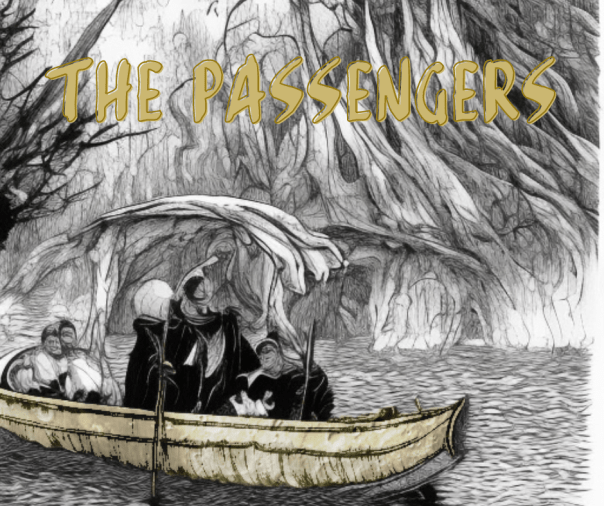


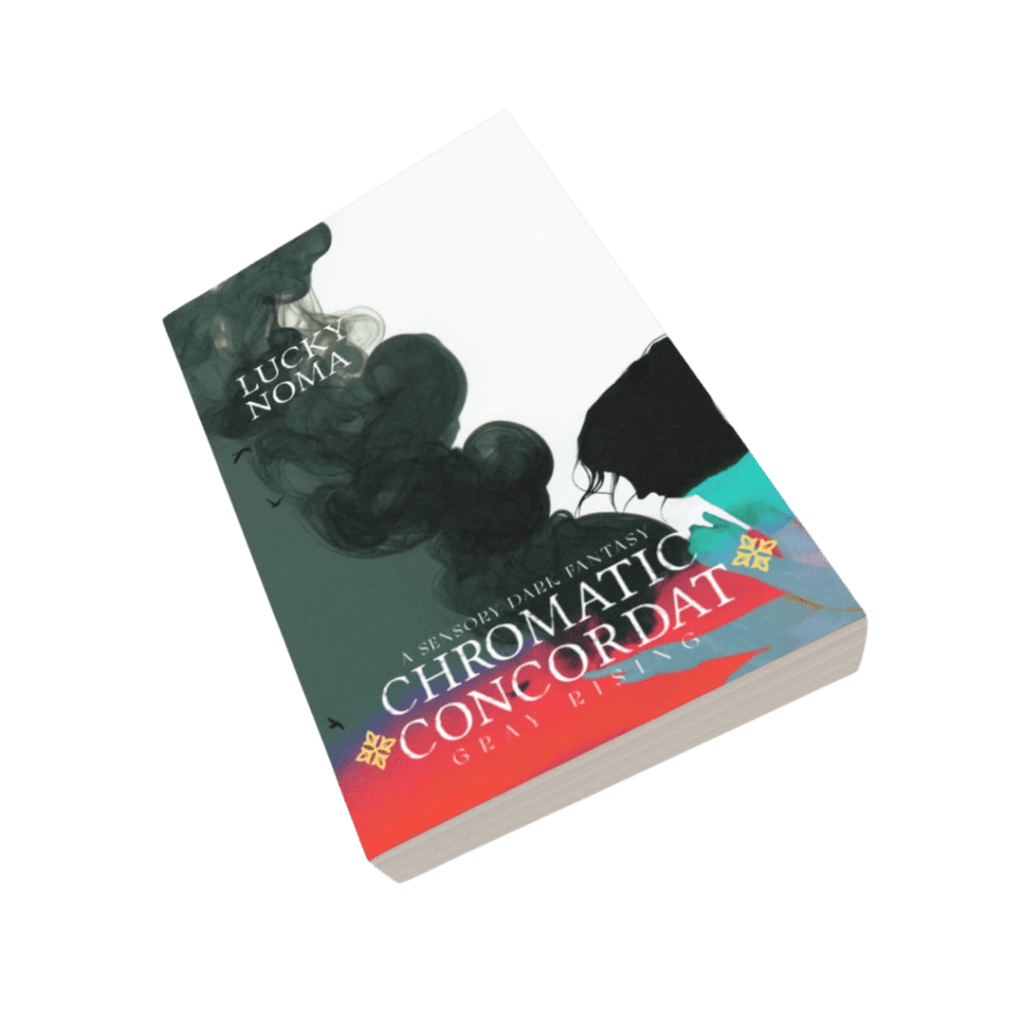



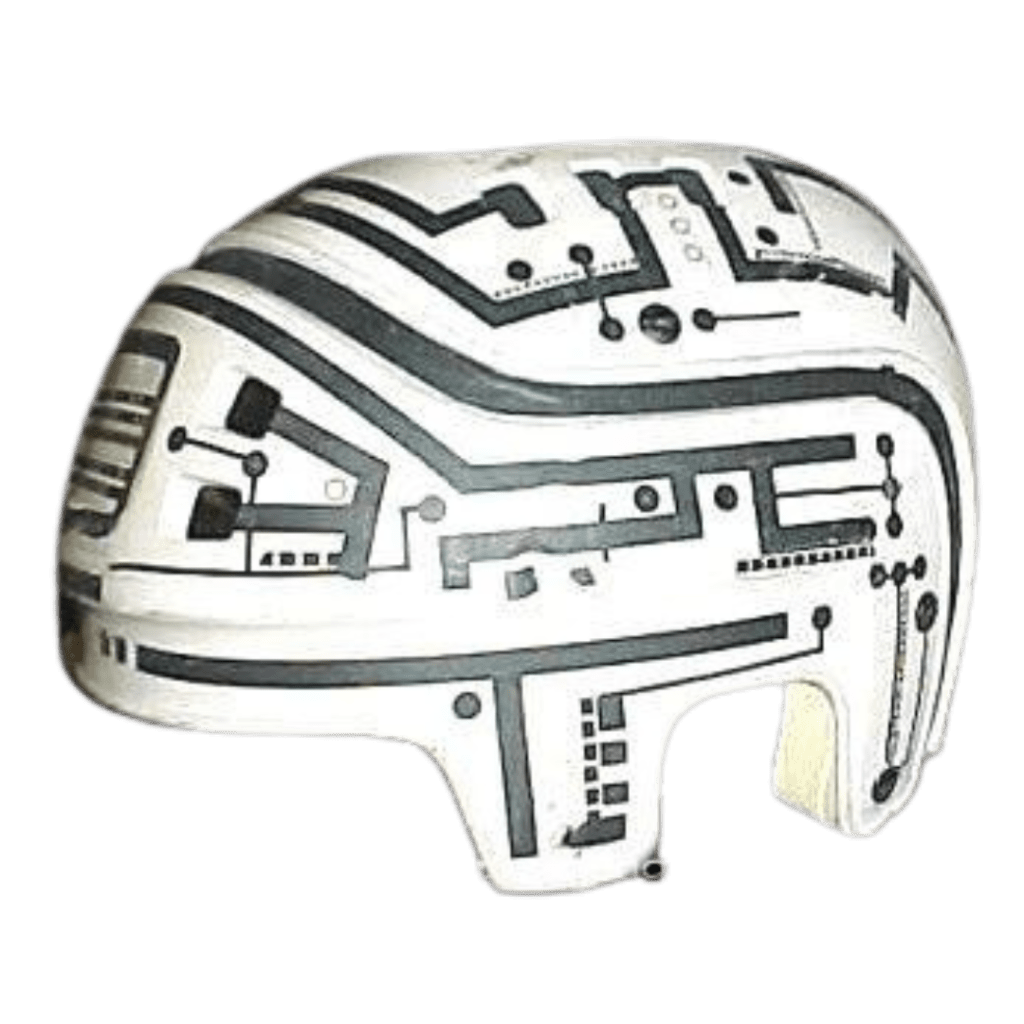
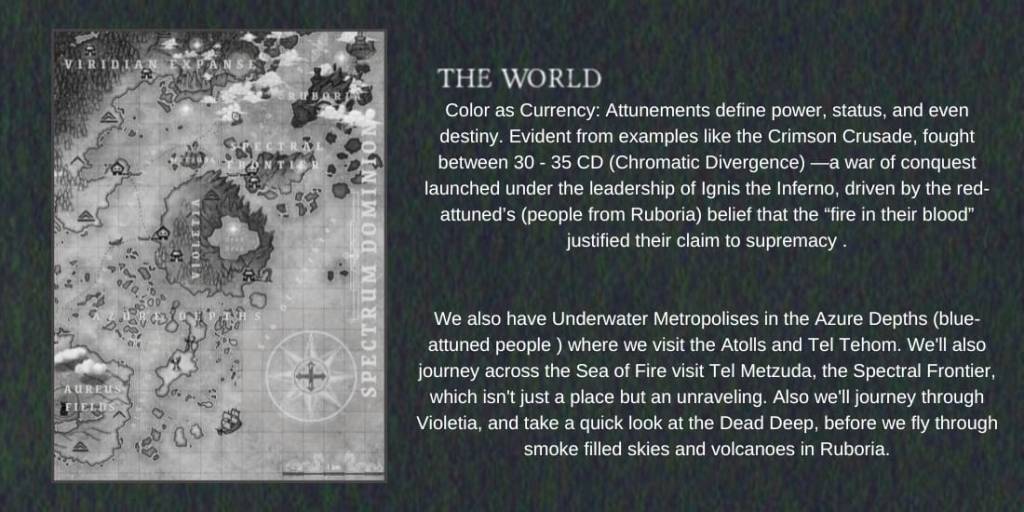


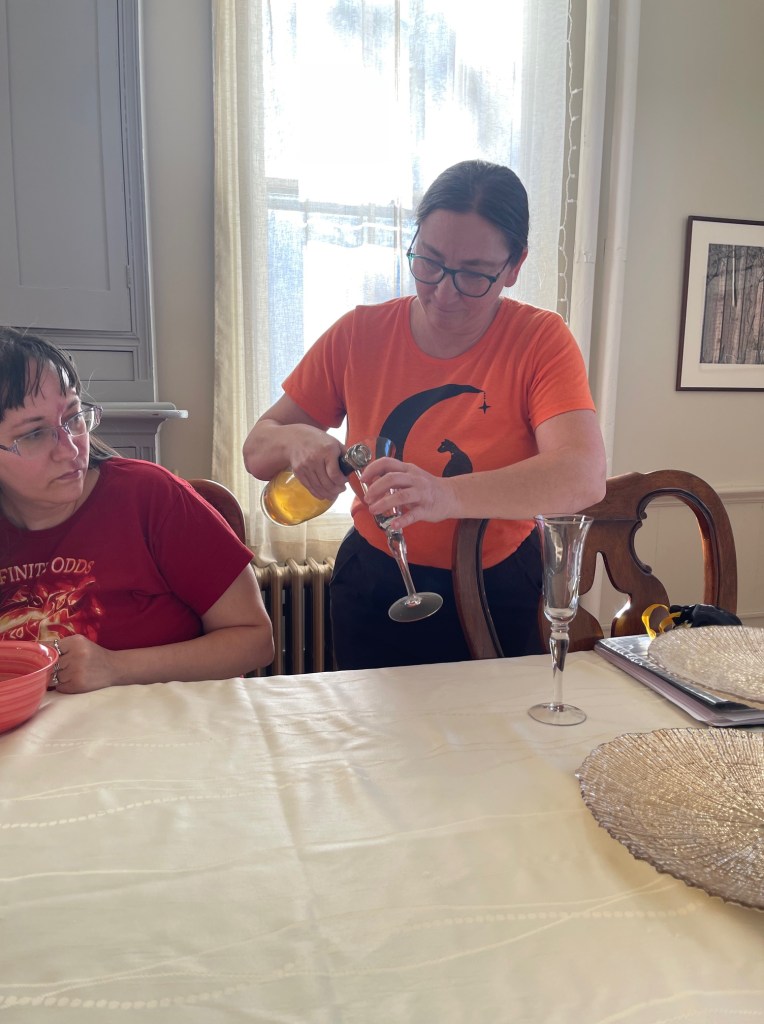


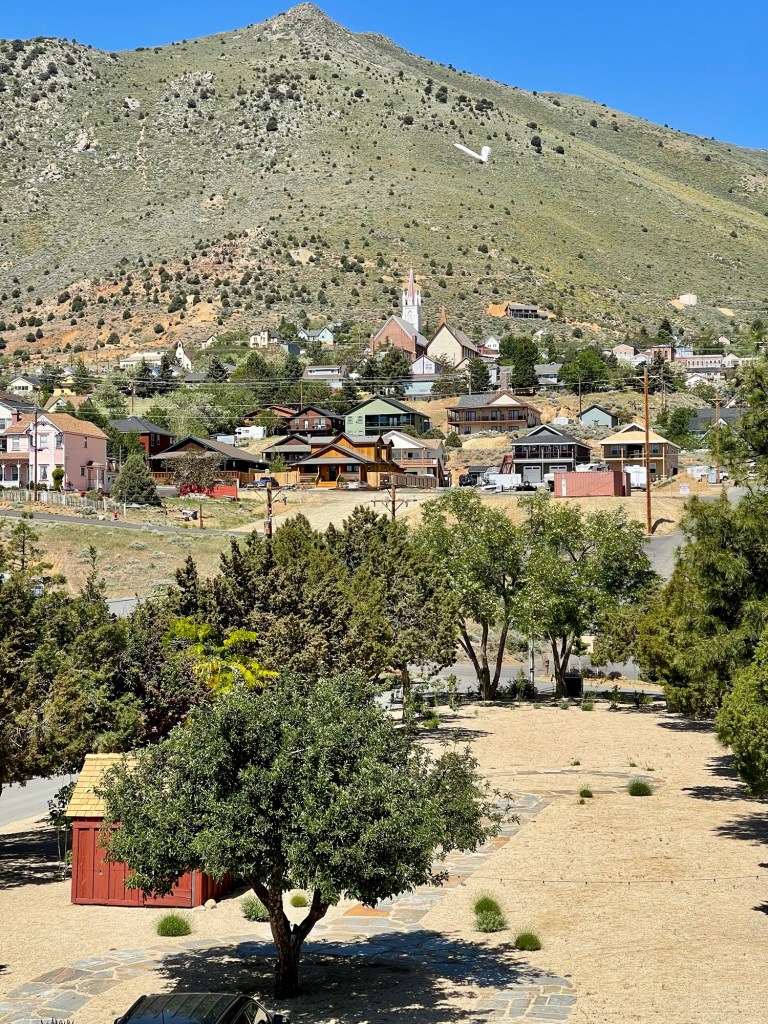


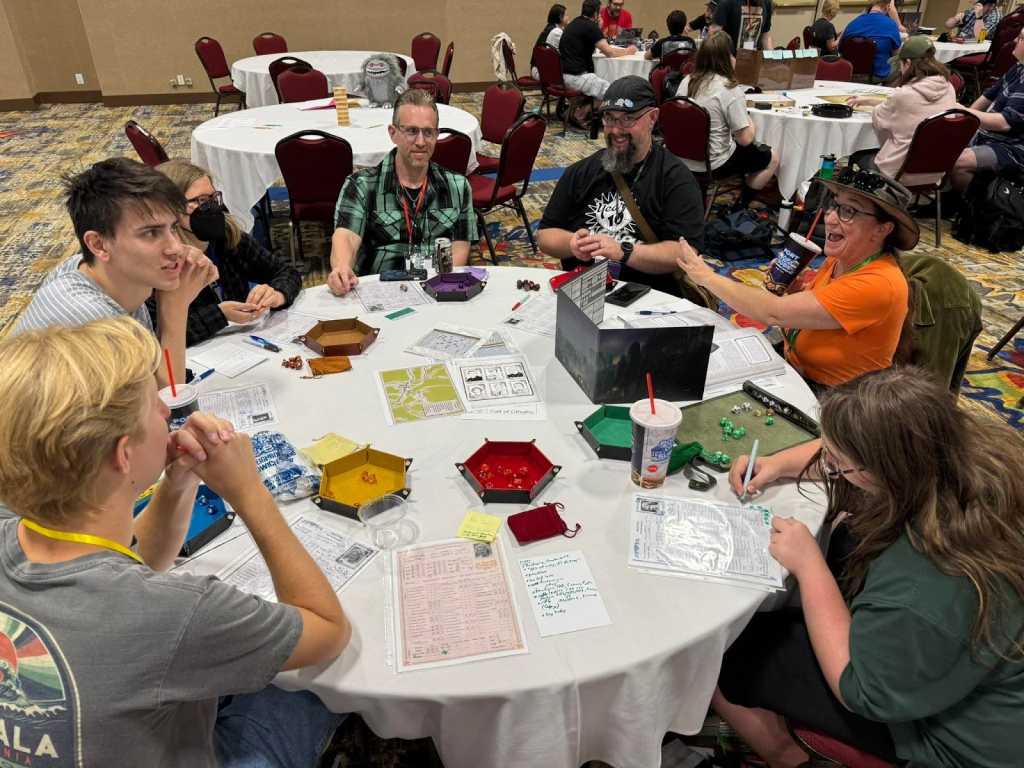
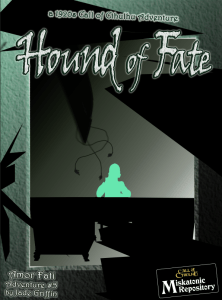
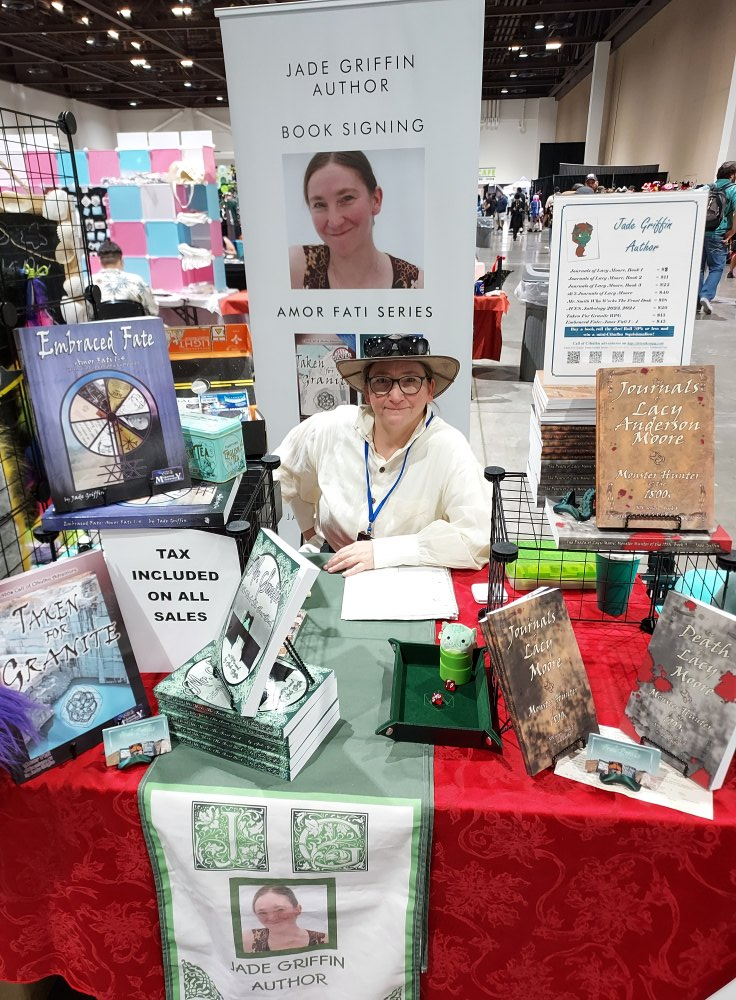

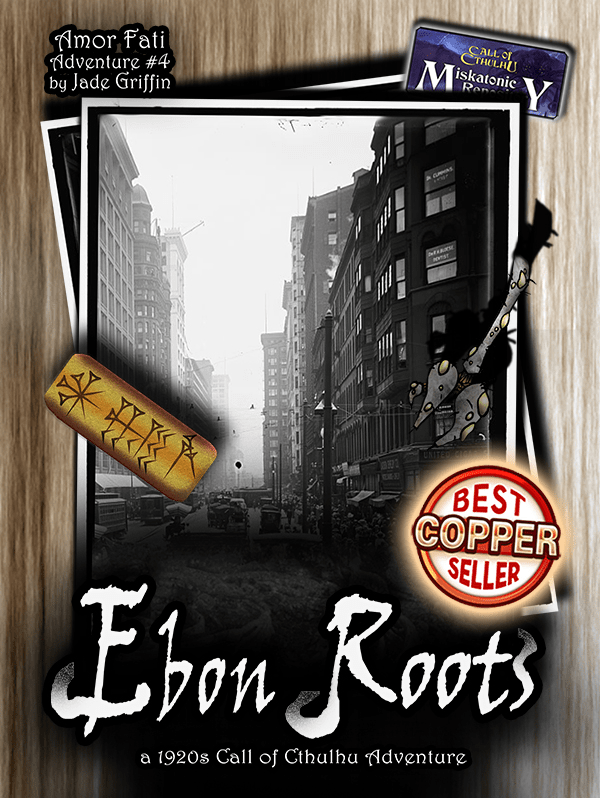

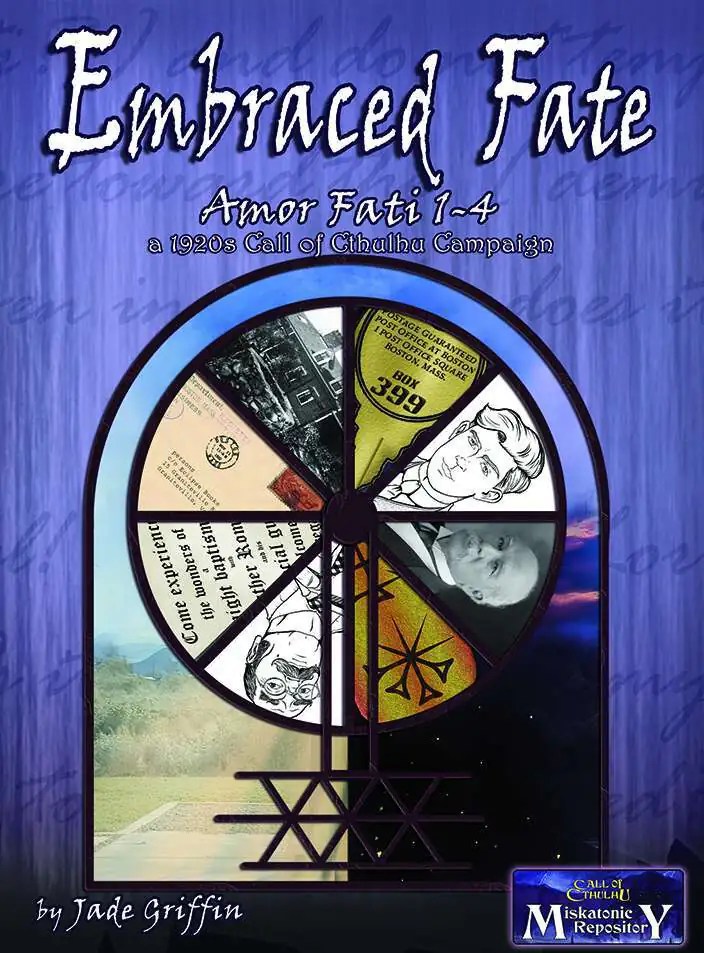



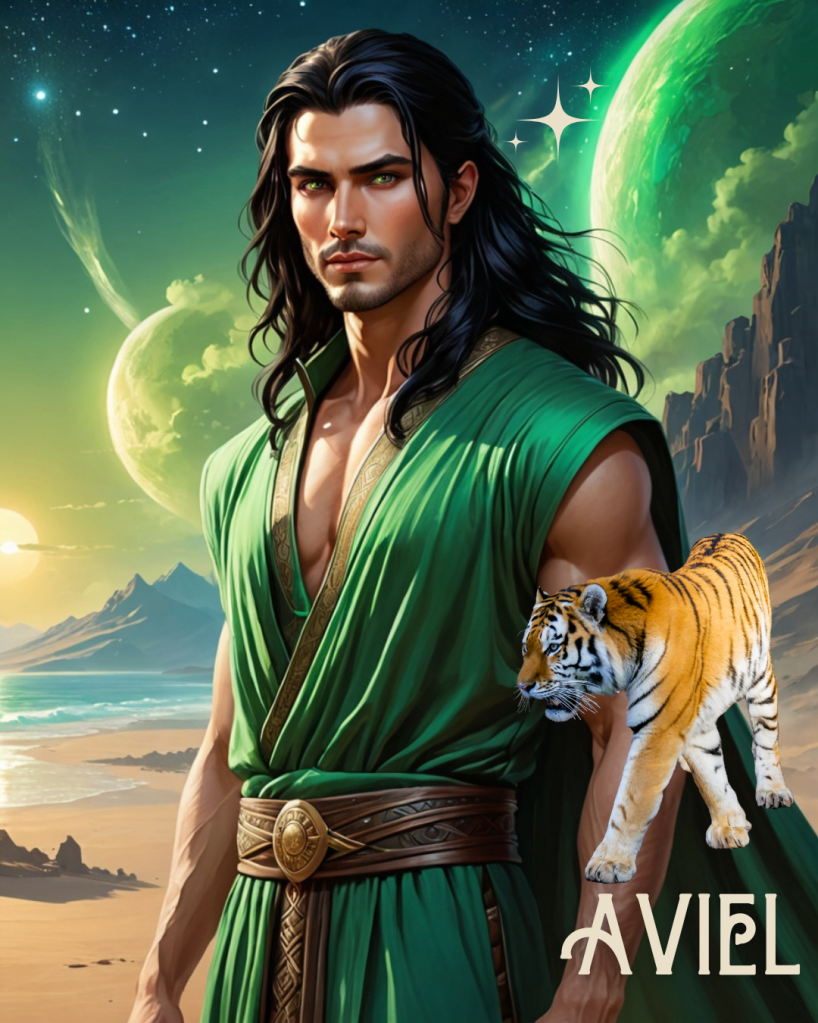

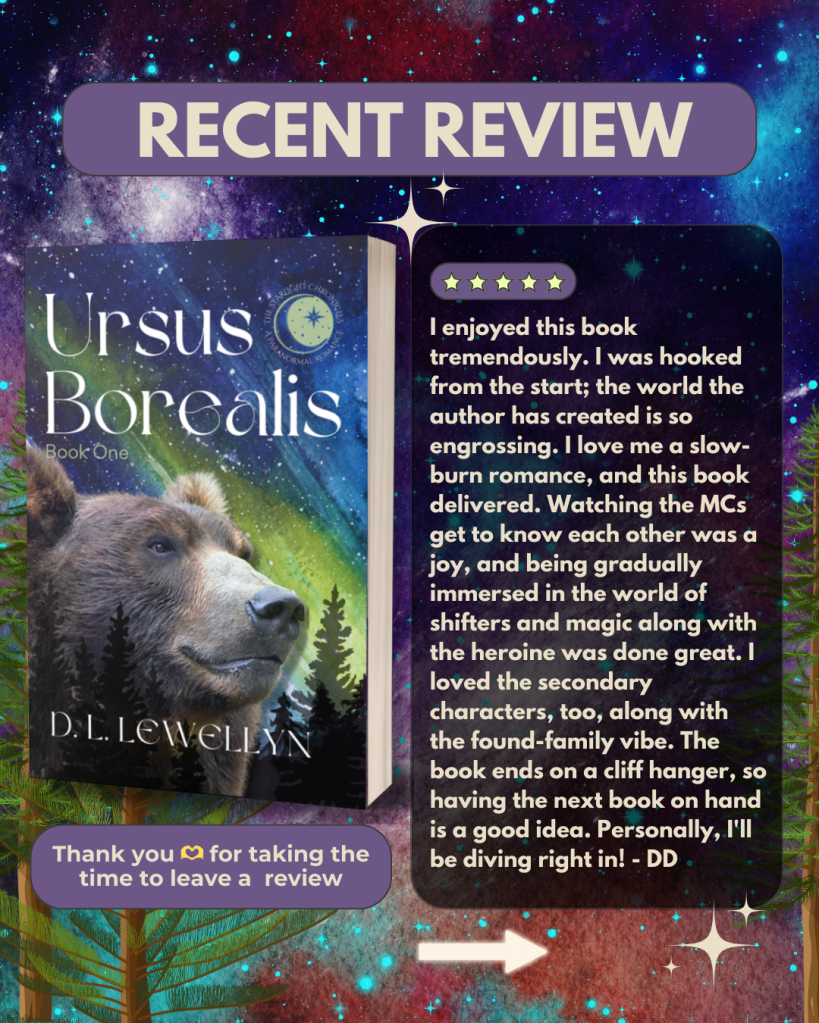

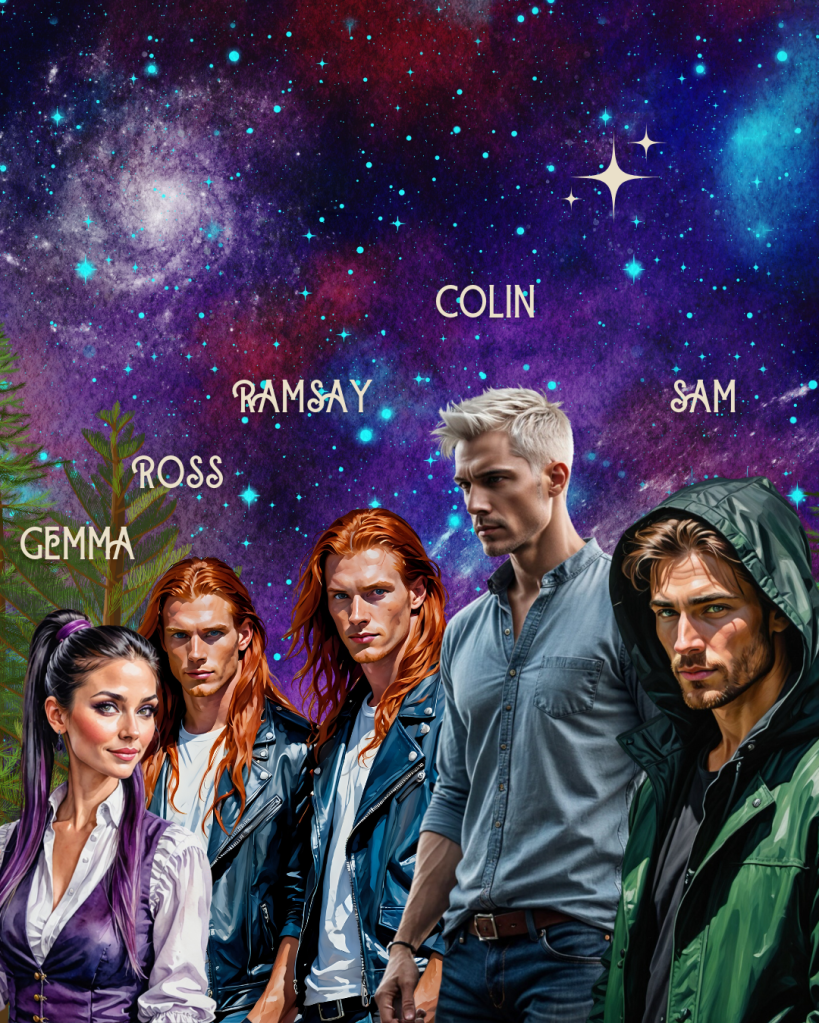
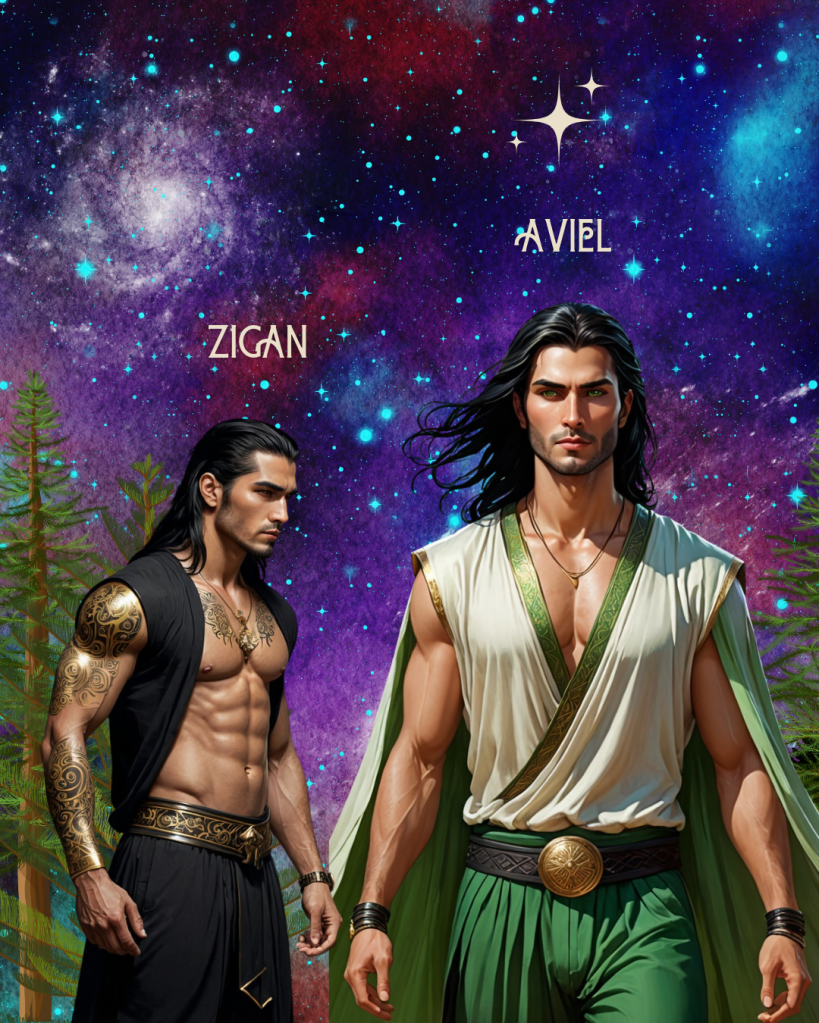


 By D. L. Lewellyn