Stitching, stitching, and more stitching! And I’m loving it all. I also interviewed a wonderful indie author who writes cozy romantasy. Check out our conversation on my Spotlight. Lots of medical follow-ups this month, and getting used to my five-year course of hormone blockers. Still, not really any complaints on the cancer front. Other than that, just using my time to stitch, get out, and walk in this crazy, gorgeous weather.
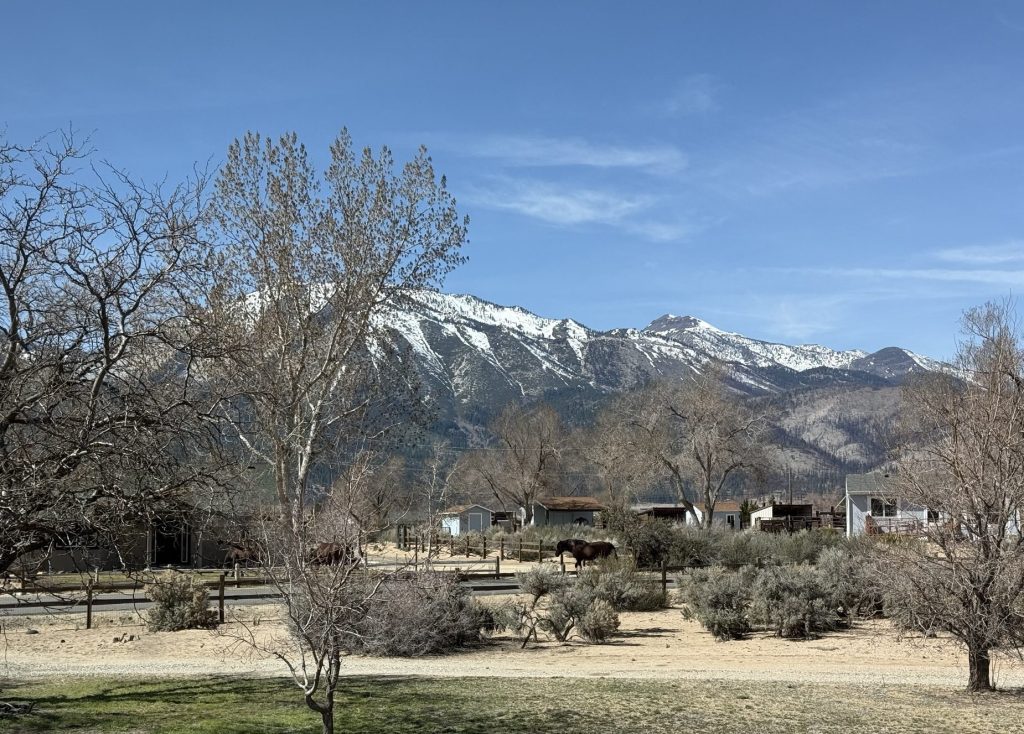
The wild horses are also out for a walk today.
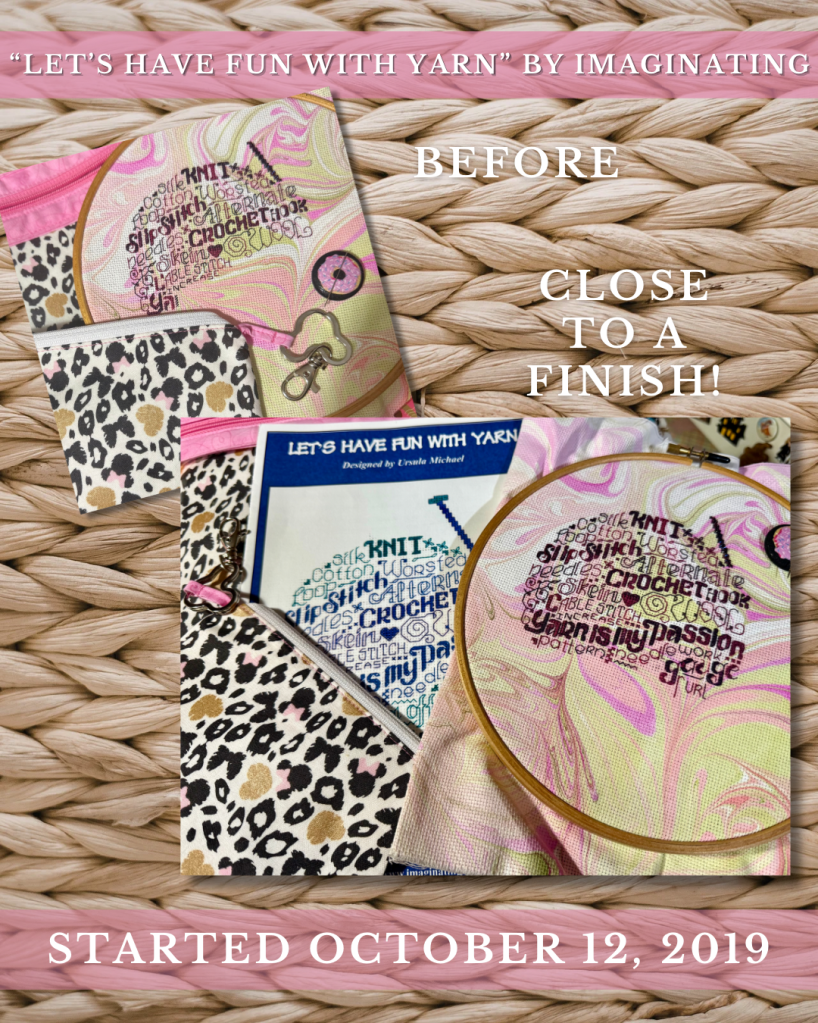
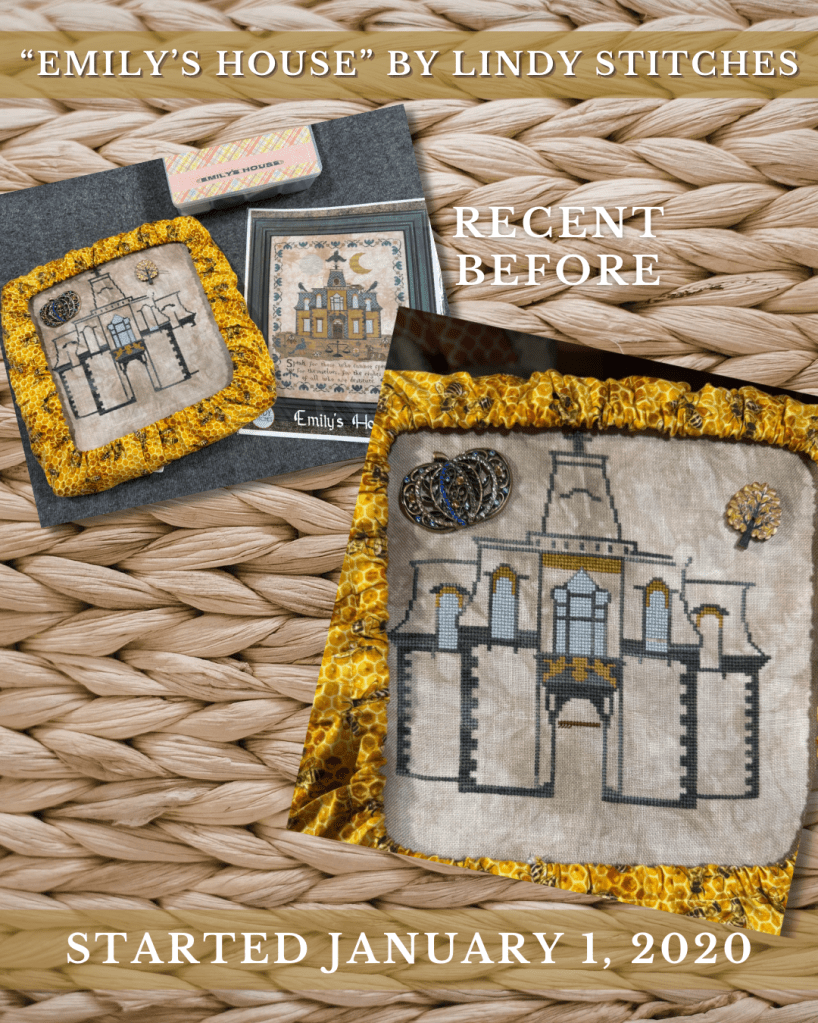
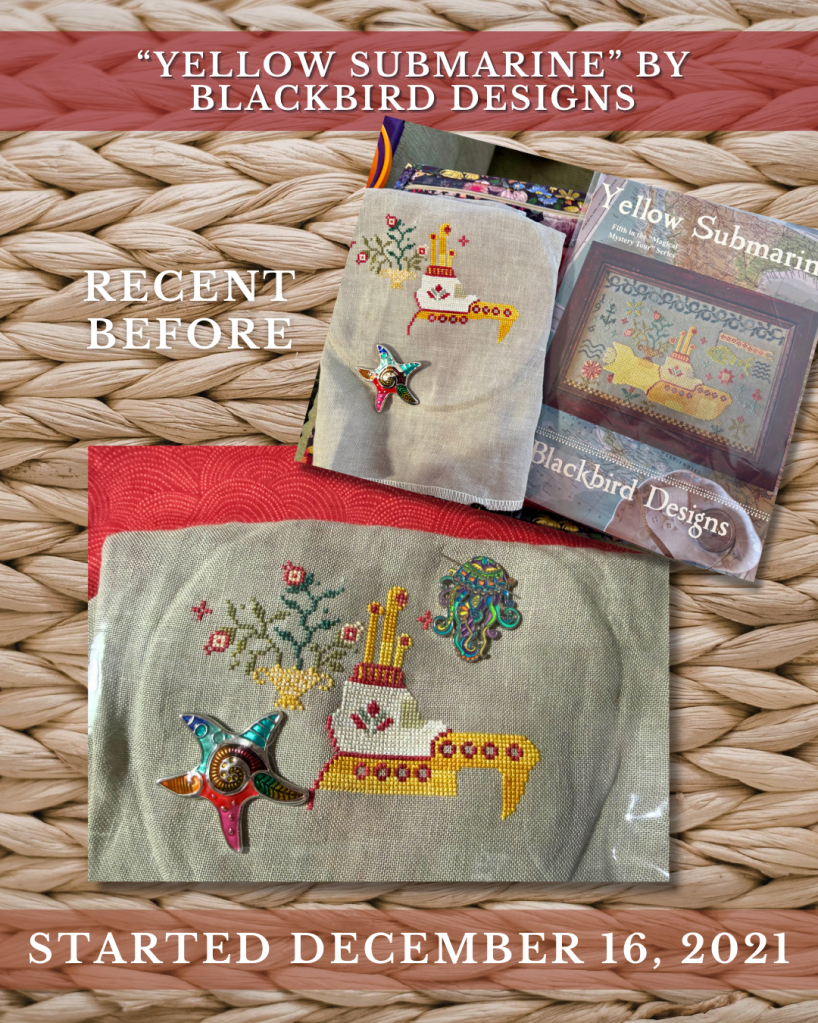
I hope you enjoy these stitchy photos of my projects as much as I do… Click here and here for previous articles in my stitchy saga. Linking to shops where I can.
Keep in mind, variety is the spice of life. It’s not hoarding…
WIPs
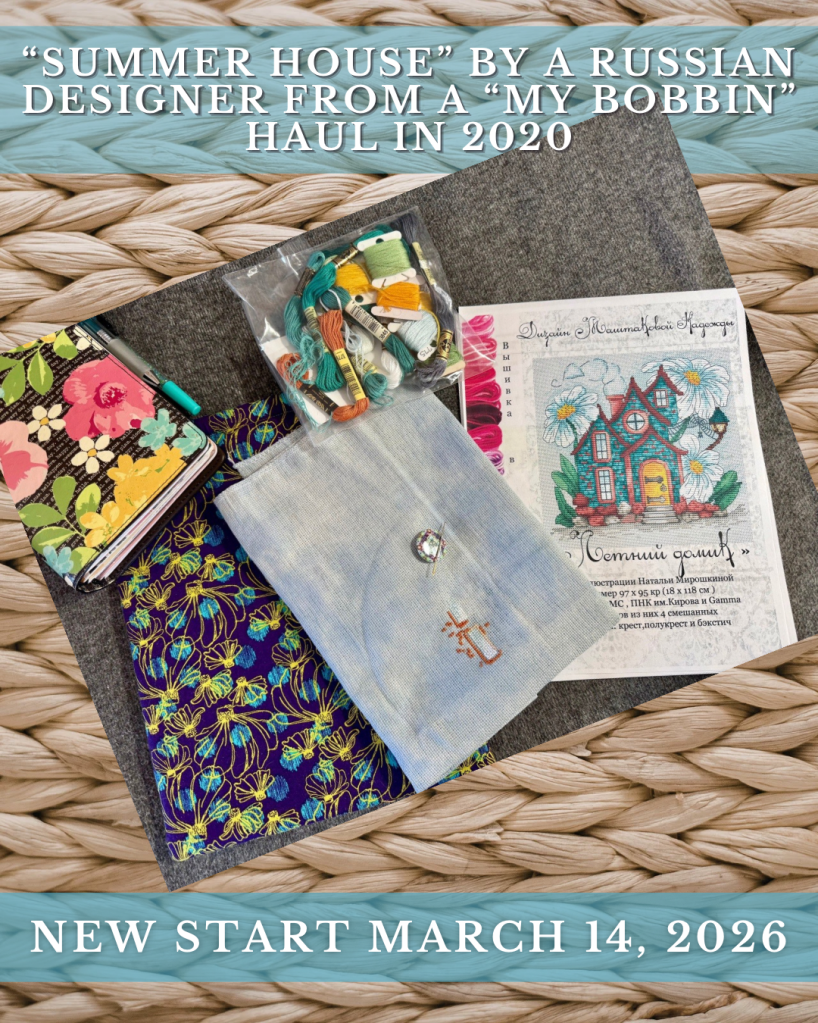
What I’m kitting up for and can’t wait to start
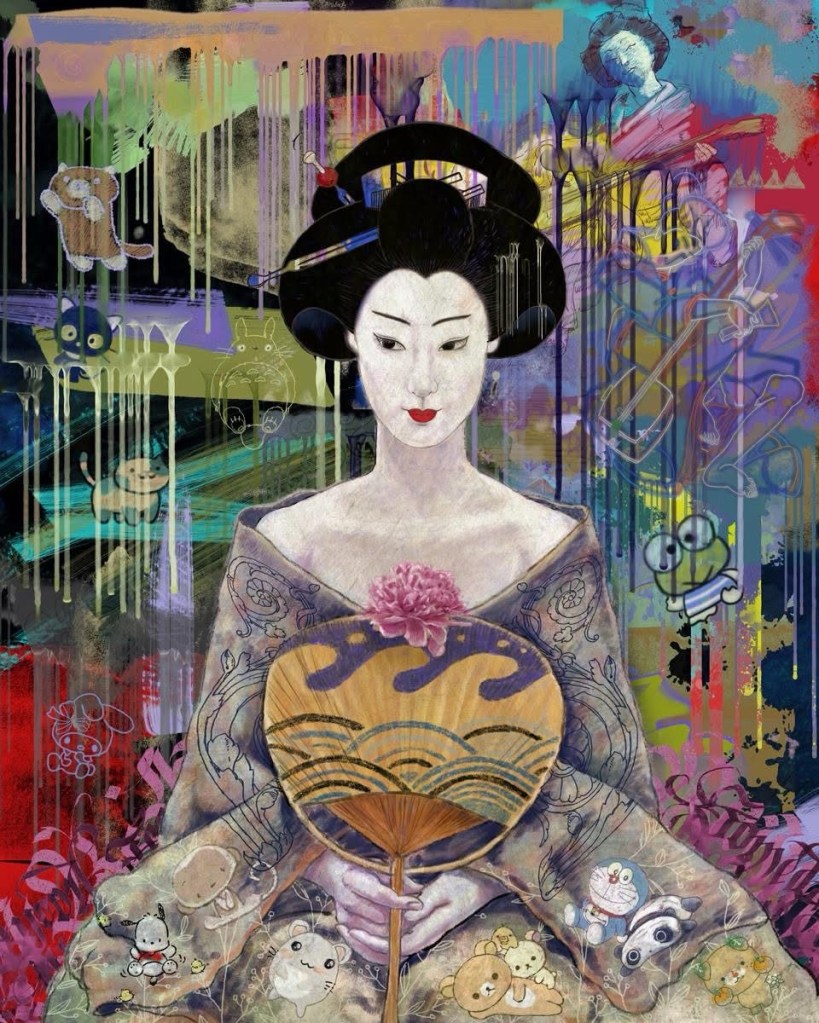
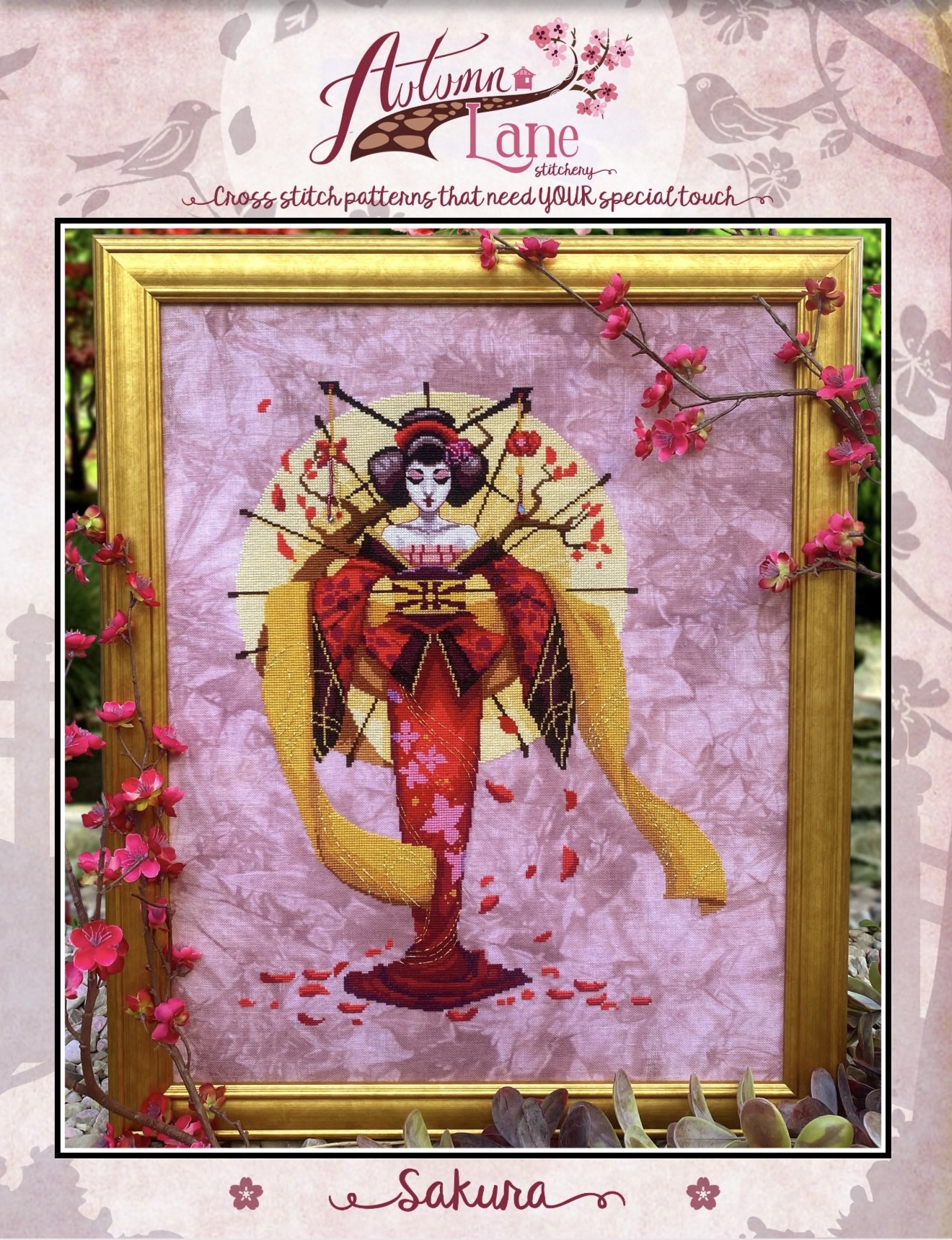
Isn’t this stunning? It’s from Heaven and Earth Designs (HAED), featuring artwork by Ernie Francis. Just my cup of tea, gorgeous, colorful mixed media, a captivating geisha, and my favorite Japanese anime hiding in the background. But folks, this is full coverage, 90 DMC colors, and 20 x 25 inches when finished (stitching tiny stitches in every little square). I will need to put the unfinished work in my will.
I have eclectic tastes, eh? But aren’t these wonderful? (I’ll just restate it here. I am not a hoarder.)
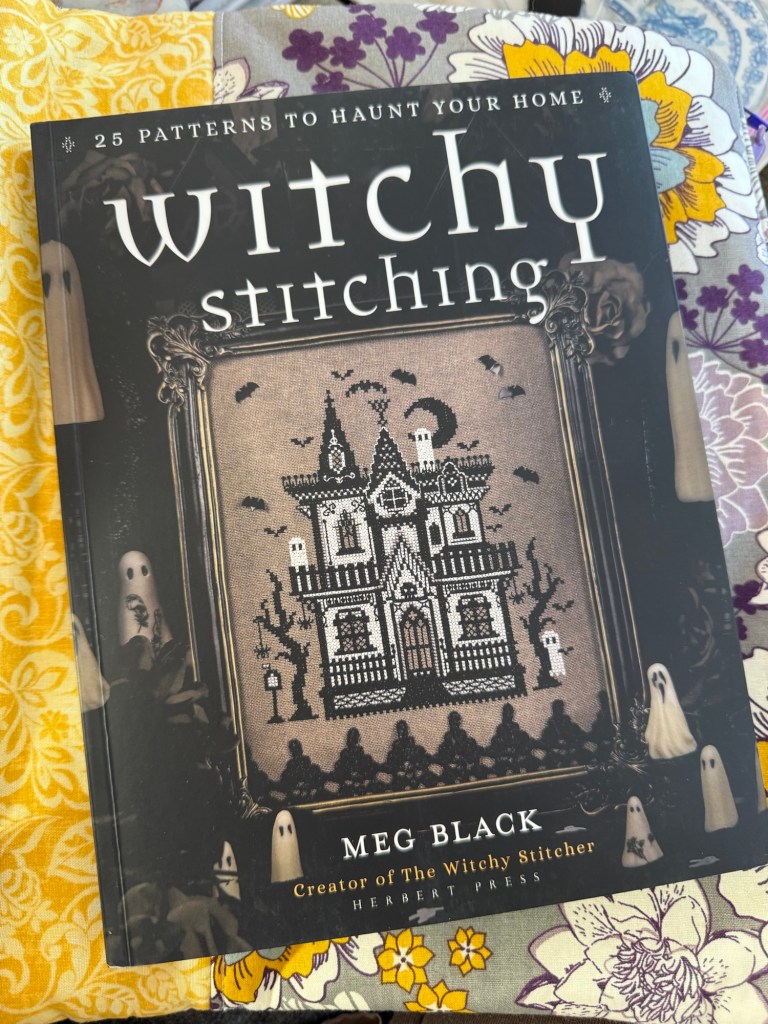
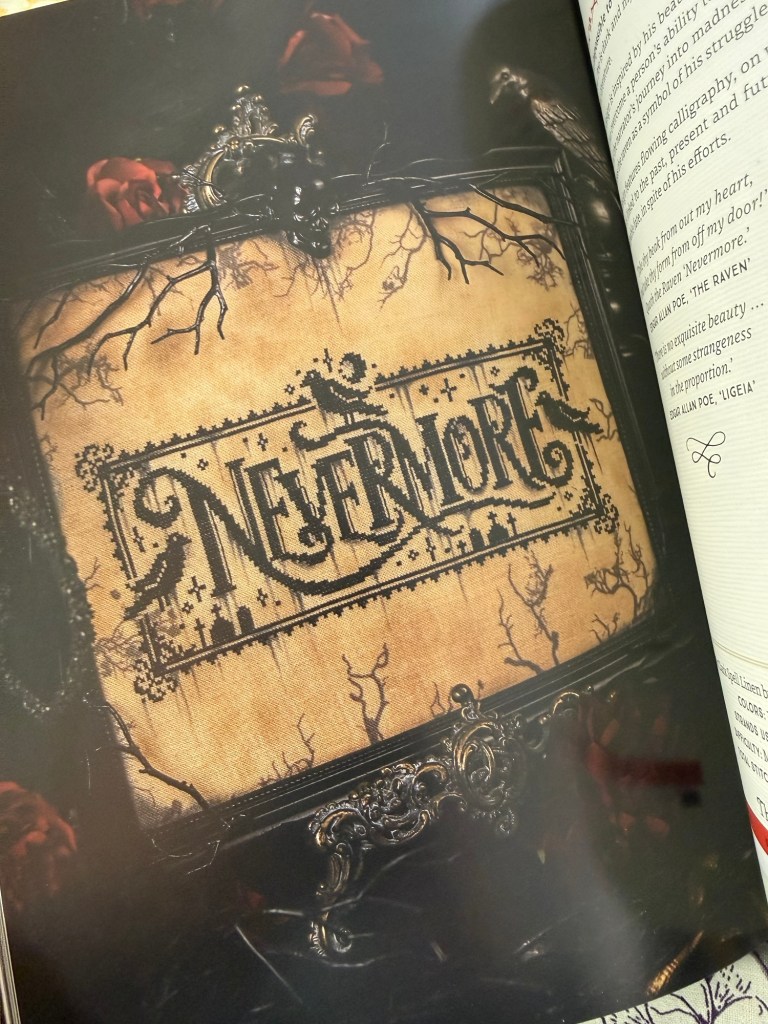
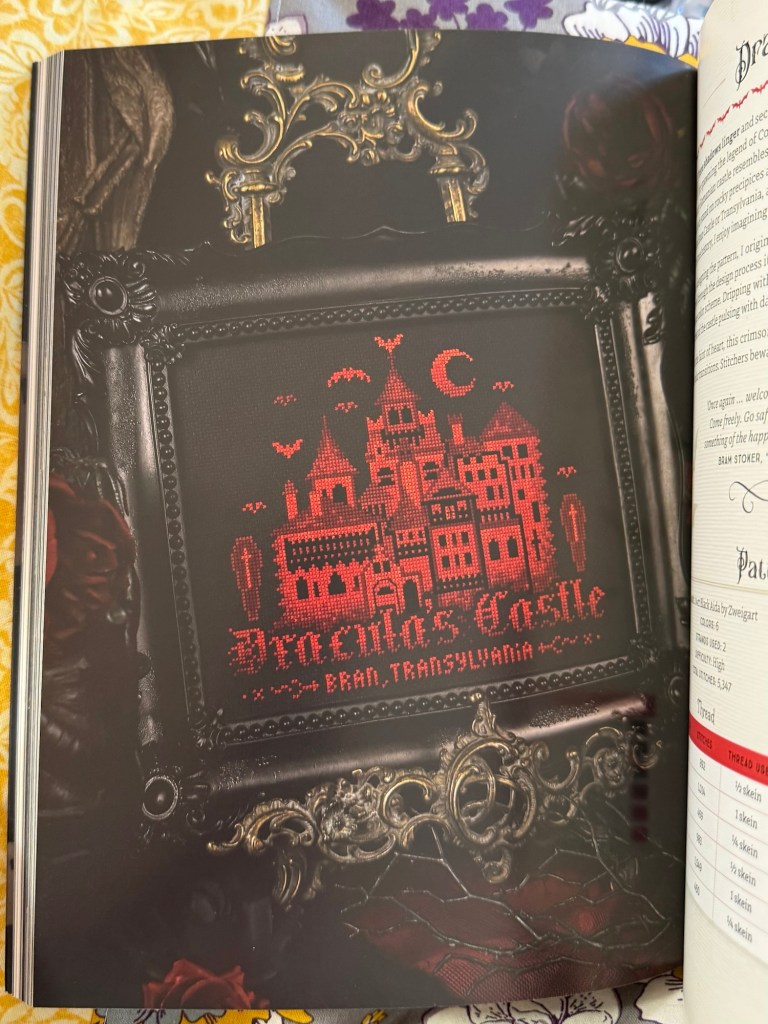
I also got Meg Black’s awesome book from Amazon. I’m drooling over Dracula’s House and Nevermore. There’s also a Poe bookmark to do.
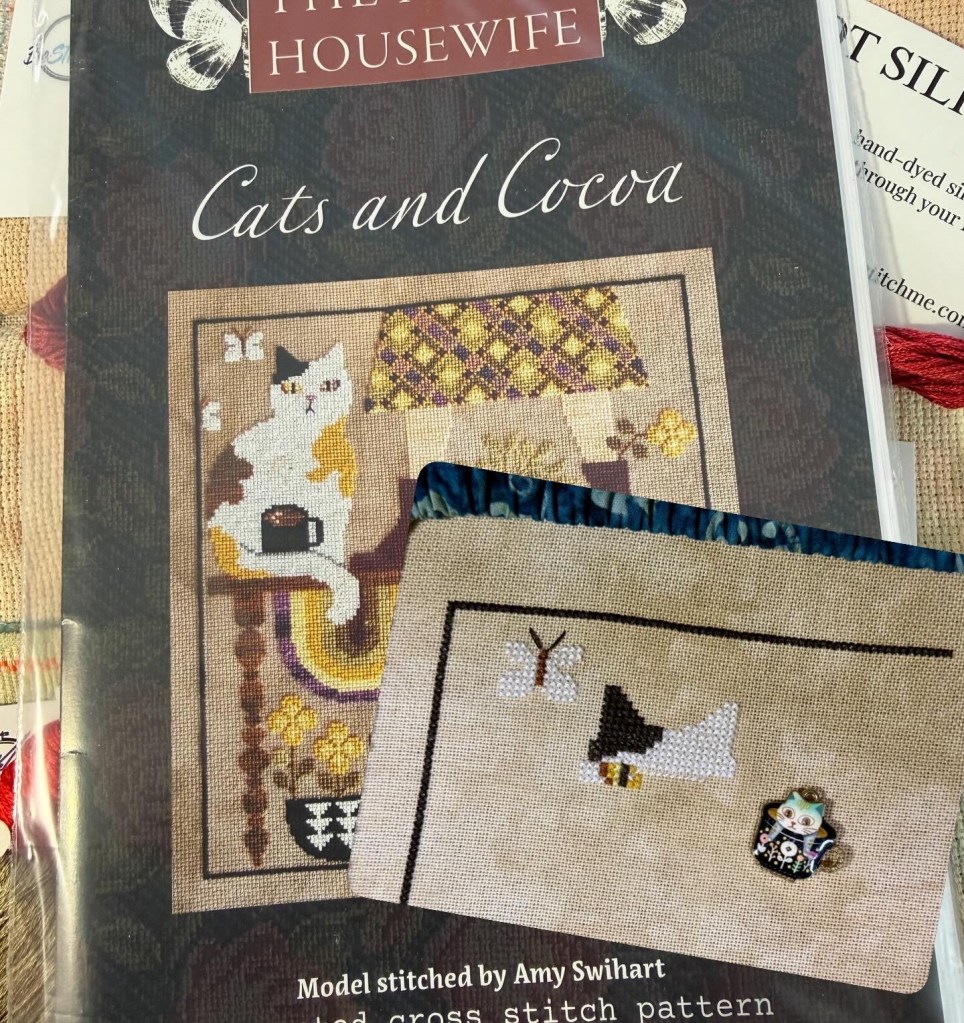
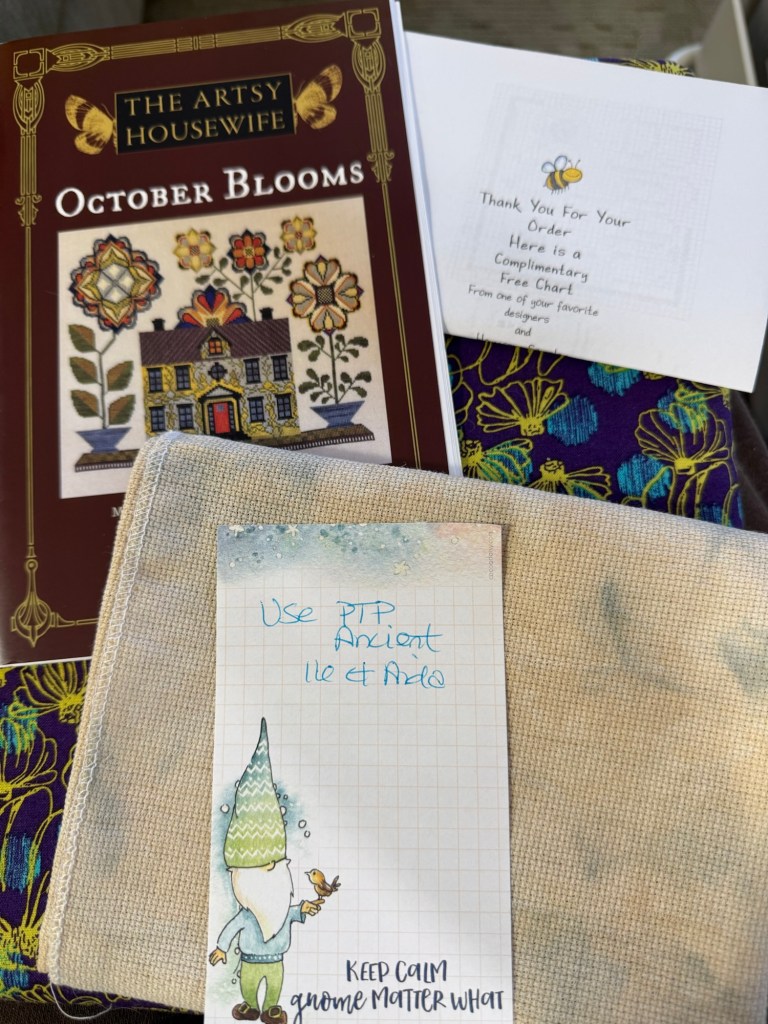
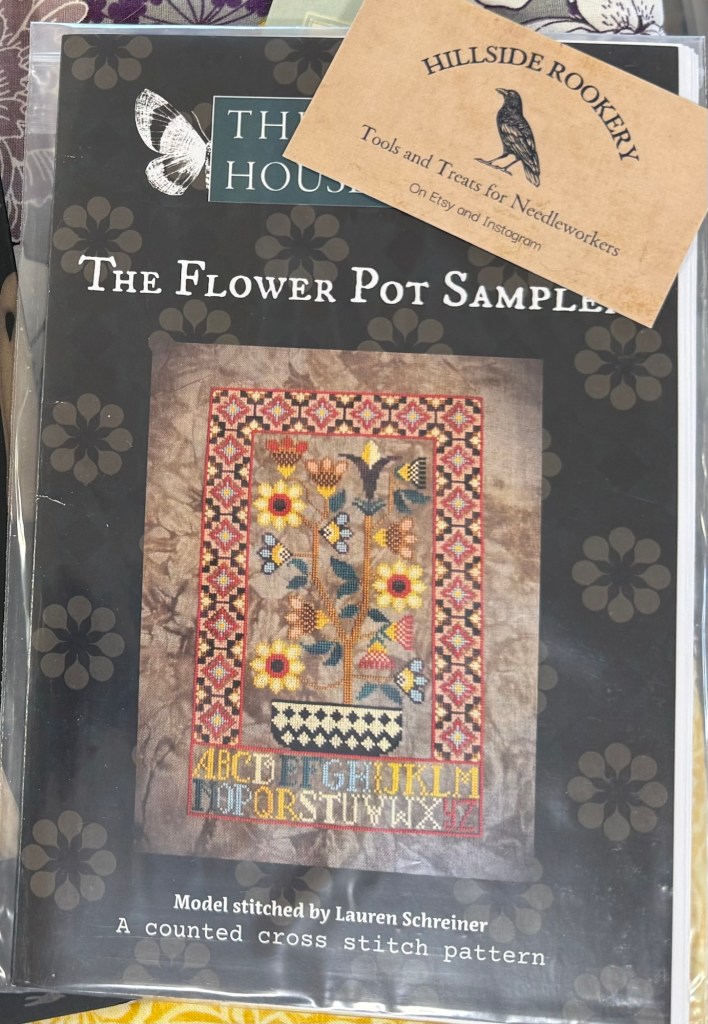
Which Artsy Housewife after Cats and Cocoa?
Cats and CocoaOctober BloomThe Flower Pot Sampler
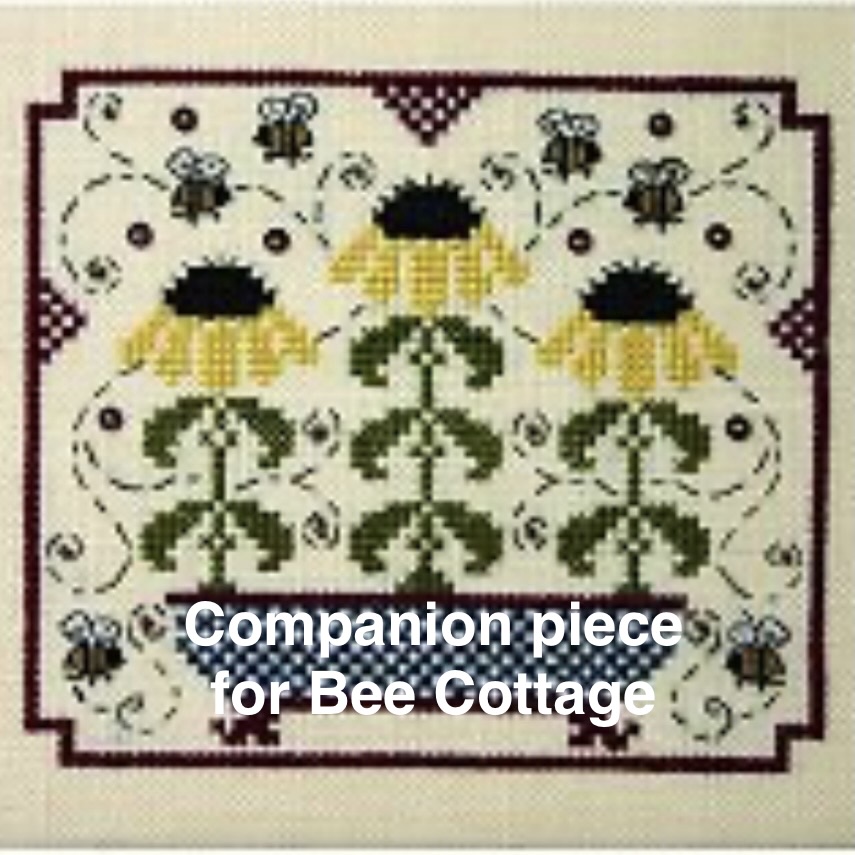
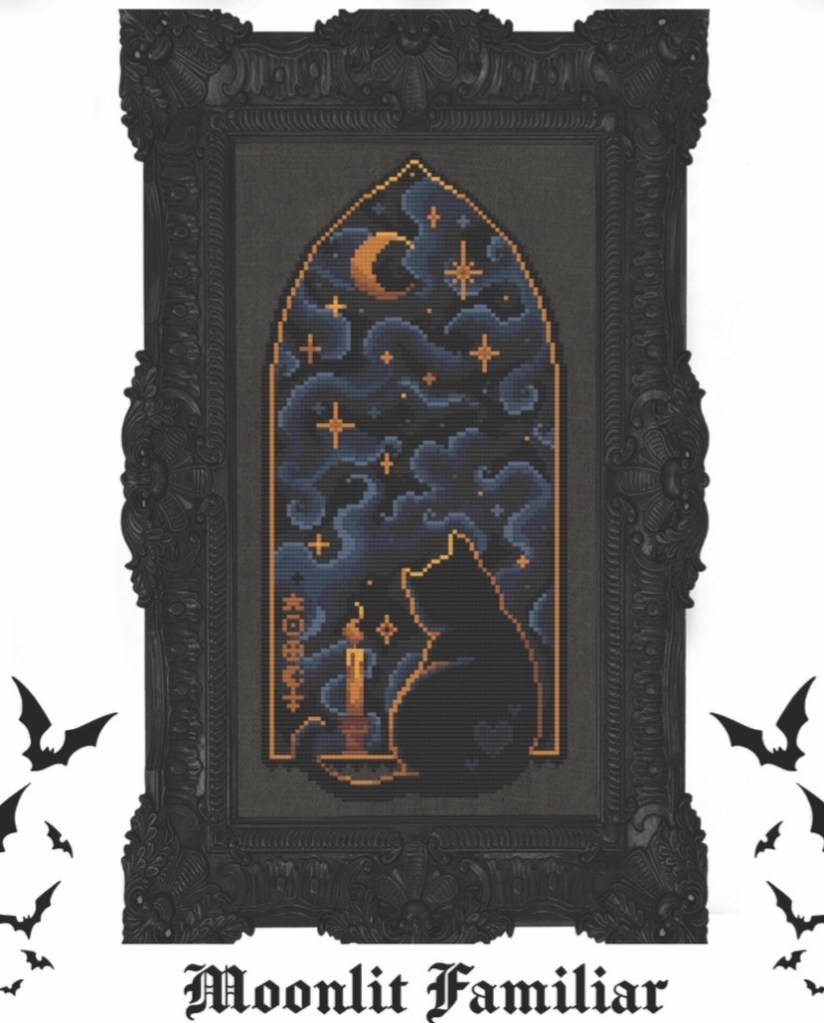
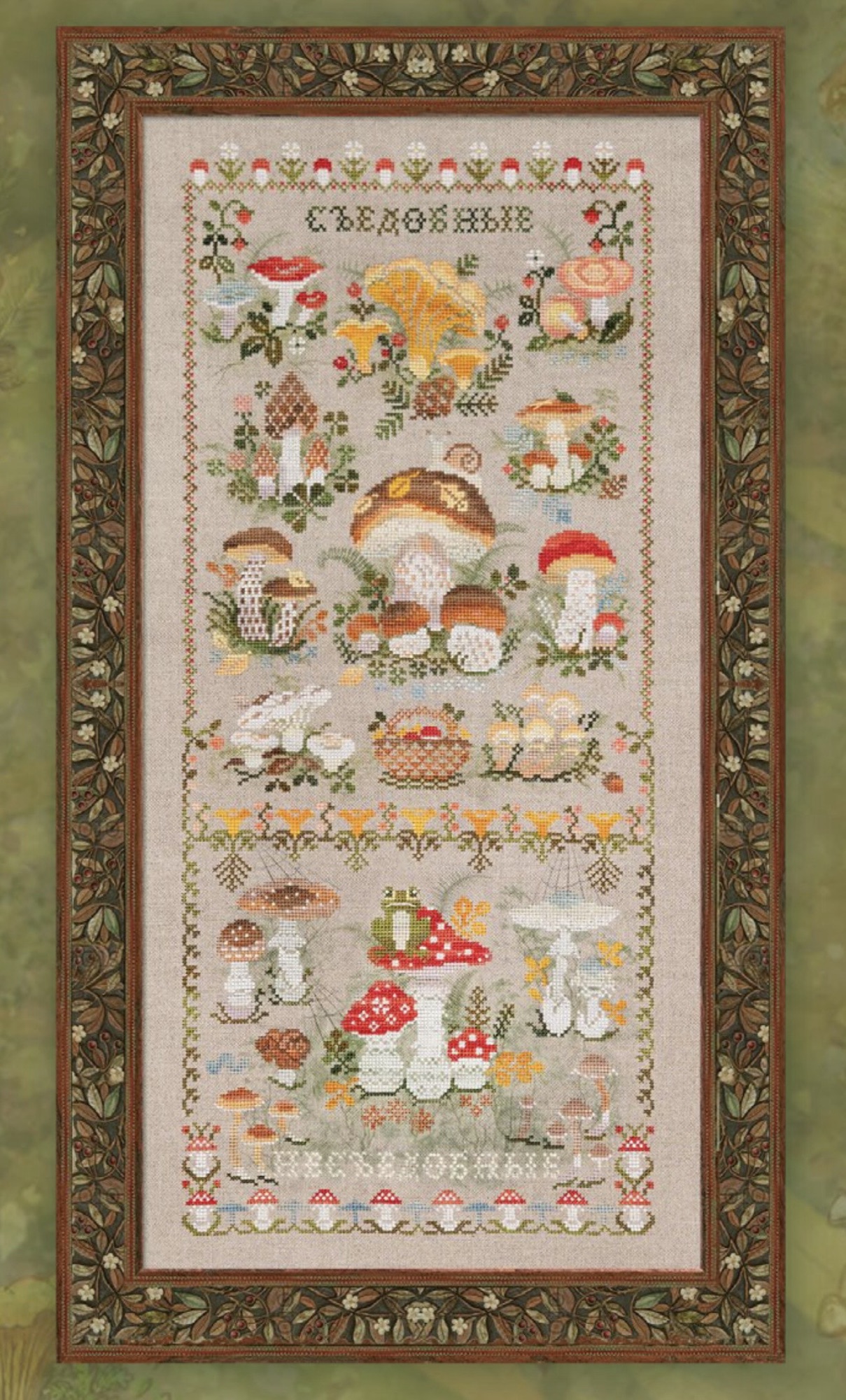
Others I want to stitch, but down the road sometime… Sigh…
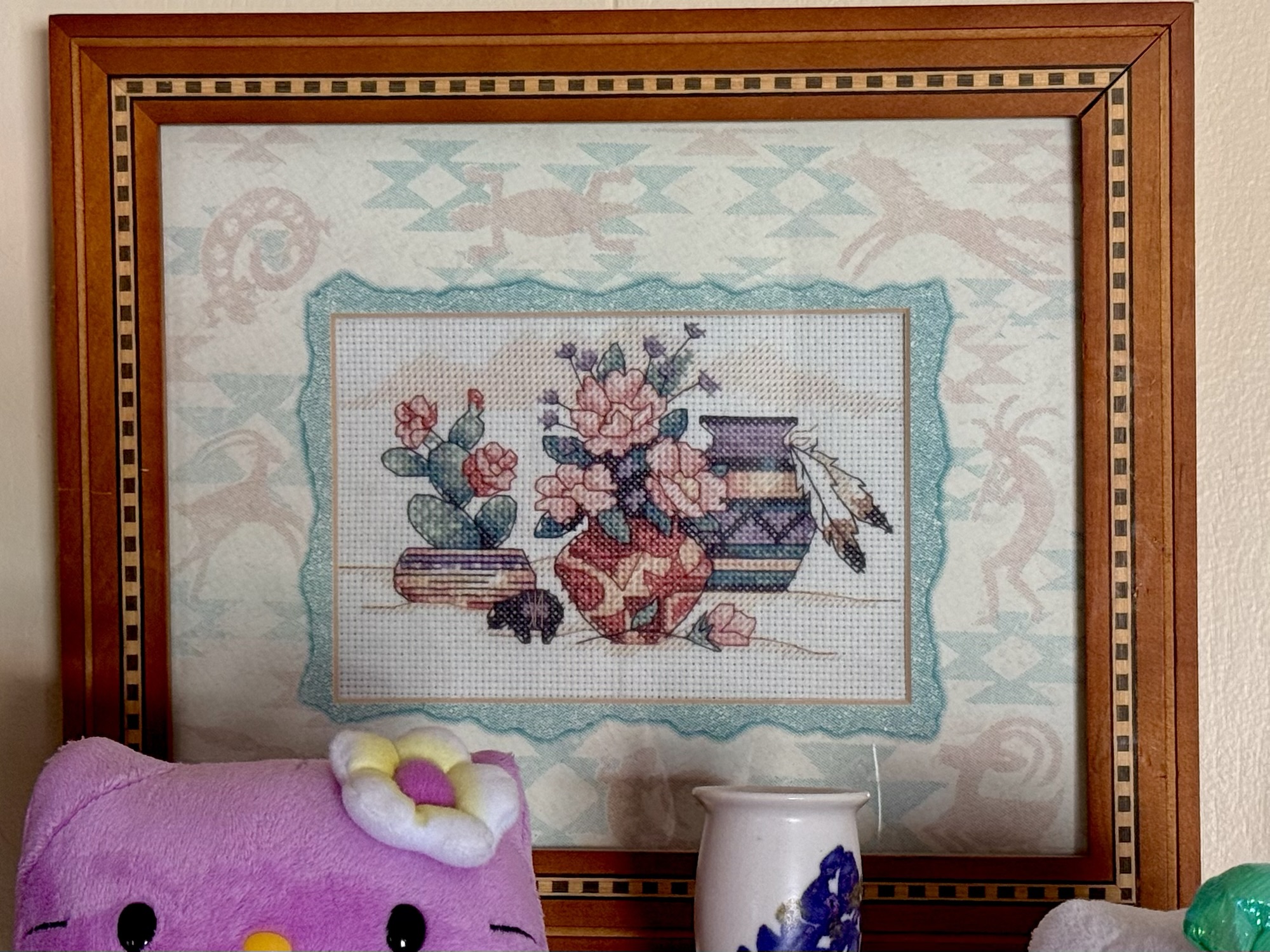
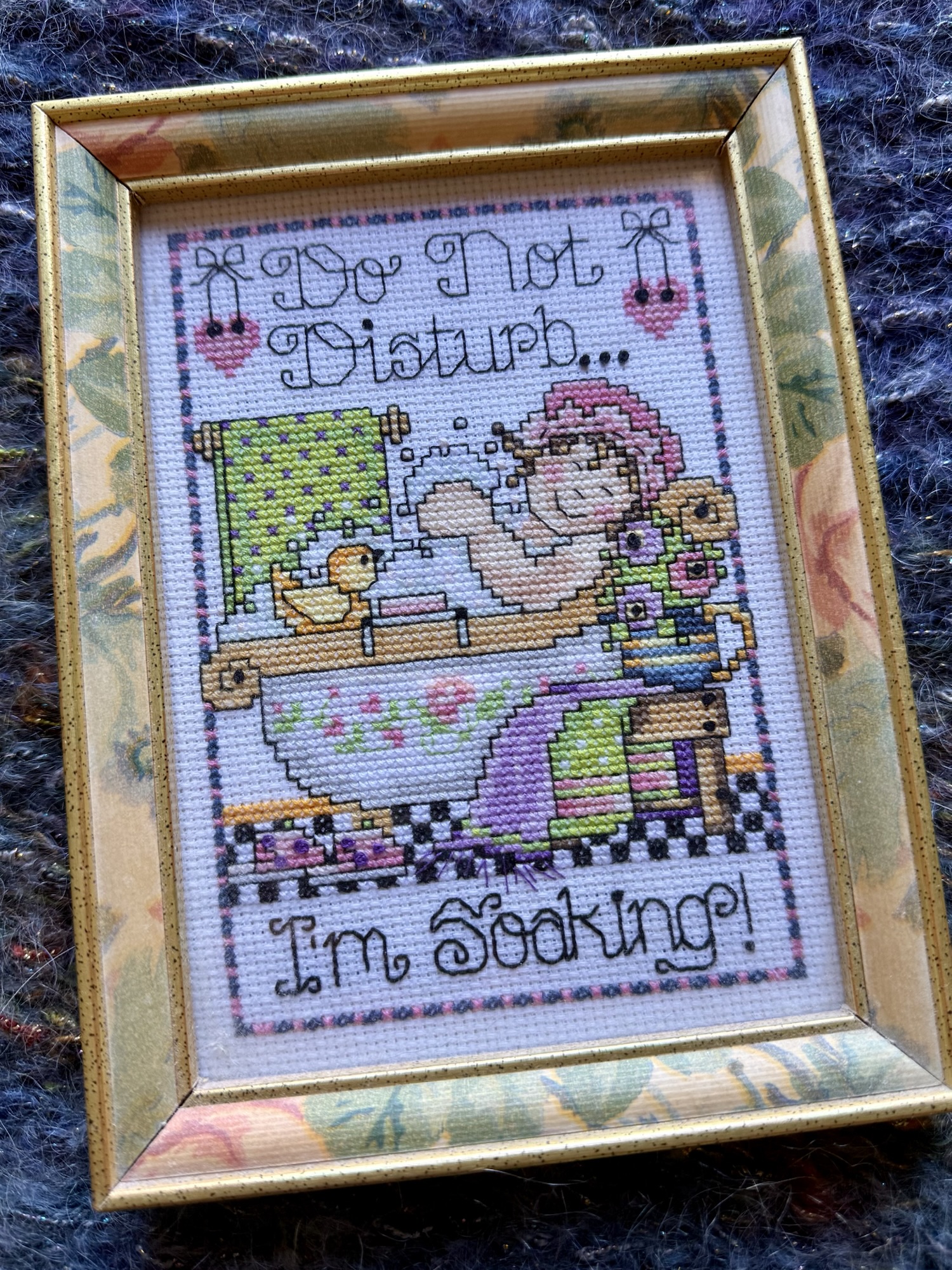
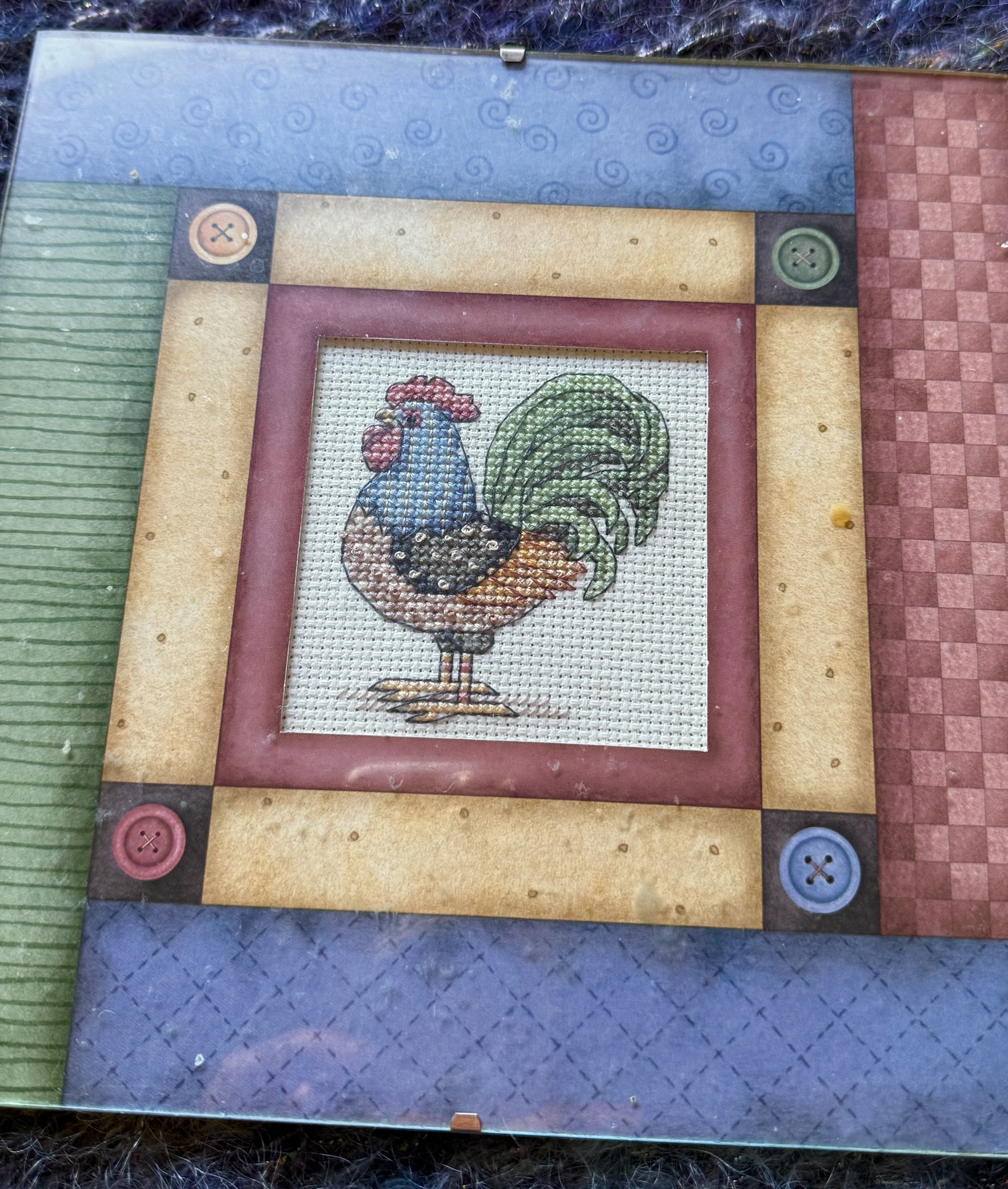
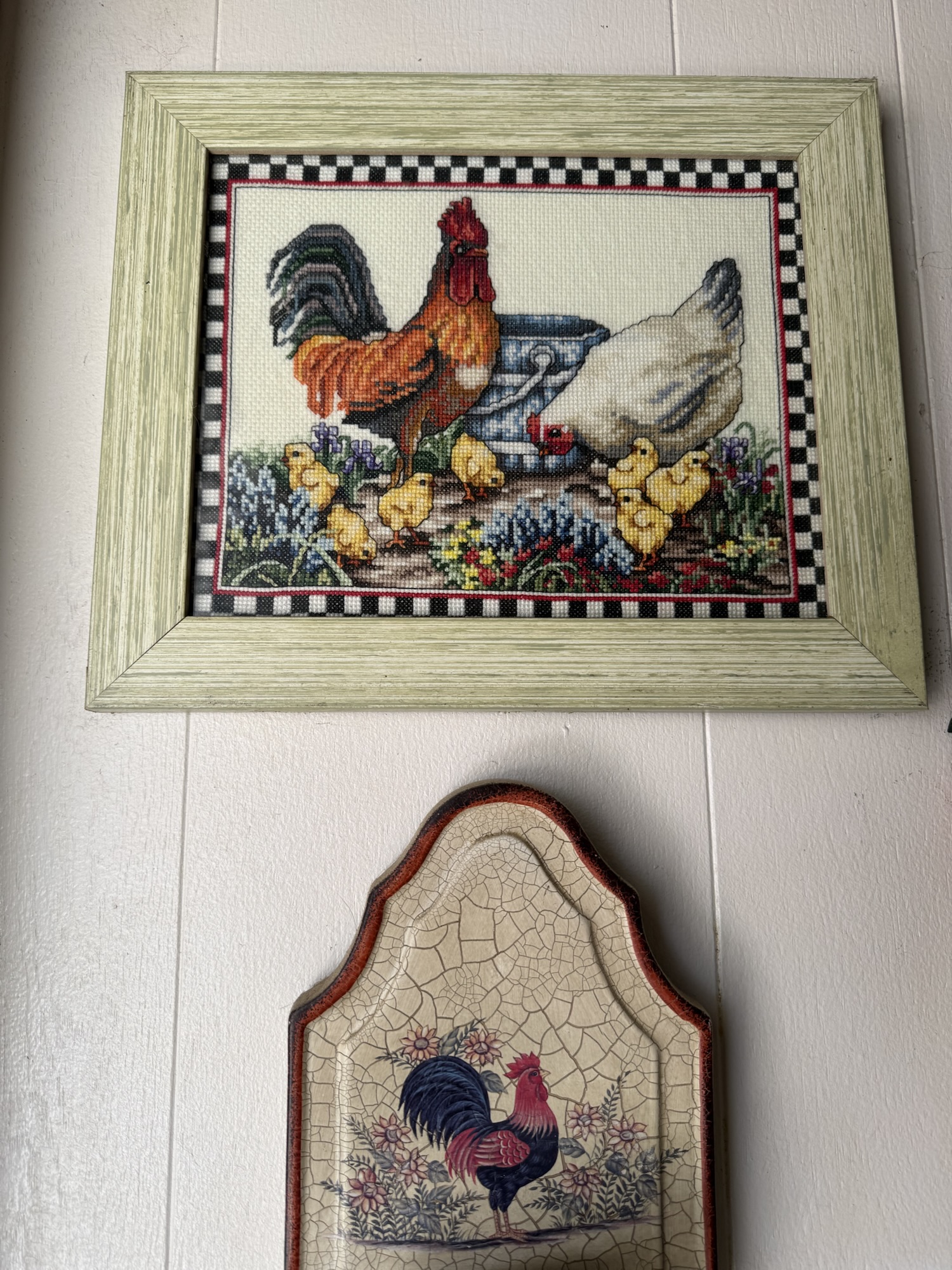
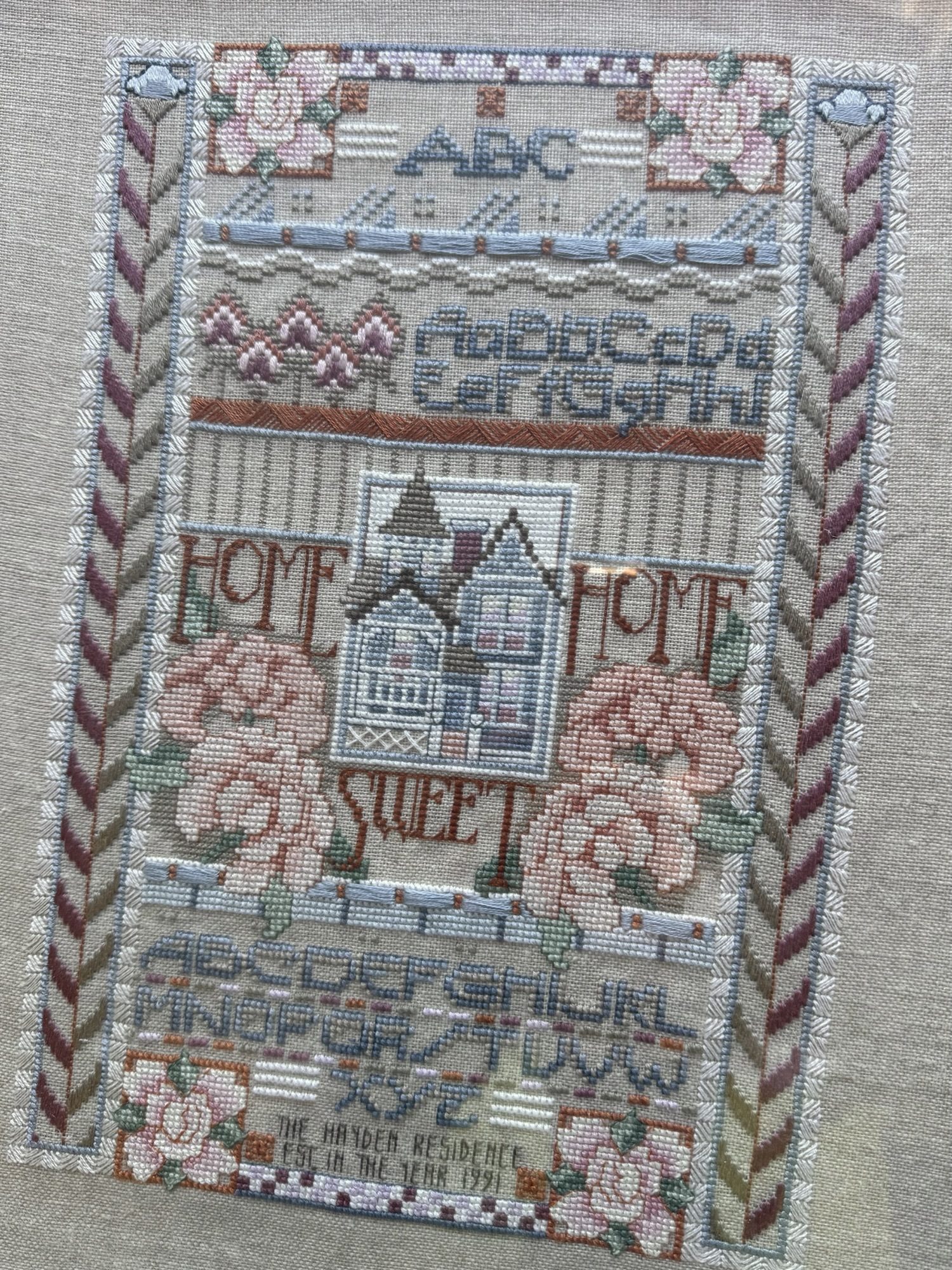
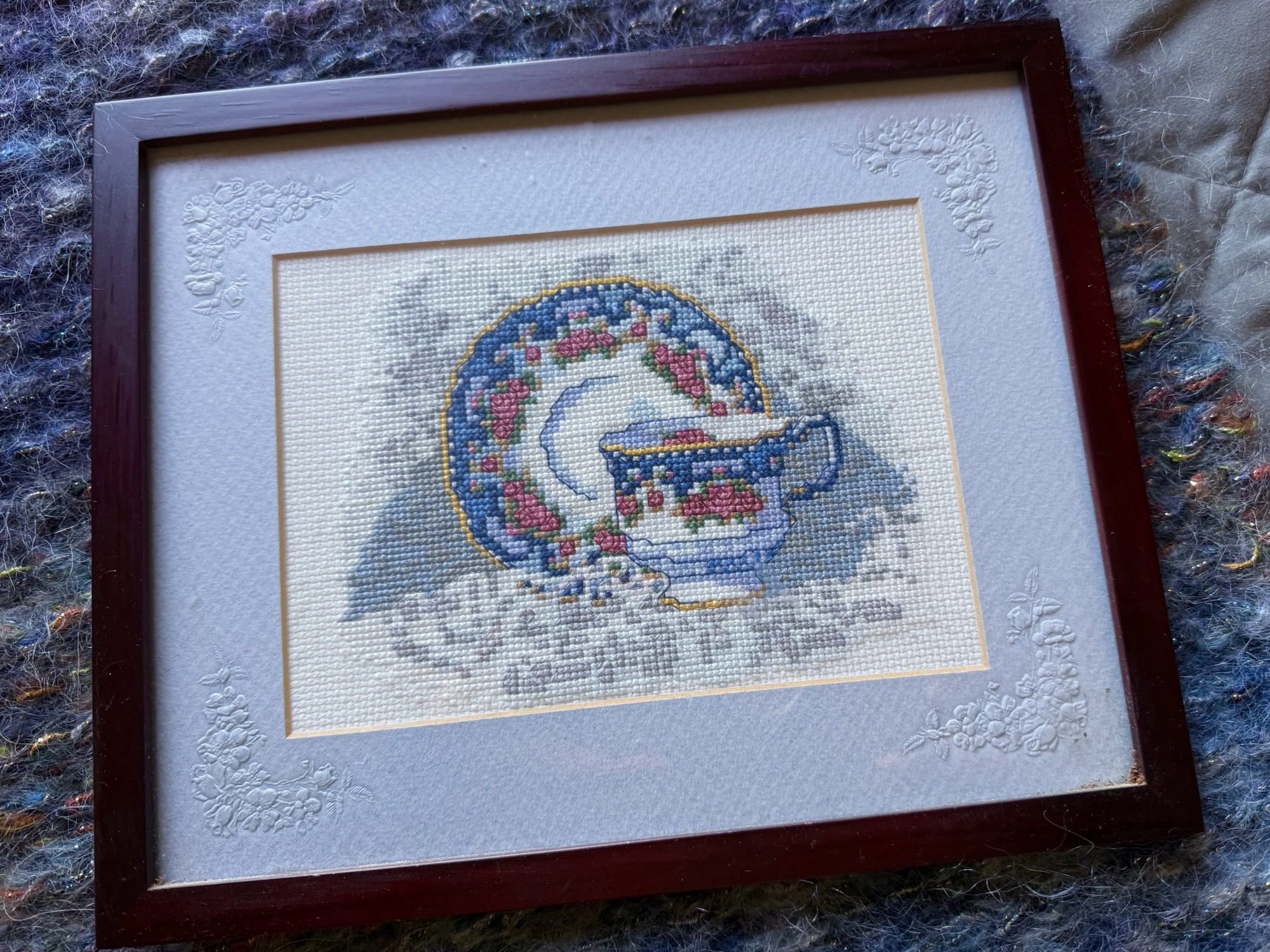
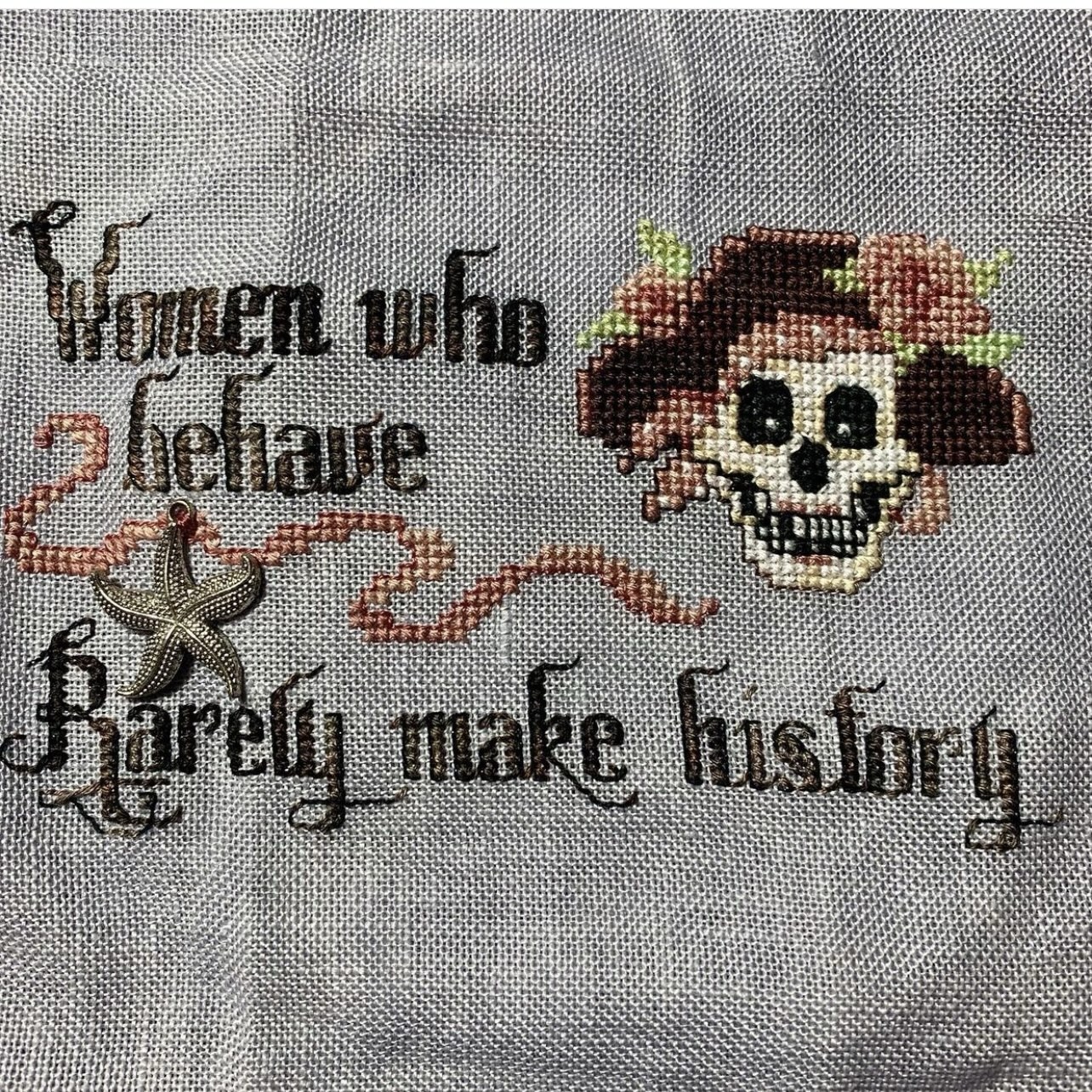
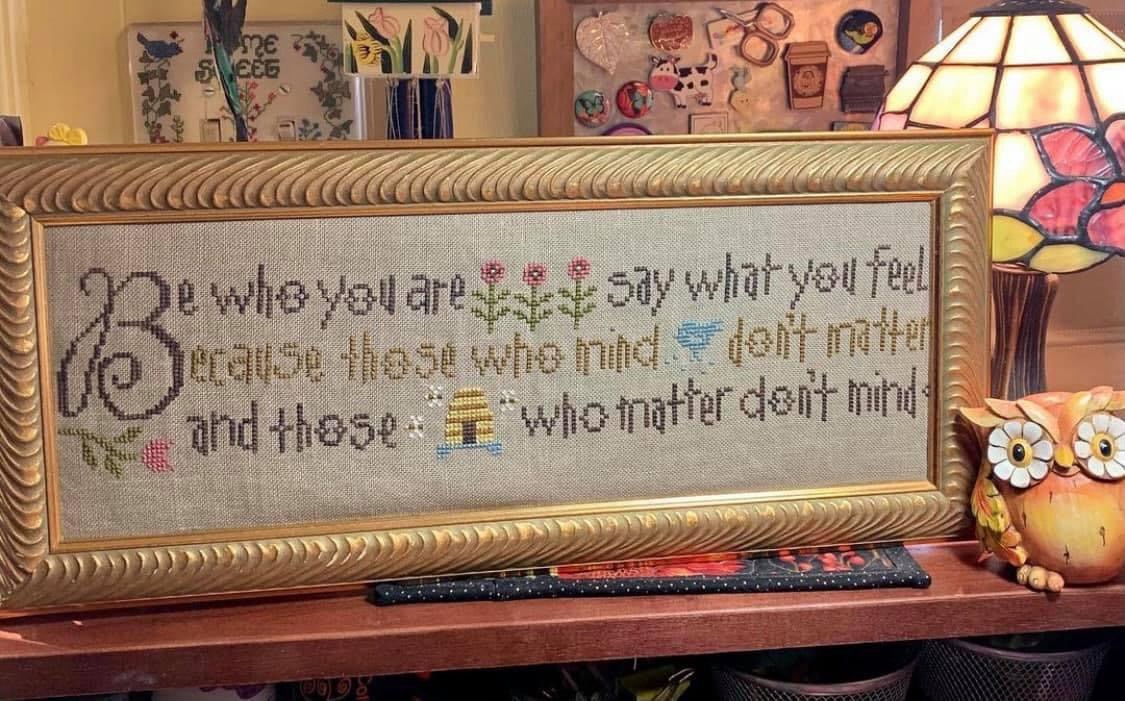
I’ll leave you with photos from my 80s and 90s stitchwork sprinkled throughout my house
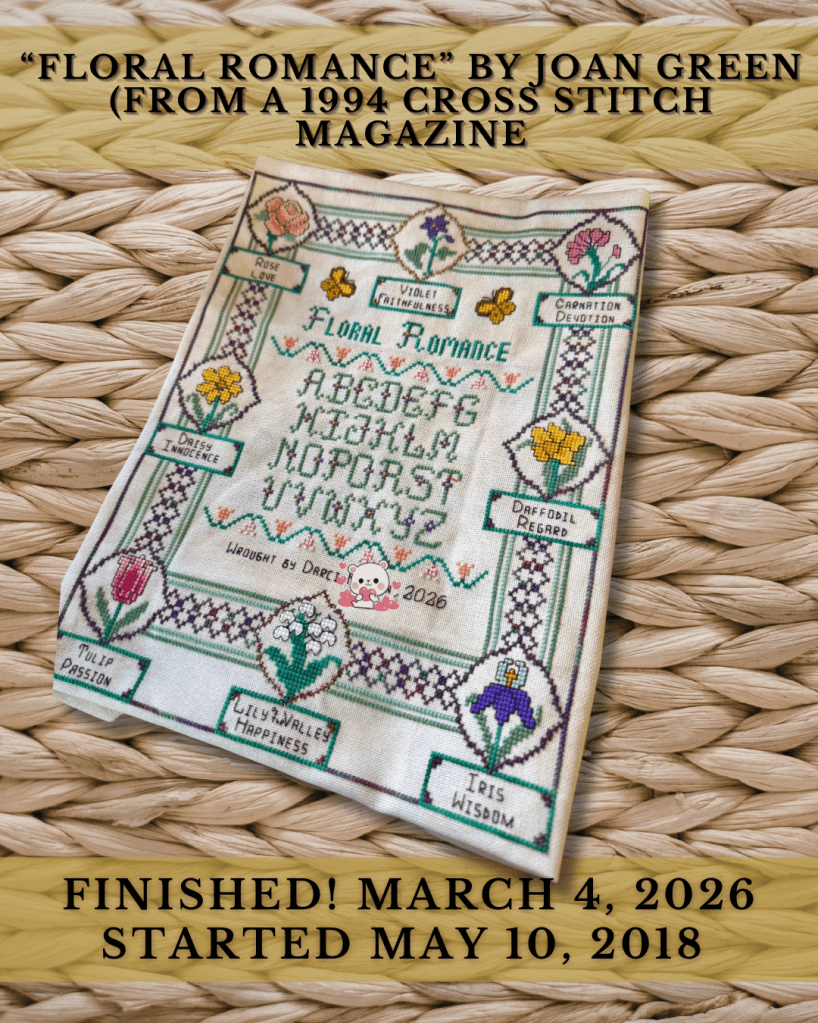
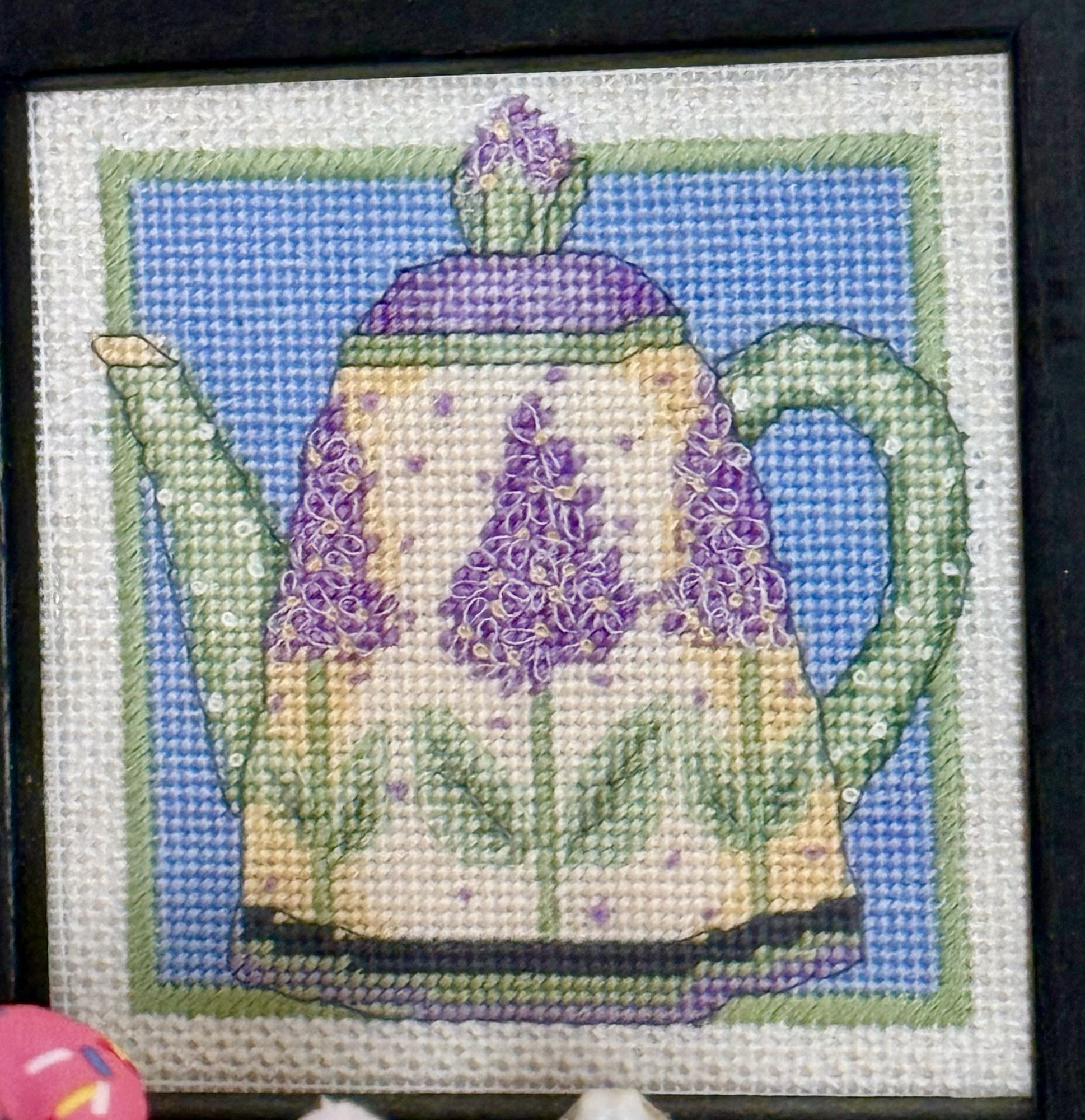
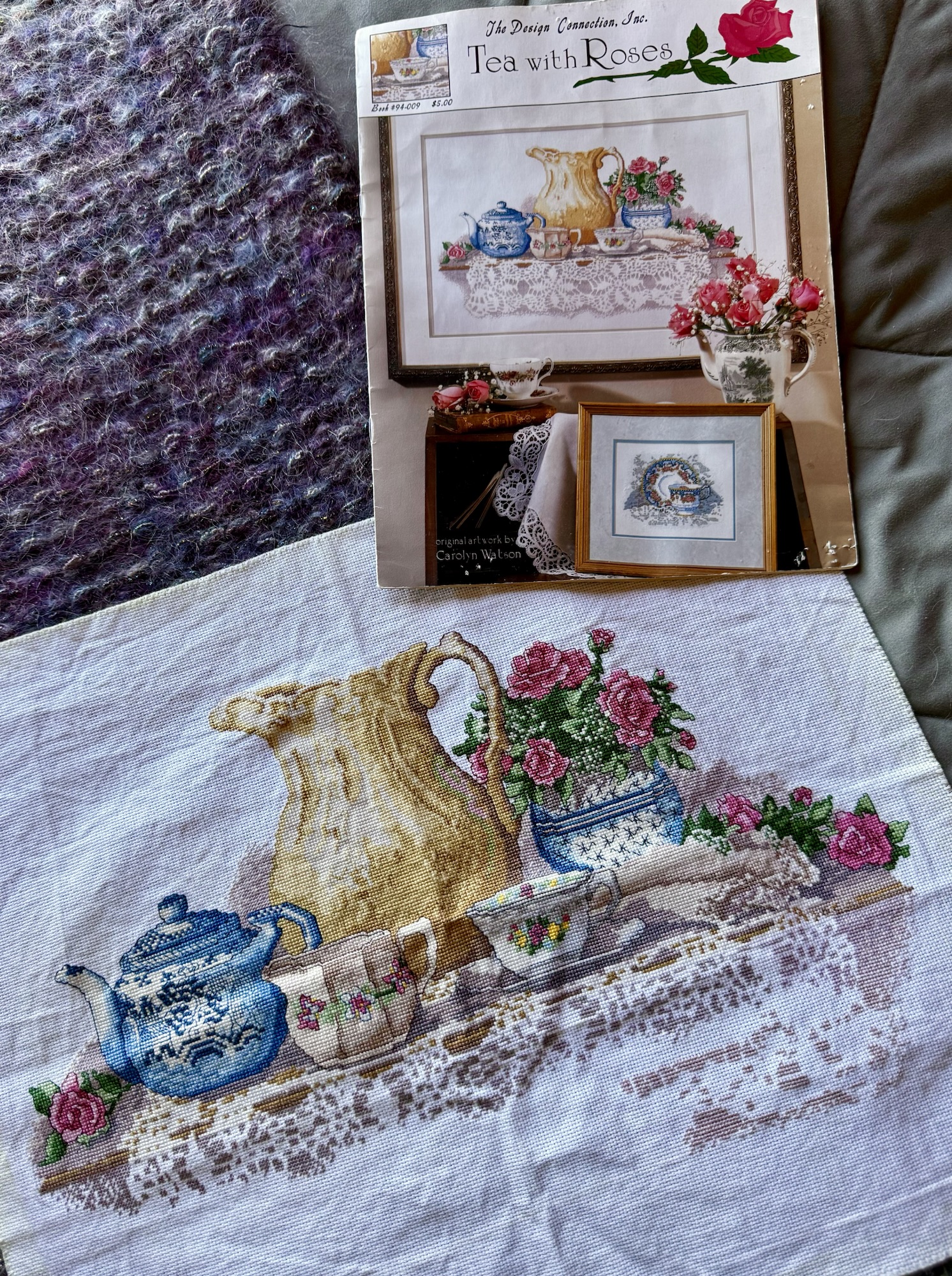
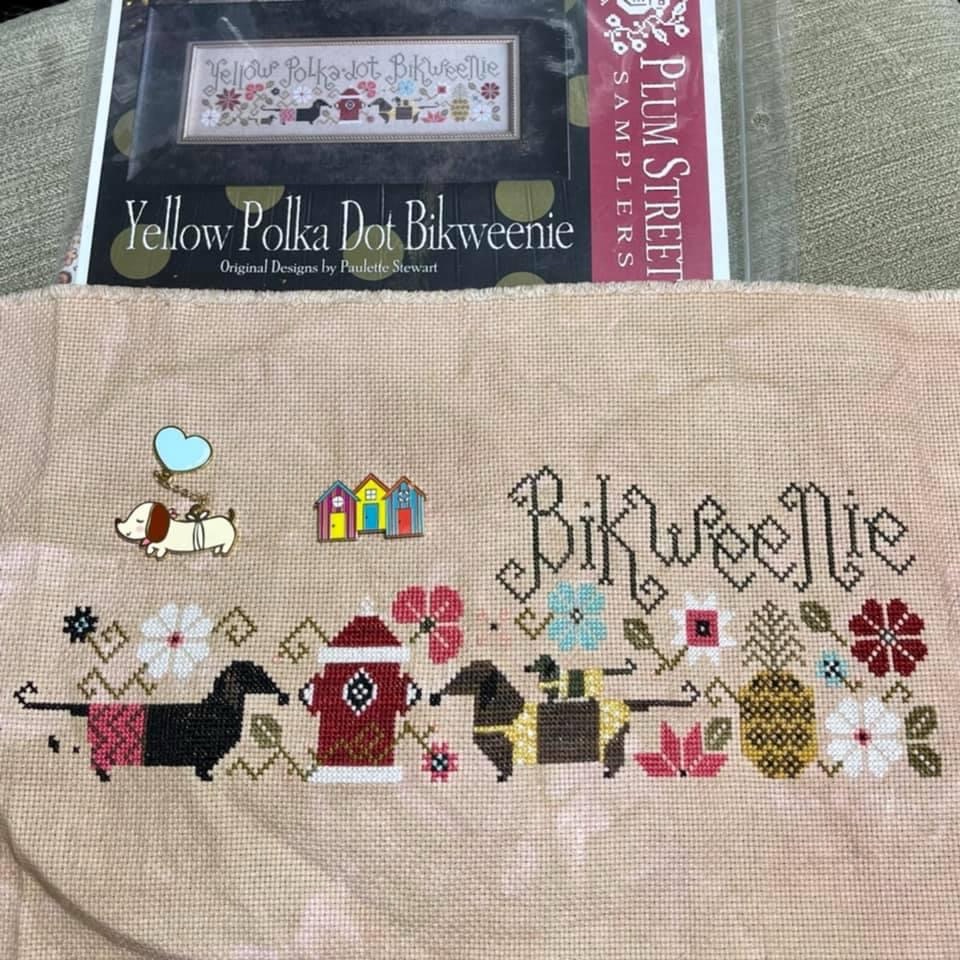
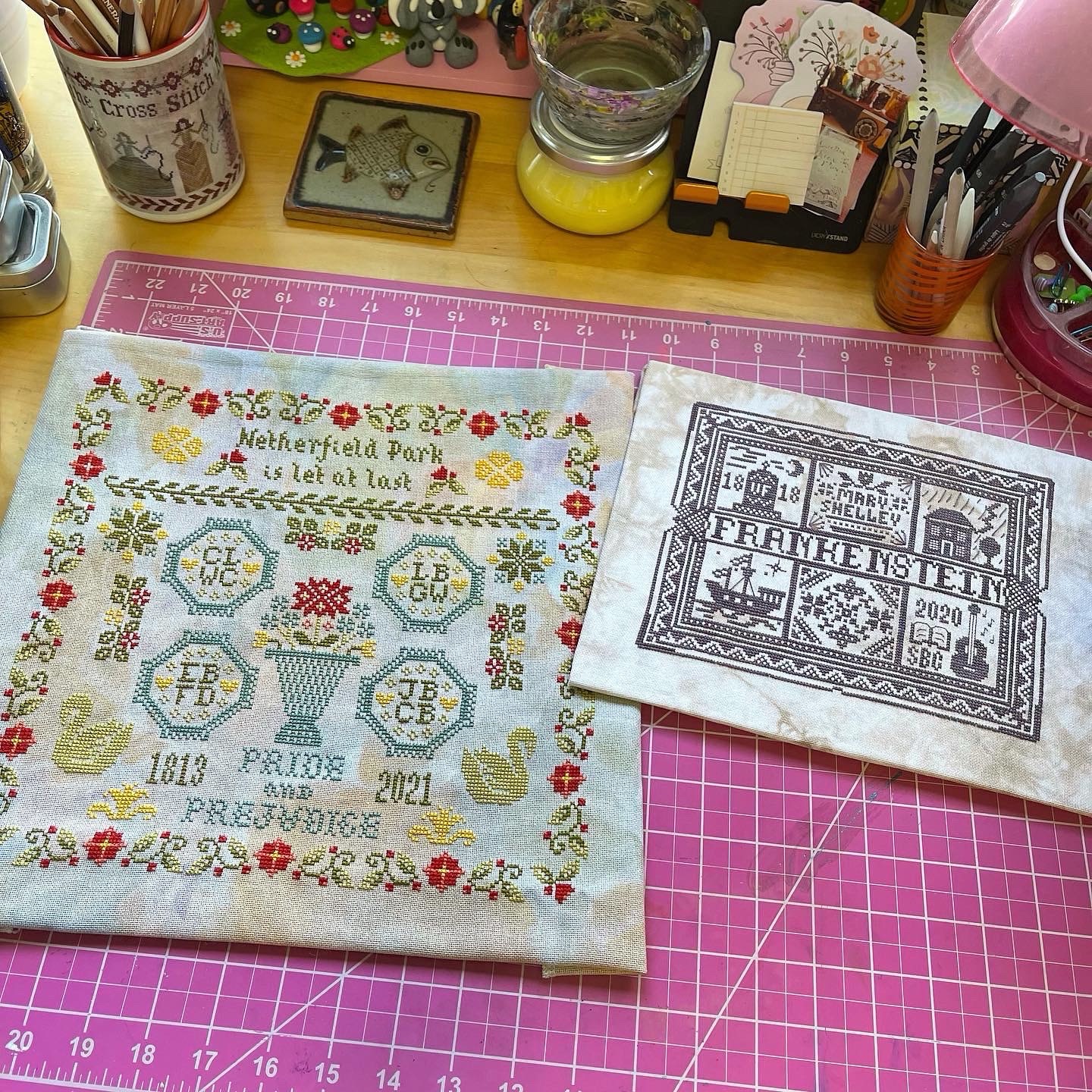
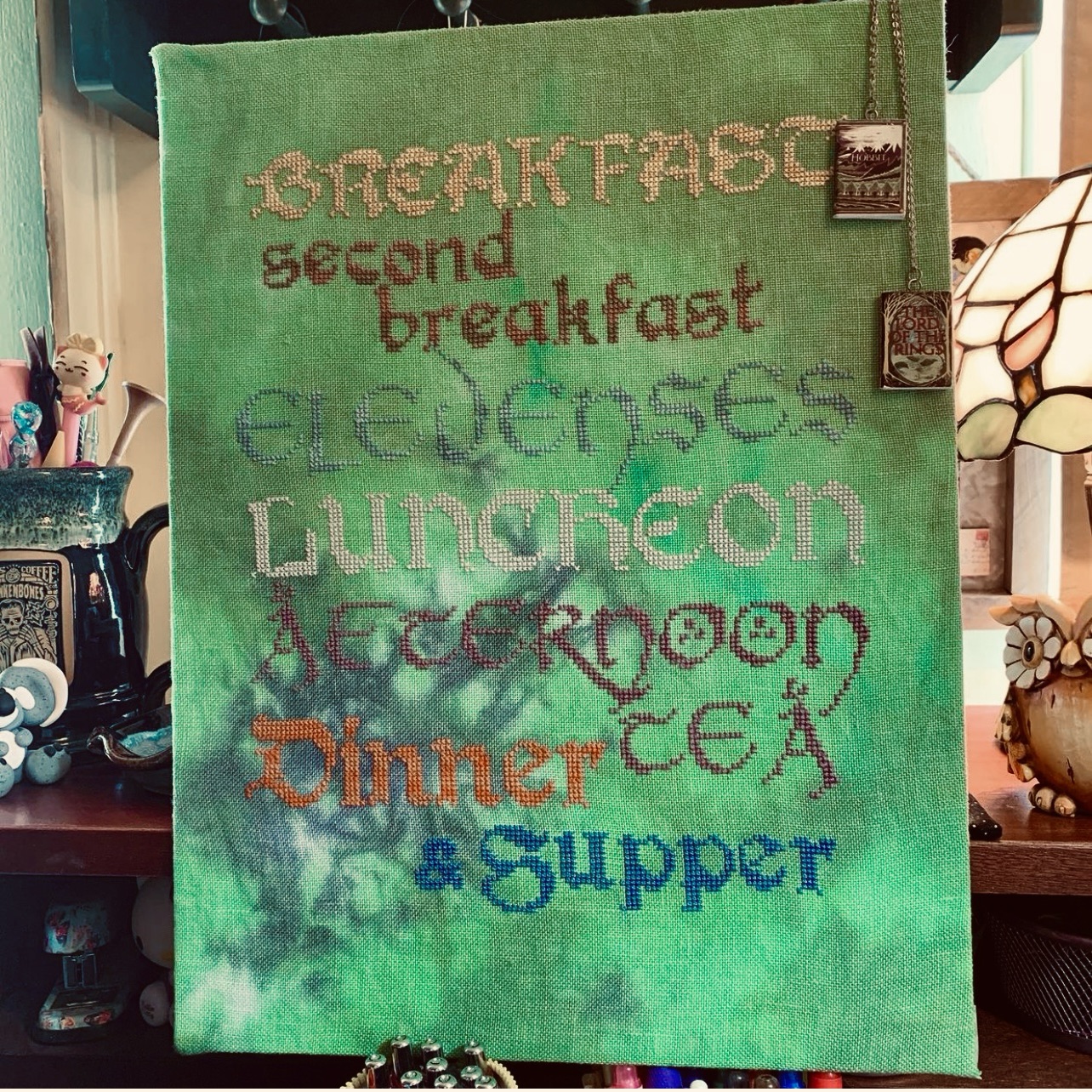
Some newer ones. As you can see, some still need finishing… Working on it.
Thanks for letting me catalog my stitchworks, as they will likely end up in a landfill someday… or maybe, if they’re lucky, in a thrift store for some future stitchworks-appreciator to collect. I’m not being negative, just realistic, and it’s something I’ve given a lot of thought to lately…
The nice steady slow beat where I can breathe and experience satisfaction in my handiwork. I hate to call it escape. Maybe “living” captures the time spent moving colorful silks and cotton through fabric with a needle.
I’m hoping some of my enjoyment will flow into the universe, and you’ll catch the vibe. (See the start of this series, and some of my beautiful stitching this past couple of weeks, in my previous post, and feel free to share your creative outlets.)
Not one fictional word written in two weeks… Wait, what?! But it’s true, and I’m doing okay. Hmmm… My pod people are quiet in my head. Maybe they needed a vacation, too.
So, instead of books and writing, I’m sharing my craft projects, old, and yes! New! I’ve caught the bug again after watching “Flosstube” videos with all the wonderful designs being shown off. I have tons of stash to dive into, but naturally I’m missing certain colors, which leads to retail therapy… Yes! Another benefit of embracing this surprising whiplash turn in my daily life. Somehow, writing doesn’t spark the same need to buy as other crafts do… but that’s a blog for another day.
Retail Therapy
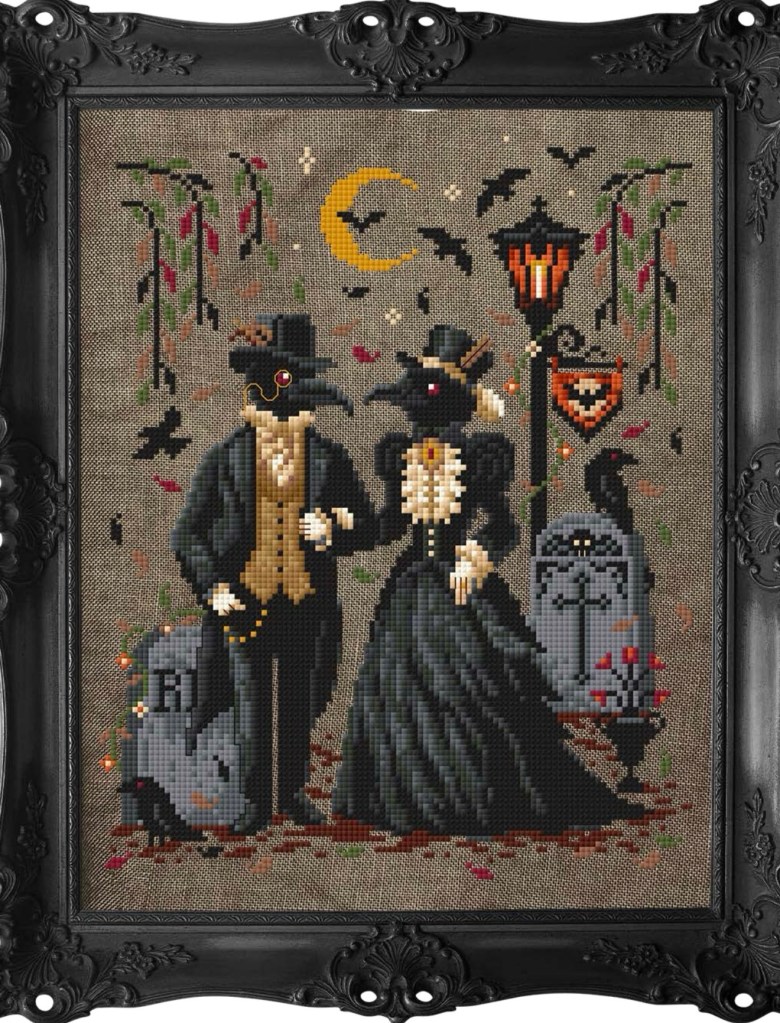
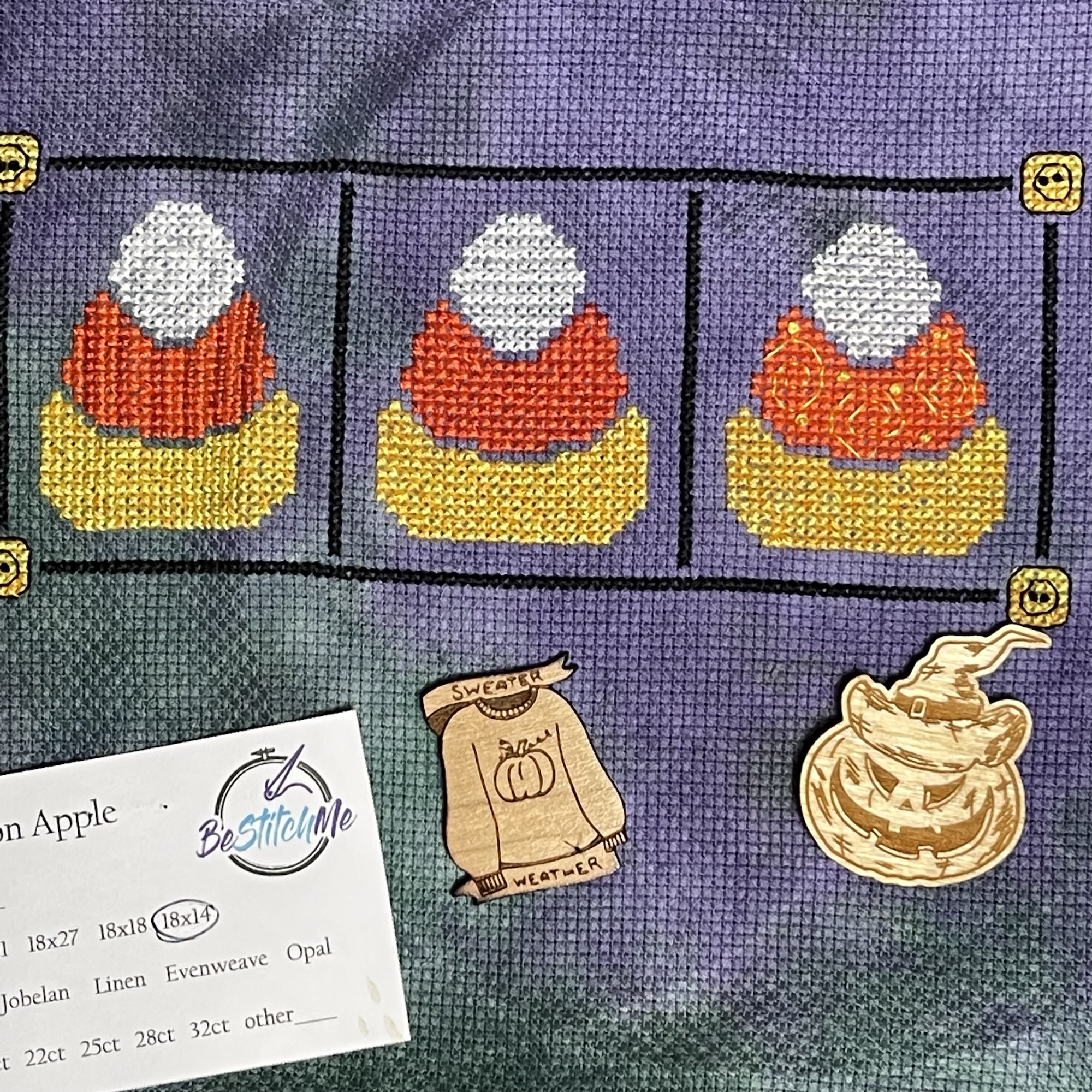
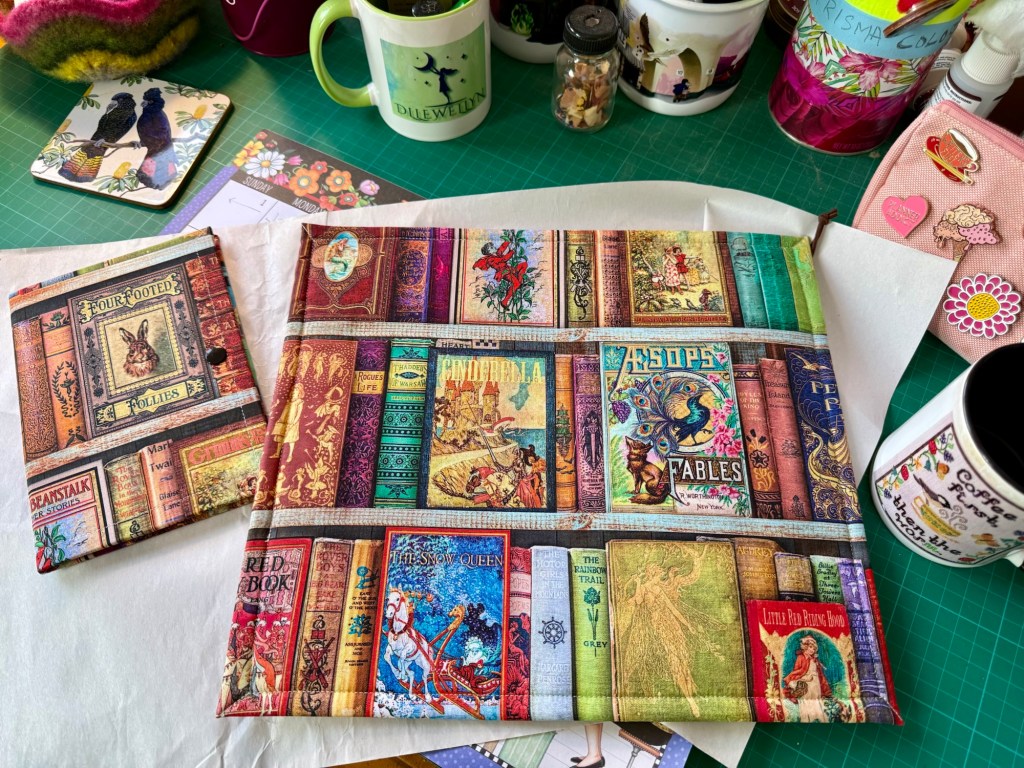
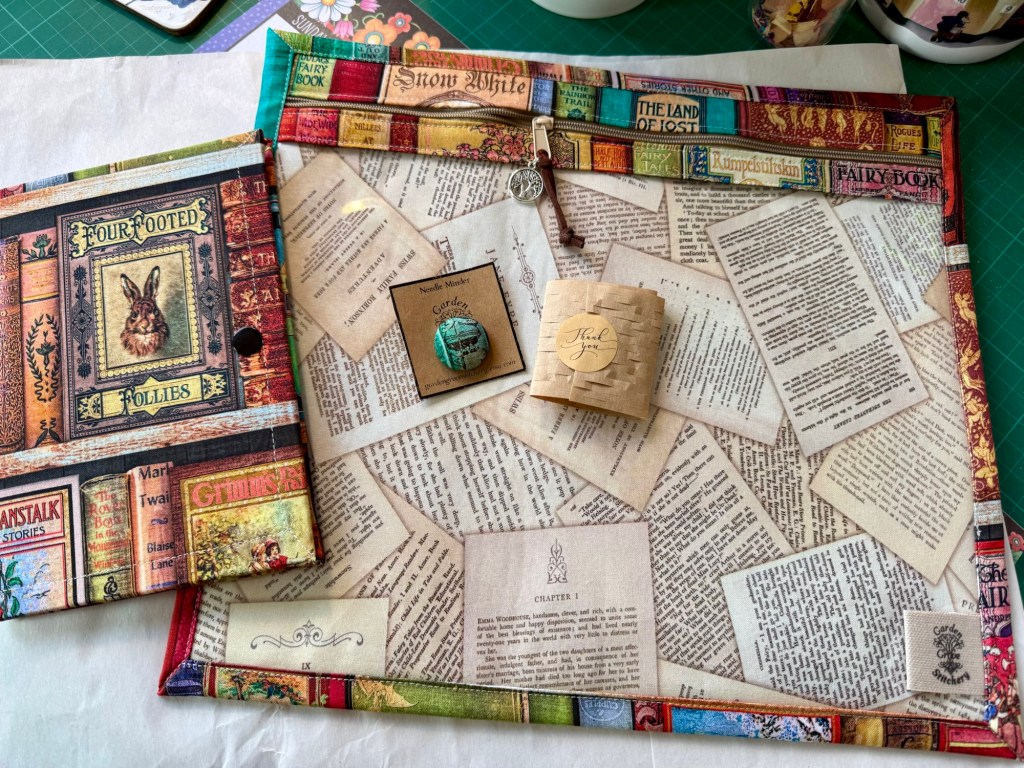
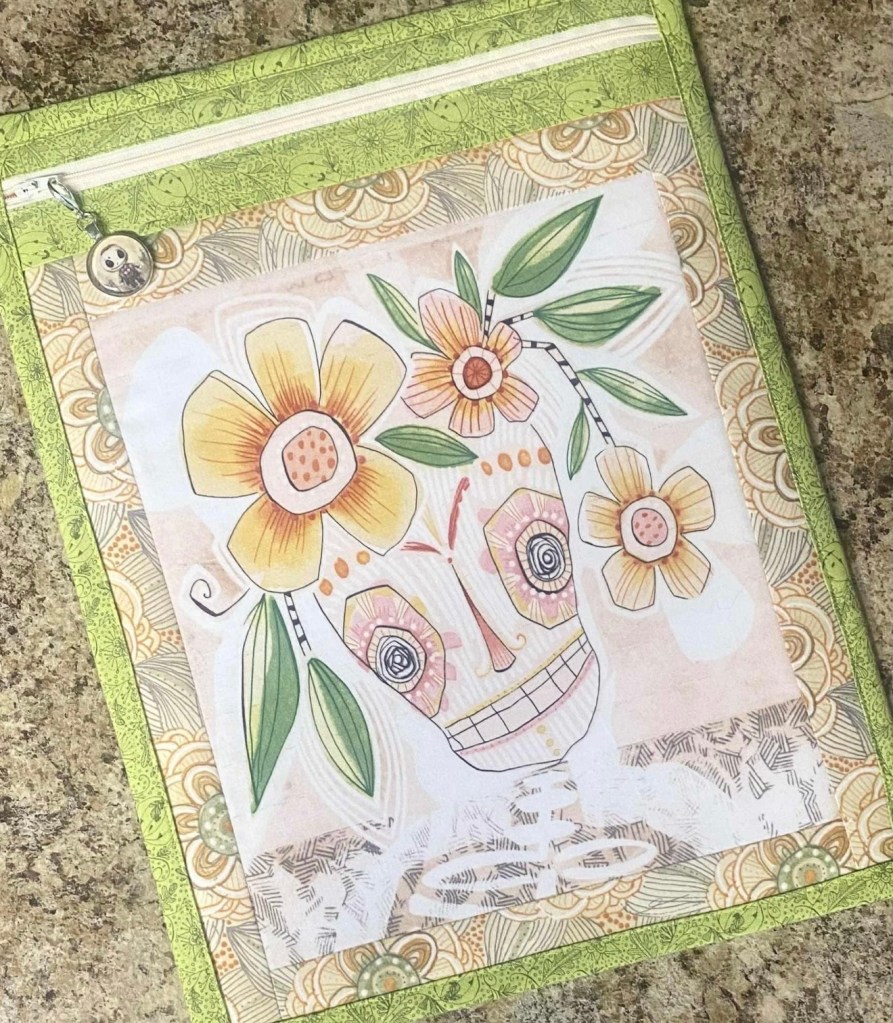
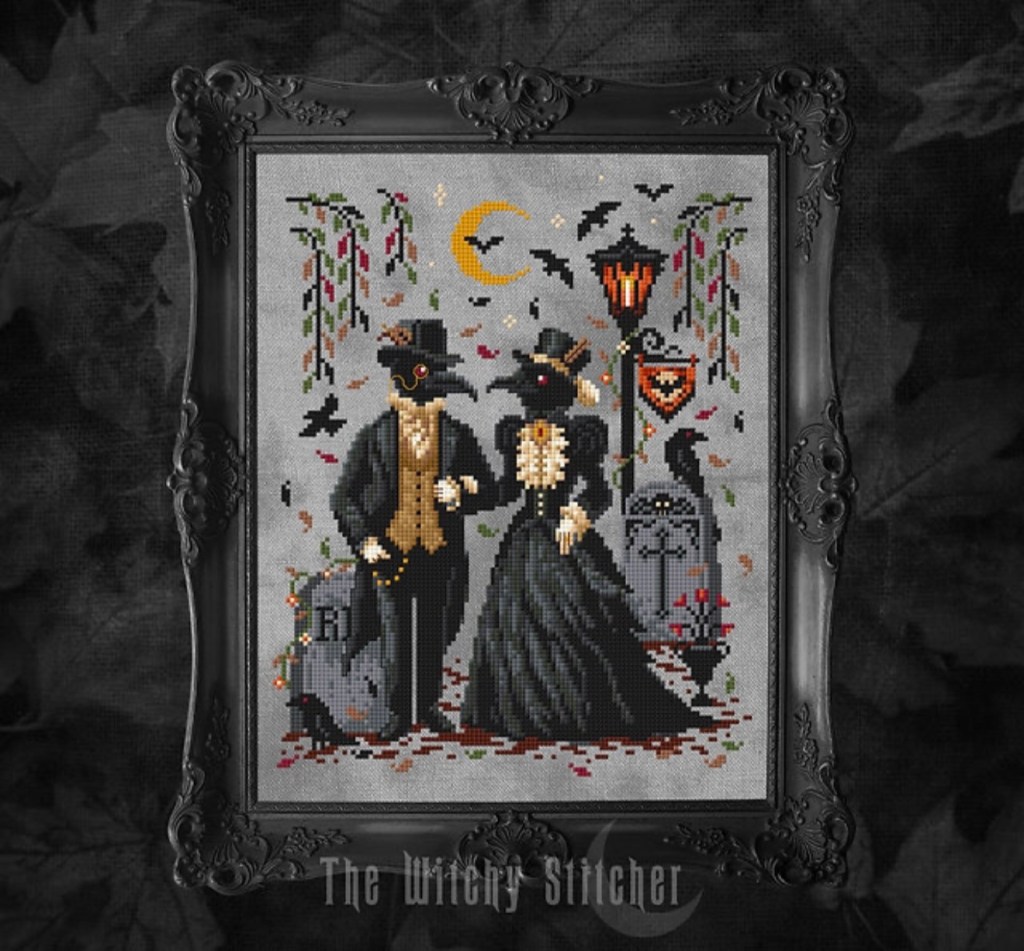
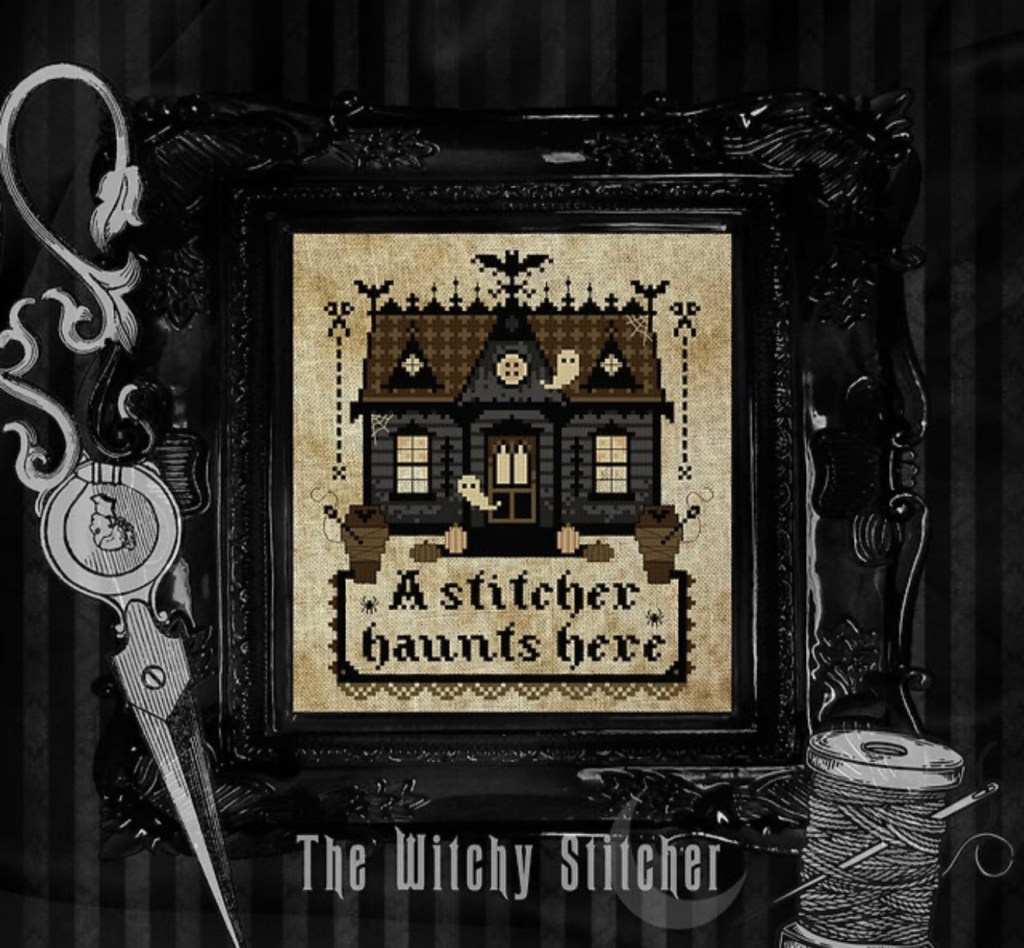
A tiny sample of favorite shops: 123Stitch.com for DMC and Weeks Dye Works floss, Etsy (so much cross stitching!) for patterns and specialty floss, and other items like these gorgeous project bags. My favorite goth pattern designer is The Witchy Stitcher for the eerie and quirky. My favorite fabrics come from BeStitchMe.com
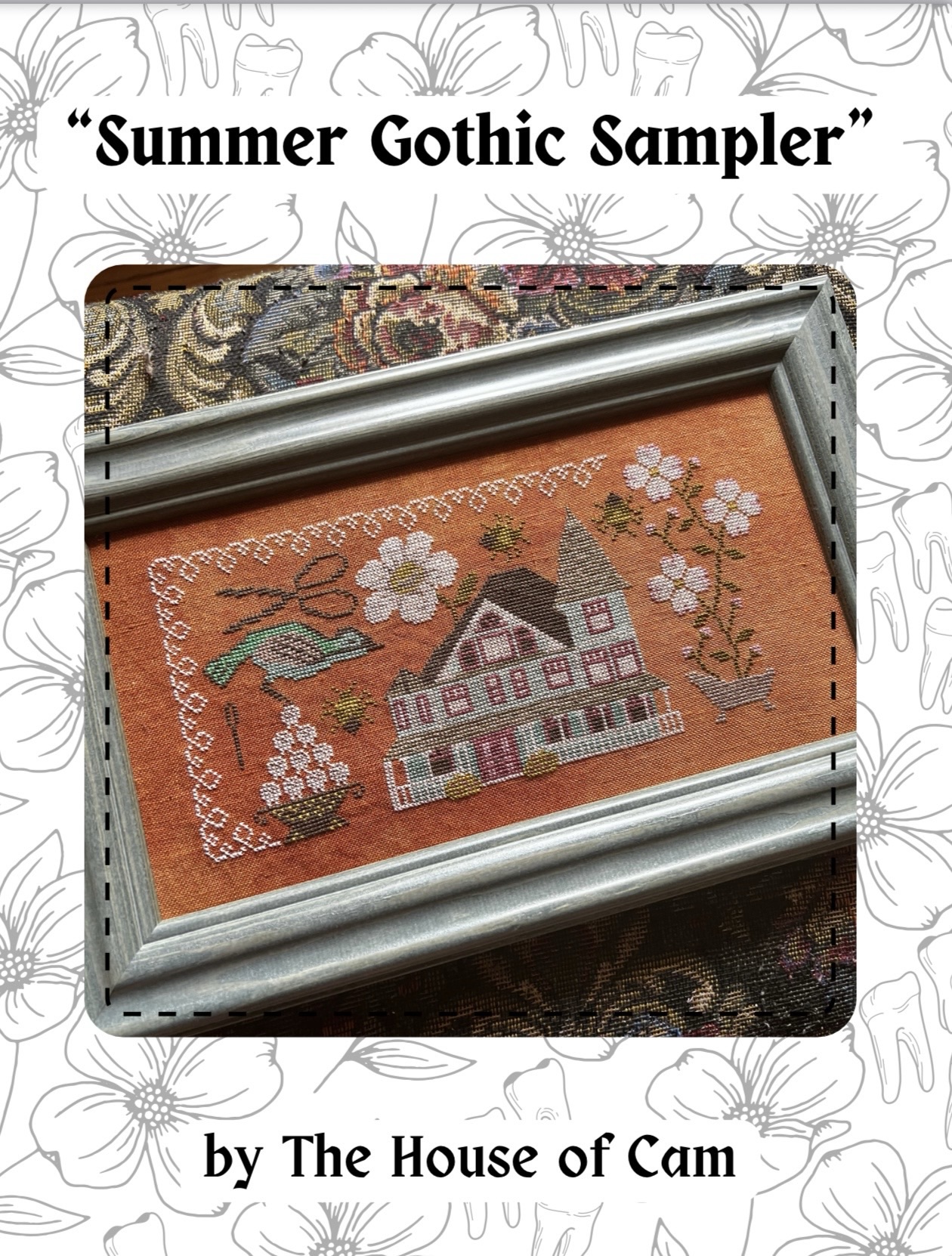
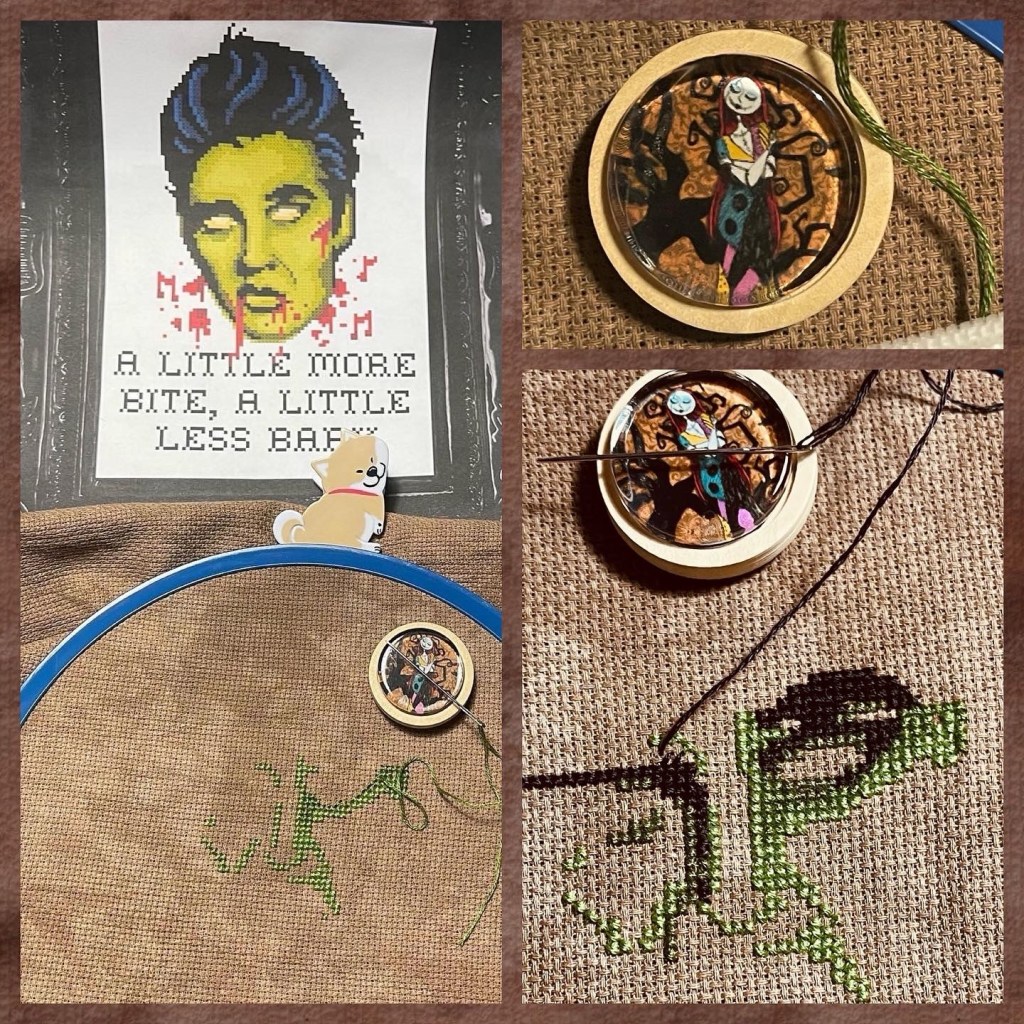
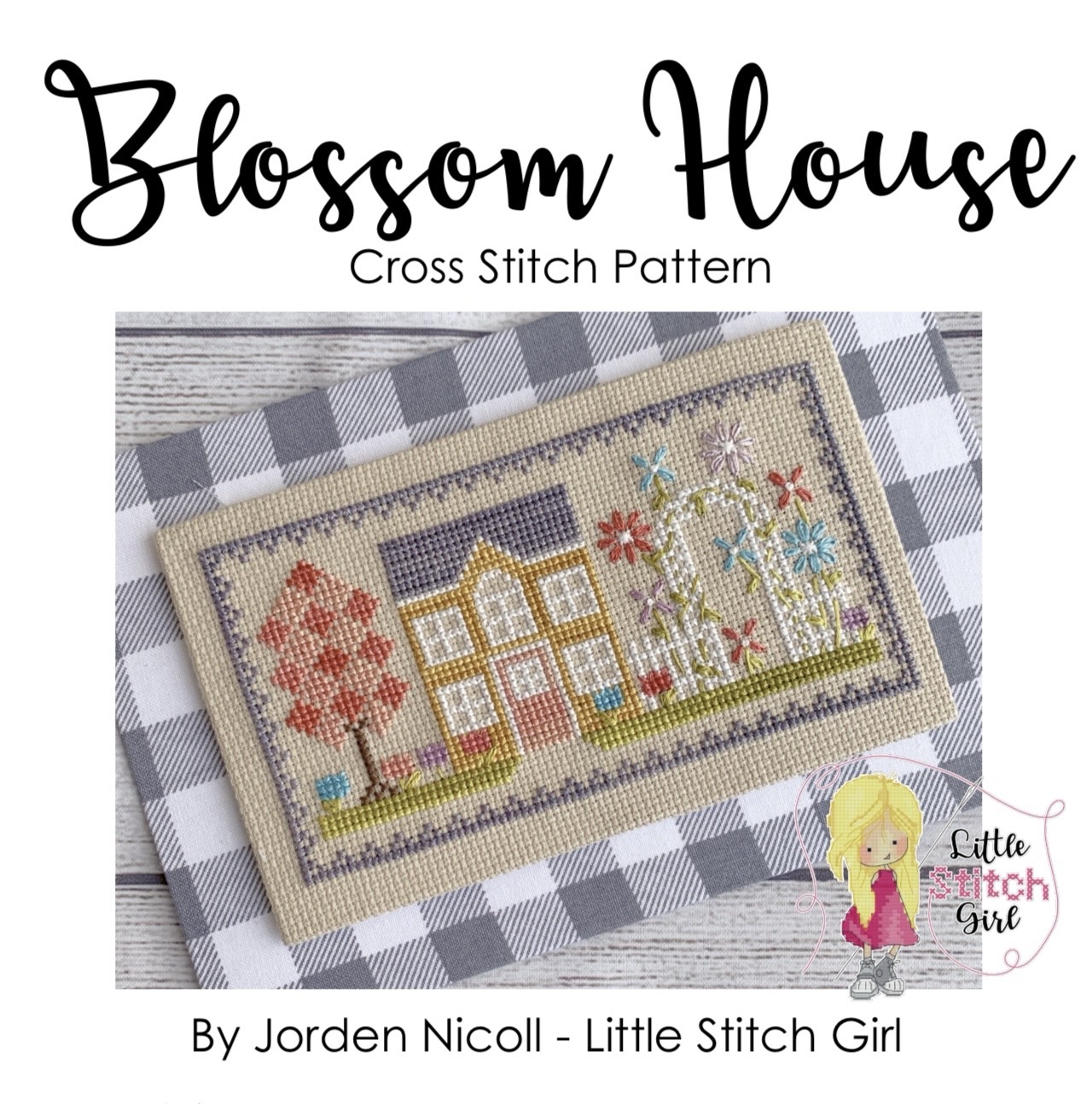
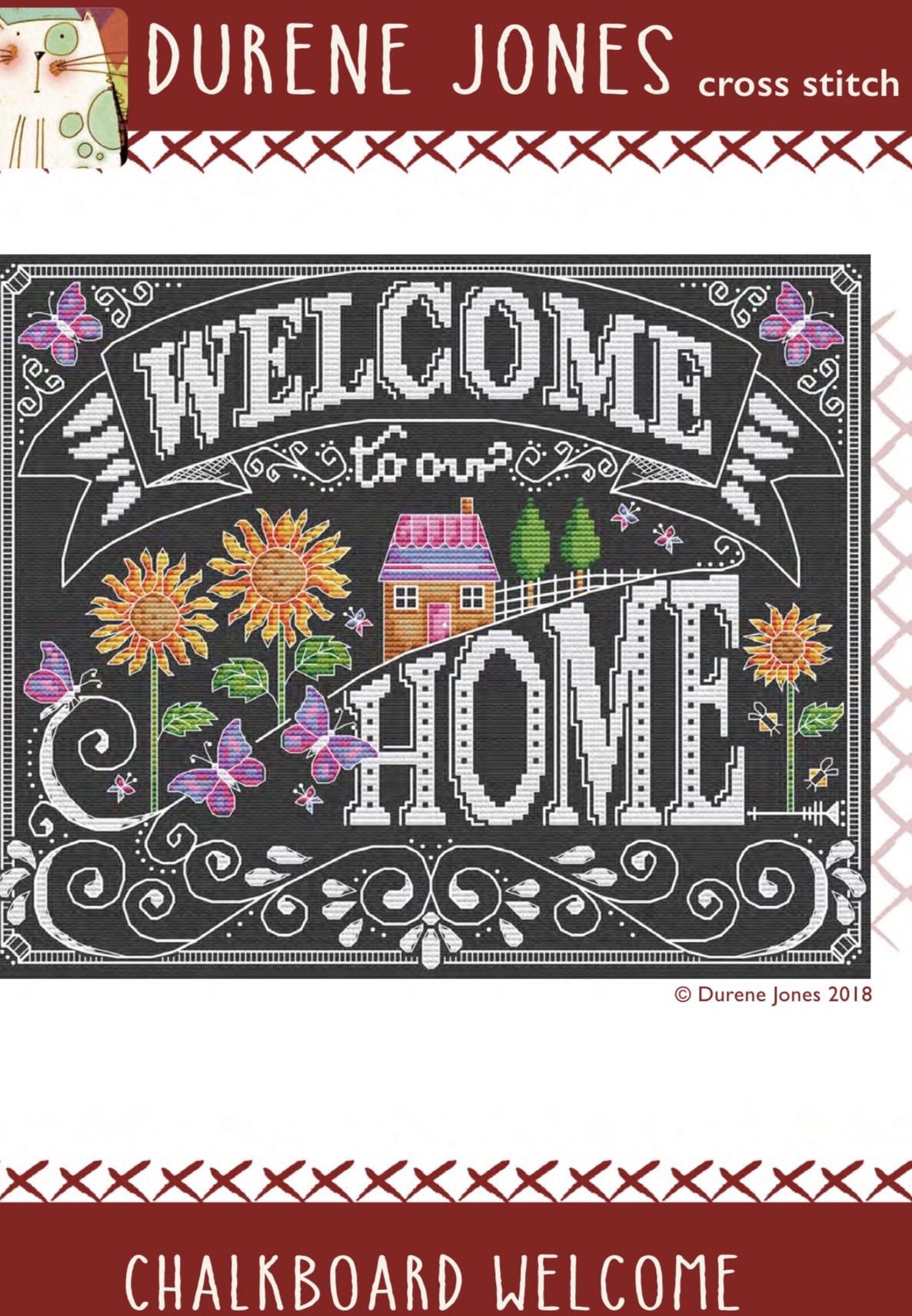
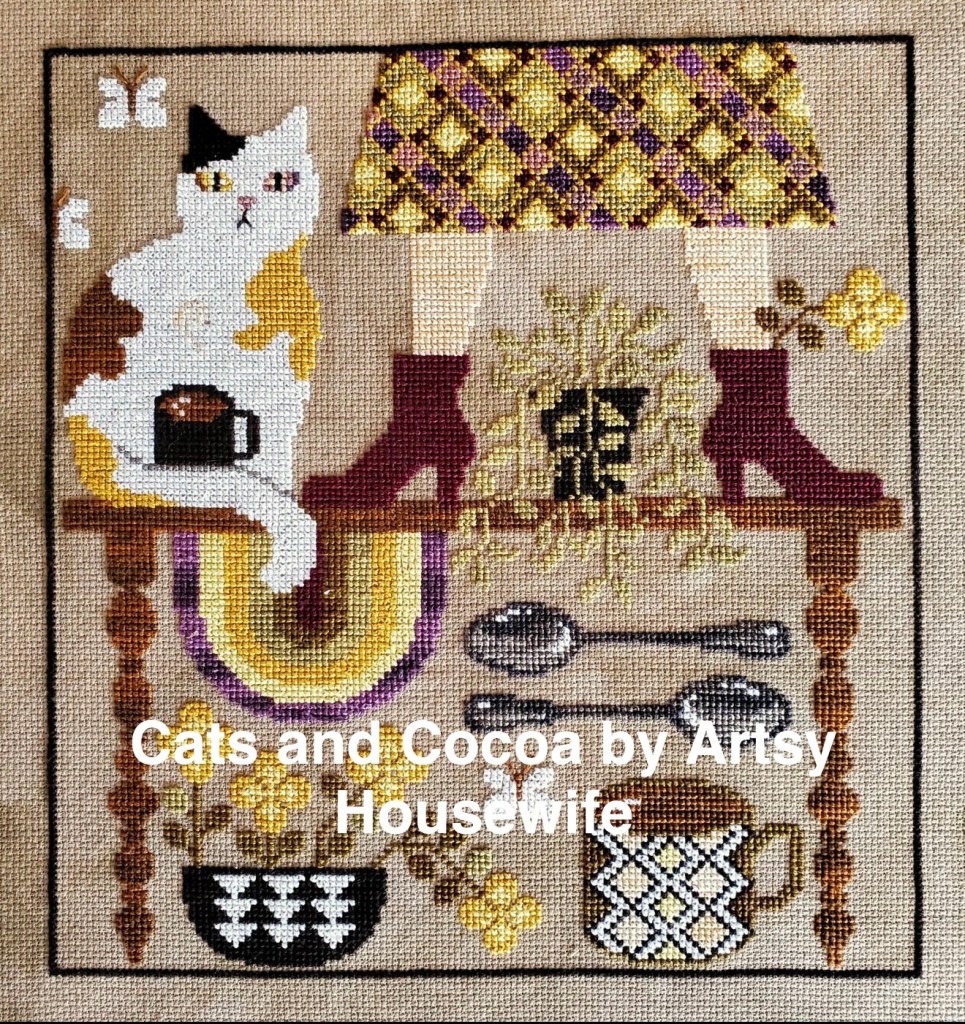
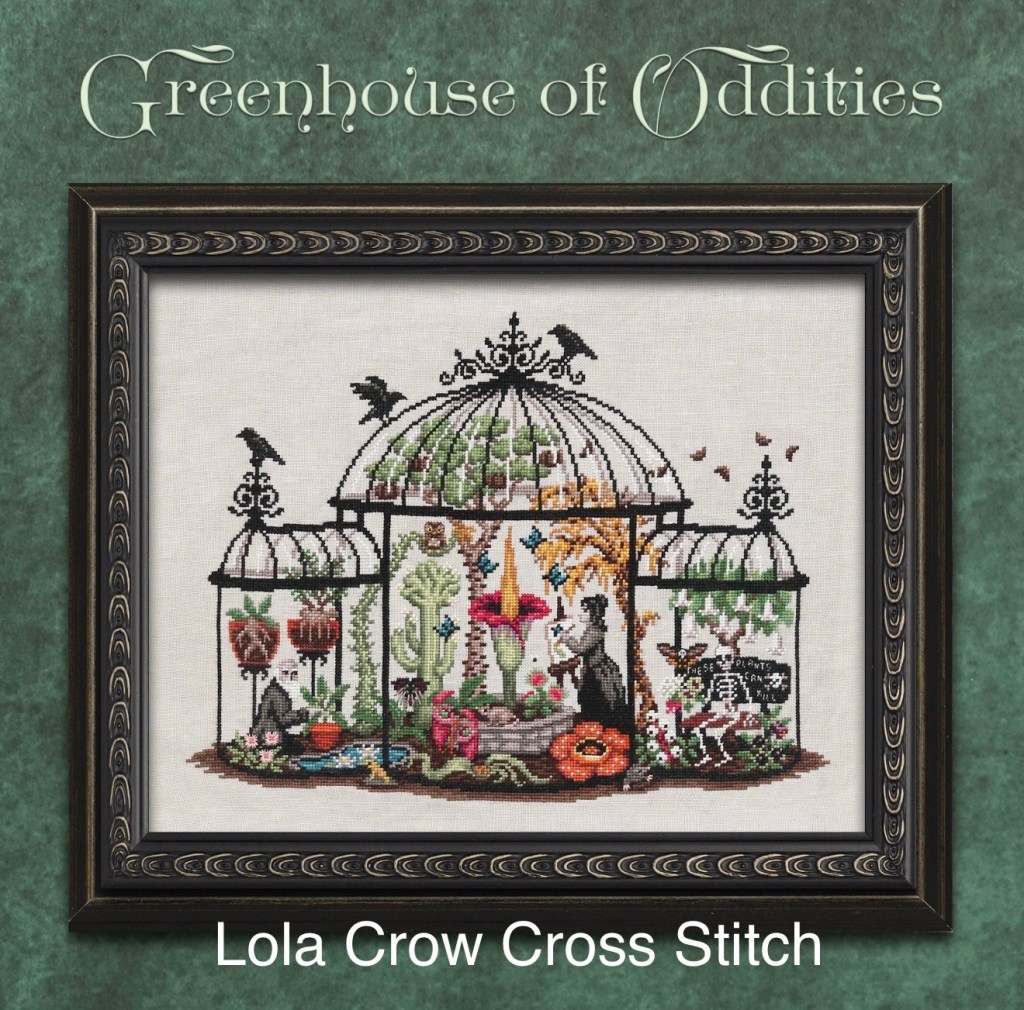
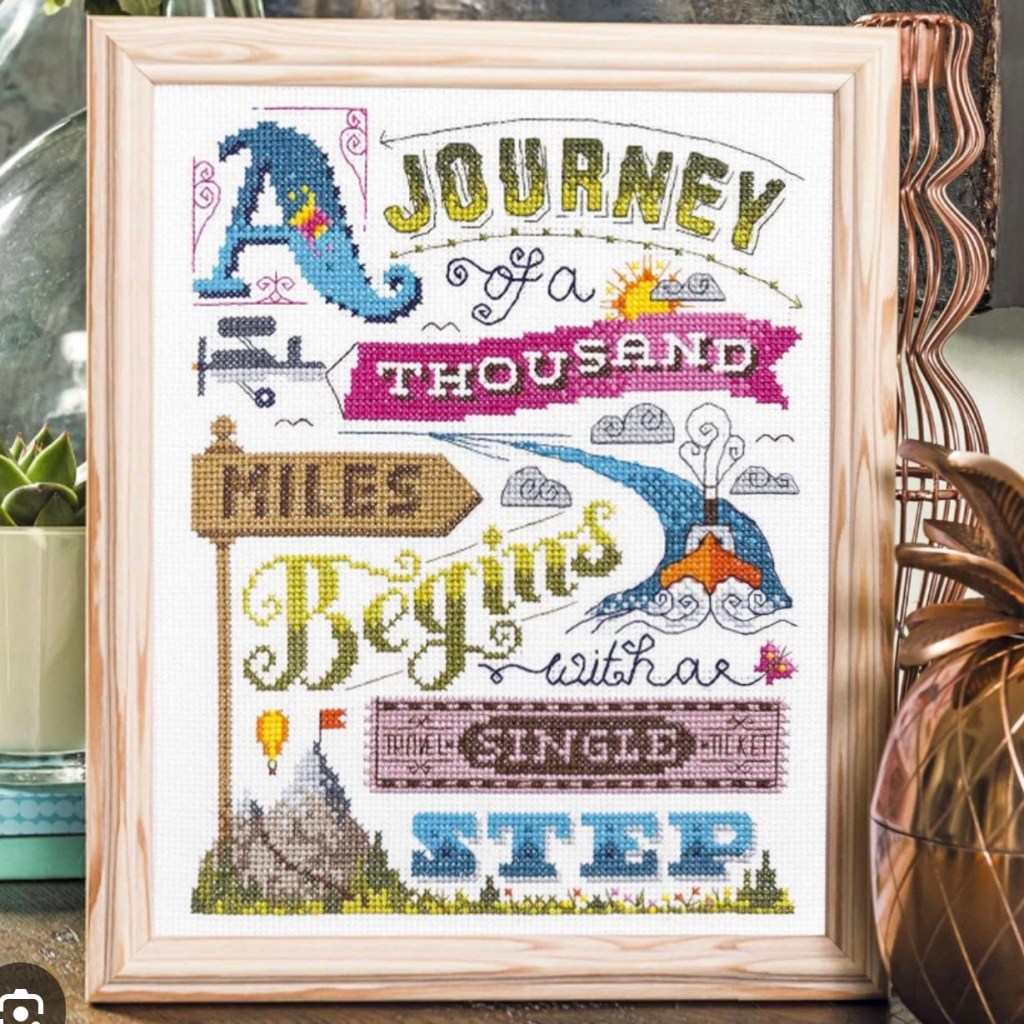
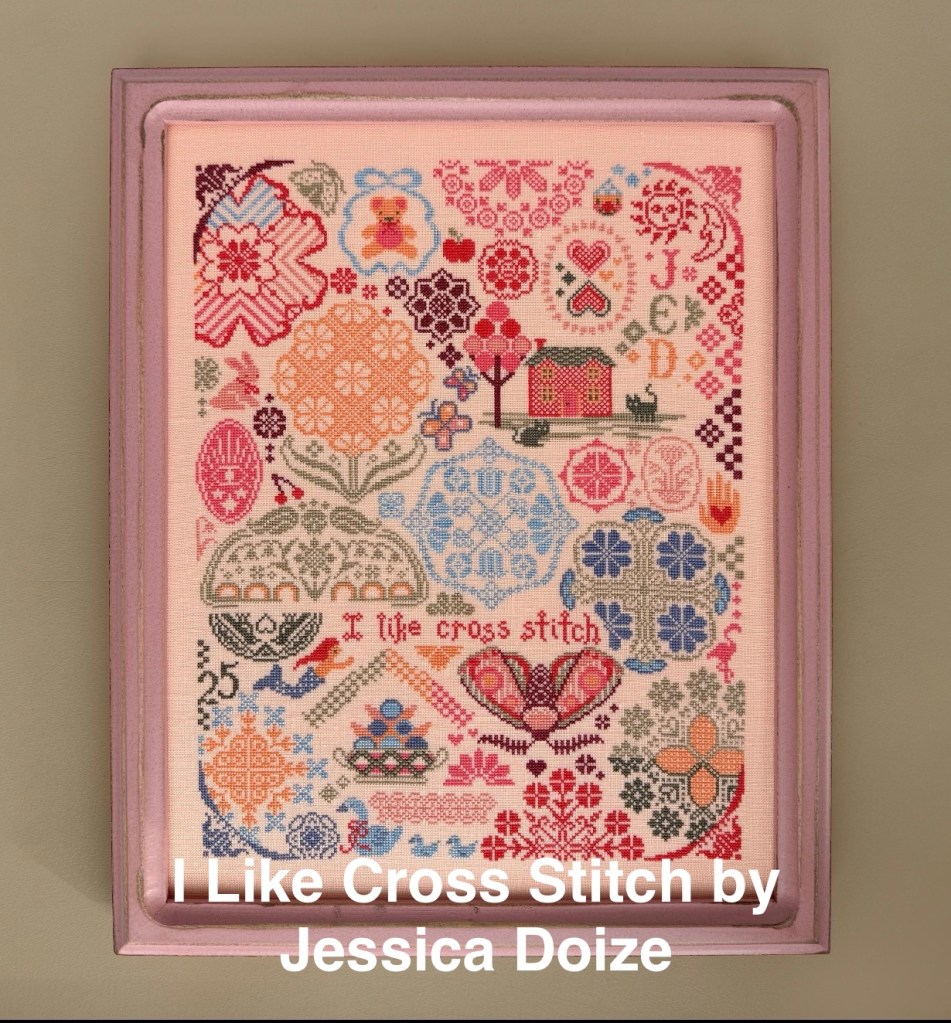
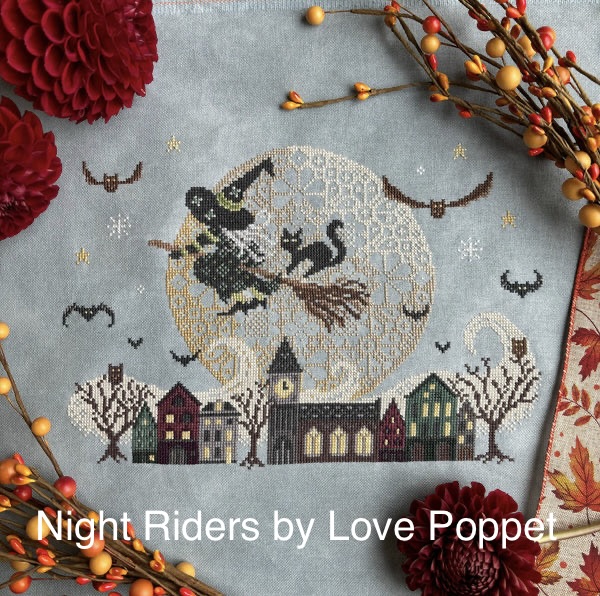
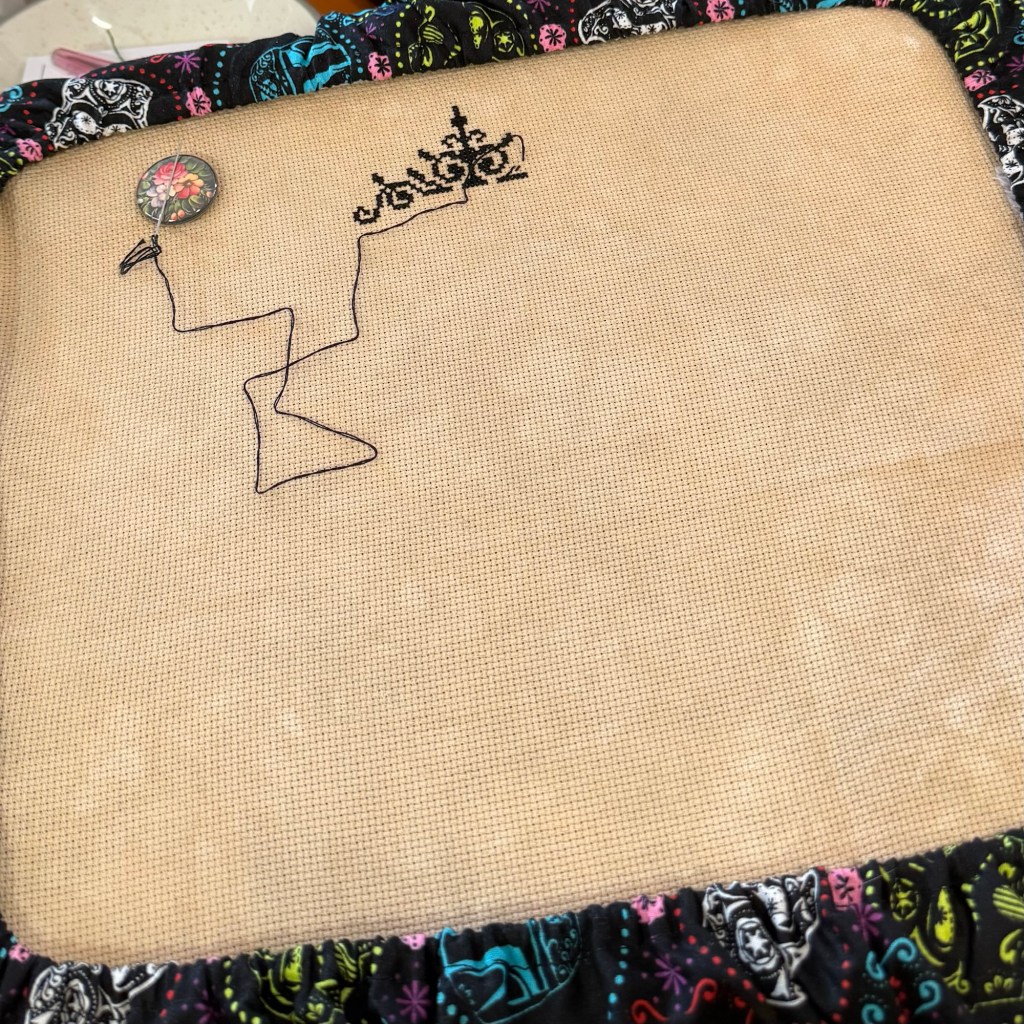
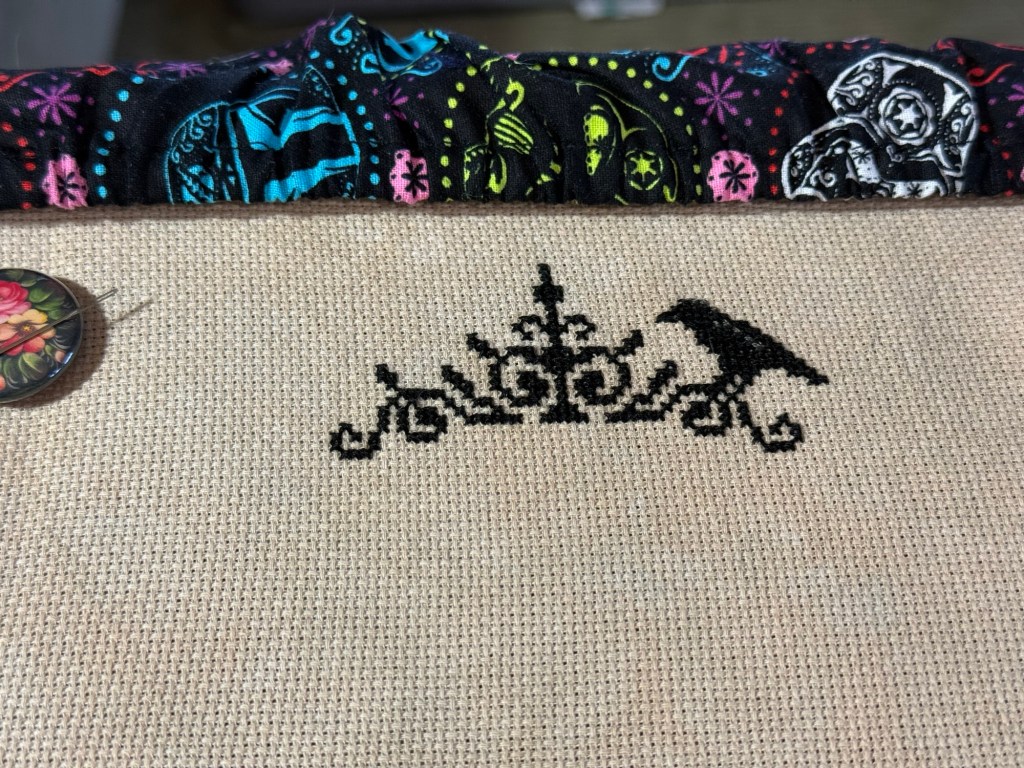
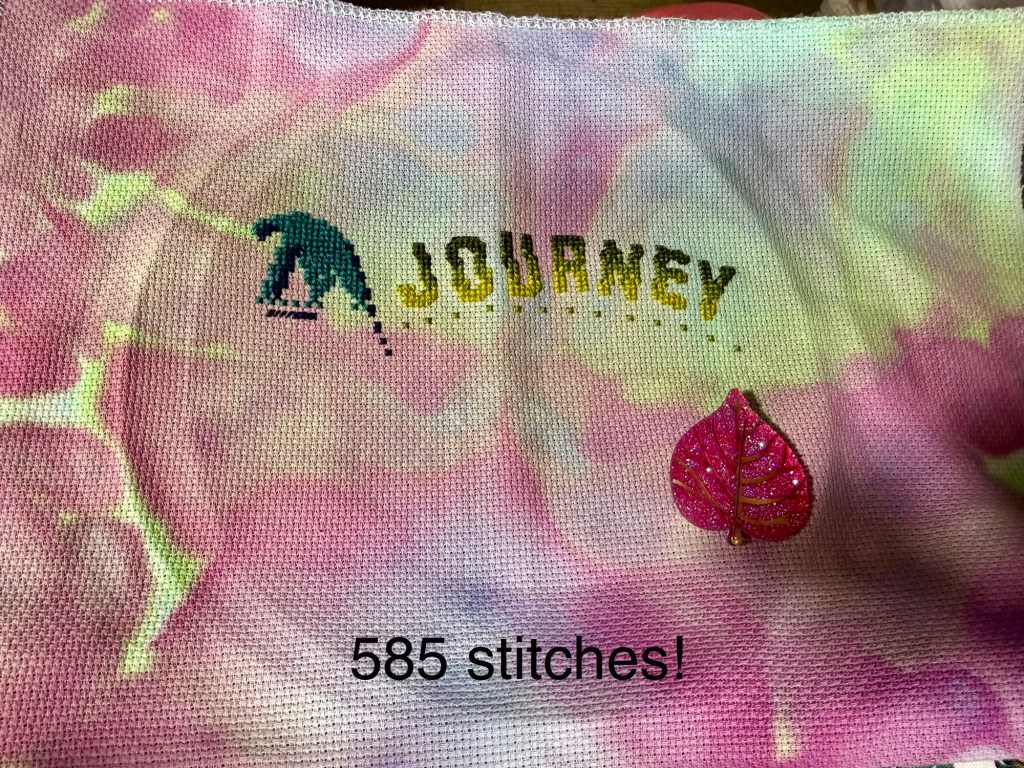
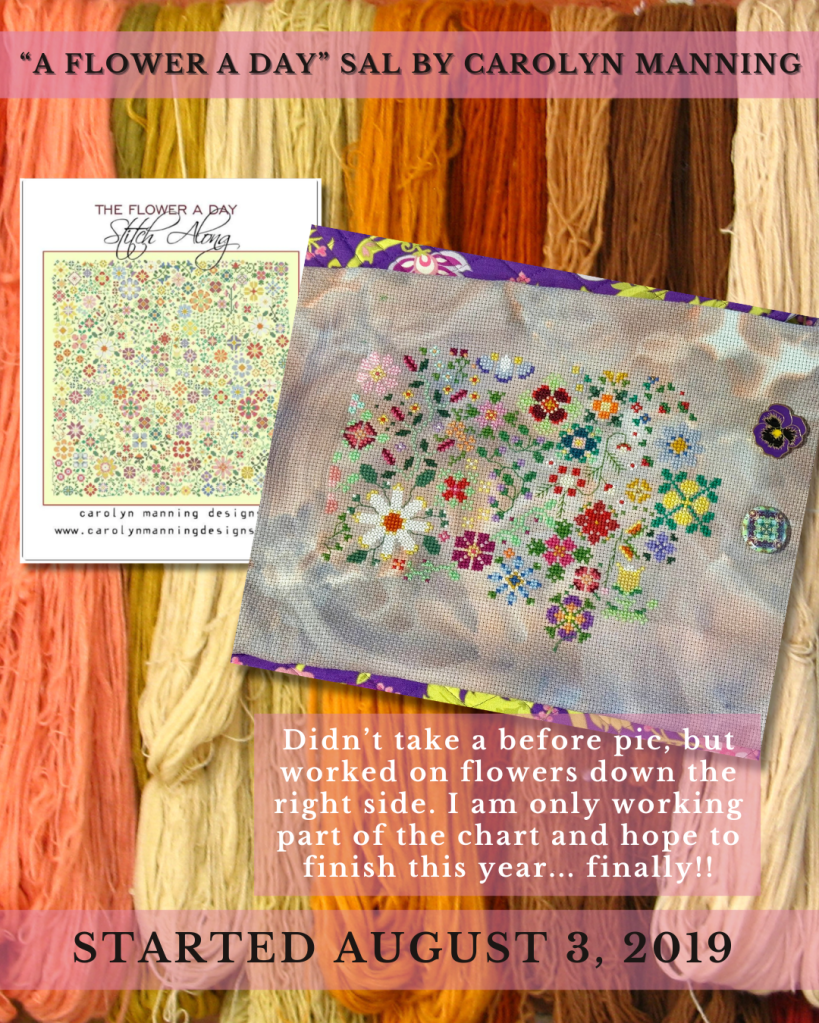
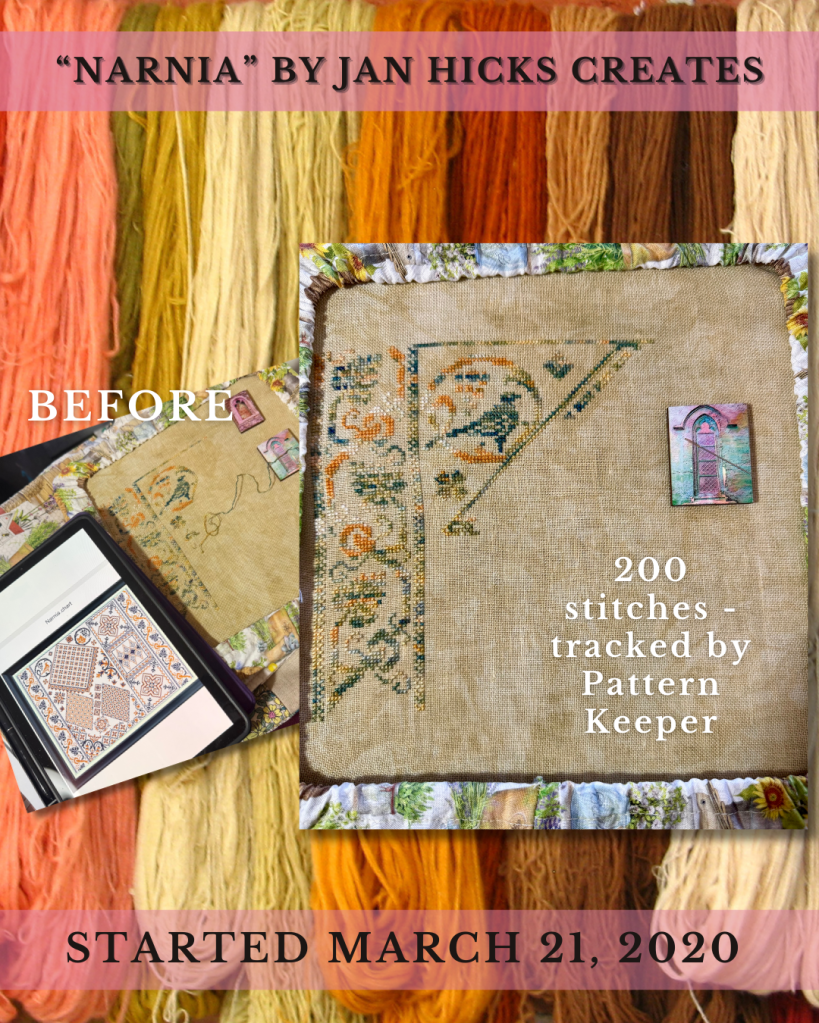
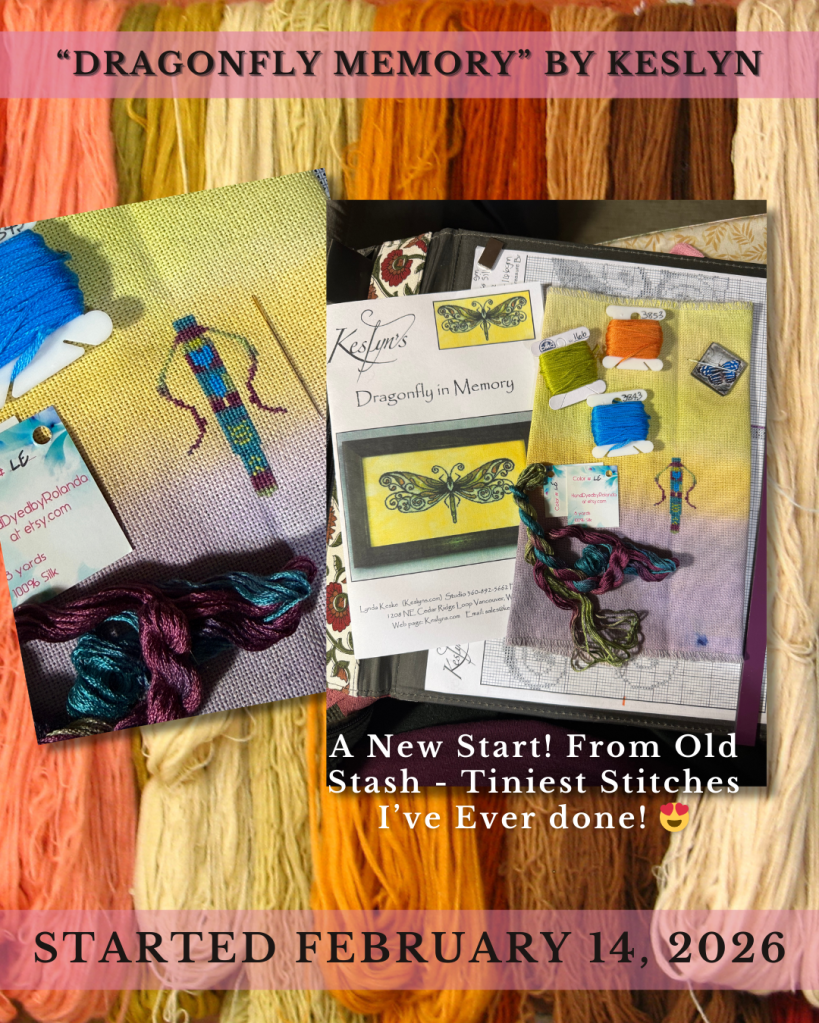
The most exciting part of this birthday month adventure has been kitting up for new starts. Check out these designs I purchased after watching too many enablers on FlossTube. (That’s my excuse and I’m sticking to it.) I’ve made significant starts in “Greenhouse of Oddities,” “Cats and Cocoa,” and “I Like Cross Stitch.” I even started an old pattern from my stash, “Single Step” by Stichrovia.
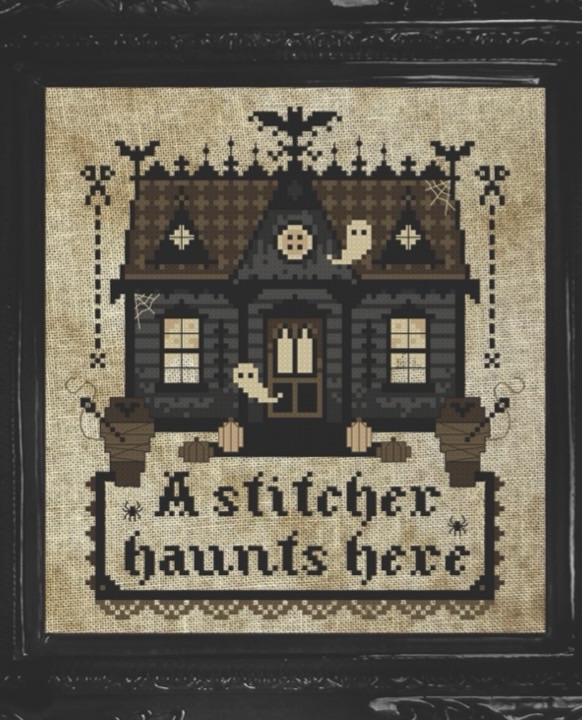
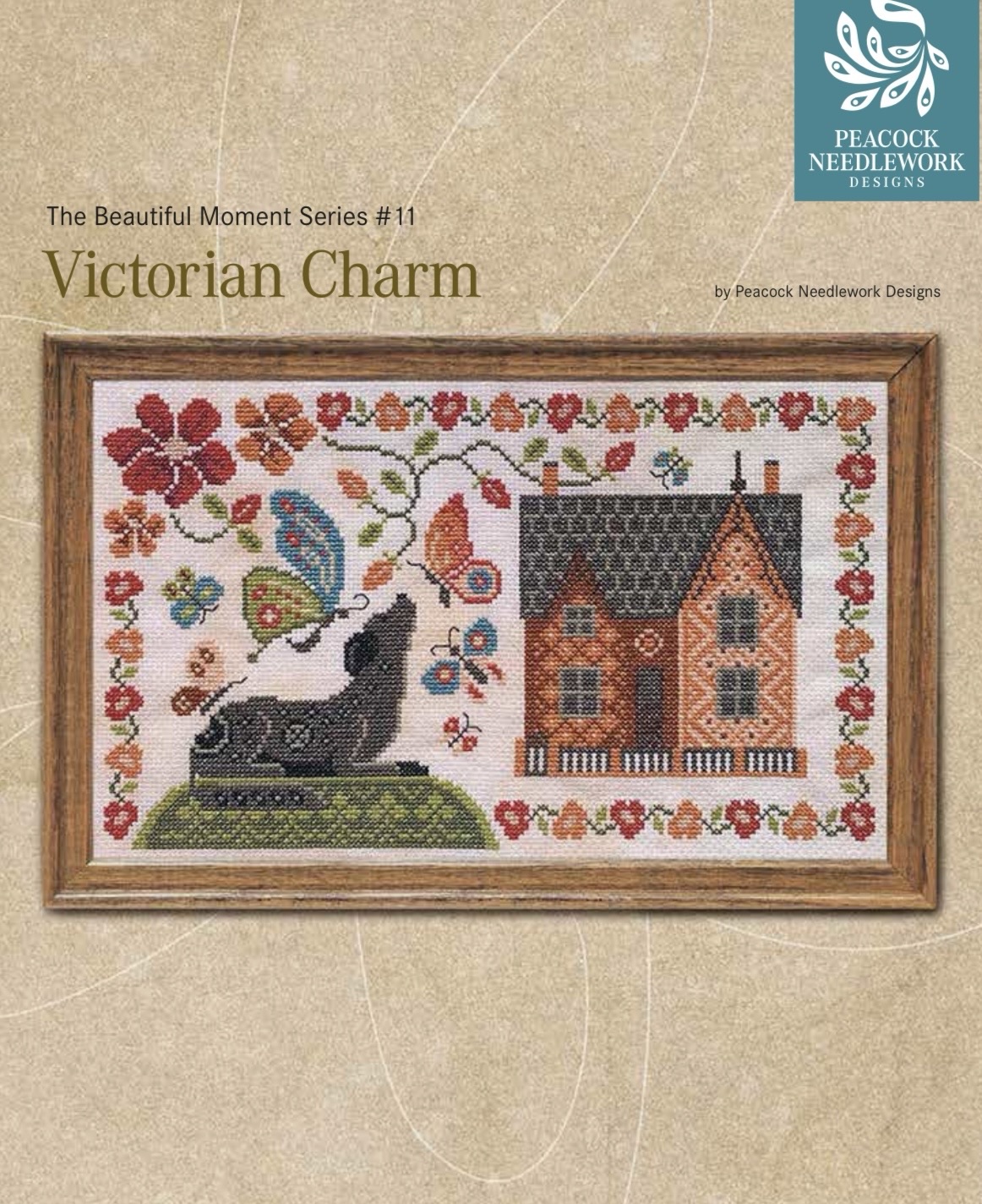
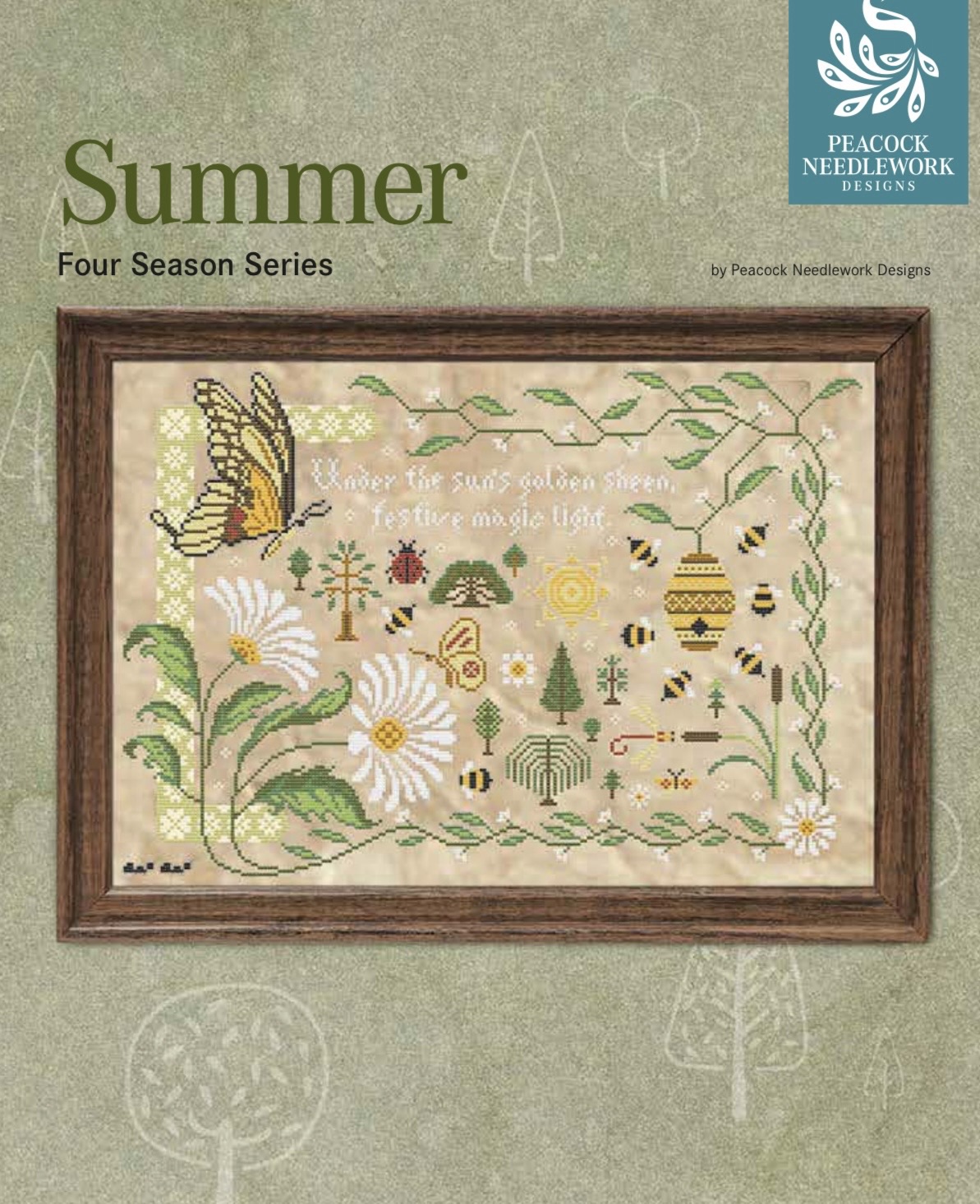
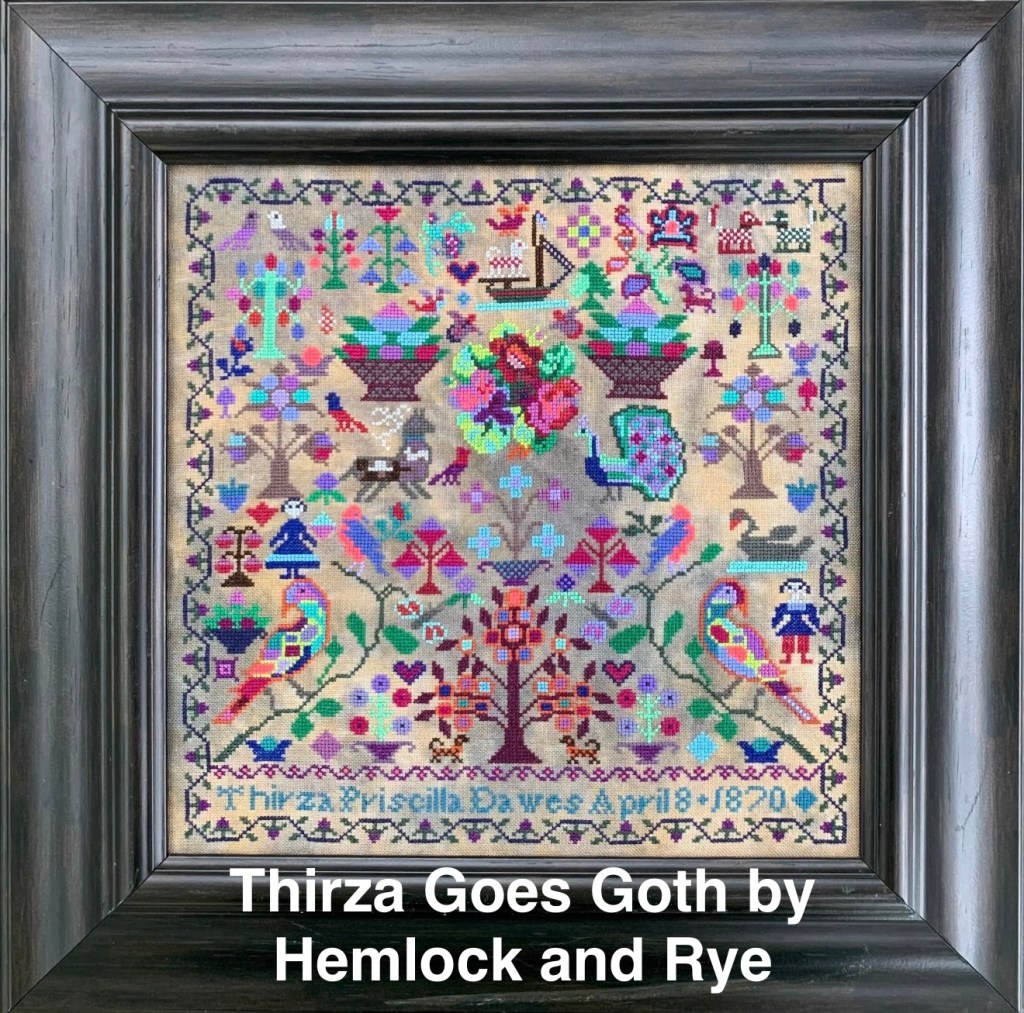
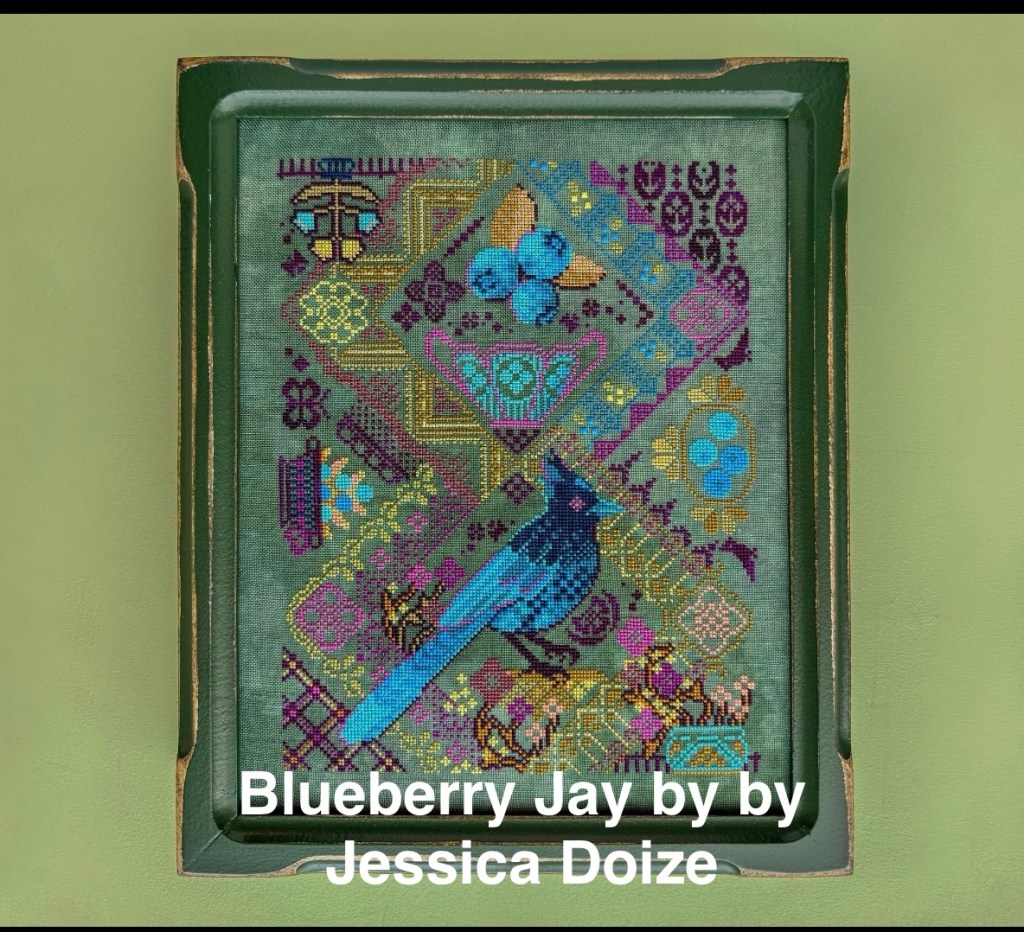
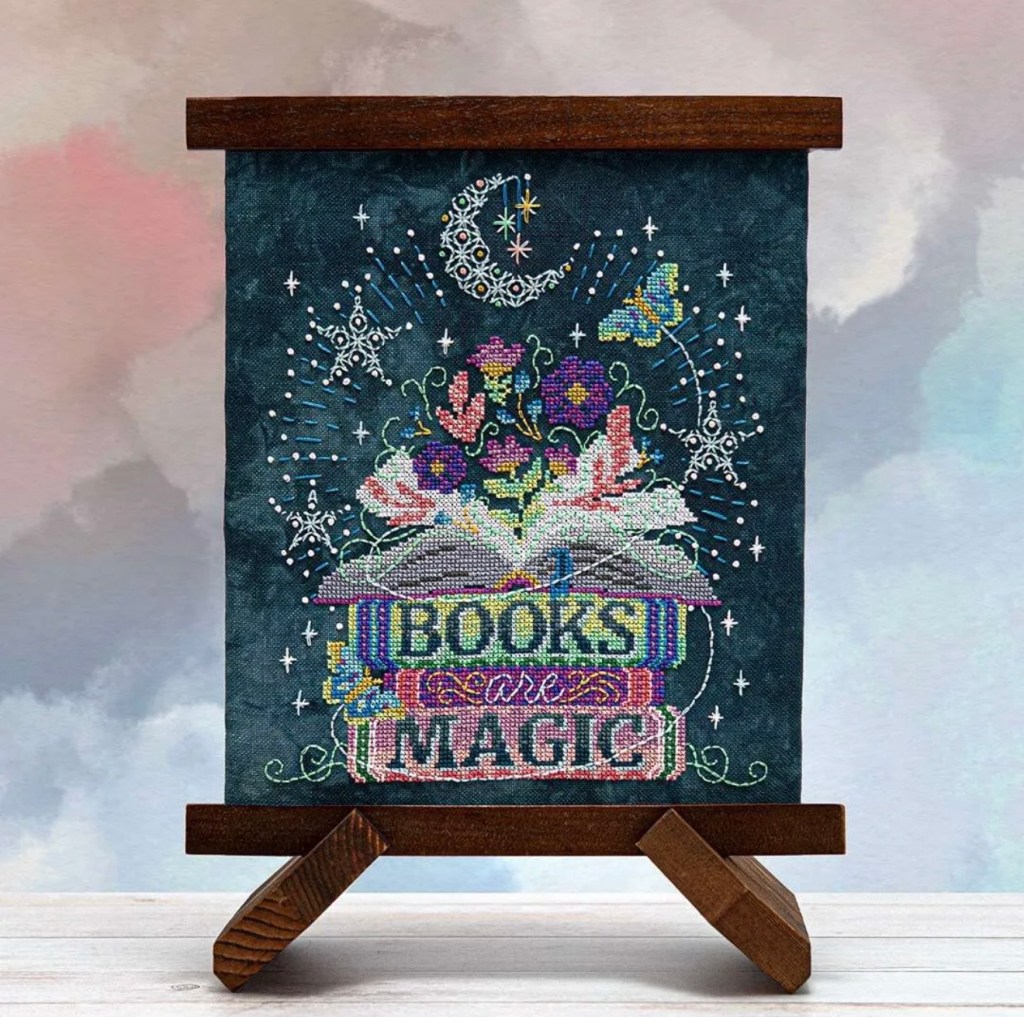
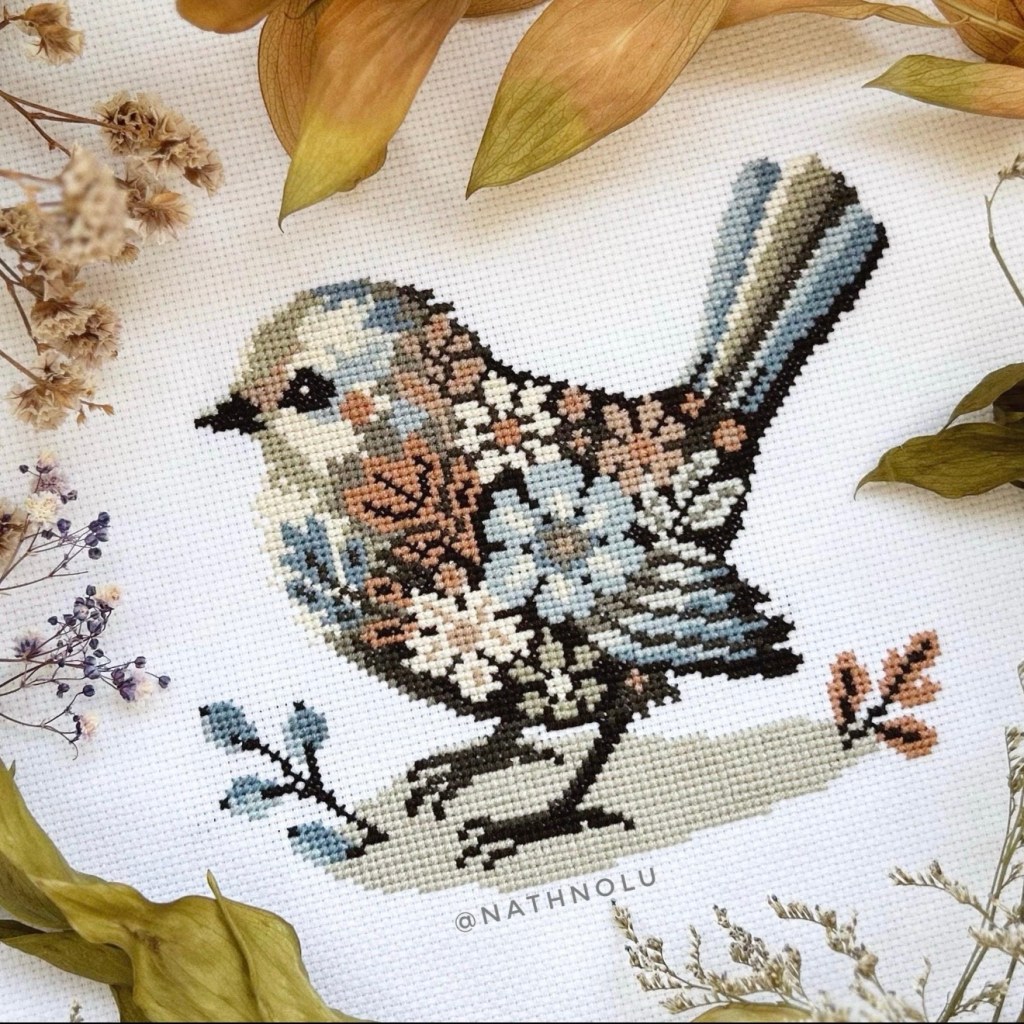
Single Step by Stitchrovia (had in my stash and wanted to start forever)Summer Gothic Sampler by The House of CamA Graveyard Wander by The Witchy StitcherA Stitcher Haunts Here by The Witchy SticherBooks are Magic by Counting PuddlesWinter Flower Bird by Nathnolu (got all four seasons)
My progress… on the first three above.
Cats and Cocoa also on 16 ct Aida, Sugar Cookie (don’t remeber the dyer)Greenhouse of Oddities, and the gorgeous fabric by BeStitchMe, 16 ct Aida, PeanutGreenhouse of Oddities (stitching in SAL sections, starting top center)On 16 Ct Aida from Hand-dyed by Rolanda
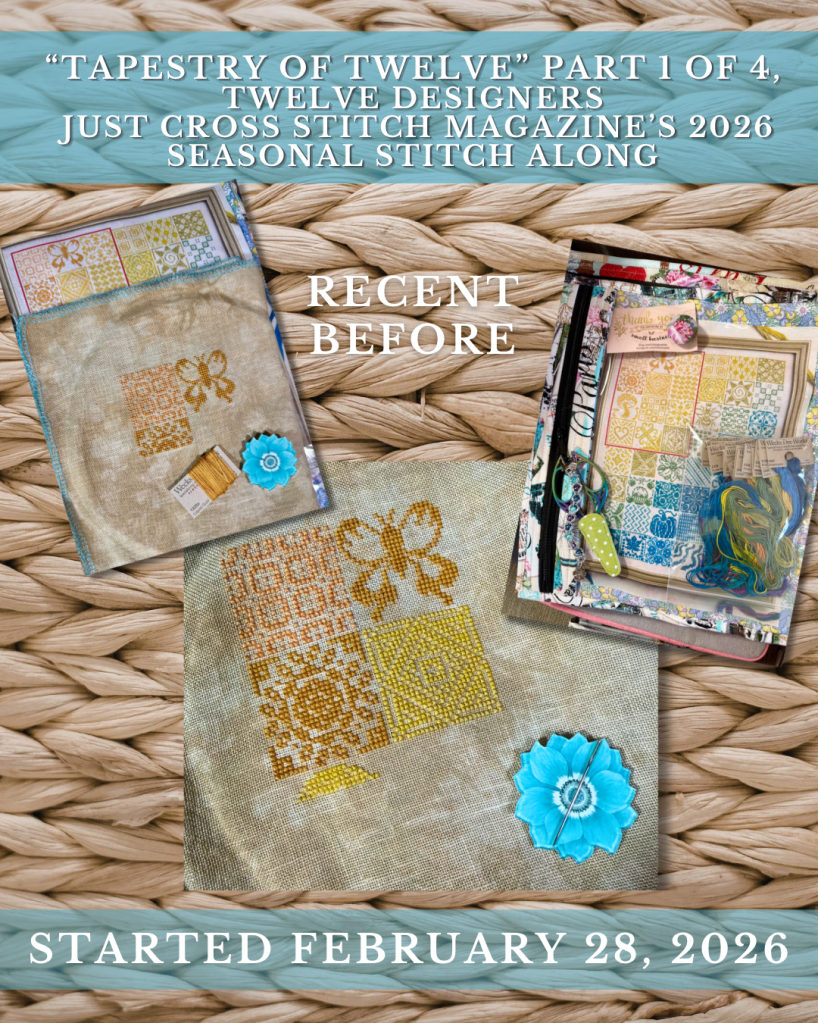
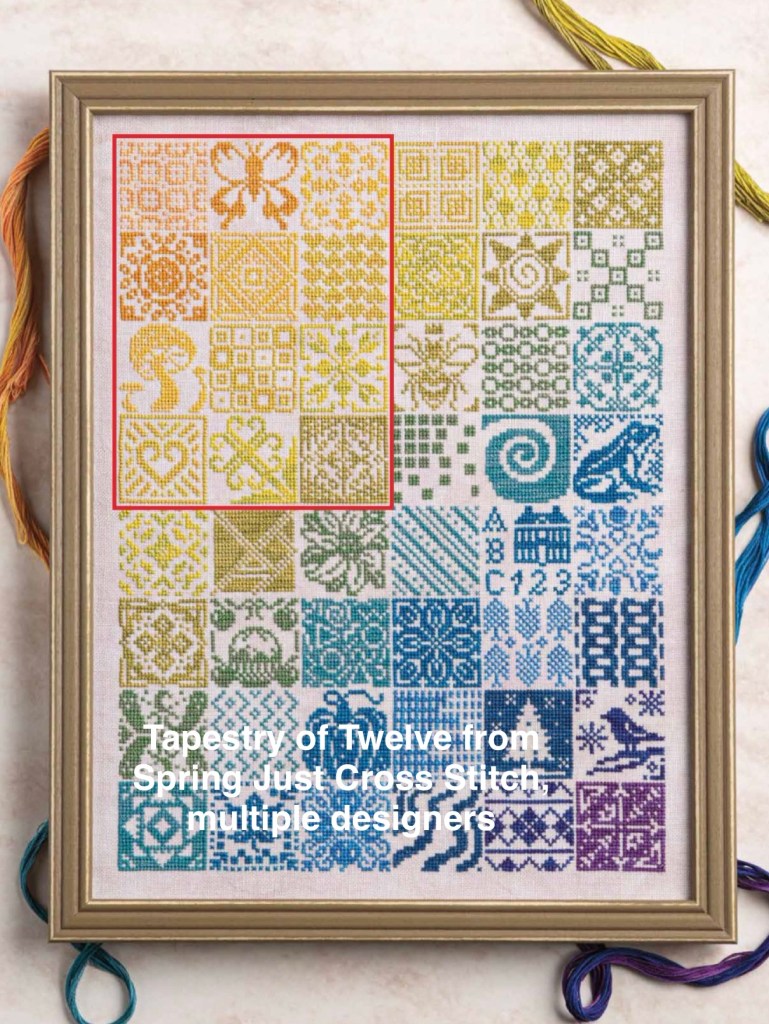
Today, the last day in February to round out my record craze, I’m starting “I Like Cross Stitch” and this Stitch Along (SAL), “Tapestry of Twelve,” from the Spring Just Cross Stitch Magazine by multiple designers. You can borrow the magazine issues from Amazon’s Kindle Unlimited. The top left corner is part one of four. I bought the called-for Weeks Dye Works overdyed floss. Gorgeous!
Rescuing Old Stitchworks Languishing in a Box
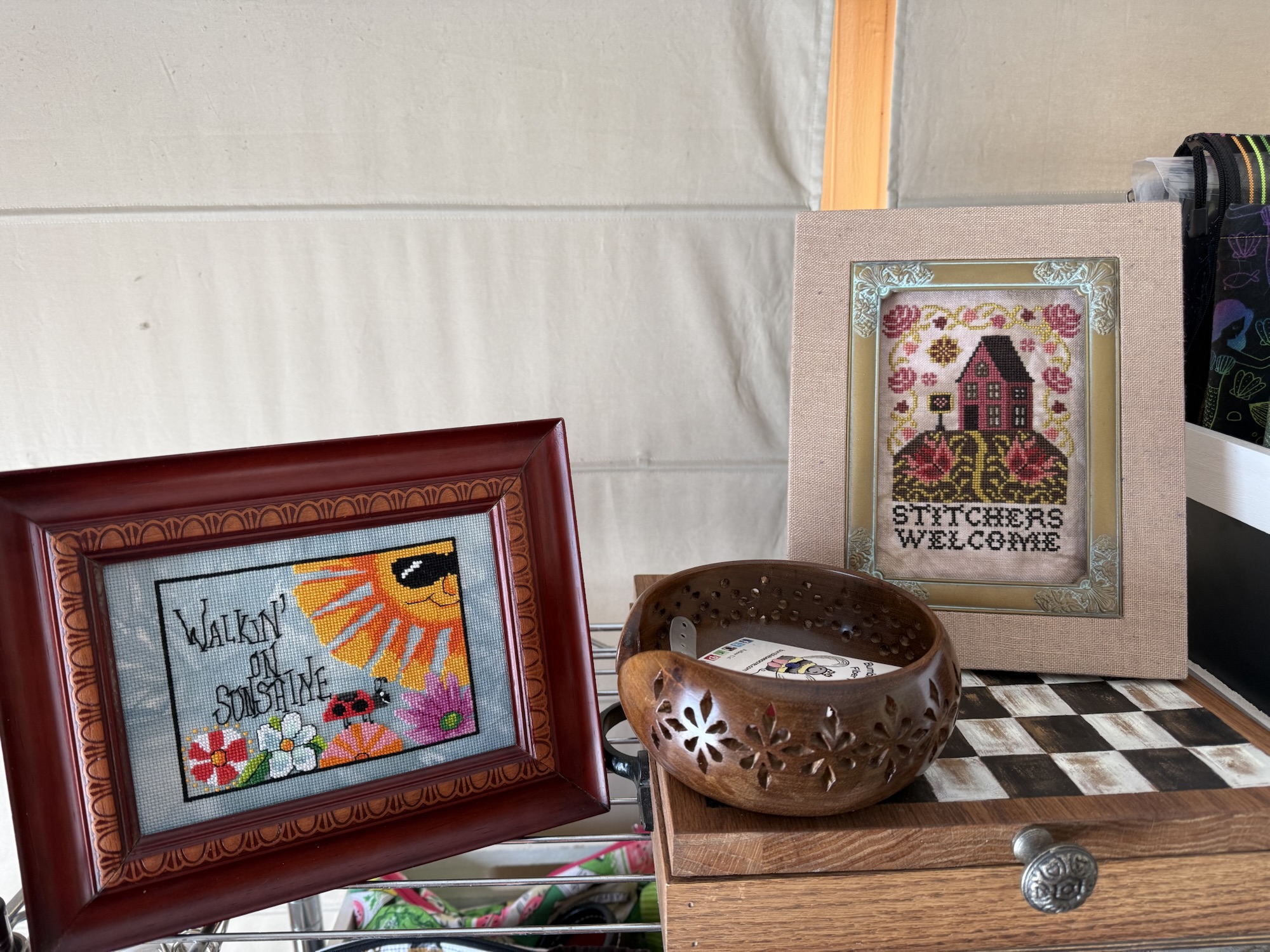
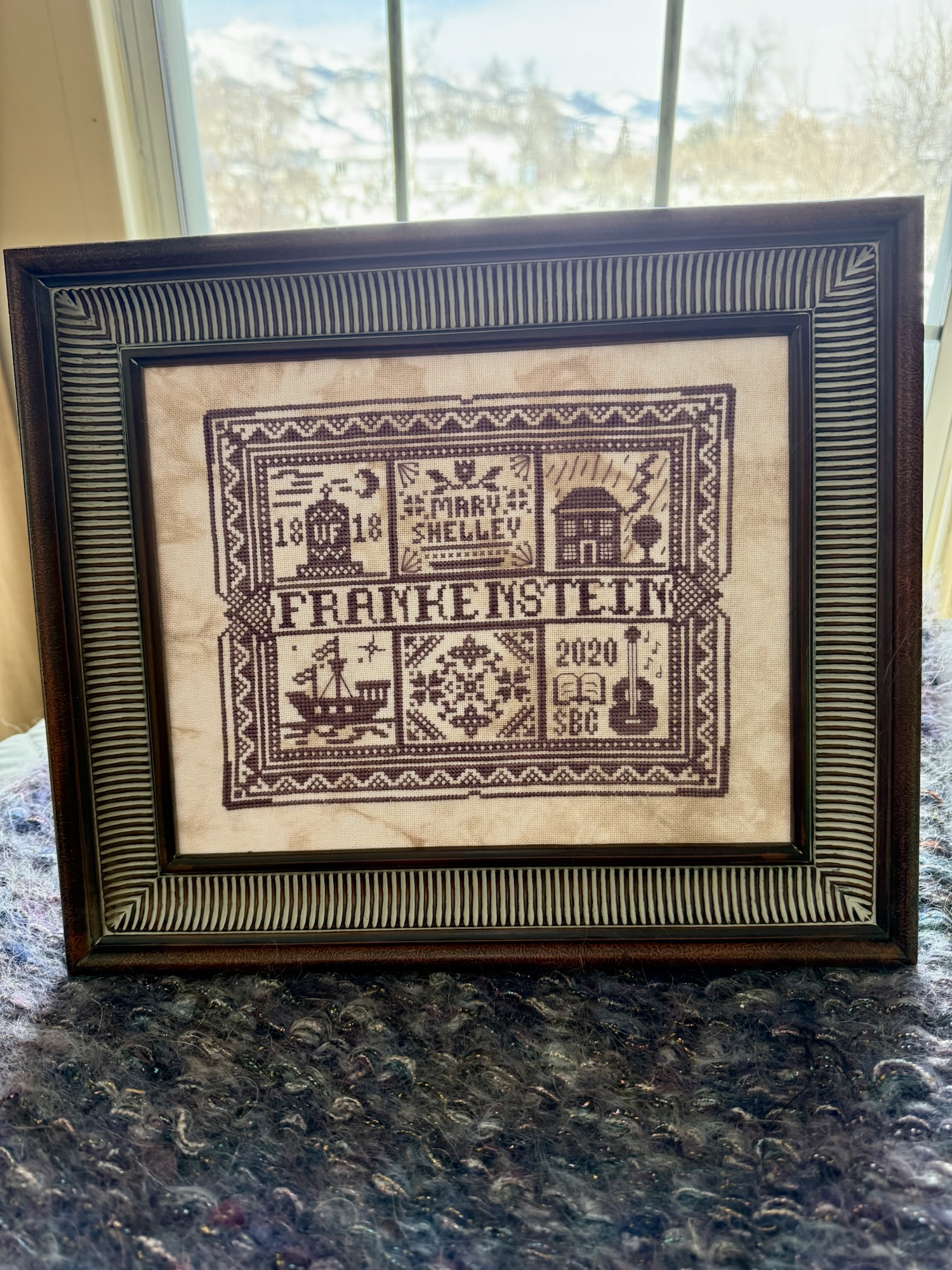
I recycled hallway picture frames, and now I get to enjoy these.
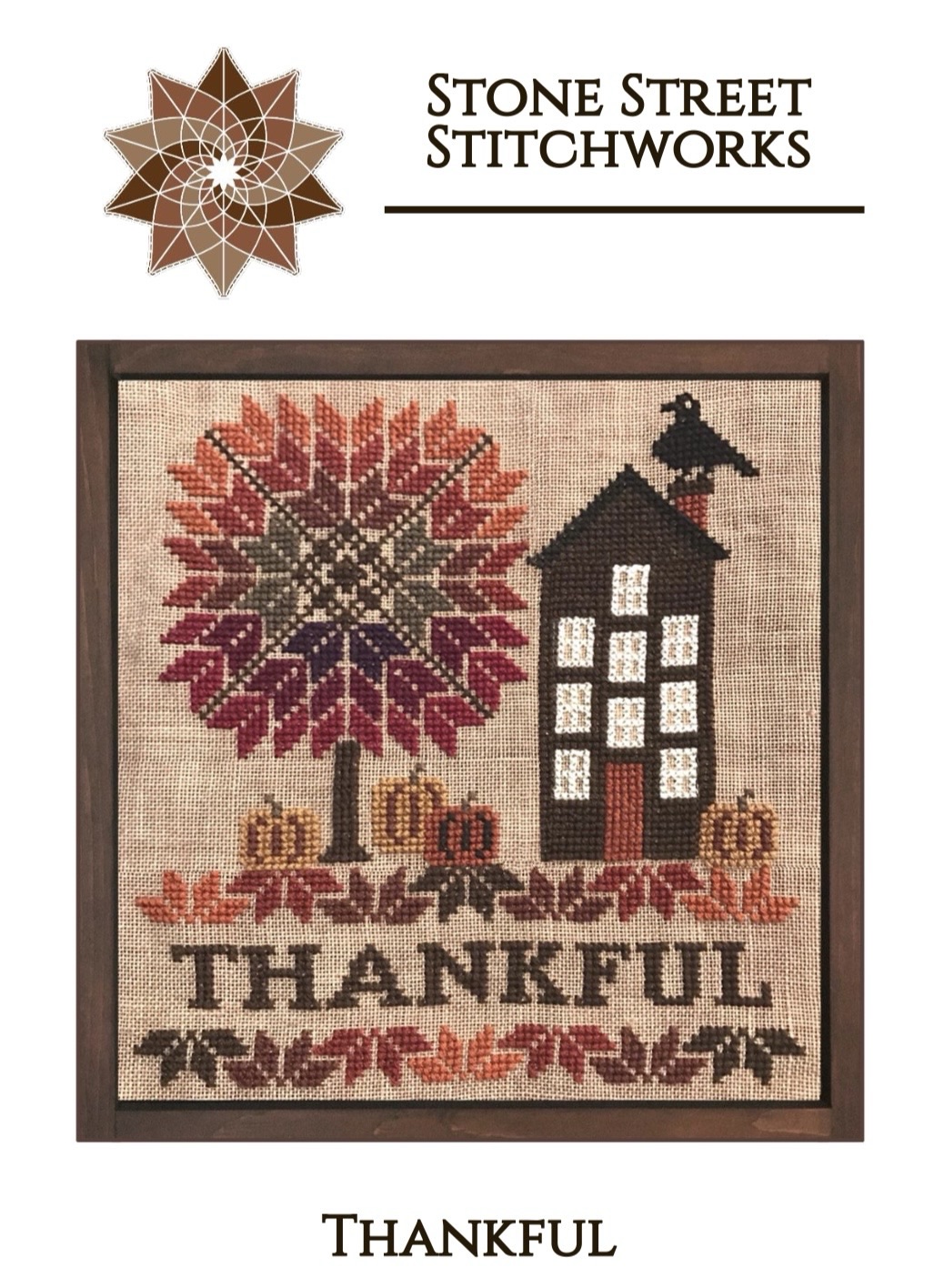
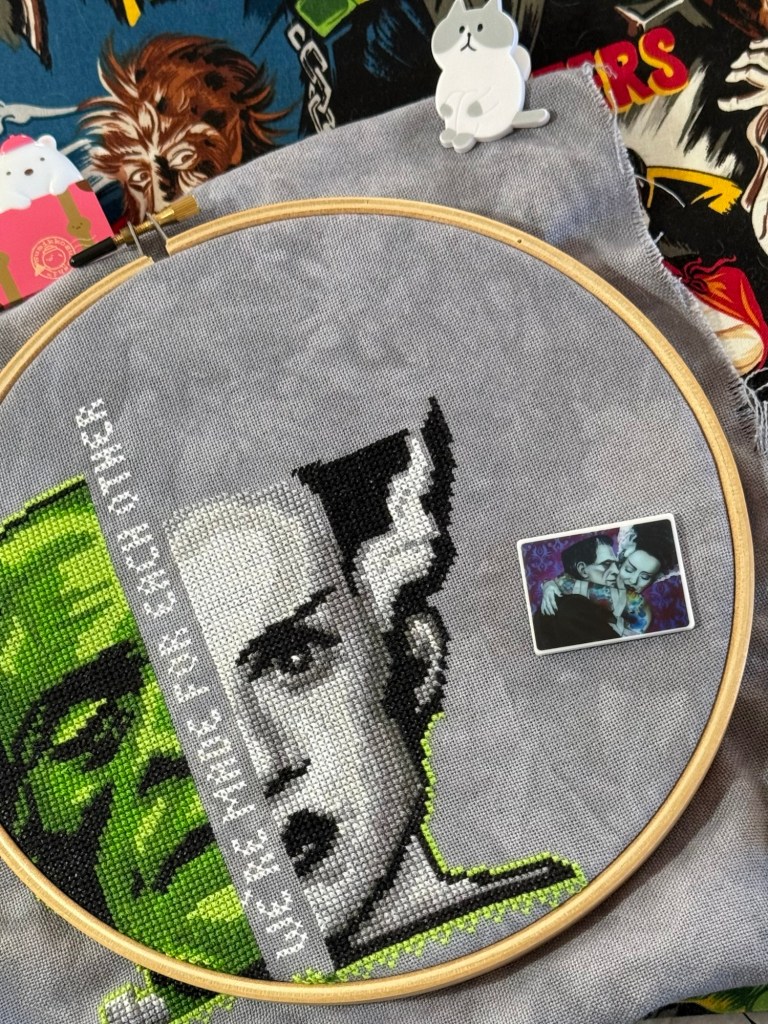
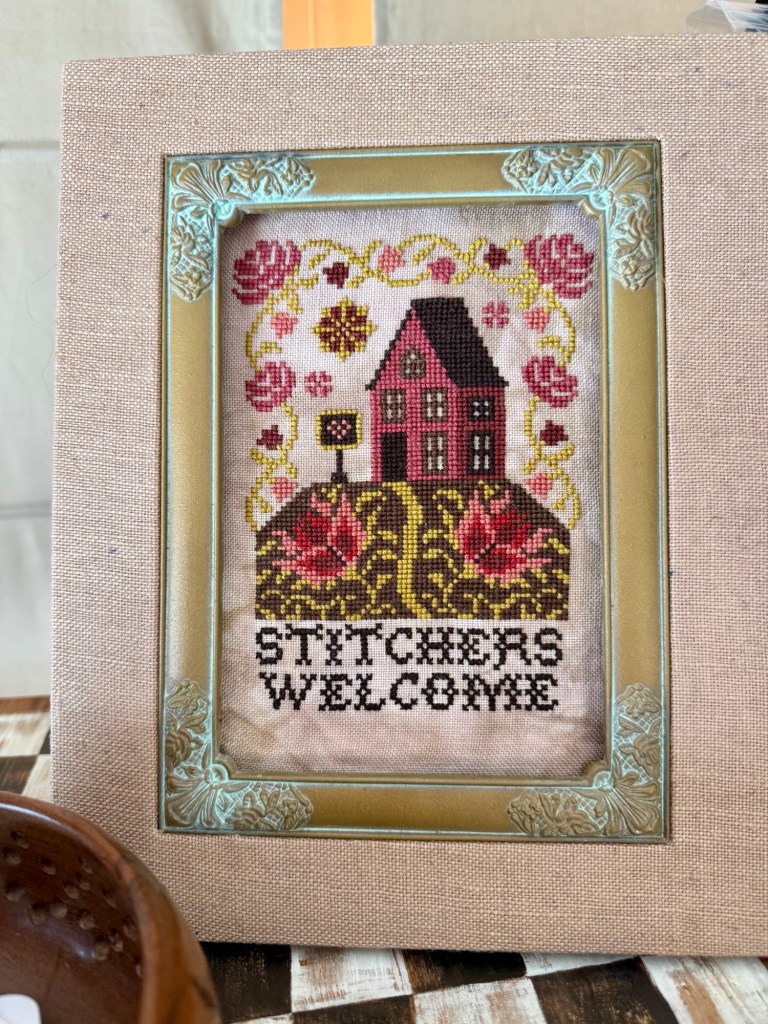
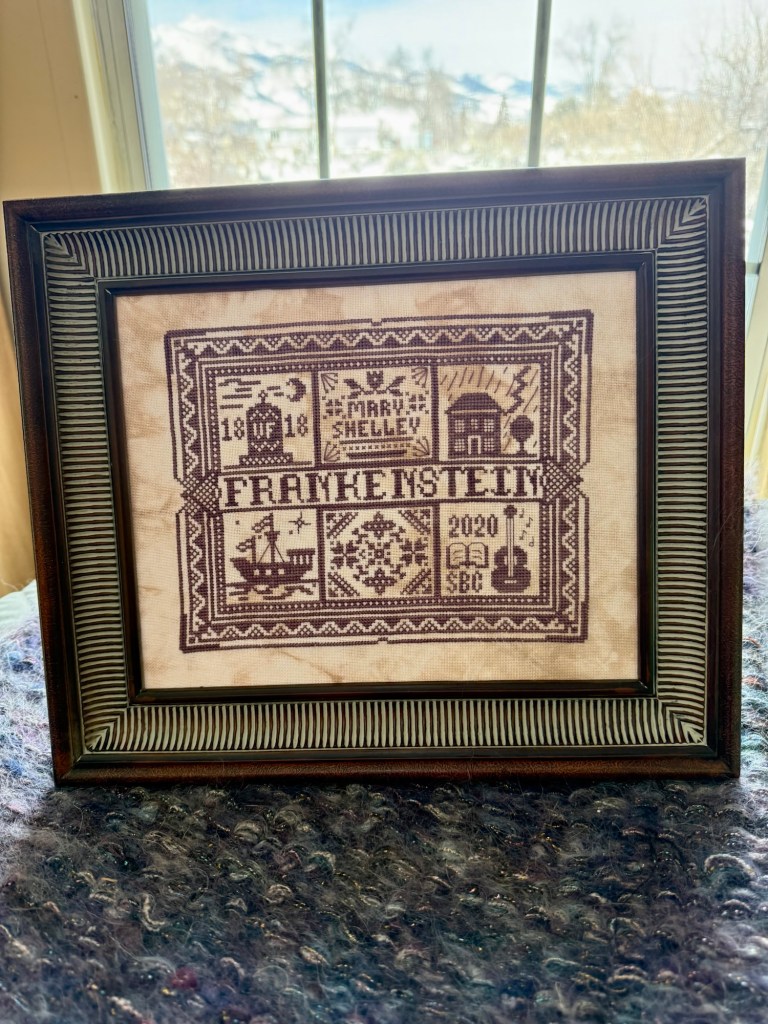
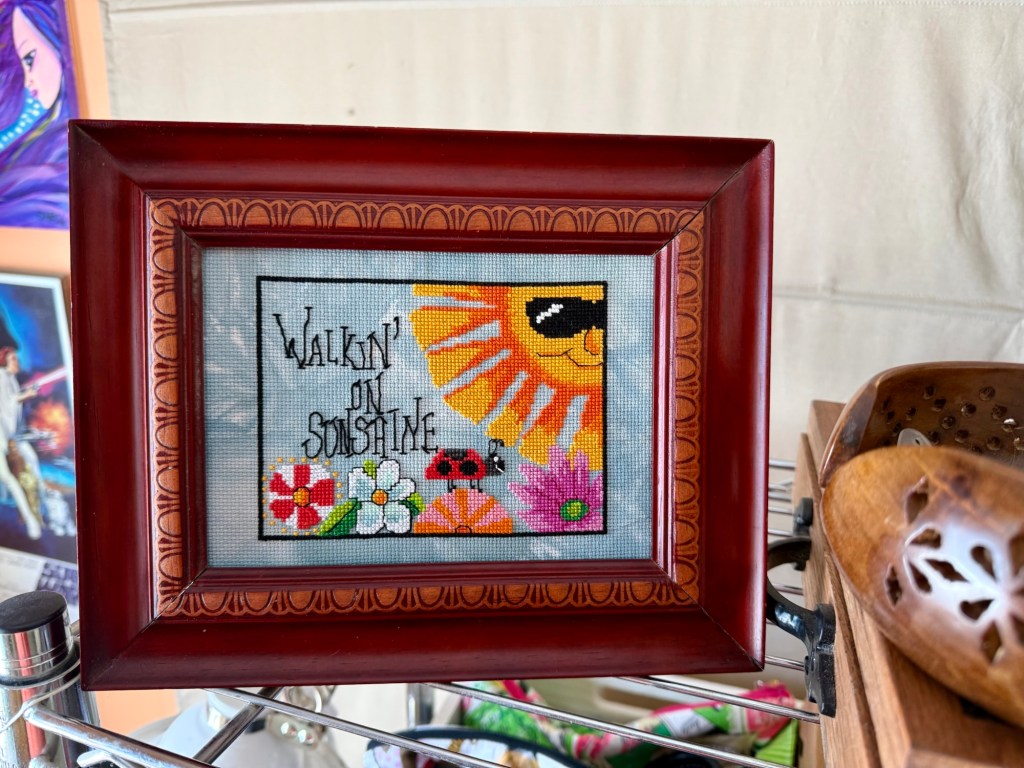
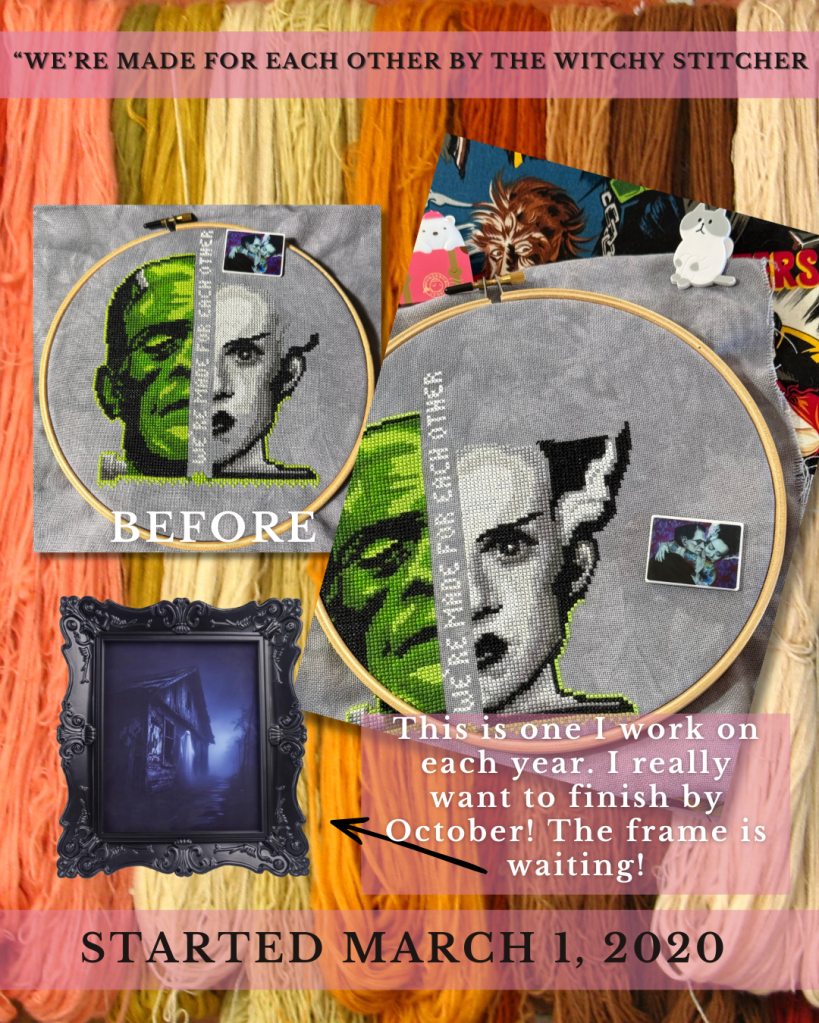
Stitcher’s House by Stone Street StitchworksFrankenstein for The Stitching Bookclub (SBC) Walkin’ on Sunshine by Luhu Stitches
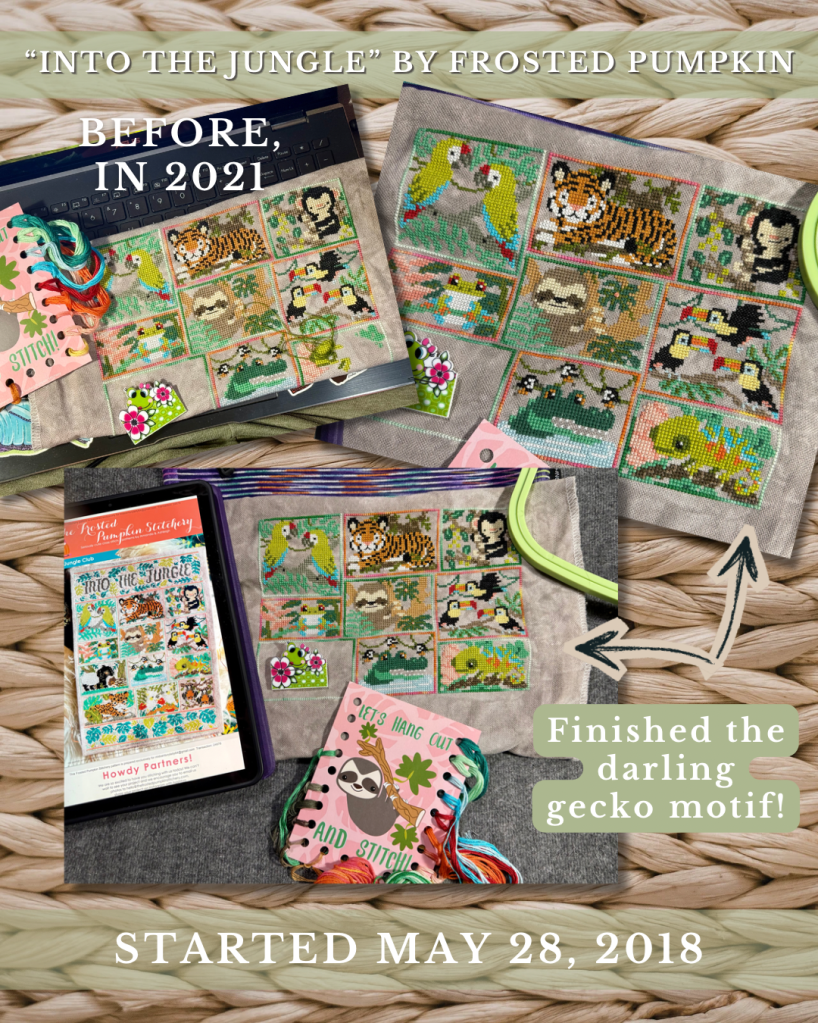
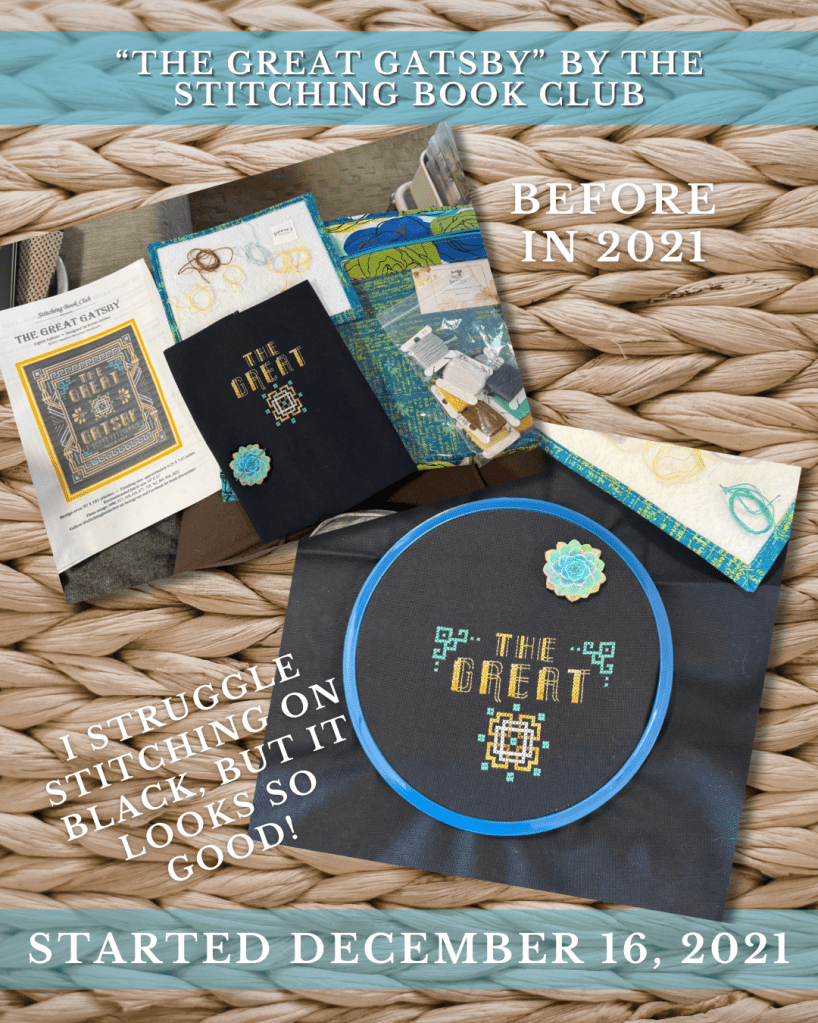
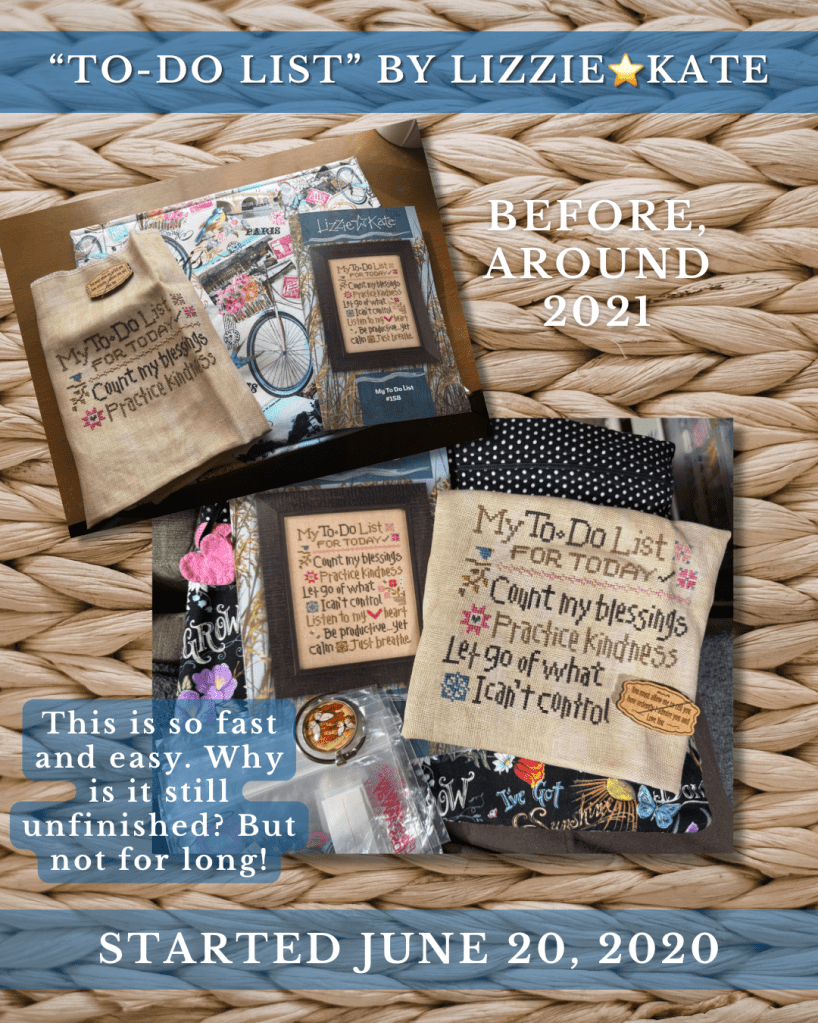
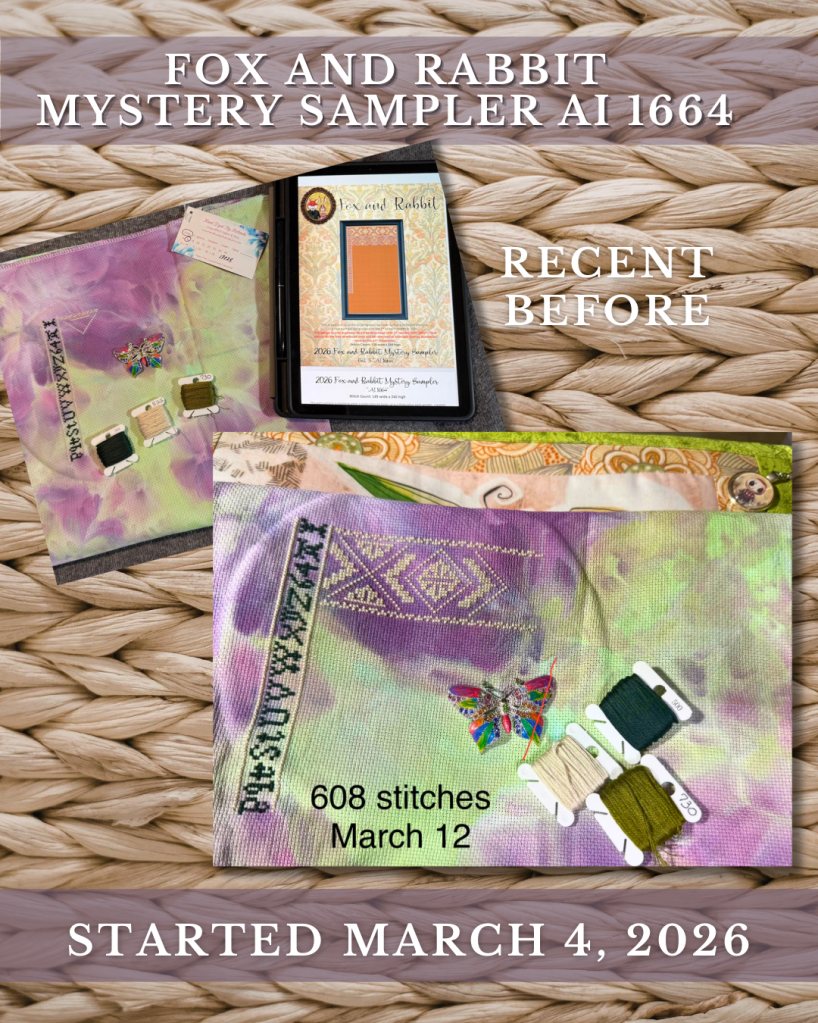
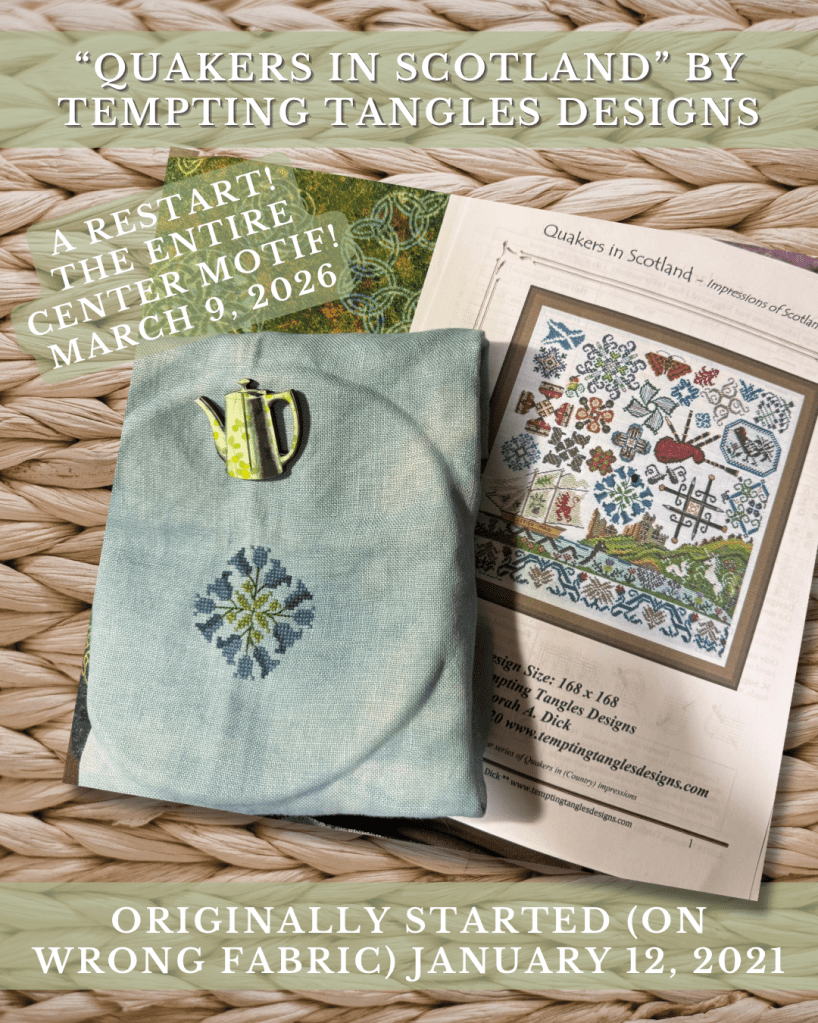
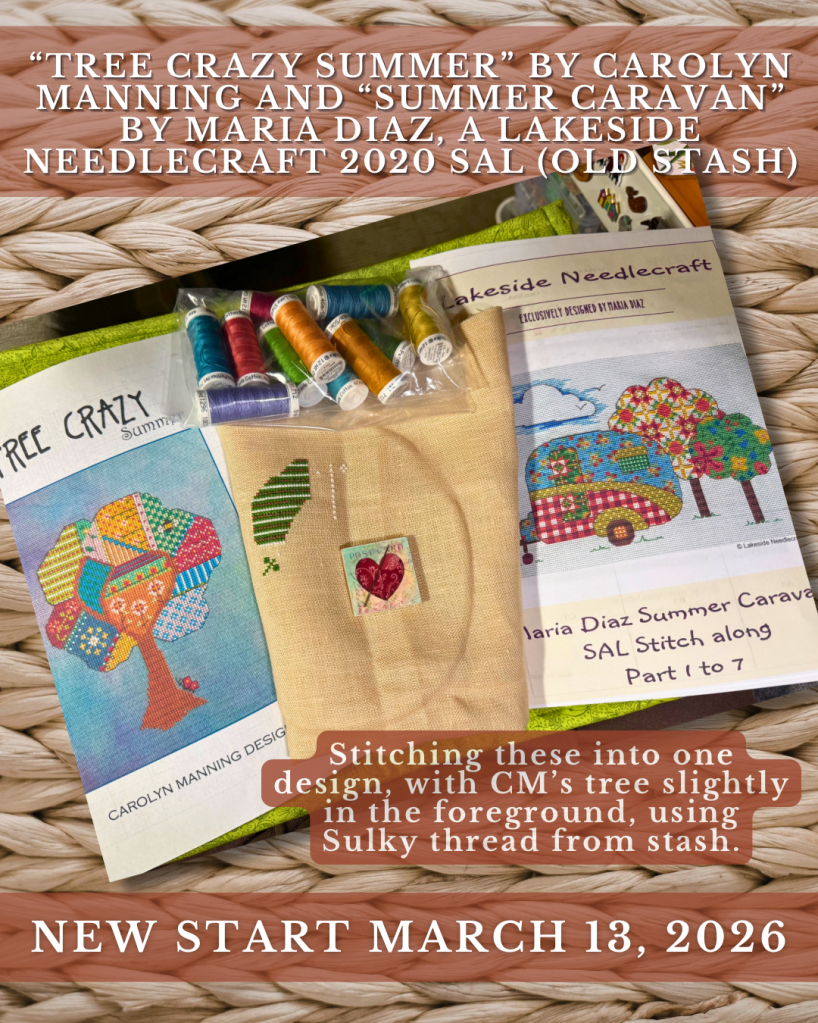
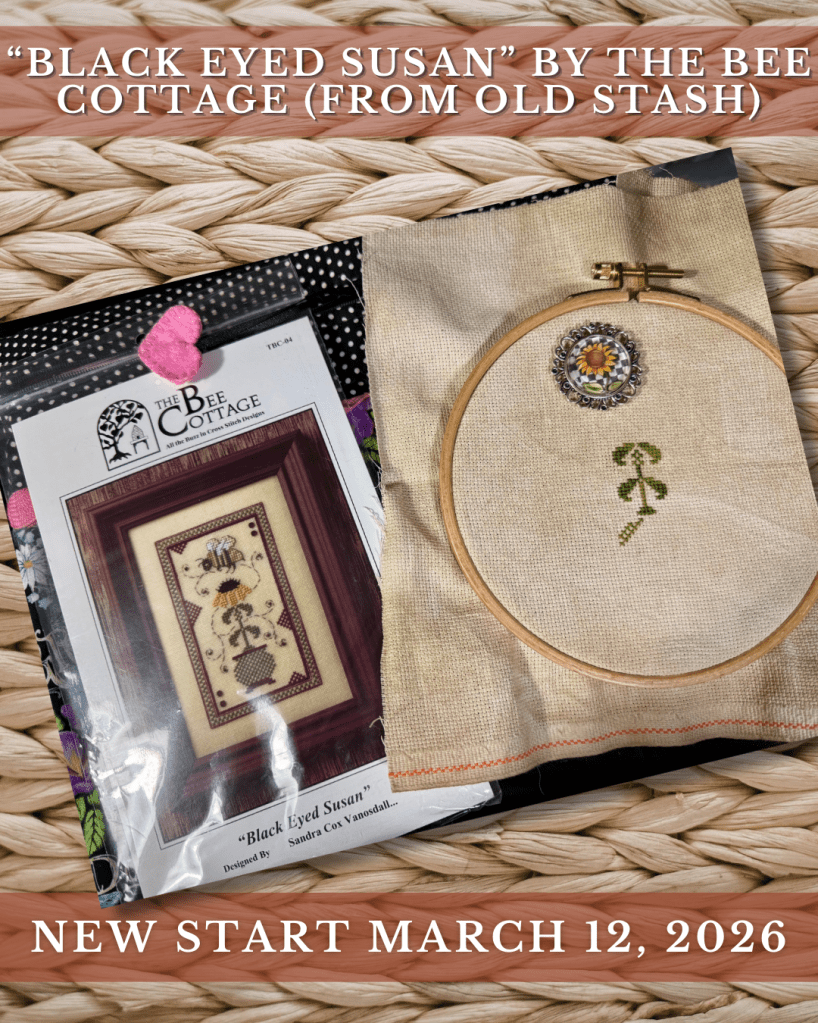
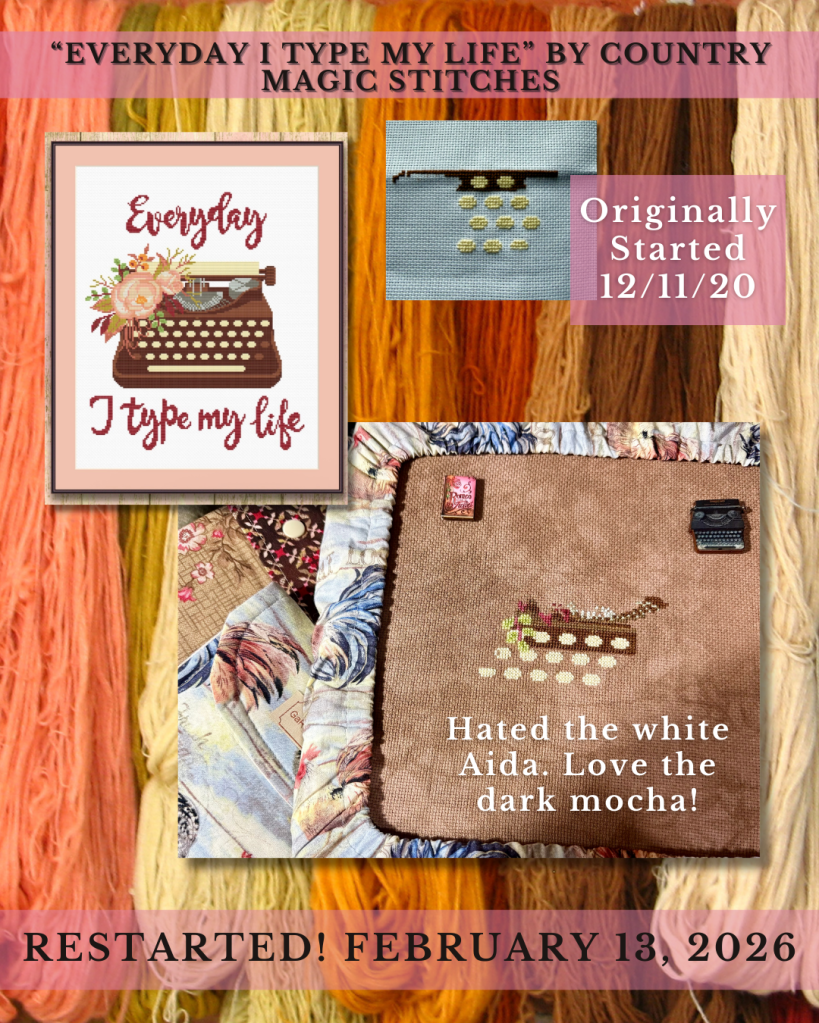
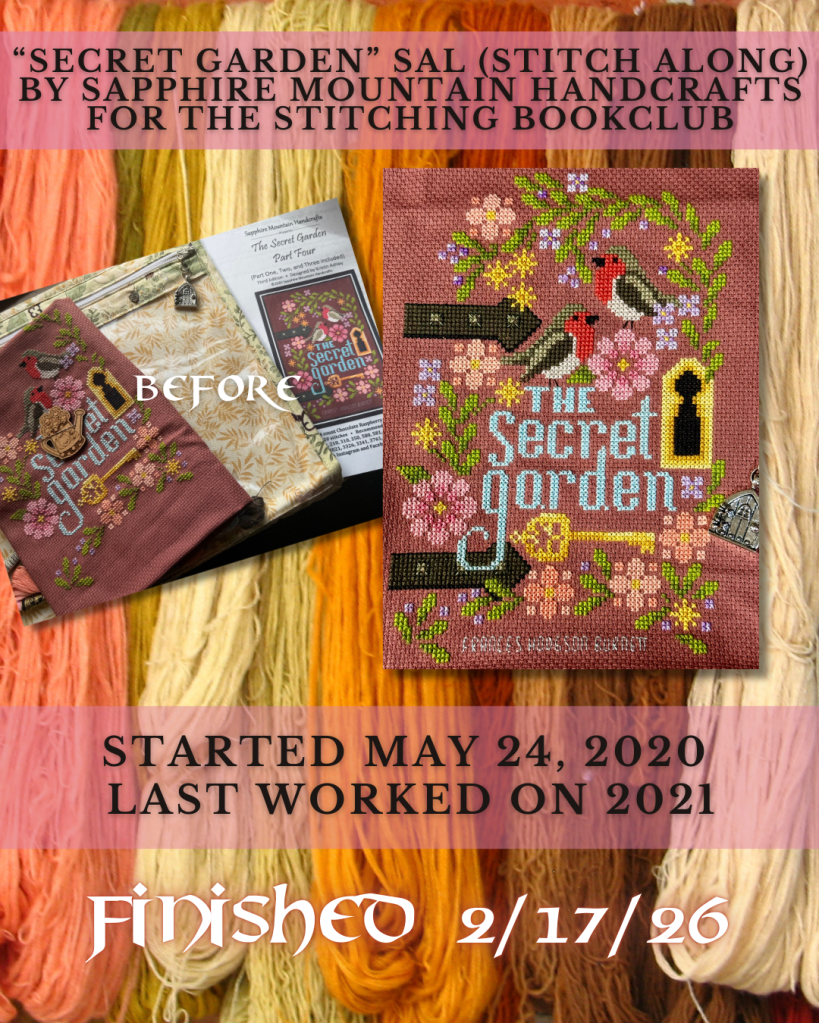
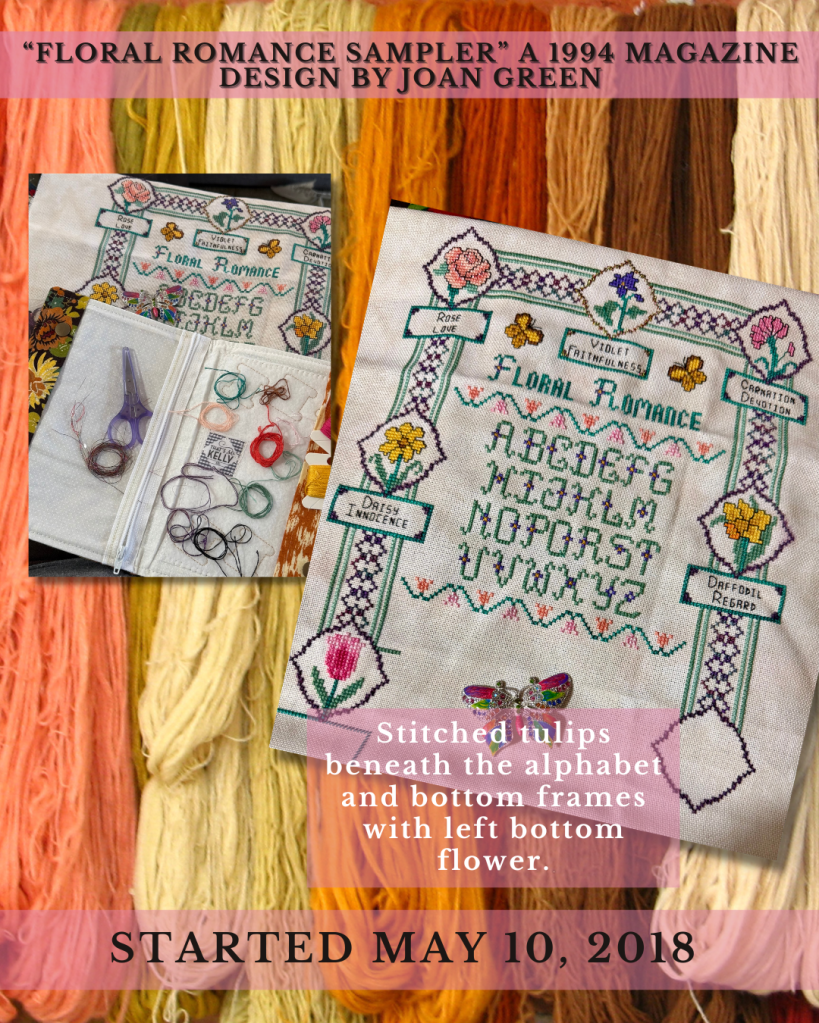
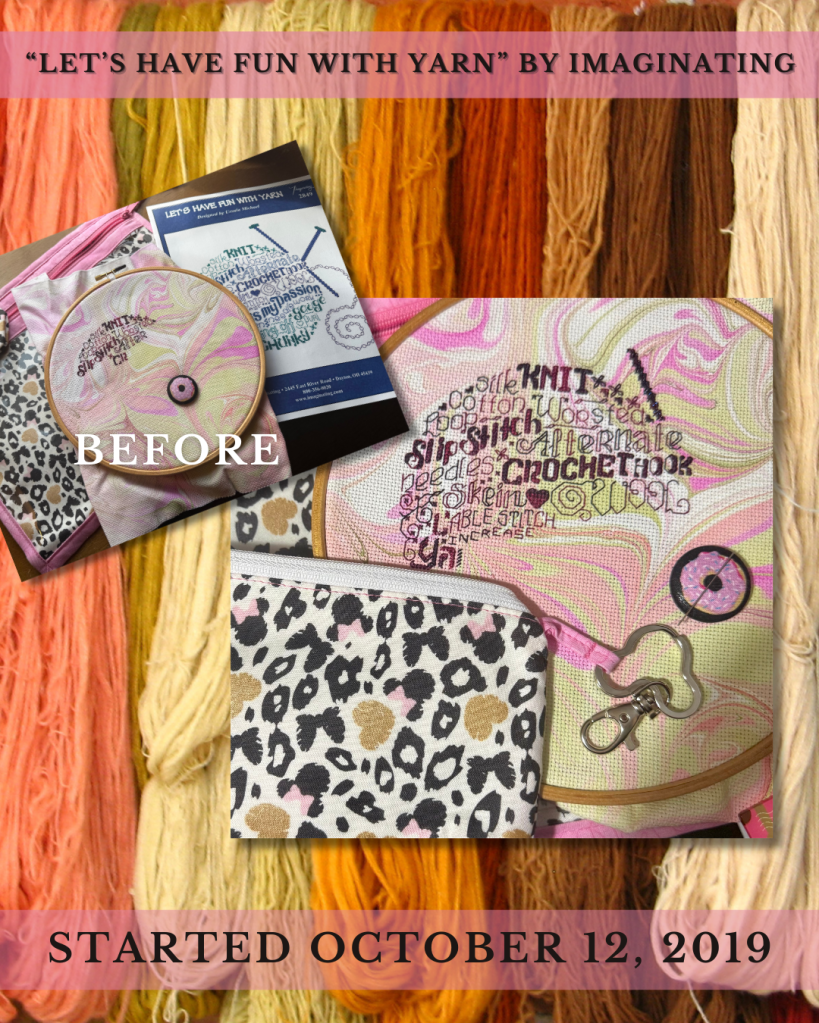
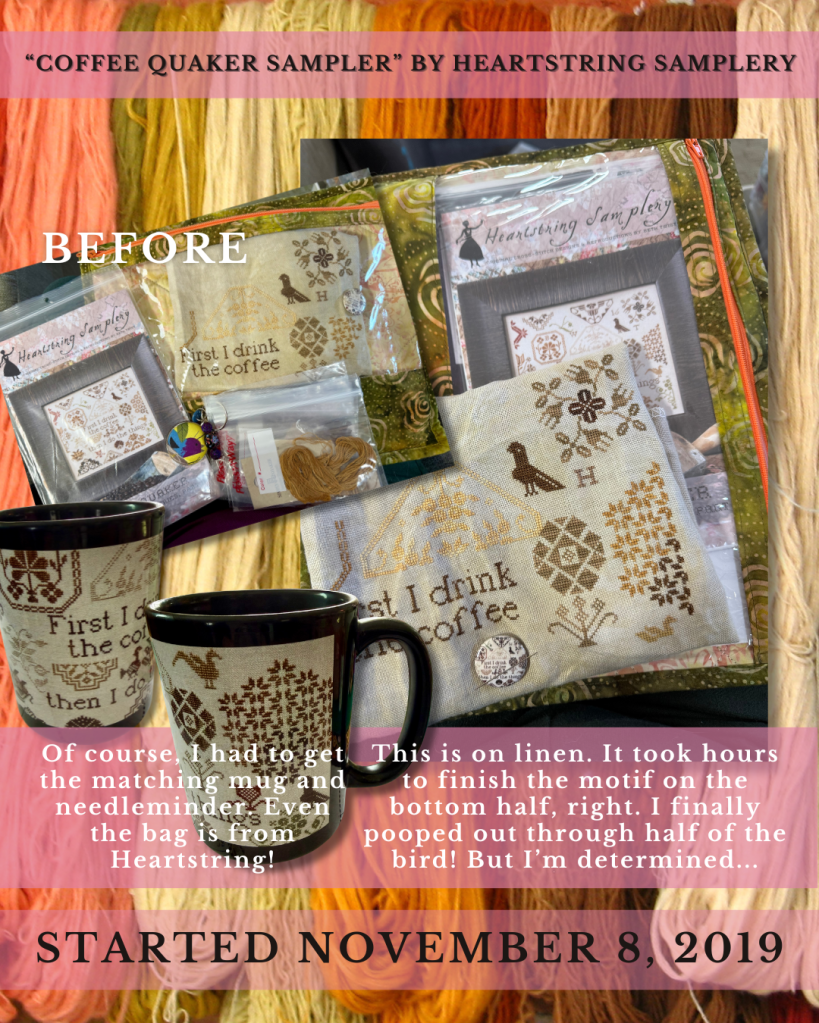
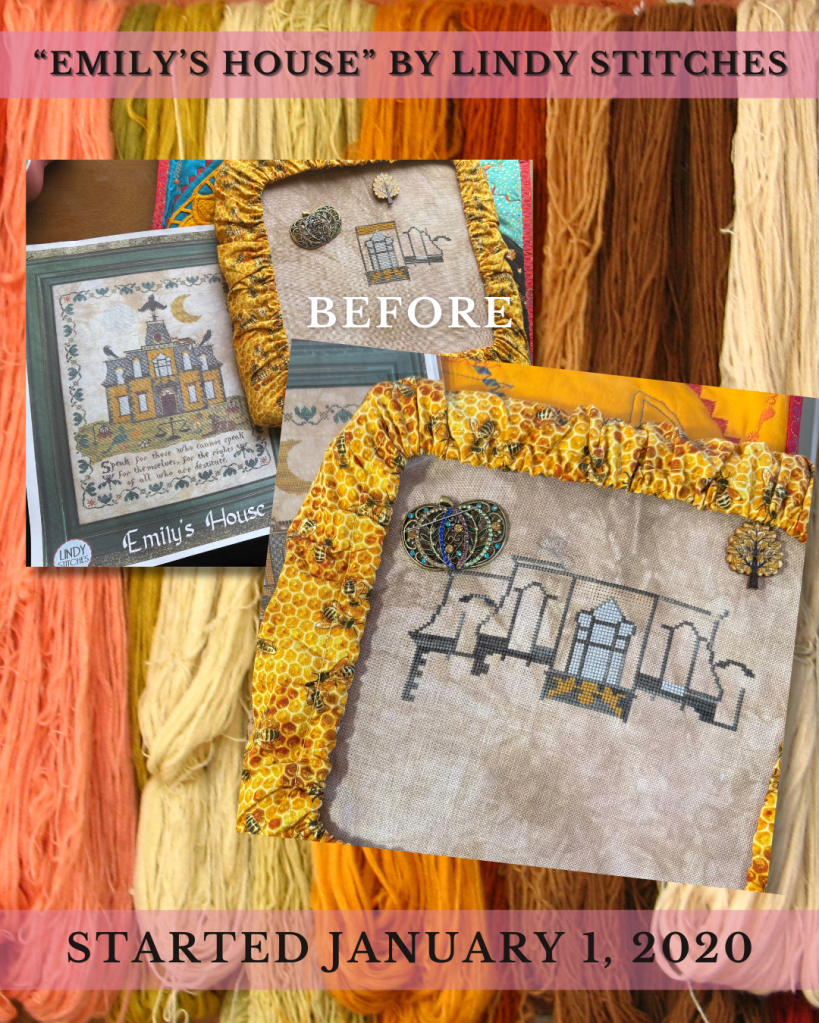
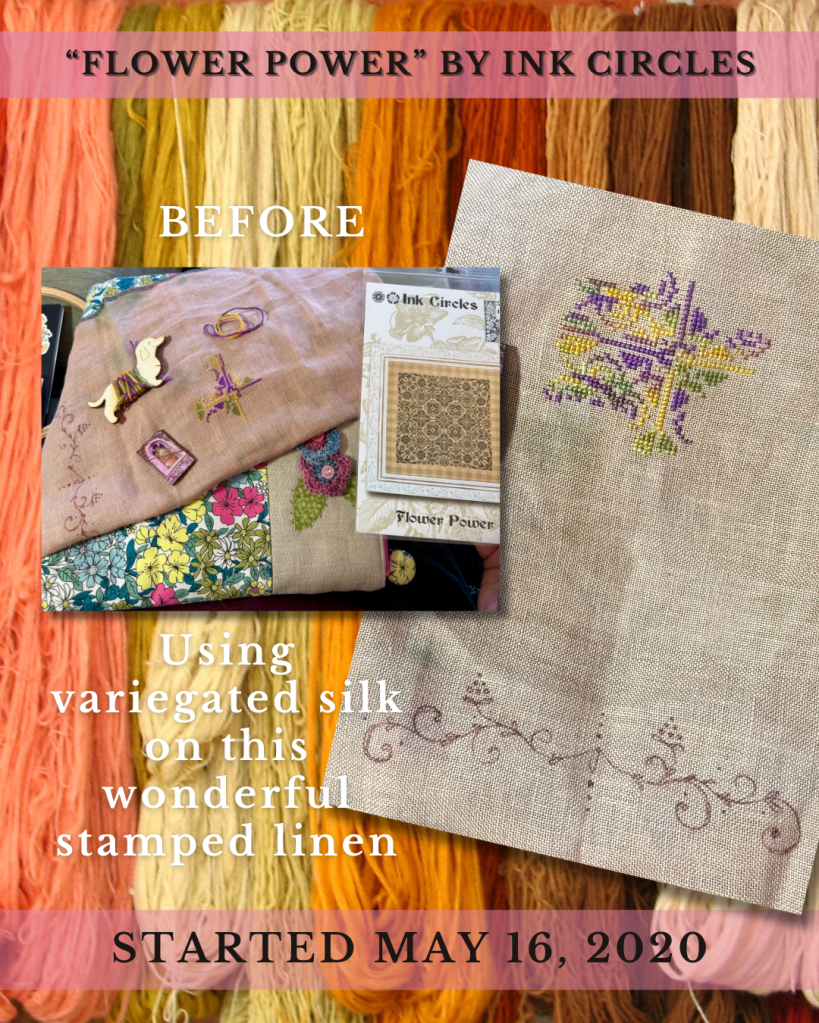
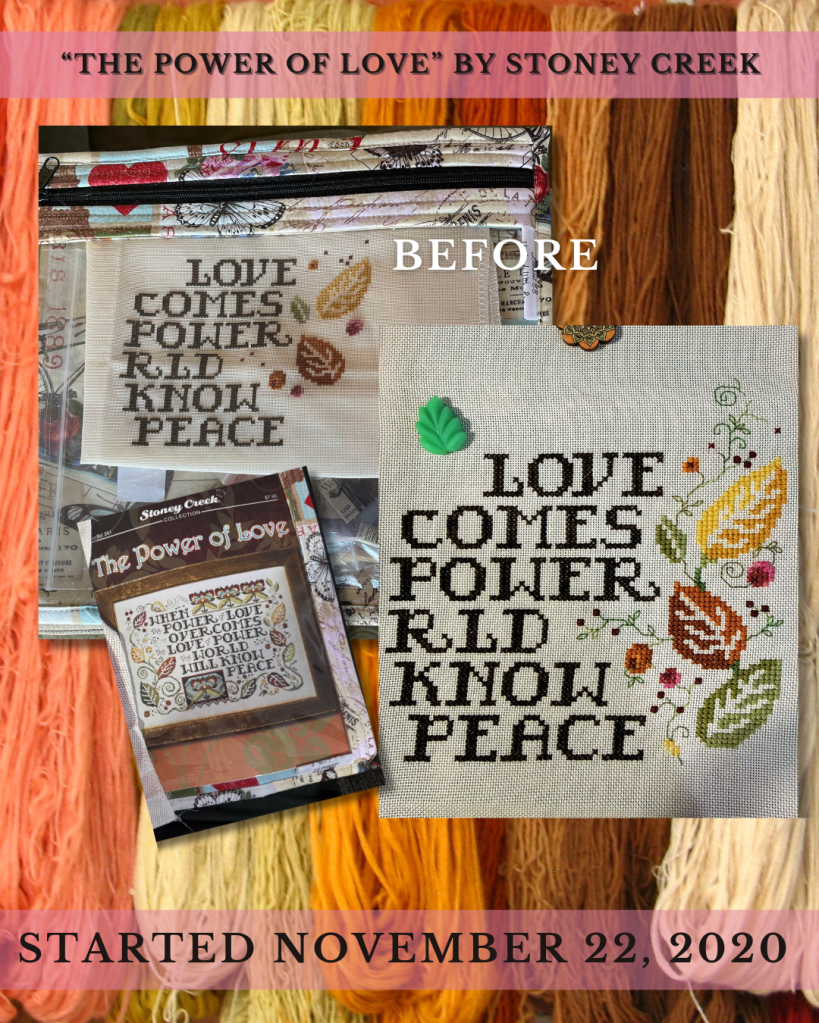
I’ve touched over a dozen old WIPs (works in progress) in February, including restarting three – all those old problems that made me hide them away and forget about them. I totally got inspired to patiently frog out stitches or toss out the disliked fabric or fabric I measured incorrectly, and show them some love. The first of my three restarts was in my previous post, but I’ll add it here as well.
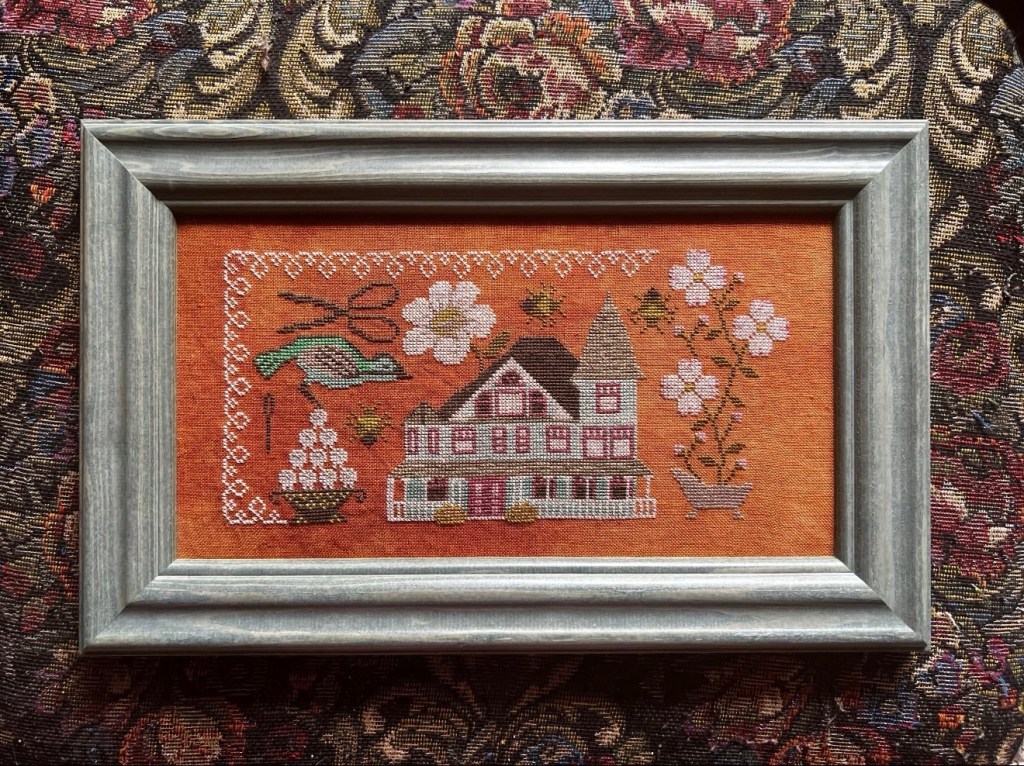
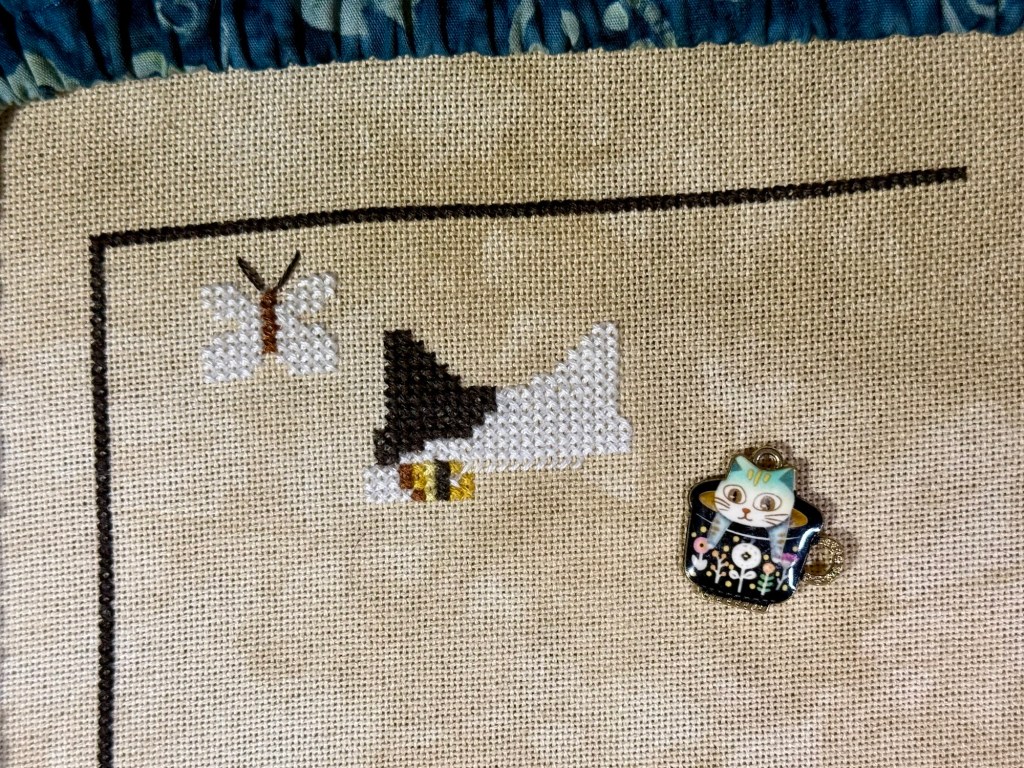
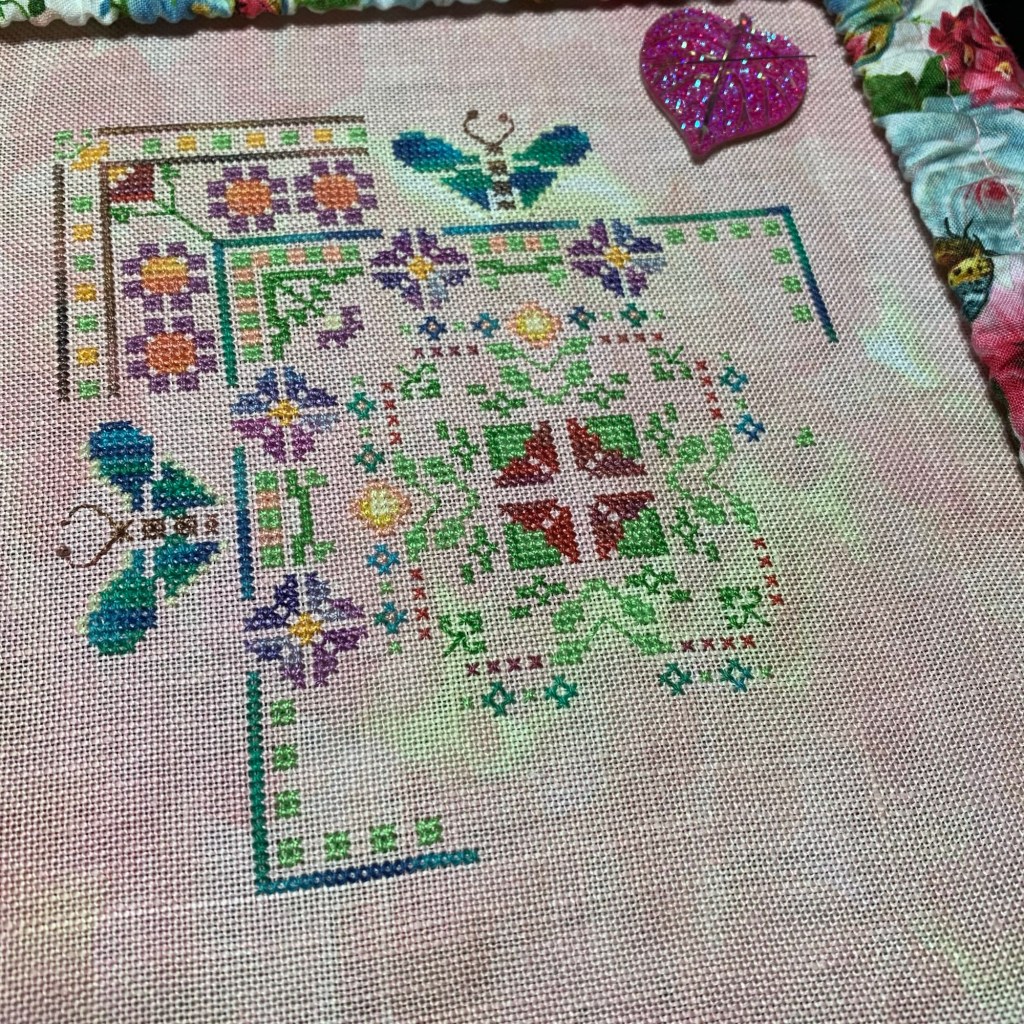
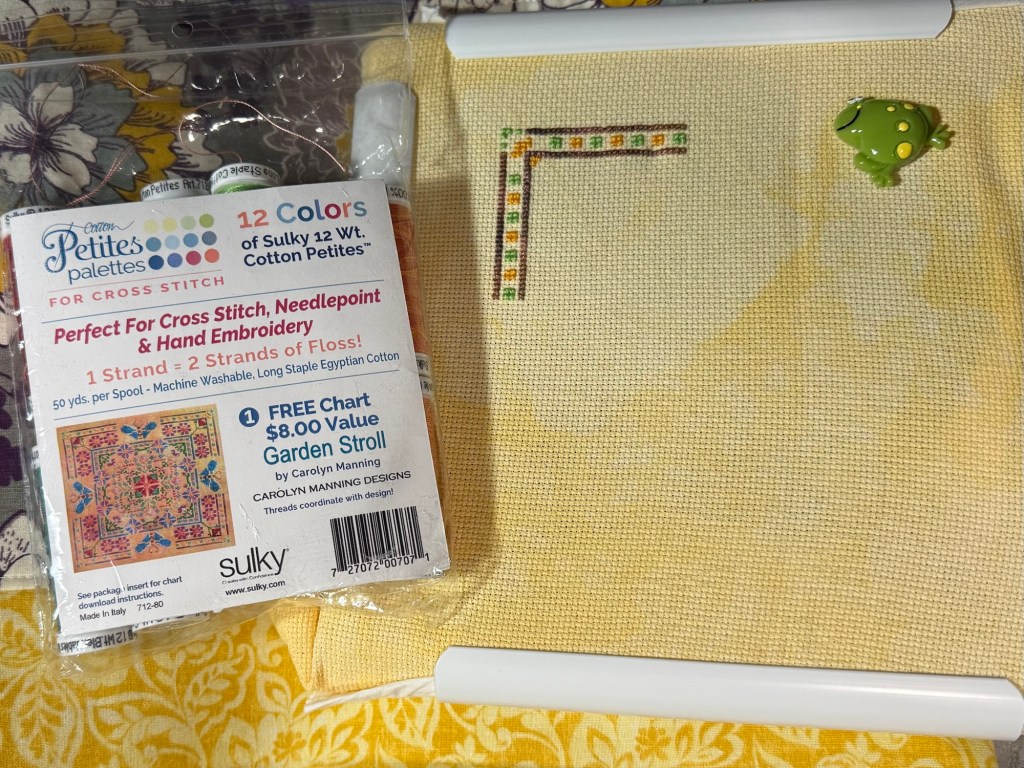
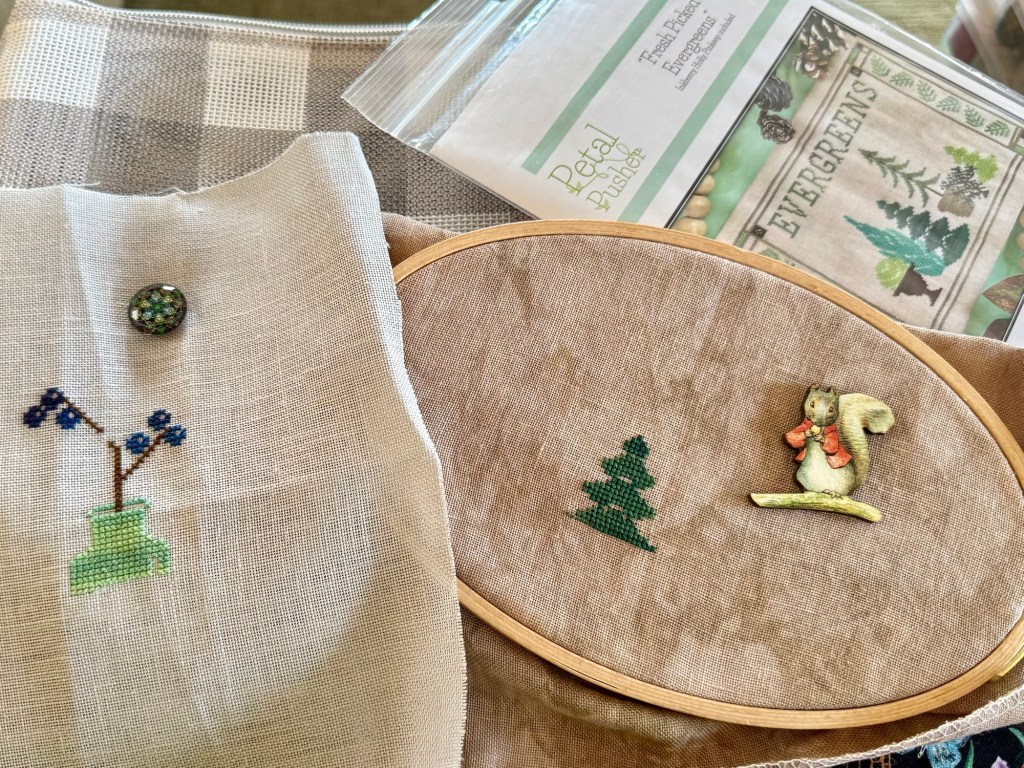
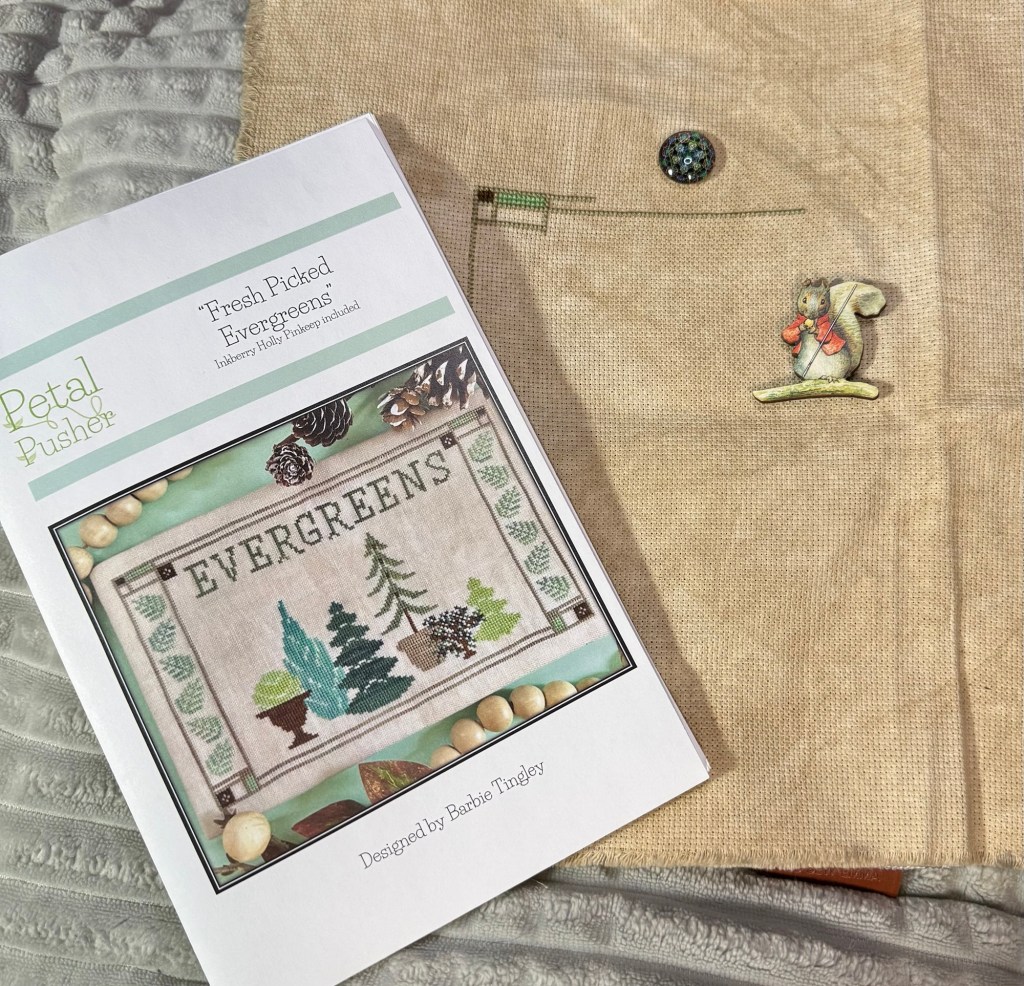
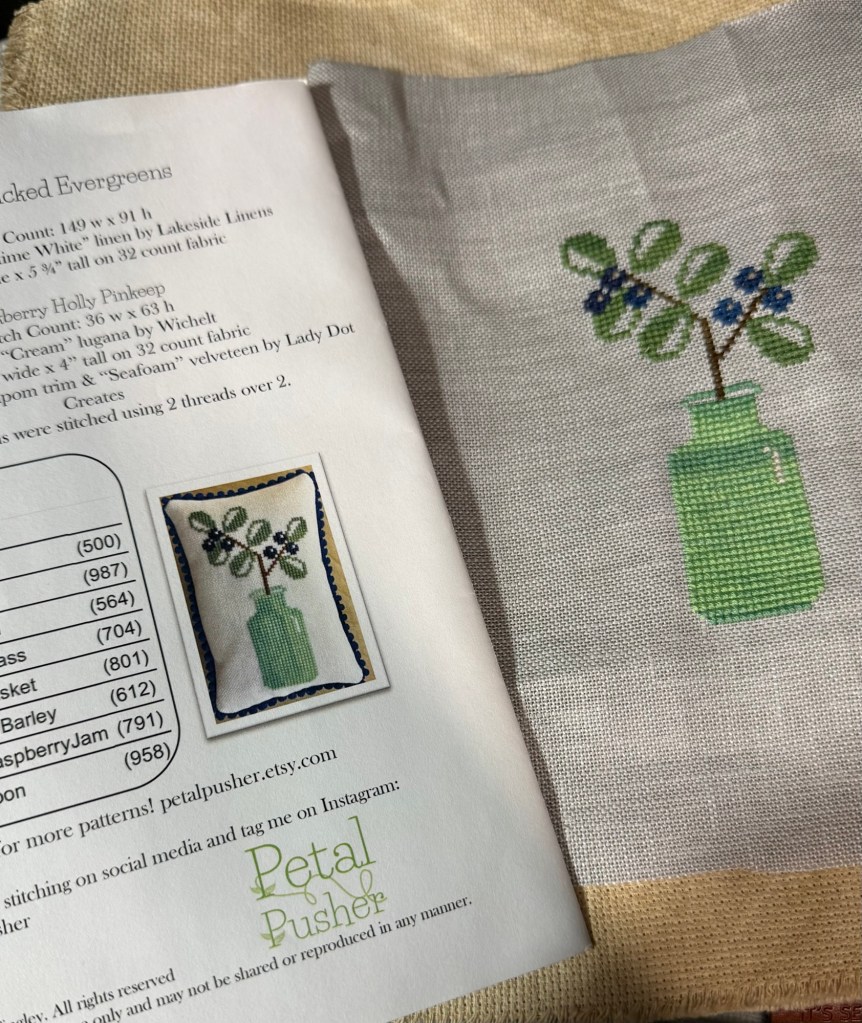
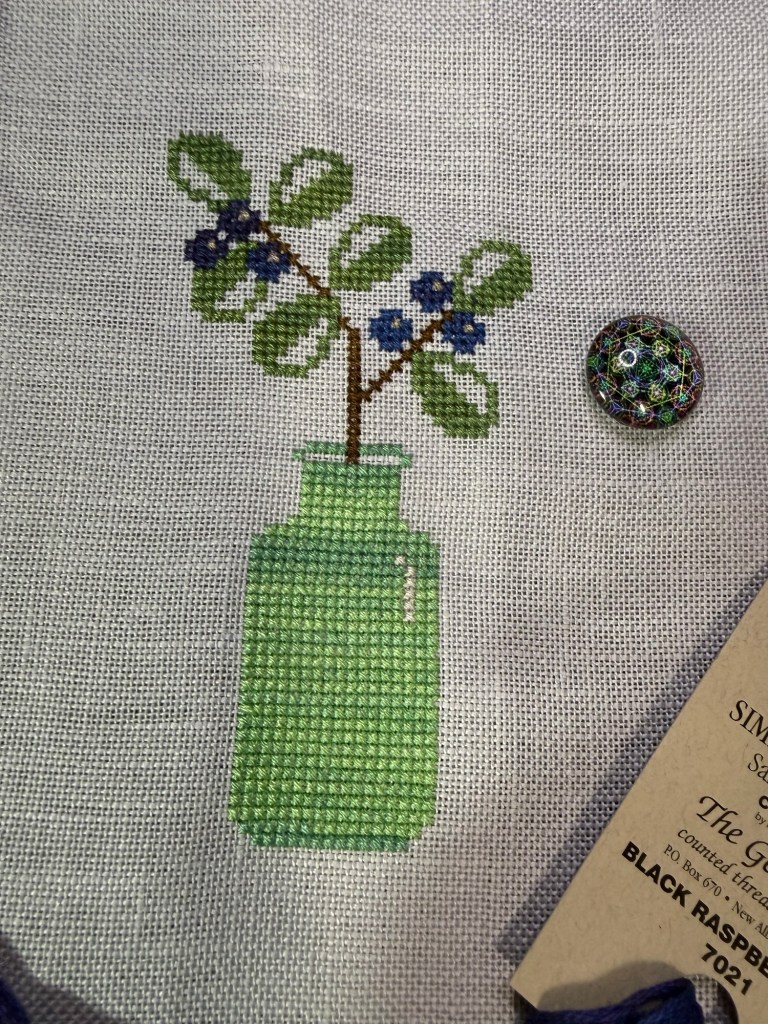
Old (sad face) Garden Stroll by Carolyn Manning (design free with Sulky Thread Pack)Garden Stroll – New startOld (absolutely no room for the entire design. Oops! Fresh Picked Evergreens by Petal Pusher (came with specialty floss)New (started in the corner this time)And… I finished the free pattern that came with it!A tiny finish! Isn’t she pretty?
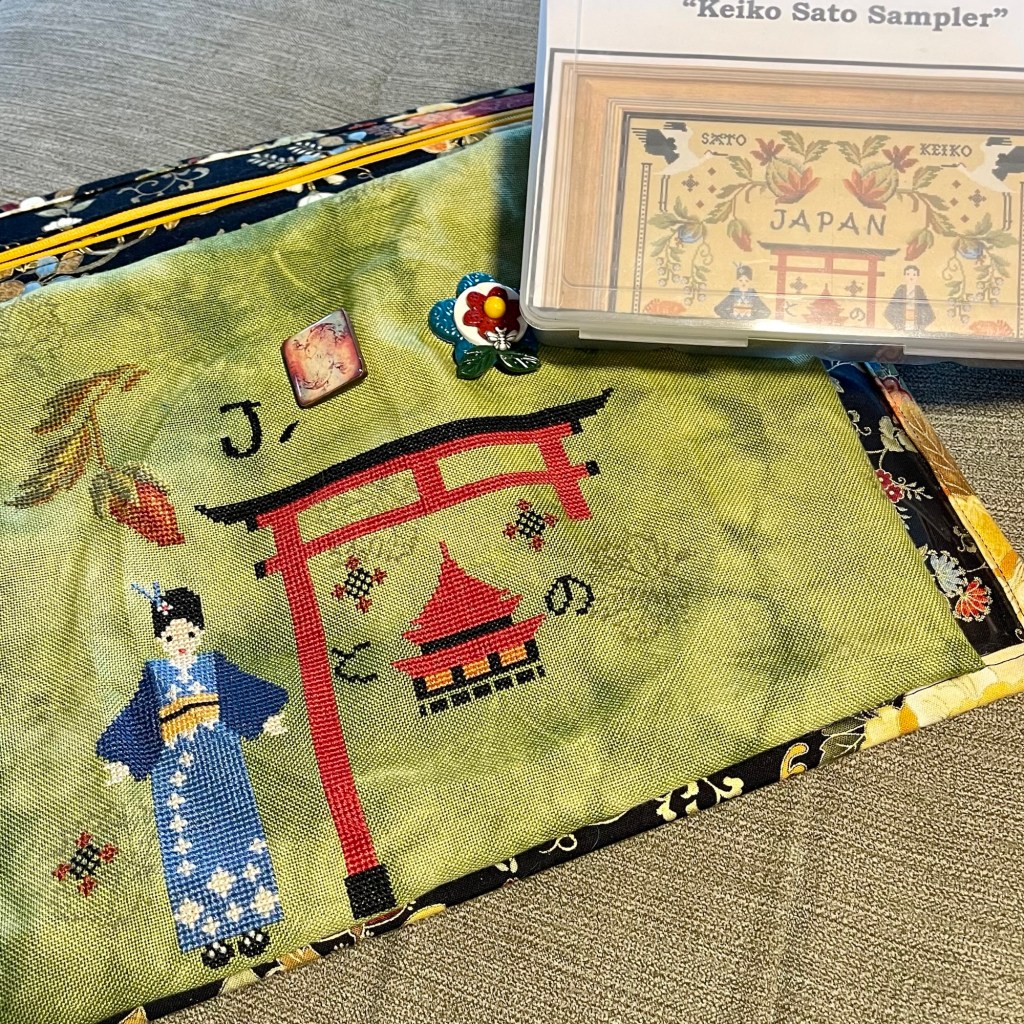
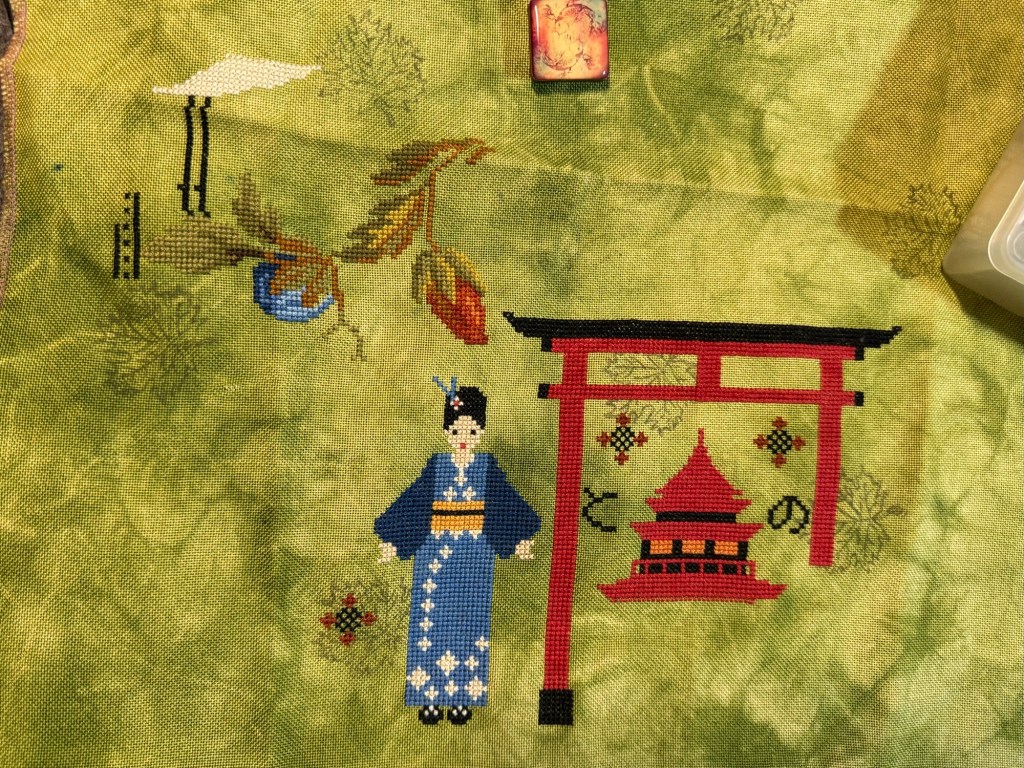
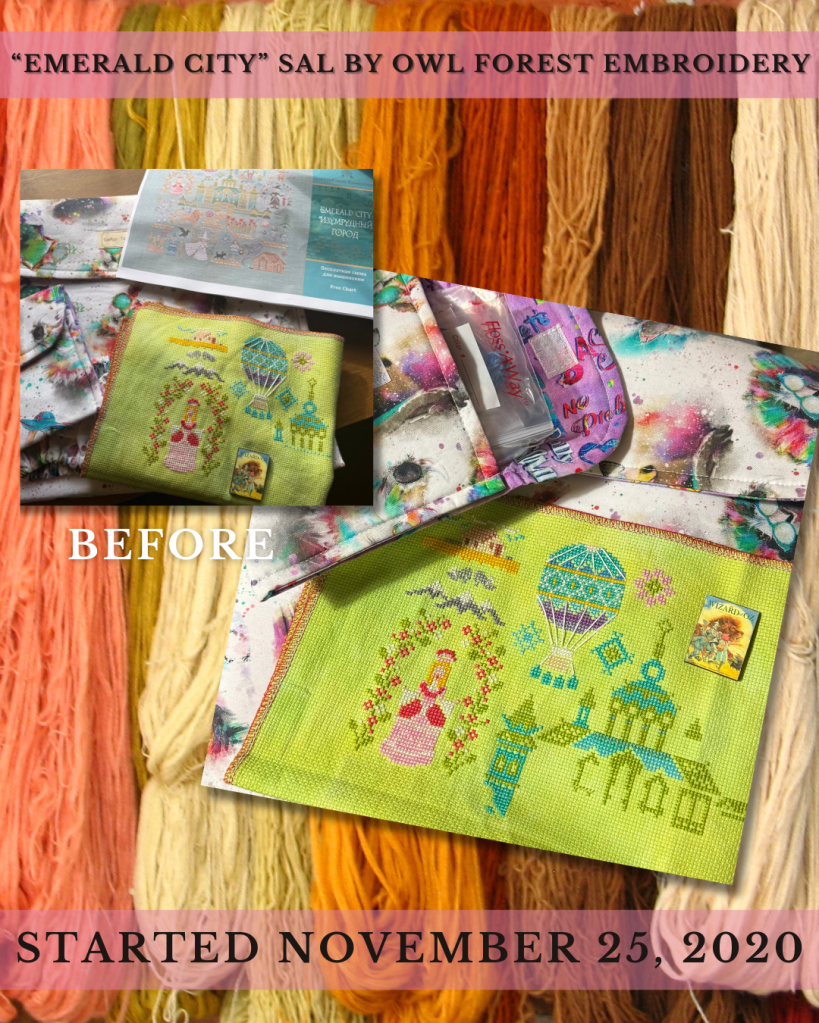
And this beloved project, Keiko Sato Sampler by Twin Peak Primitives, started in November 2020, is also on fabric a bit too small, but I love the color with the stamped leaves, and decided to make it work. So, I stitched all night on the berry out to the black border, and part of the crane to see how close I would be to the edge of the fabric. Less than an inch! But I’ll make it.
Keiko Sato Sampler by Twin Peak Primitives
Another Finish!
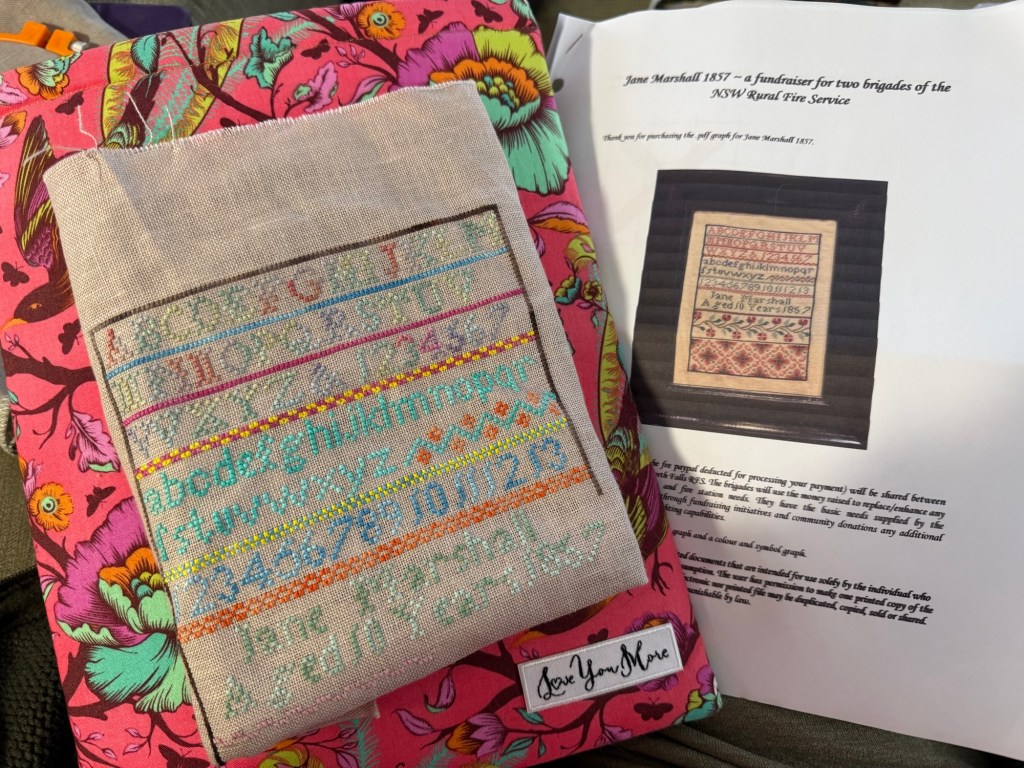
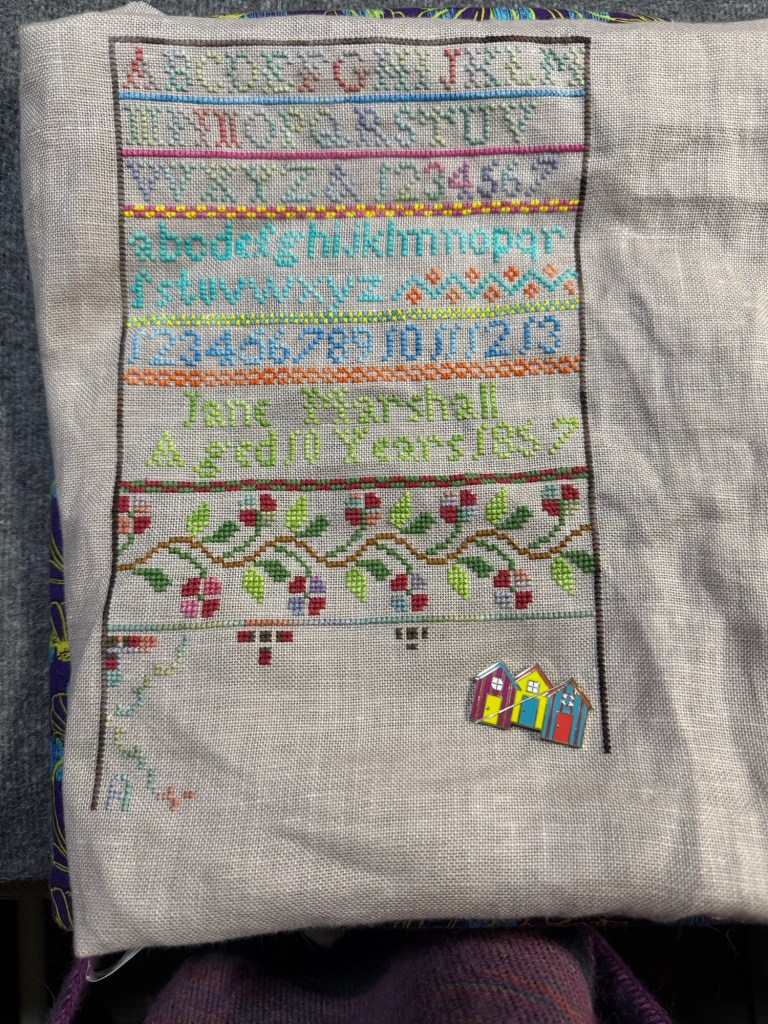
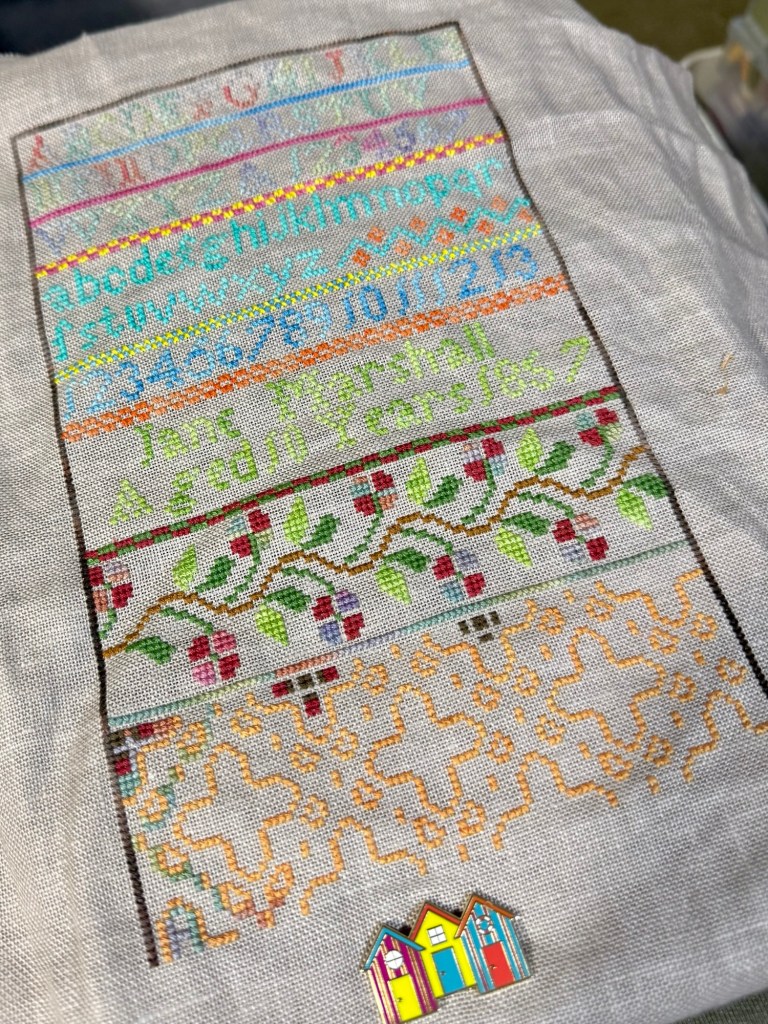
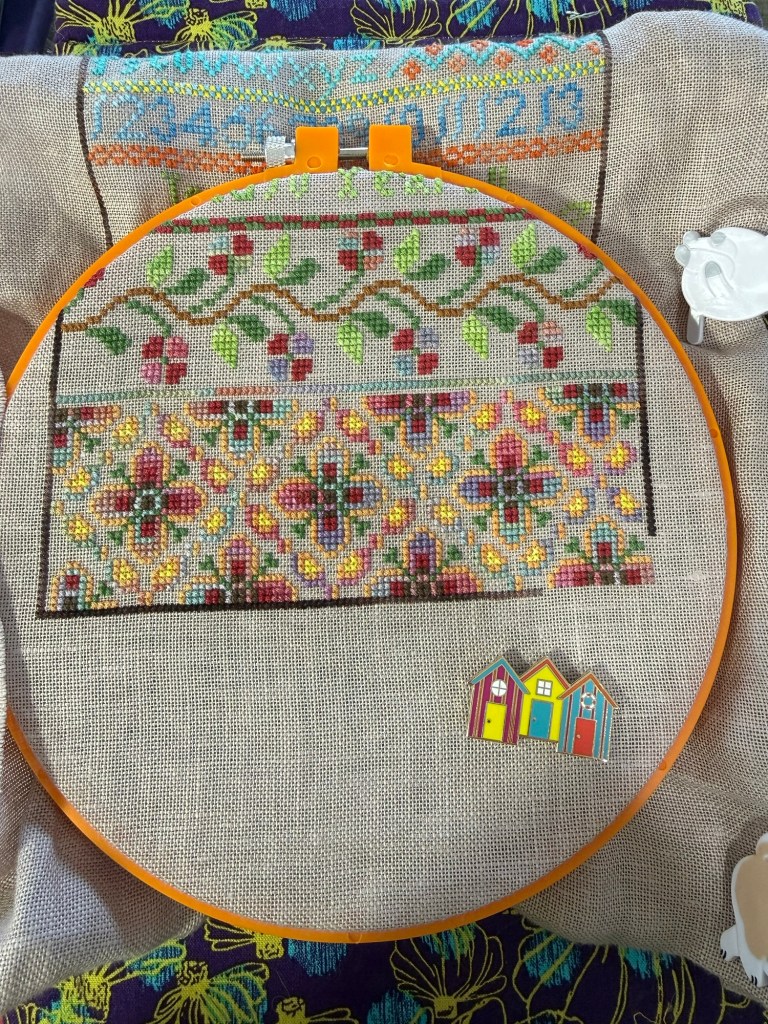
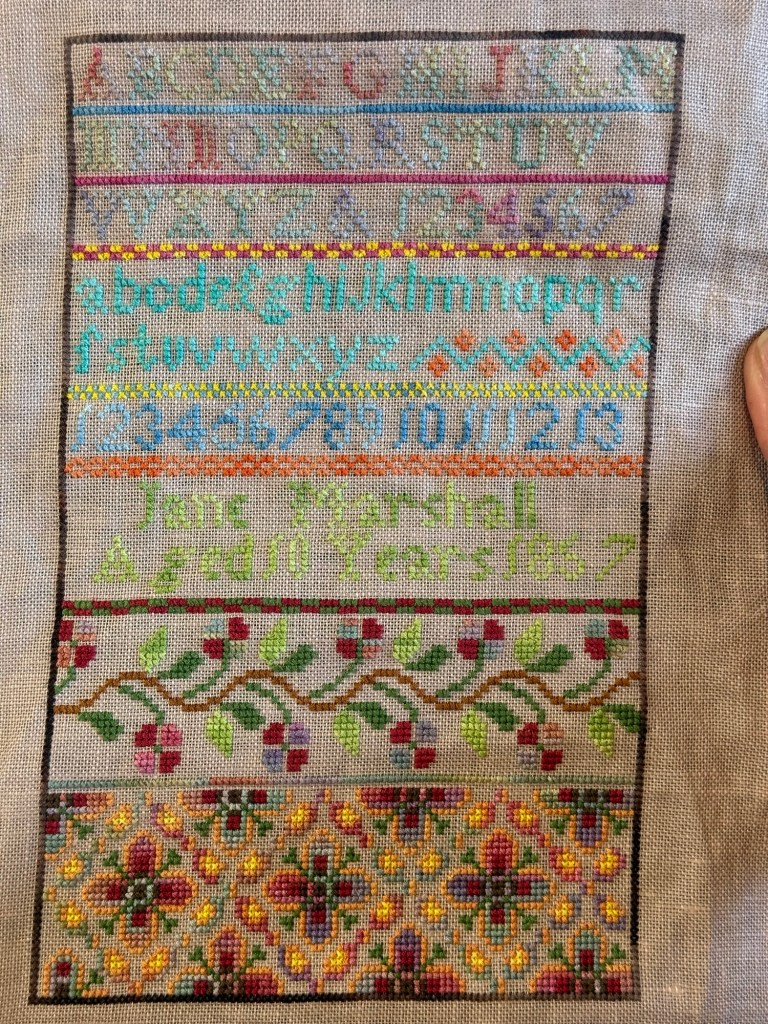
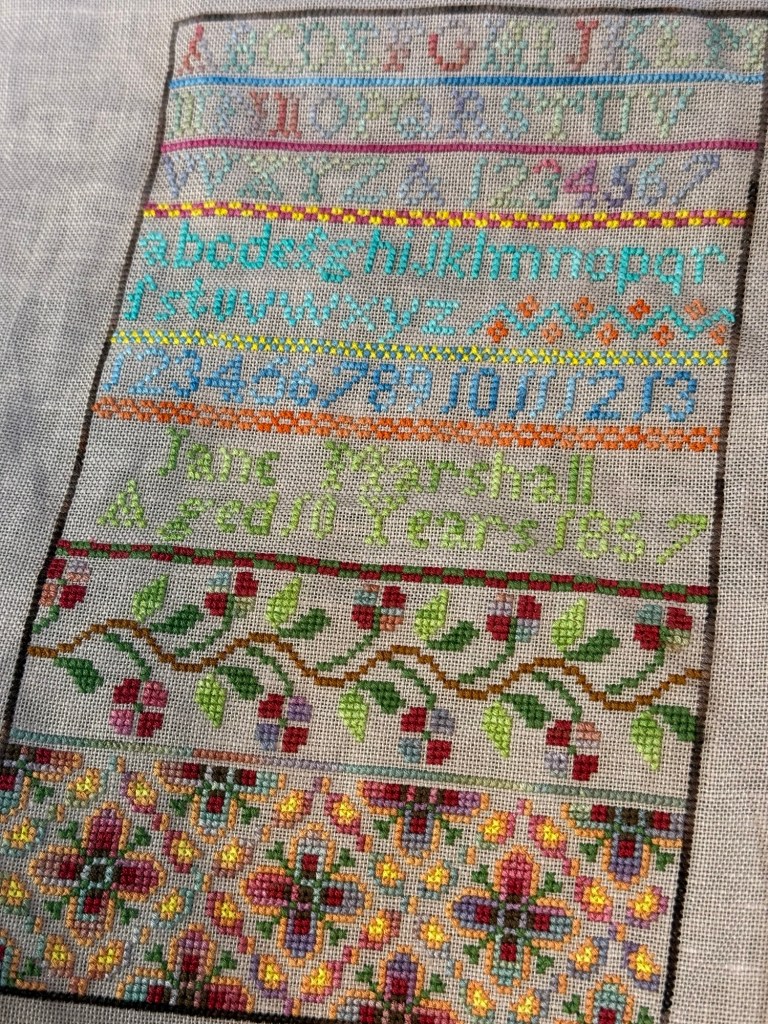
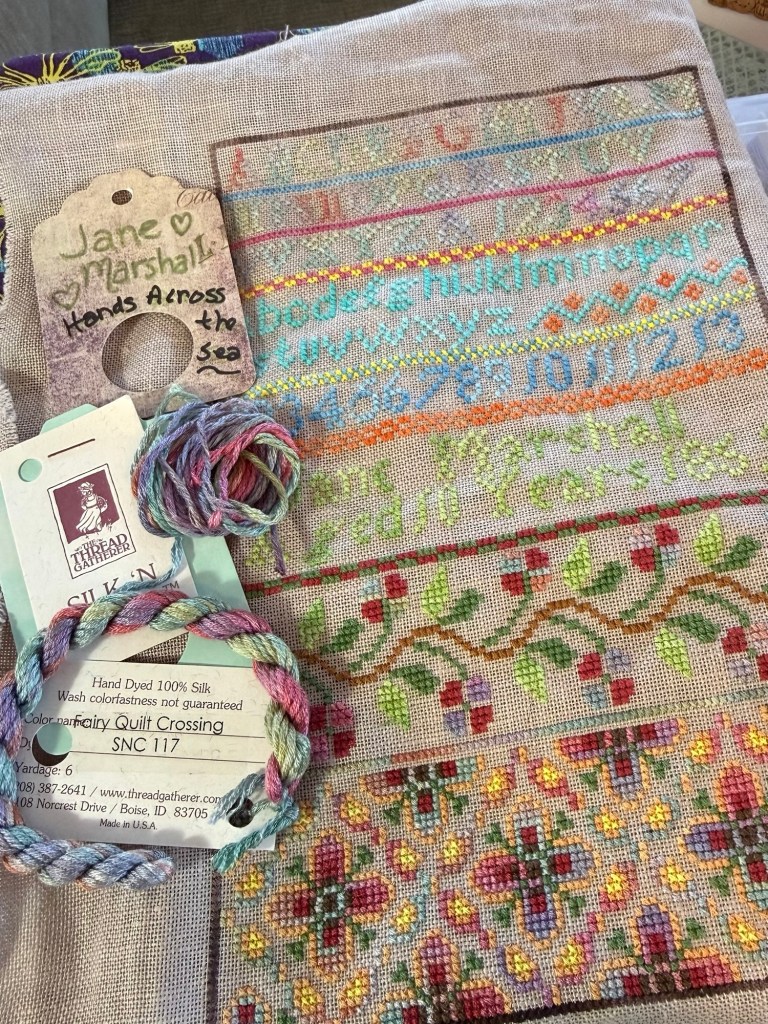
Check out this gorgeous reproduction sampler, stitched in 1857 by Jane Marshall, a 10-year-old Australian girl. I pulled out the band I was working on (her name) because the color just wasn’t working, and then I couldn’t stop stitching. The silk floss came from my stash, featuring a gorgeous variegated silk called Fairy Quilt Crossing. The pattern was free from Hands Across the Sea Samplers in support of the Aussie fires in January 2020. Many designers contributed patterns, and I stitched three, two I finished in 2020.
I’m blinking hard. The light is bright and welcome. I smile. Where shall I start? I reach for the canvas bin and all my pretties…
This has been my February: emerging from a five-year writing binge, still preoccupied with the many stories I have yet to finish. However, I know I need something different. Suddenly, the urge to stitch strikes me. I experience a moment of panic, but then I remember that dozens of kitted-up projects survived the great purge of 2025 – that strange year (yeah, it was only last year, but it feels like a lifetime ago) when I felt compelled to clear space in my 10×10 craft room for life’s unexpected challenges.
My cancer treatments are behind me now, the world is even crazier, and living in it requires creative survival tactics. I’ll call it revitalization. The joy I’ve found in stitching over all my decades calls to me again, urging me down that rabbit hole of bliss in mindful handwork – all the color, texture, and wonderful redefining rhythms of pulling a needle filled with vibrant silks and cotton through scrumptious fabric.
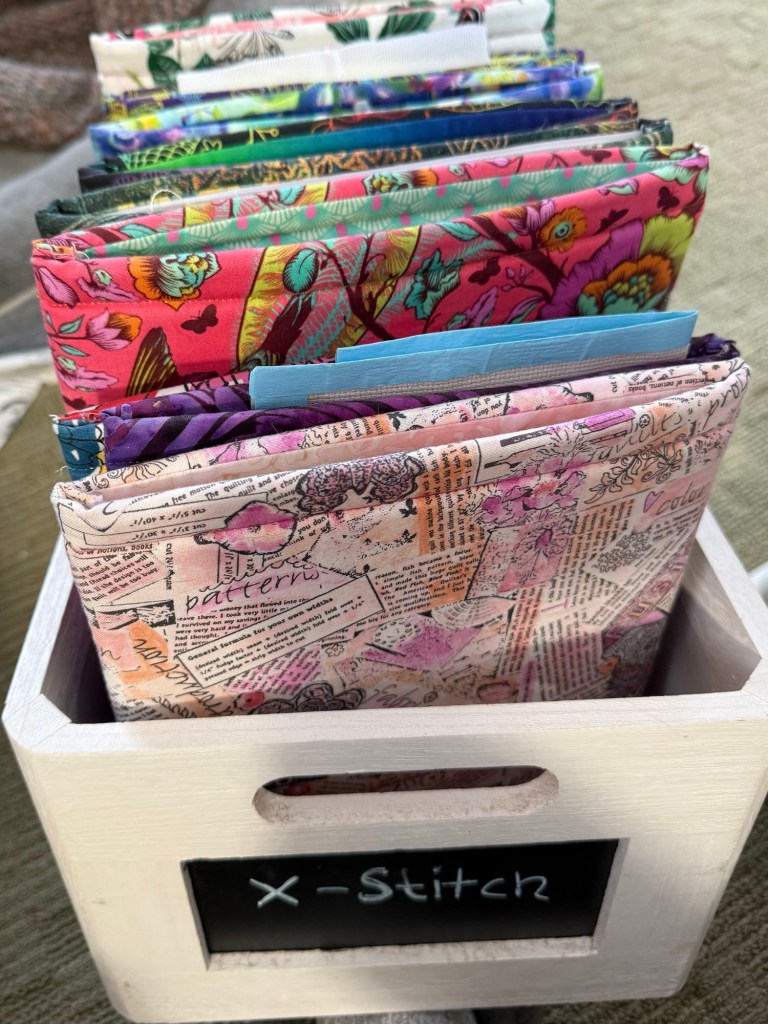
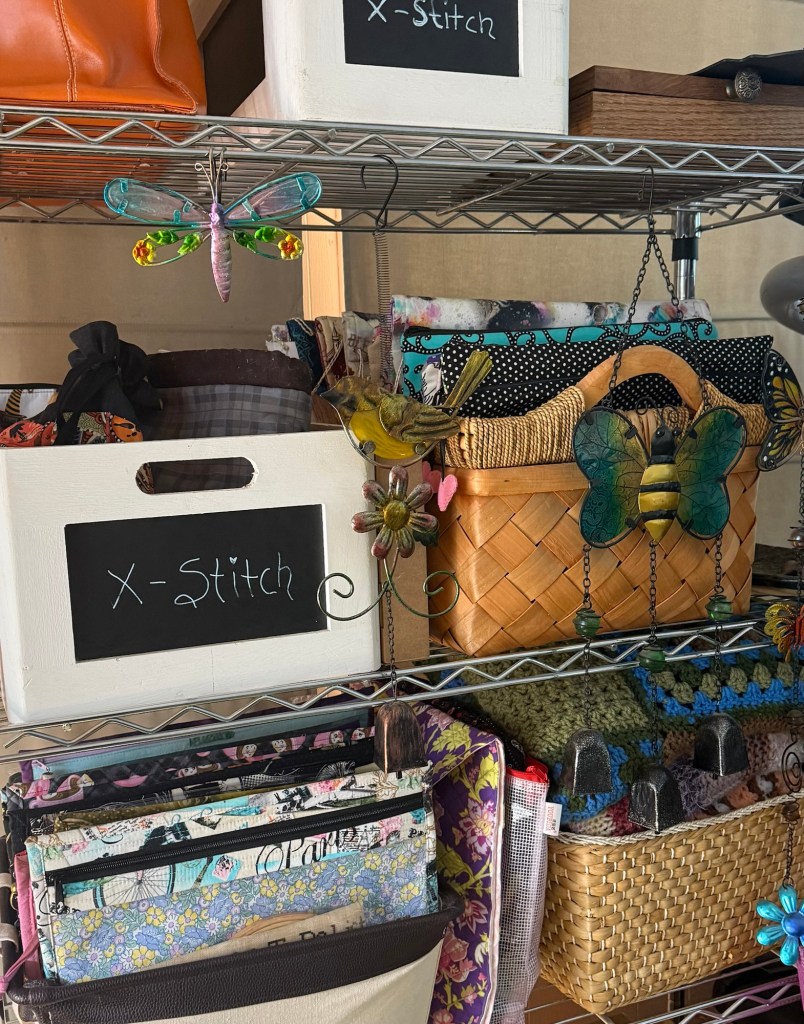
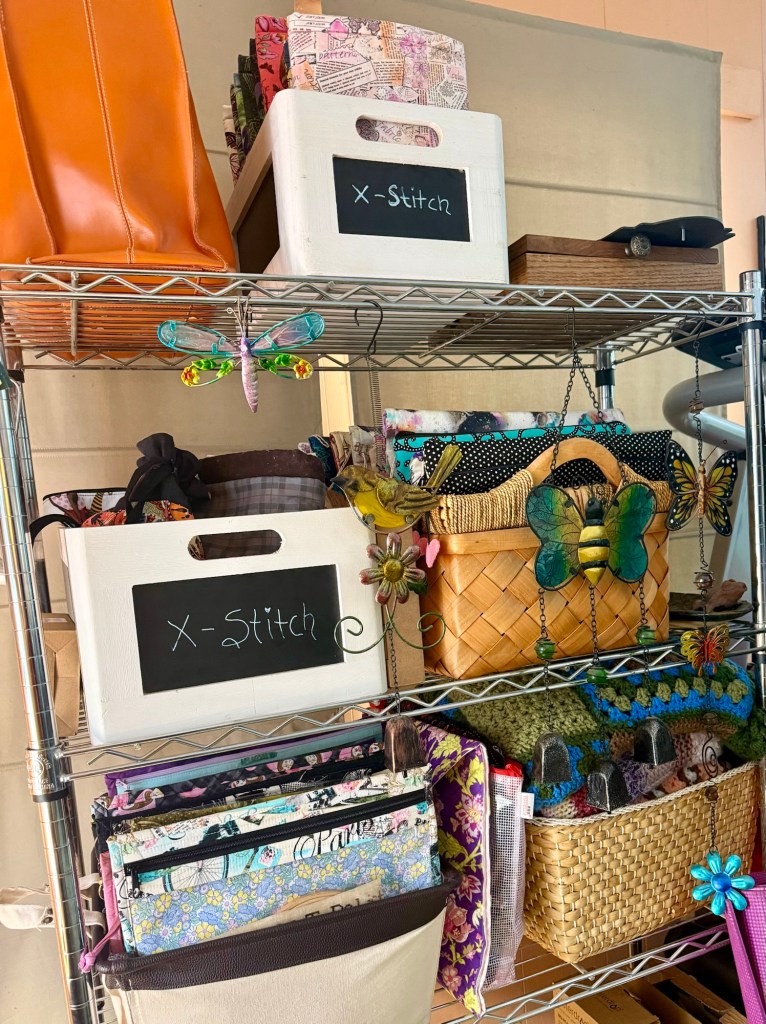
I’m happy to report that I started the fun last week by organizing all 50 WIPs (works in progress) and my supply stash. And yes, 50 survived the purge, though I sadly gave away 30 others plus tons of stash. My projects are all stored in a beautiful collection of handmade bags in pretty bins on my shelves.
From late 2018 through 2021, I was part of the stitching community on YouTube known as FlossTube, an outgrowth of BookTubers who love to stitch. The channels multiplied as even the shiest stitchers came out of their craftrooms to share their passion through video. Watching these women and men from all over the globe, living all the diverse lives, talking about the huge thing we all have in common, and sharing their progress, is surprisingly addictive… and highly enabling – and the craft supply hoarder part of me went wild. So did many new designers. Careers were launched, dreams were made.
Sitching while listening to books was how I got started writing at the end of 2020… but that’s another story.
I’m so excited to return to this world on YouTube, finding so many old favorites still at it and still working on some of the same BAPs (Big Ass Projects), many of them the same ones I’m trying to finish. Nope, it’s not a lonely craft. If you check it out, you’ll discover that for yourself.
My challenge now is to balance time for crafting (including knitting and crocheting) with time for writing novels. I’ve got nine, yes, nine stories in the works. I’ve always been, and always will be, a multi-crafter, serial starter, and steady finisher. Lately, I’ve focused on finishing short stories for anthologies, but those novels keep on developing…
Want to see some of what I’ve been doing this past week? Because I must share. 😍 I stitched on 13 projects, making really decent progress, and even finished one last night! I plan to finish another one in February. As with my novels, I’ll keep you posted throughout the year.
I hope this inspires you to catch the crafting bug or return to a favorite – maybe carve out some time to create a little something every day, then share the beauty. It makes a difference to the universe.
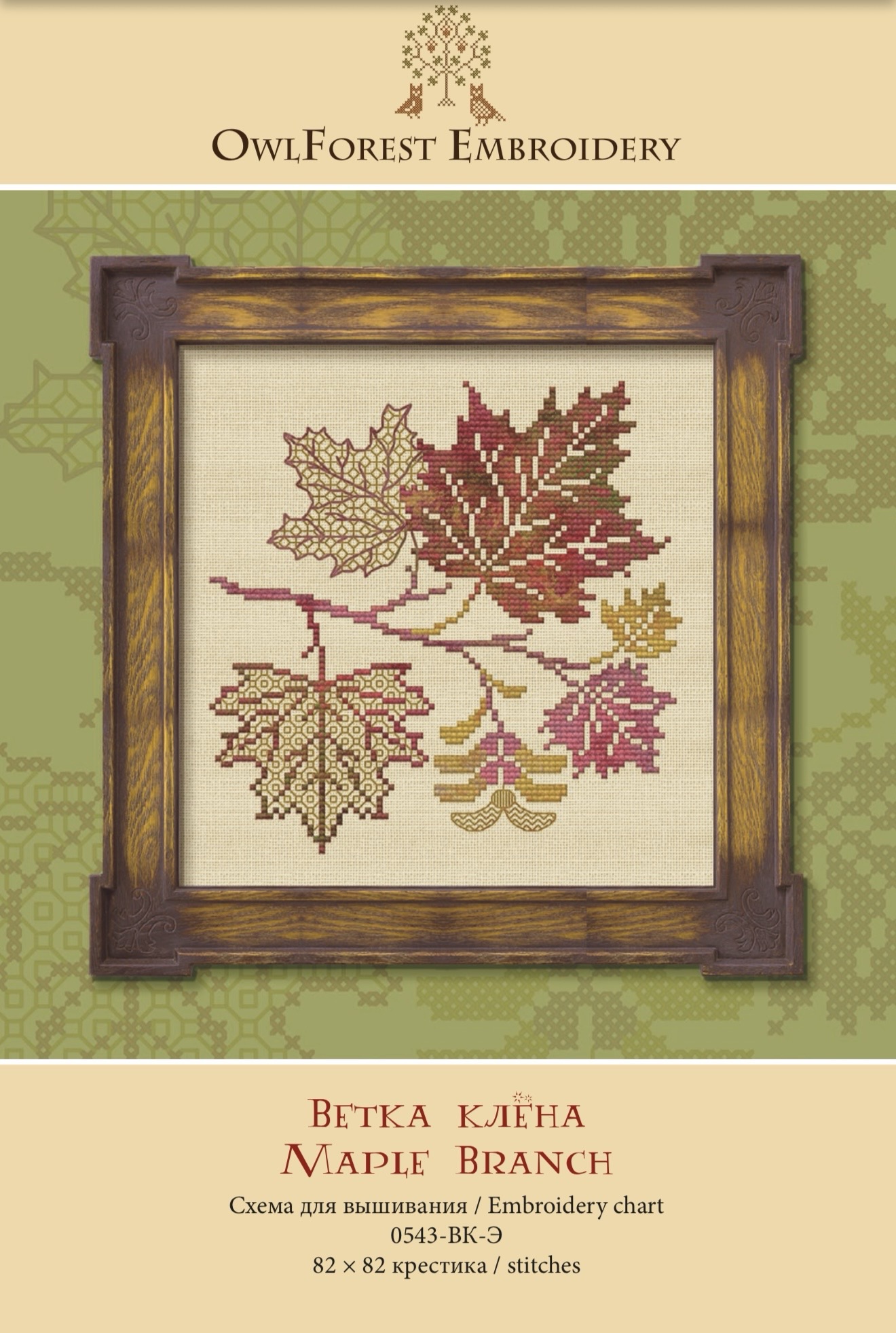
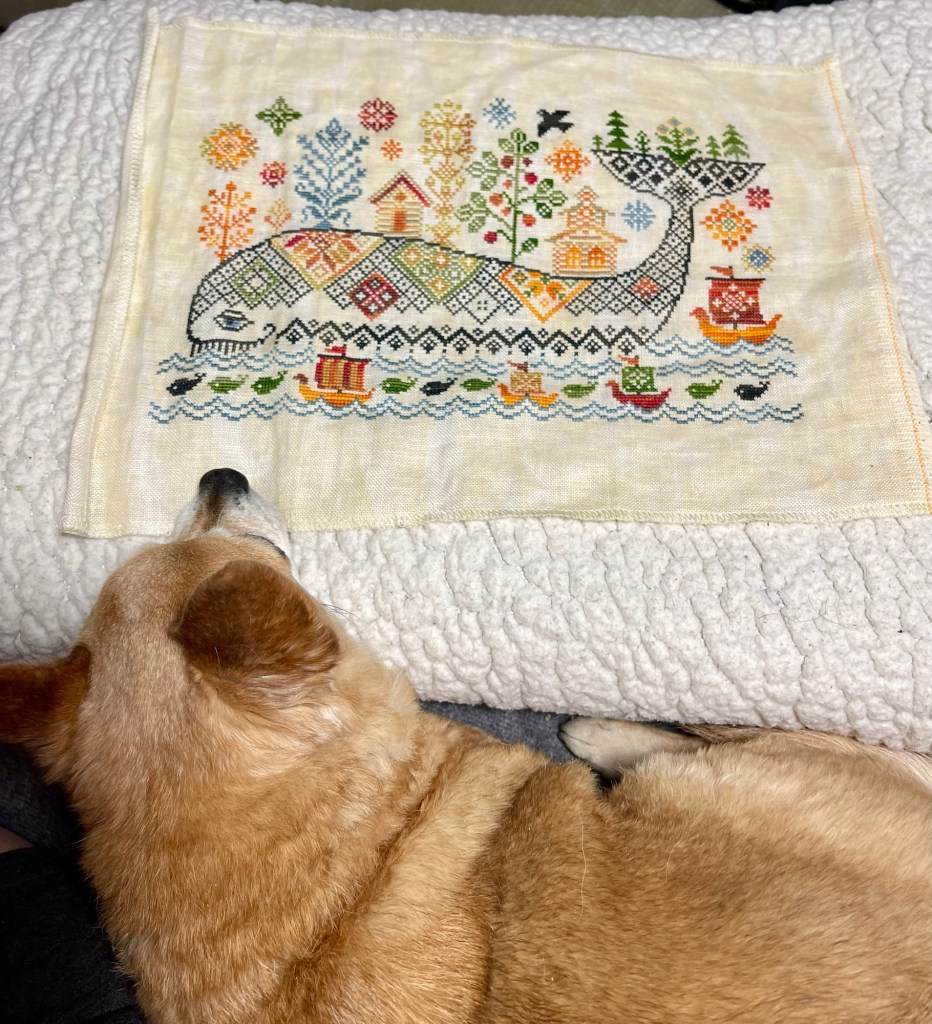
I did get a finish done last year, which I adore. Monster Whale by Owl Forest Embroidery. It still needs framing… so you get my chihuahua for now.
What a fun conversation. I was so excited to go behind the scenes of this rapidly growing writing community contest phenomenon. Read on and be fascinated and inspired!
An Introduction from Teona
Once upon a time, Max was a software engineer for a large defence company and unhappy in the lack of creativity he was able to exercise in his job. As an amateur screenwriter himself, he had come across writing contests before but knew there was room for the framework to improve. His wife Teona, was coming to the end of her maternity leave and so Max, with the long term goal of making this his full time job, took over as full-time parent by day and used the very little time in between kiddo naps and nights to mould the contest. With iteration after iteration, integrating suggestions from his brother, the writing battle community, and a lot of long nights full of doubt, he has finally gotten to a place where the contest works remarkably well. Battle season nights can now be spent enjoying wine, reviewing feedback and chatting with Teona instead of sweating over the keyboard to ensure the forums that he built from scratch are ready for the next day (yes that really did happen). Now we are in year three, just wrapped up battle number 9 and Teona has been officially “hired.” We are so excited to watch the community grow and thrilled to hear people enjoy the tournament as much on the writers’ side as we do behind the scenes.
A huge thank you goes out to our community and supporters like Darci who make this dream work for us! 🙂
What a great intro! I had to add it here in addition to my announcement page. I can’t thank you both enough for visiting with me today and chatting about Writing Battle. I was intrigued as soon as I saw a post on Instagram, and so glad I signed up for my first battle. After participating in the Autumn Short Story Contest, I was hooked.
I’ve been noodling over how I might describe the highlights and why I enjoy the contests, but there are a lot of reasons. So, I’ll sprinkle my comments throughout our discussion and hopefully capture it all that way.
I know for me, I can get bogged down in the serious work of writing, so I’ll start off by saying, these contests are just plain fun, a great way to remind me to enjoy the writing process.
In your introduction, there are a number of pursuits mentioned, software engineering, screenplay writing, starting up a business, time for parenting, which led to Writing Battle. Can you each share more about your backgrounds and how they shaped the fantastic platform and resulting community?
Max: My background is a bit all over the place. I was super into film and music as a teenager/early twenties, and ended up joining the Navy. I went from that into Computer Science, but always had it in the back of my mind that I would start writing screenplays again. After participating in NYC Midnight and enjoying the peer critique on their forums, I thought – hey, maybe this could work as a writing platform. A writing tournament where it is entirely peer-powered. The thing with programming is that when you are coding all day long at work, the last thing you want to do is code in the evenings. For me anyway! So it was crucial that I dove head first into Writing Battle. Teona going back to work after mat leave facilitated that – where I could look after our then 1 and 3 year old during the day and code Writing Battle at night.
Teona: We were actually just chatting about this yesterday– I think like many other people during the pandemic, we were in search of something. I had just given birth to our second child and as we said in the intro, Max was very unhappy working in his defence gig which was only amplified by working from home. On my side, and I think (hope?) many parents can also identify with this, I got this overwhelming sense of loss of my own identity to the new one in parenthood; I was happy to go back to work as an EEG Technologist to regain some of that “me-ness” and in turn Max was able to continue developing the WB platform. Obviously both of us could work outside the home, but we always agreed that if we were to have children, we wanted someone at home with them (plus childcare costs in Canada are outrageous, especially having two).
Other things we did/tried during the pandemic: Sell our house; join a cohousing community in construction; write and film a pilot concept with friends for a children’s show; serve as a script supervisor on a few short film sets; talk seriously and explore the idea of moving to other provinces, states, countries; start marriage counselling to better support each others’ search for that ever elusive “something.”
Max is the dreamer. I am the voice of reason (read: stick-in-the-mud). We are constantly trying to bring balance to each other which we are really starting to find in our own exploration of what Writing Battle is :) The biggest thing we have enjoyed about WB is that we truly feel part of a really positive community, which I think at the end of the day is what we have always been looking for.
Teona rants a bit if you can’t already tell 😛
Darci. Haha. Ranting (aka elaborating) is what this creator’s life chat is all about. To hear all the exploration that led you separately and together to what participants can now enjoy in the writing community is truly phenomenal. Thank you for sharing that! I was curious if NYC Midnight influenced some of the ideas behind WB. I’ve enjoyed a few of those competitions, too, though I got a little lost in the giant forums. I must say, Writing Battle does a great job giving its participants a community forum scaled to a fun and manageable size. It’s an amazing design.
The wonderful Writing Battle homepage image (the graphics are another attraction) totally has me picturing you two battling at home with pens and paper, and the lightbulb switching on-Why not spread the fun and get a community involved in battling with us? (Thanks for letting me indulge in my imagination.) Have you, Max, designed other software for fun or for your own creativity before Writing Battle? Did you have earlier manifestations/dreams of a Writing Battle-like platform, or was it only a recent realization?
Max: Thank you haha and I never really saw ourselves in that image, but now that you mention it – I can definitely see it! Especially before marriage counselling (ha). The artist’s name is Nikita Mazurov, and does absolutely amazing art. As far as software for fun, no, not really – just for other companies. I was always interested in online games and board games that explored the social interactions between people like Balderdash. I’m going to sound like a huge dork, but I LOVE the tv show Survivor. I think it’s the coolest social experiment. That’s how I look at Writing Battle. It’s really just a month-long social game for writers.
Darci. Believe me getting to the end of the competition twice now has made me feel like a survivor! I can totally see that influence. All those are great elements and exactly the fun tidbits about the creative process I love sharing with our readers.
Besides your own creative mind and lifestyle changes, are there other people, communities, philosophies, entities who inspired you to go for this?
Teona: I’ll chime in here– I mentioned earlier about joining a cohousing community in the pandemic. I think that in the end, even though that lifestyle didn’t end up fully resonating with how we saw our future, there was something there that may have inspired what we saw WB becoming. Positivity, sharing and evolving ideas, supporting one another– these are all pillars of what that kind of environment is enriched with and we still wanted a part of that in our lives despite leaving the cohousing development. I think Max would agree that we joined the cohousing community in search of “our people” and then tried really hard to fit what we thought that meant instead of coming as we are. I think being our authentic selves and full transparency became incredibly important to us through that experience and we hope that WB showcases that.
There is also one person in particular that was an incredible support to Max throughout this experience and that was his brother Alex. Alex was there cheering on and pushing Max to continue in the deepest moments of discouragement. “Just keep going for a few more months… see what happens and reassess.” That on repeat was our focus. One more battle, one more goalpost with more information. Is this viable? Is this worth it? Can this passion project truly become a source of income? Even when that answer felt like a “no” Alex was there believing in WB, believing in his brother.
Darci. Fantastic. Thank you Alex for helping to keep Writing Battle going so we can all enjoy it! And I’m thrilled to hear it’s becoming viable for you as an income, Max and Teona. Here’s to continued success!
You mention the Writing Battle community feedback helping you improve the platform. What were your biggest hurdles in the beginning and your favorite suggestions?
Max: Special shoutout to Leila Poole from the forums and my brother, Alex, who I bounced ideas off of for the entire first year of Writing Battle. It started with 11 participants from the NYCM forum. Leila was one of the first to agree to participate and “got” what I was trying to do. My initial idea for the site was that it was to be Screenwriting-only, entirely free, and people would only pay if they wanted to redraw their prompts. As you can tell, we’ve had to pivot many times to make this contest work and the community feedback has been crucial. It’s hard to pick a favourite suggestion because honestly, the entire contest has been shaped by the community.
Darci: Ah. The ingredients for success and what a win win for the community and Writing Battle.
One aspect of Writing Battle that really stands out is the peer judging. When I first looked into signing up, my initial reaction was, Oh no. I’m not qualified to judge other writing, and wow that’s quite a commitment in order to participate. But after thinking about it, I could see the appeal, the potential to enjoy a variety of writing styles and learn from them, then benefit on the other side of the coin through the responses to my writing. I did experience a little of that with the NYC Midnight forum and now we know how that platform got the ideas rolling, but can you tell us more about the story behind the peer participation?
Max: The initial inspiration came from how valuable I found peer feedback for my own screenwriting, but there’s a bit more to the story – I also found that the judges for writing contests tended to all be cut from the same cloth. And I mean, why wouldn’t they be? It takes a certain type of person to apply to be a creative writing judge. To begin with, you have to think that you’re qualified! So they are typically literary academics that understand the craft of creative writing. There’s nothing wrong with that, and feedback from those folks has value, but they don’t represent the entire readership pool. Far from it. Like you say, it’s a bit intimidating to think about joining a writing competition where you are also a judge. However, if you can read, you can judge. You know what you like and what you don’t like. We believe authors should be striving to write stories that everyone wants to read. Not just academics.
Darci: I for one have benefitted from the feedback in a myriad ways, especially when there is a consistency in the tone or a specific element(s) of the story that gets pinpointed by a majority of the judges. If you can suck it up and take it to heart, you can’t help but grow by leaps and bounds as a writer. Highly recommend the experience!
When you register, there is an opt out of the judging for stated reasons. I’ve been curious. Do you get participants who select that option?
Max: No, very few people select the opt-out option. Last Battle, out of 725 people only 4 selected that option. It’s our way to help folks that may be too busy to read stories that month or perhaps have triggers that would make it too risky to read unvetted stories. All of the extra money goes to members of the community that have chosen to read more stories that Battle. Essentially, it’s a reading fee. But yeah – not very popular. People seem to love to read/judge other stories even if there is some risk involved with triggers.
Darci: You must really dig statistics like that. What a great way to know it’s working.
Now for the details because those are what infuse the Writing Battle platform with fun. I adore it when it’s time to draw my prompts! I love having options to redraw and going through the decision process to determine whether to keep my initial draw, or take a chance on another combination. The fun in this is reflected in the community comments when contestants share how they went outside of their comfort zone to write in a different genre for the first time. That’s happened to me each time (Cannibal Comedy and Lost World). When I read the results of their efforts, I’m blown away every time. Can you give us some behind the scenes on developing the tarot card idea?
Max: I was just always into poker as a kid and I love card games so that’s where the redrawing came from. Writing prompts seemed like a good fit to stick on a card. There’s no fun tarot card story really haha I just thought it would look cool :) glad you like it!
Darci: Awesome! Your fun is our fun.
How do you come up with/decide on the genres?
Teona: A lot of that has been community feedback. We noticed we got the best reactions when we had the wildest genres – as long as they were from a spread of genre categories (plot-driven, spec, comedic, and more serious). Max and I have SO much fun sitting down, drinking wine, and throwing crazy genre ideas at each other. Some are solely to make the other person laugh like Cannibal Comedy. There have been some killer community forum suggestions for this last Battle that will heavily influence our upcoming competitions.
Darci. There’s that image again of you two at the table. Such a great icon. I’m going to have to find more time to read the forums. This is another great example of your creative energy influencing the writing community and bouncing back to you. I love it.
I noticed the prompts are repeated in the contests like they’ve been reshuffled for the new batch of genres. How do you come up with the prompts?
Max: They’re really just from lists that I’ve compiled from the internet, and it’s always amazing to read the stories that people come up with. In the very first battle, there was a prompt type called ‘Things’ and it consisted of every single noun in the English language (which I downloaded from some online dictionary). We’re talking tens of thousands of words that people could draw, but that just made people upset when they drew prompts like praseodymium and had no idea what to write. We pruned that list to around 600 words and called it ‘Objects’ instead of Things haha. There’s still work to do on expanding the other prompt types.
Darci: Oh that’s a great story. I’m looking up praseodymium… hmmm, a mineral from the periodic table. Might have to give it a go. Wait. I have tried that. My supernatural romance series features promethium used to make a weapon deadly to shifters because for some weird reason I wanted to incorporate rare earth minerals into my story. Love it!
I blogged a bit recently after my second contest about how Writing Battle works. I broke it down into stages, which is another fun element; the different ways we can be involved over the weeks as we move towards the final judging. But I admit, I had to describe the peer review (duelling) elimination rounds in general terms because the process is mind boggling. I’m still not sure if my story was eliminated in the second or third round. 😁
My confusion is probably due to my lack of a gaming background or some brainy, techy component I’m missing, but I would love for you to give our readers more on the concept in layman’s terms, so we might understand how it works.
Max: Haha I’m still trying to figure out how to describe it! I’ll do my best.
The first stage has the writer redrawing prompts and writing a story in a short amount of time.
After submission, the contest enters the second stage where each writer becomes an anonymous judge. They are given 10 stories total, but spread out over the course of 3 weeks – given two stories to judge at-a-time. They have to read each of the two stories, give a bit of feedback, then choose a “winner” of the two. That process is called a Duel. Those Duels help progress a massive best-of-five, single elimination tournament. The peer judging stops when the top two stories from each of the four genres have been determined and that brings us to the third stage.
There’s a bit of a fog-of-war until the third stage. No one knows who wrote what or how their story did. The third stage allows the writers to share their story in a semi-public forum called Debrief. Because the peer-judging is over, it’s now safe to reveal yourself (if you choose to do so). You read each other’s stories and comment on them, but this time not anonymously and not in a Duel. We then slowly lift the fog-of-war and reveal the tournament brackets over a week-long period while the industry judges (authors) pick the four winners from the final 8 that the peer-judging chose in the second stage.
Darci: Thank you!
Can you share the gist of the collective feedback you get from the community on participating in the Duels?
Max: I think the initial reaction is something like – “Uhhh wait this sounds like work.” Haha, which is fair! It is a bit of extra work. But by the time the fifth Duel rolls around, I would say in general it becomes their favourite part about the contest. It’s also an unexpected educational tool. You read stories of varying quality and you get to decide for yourself what works and what doesn’t and then maybe even ask yourself why something connected with you. I’ve had a participant in his 80’s tell me it not only changed the way he writes, but even changed the way he reads. I found that fascinating.
Darci: That’s great, and I can relate to my fellow participant’s comments.
How do you find and involve the amazing professional judges?
Max: I just cold-email everyone until I get a response. We’re still trying to perfect that part of the contest.
Teona: I had the exact same question when Max told me the calibre of people he had agreeing to be the pro judges! Like how? You didn’t sell our firstborn right? Haha. He insisted he just cold-emailed them on a whim, ensured me artists were supportive of other artists and that that’s what drove them to support our little cause.
Darci: Haha. So fun to hear from you both on that. And I didn’t expect the cold calling technique though I don’t know why because it’s simple and it works. I’ve employed the “it can’t hurt to ask if you want something” policy many times. That’s how I invited you both to chat with me. 😄
I’m going to put you on the spot here. Do you get to read any of the submissions after they are open to the community?
Teona: YES! And not just after, we read them all throughout the judging stages, keep an eye on our favourites, or on members like yourself who we have developed a relationship with through the community :) We are also sifting through all the feedback during the battle to ensure people are adhering to the rules. Sometimes that requires us to read stories to make sure the judges are doing their part and being fair to their duels by truly reading and providing feedback that directly addresses the stories facing off. On at least two recent occasions, Max has looked over at me at my desk and I was in tears, and he asked “what happened?” and I simply respond “I just read an amazing story that may not have existed without WB and I am grateful to be a part of that” <3
Darci: OMG. I love it! What a bonus to see what your competition inspires.
It seems to me that the numerous contest opportunities scheduled throughout the year are planned to perfection and run smoothly at this point in time. Any plans for enhancements or additional features?
Max: Always. I am currently rebuilding the website and all of the code from scratch. The new website should be released in a couple of weeks. Stay tuned!
Darci: Ooh. How exciting! Thank you for sharing that right here on my blog!
The aesthetics of the Writing Battle website are very appealing and inviting. It adds so much to the fun. Who does the artwork/design?
Max: Thank you! I mentioned the artist, Nikita Mazurov, who did the art for the landing page. Design has been the hardest part for me. I didn’t know it at the time, but I think I (perhaps poorly) was going for a neo-brutalist web design when I first created the site. It’s been fun to learn as I go. The new website is a lot more chill and maybe a little easier on the eyes if you’re on the site for longer periods of time.
I’d like to include one more question on a personal note. Do you both find time to write and create? Max, do you still get to write screenplays? If so, what are your works in progress and goals? What are your tips for balancing it all with life and family?
Max: No writing for me for the past year, unfortunately. I have a few ideas floating around that I still want to explore. I could definitely see myself in a couple of years getting back into it and feeling out screenwriting a bit more. As far as work/life balance, it’s pretty easy when you have a couple of preschoolers running around. They have the tendency to pull you from work to focus on them haha.
Teona: I would never identify myself as a writer. I am better at stream of consciousness writing as a means to organise my thoughts and I love playing with words in doing so but I have never really tried to write a story. Maybe someday :)
I don’t know that we are at all qualified to be giving tips about balance. HAHA. Some days are incredibly balanced and harmonious– this is usually following a rare full night’s sleep (our kids have always been terrible sleepers). For a more accurate picture of our “balance” it is kinda just roll with whatever seems to be working that day, hour, or moment, and reassess in the evening to try and make the next day better. Having young kids and an even younger business is no joke but we are having an absolute blast with it all, learning lots along the way and for us it truly comes down to good communication.
Thank you so much, Max and Teona, for visiting today! This has been a blast. You can follow Writing Battle on Instagram, Facebook, and Twitter to participate in this amazing writing community, but don’t forget to sign up for a battle!
Any parting words of advice to our readers who dream about writing, web design, and finding ways to pursue their creative passions?
Max: Thank you for the thoughtful questions. This has been a lot of fun! My only real advice would be to constantly re-evaluate and not to be afraid to pivot. I think it’s unrealistic to believe that you know what you have before creating your first prototype or draft. Get feedback and see how people use what you create. If it’s writing– then get honest critique and take it to heart. Don’t be afraid to admit when you’re wrong and pivot towards what’s working for your consumers.
Teona: Max has taught me to reach further than what I believe or perceive to be the edge of possibility. WB is proof of that for me.
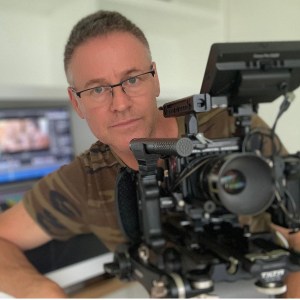
Welcome to my Sunday Spotlight Graham. What a delight to have this opportunity to catch up with you and have you share your works with us. I’ve not had many guests where I could say “I knew you when.” And that makes our chat special for me because when you took those steps after high school to set off on your creative journey, which led to your amazing career we will chat about today, you helped me take a few bold steps of my own. I’ve always been grateful for that.
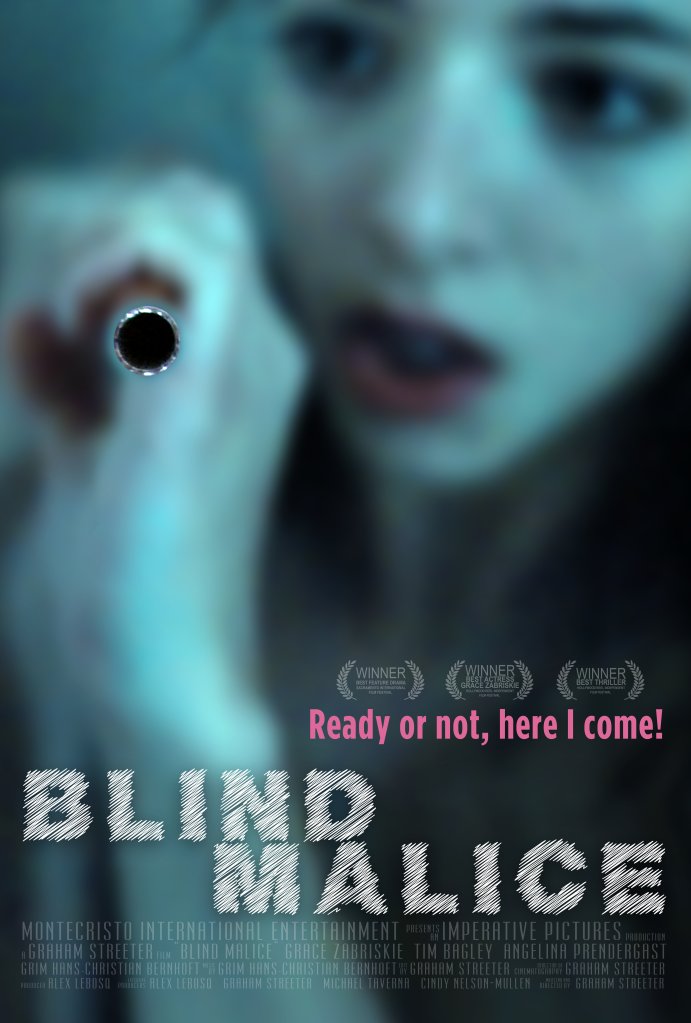
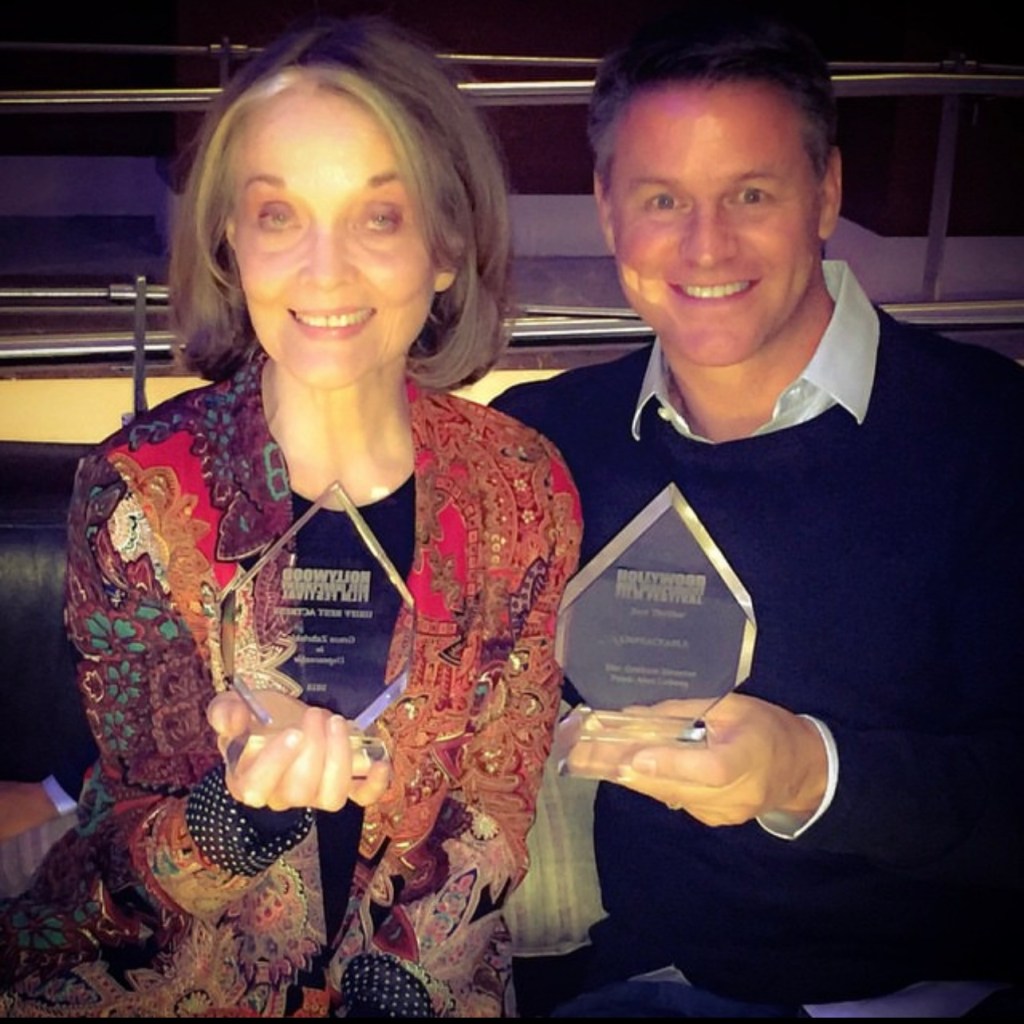
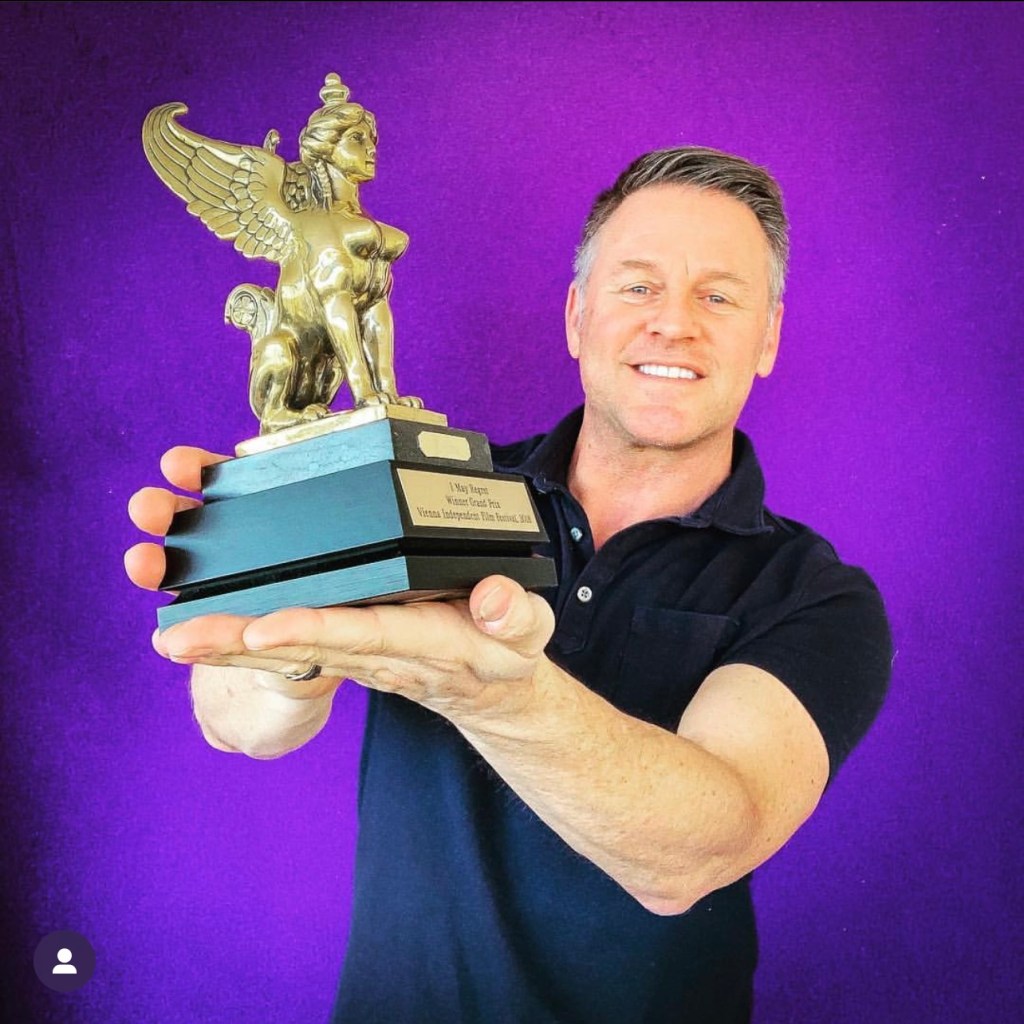
So let’s start by introducing you as the principal behind Imperative Pictures, a film company with an exciting and eclectic body of work our readers can check out on IMDb. Your 2018 film I May Regret was selected for the San Diego International Film Festival and won the Grand Prix at the Vienna Independent Film Festival, and Blind Malice did fabulous on the awards front as well. Grace Zabriskie earned a best actress award, which I was thrilled to see. She’s always been a favorite of mine. All the actors gave us potent scenes in that film. It was also a special treat to join your crew to watch it at the Sacramento International Film Festival on the historic Delta King riverboat. And you’ve gone on to win many more international film awards. Congratulations!
D. How long do you work on your story ideas, the writing, before a piece becomes a full-fledged project? Or do they start life as a film concept, then comes the writing?
G. I always start with a subject matter. Usually through the act of general wide-cast exploration I eventually stumble blindly upon a subject matter that I had little or no knowledge of. That’s when I get interested. That’s when I become intrigued. It usually means I’m not alone and the subject matter is worth furthering to educate people like myself.
Then I ask myself is it a big enough subject matter?
If so, the writing process always starts off super fragmented, at best. I try not to focus on a storyline, but instead, I’m usually fixated on an ending; an outcome; a take-a-way. Having a specific ending in my head from the start is essential. It’s the core driver for everything else that will take place for this project for the rest of my work. Even after the film is done this core still drives marketing and promotional possibilities.
Once I know what I wish to say about the subject matter, then I can start creating an actual narrative that takes us on a journey that ultimately lands on that final point or message. I guess you can say it’s reverse engineering.
D. As a writer, I have been interested in the differences between writing a novel or a screenplay, especially since I noticed that many writing challenge platforms offer screenwriting contests along with short story writing. Which means to me, many fledgling writers want to write that next epic screenplay. I think the main thing is creating scenes that build on each other through a story arc. But what other key features are there in writing screenplays?
G. I don’t have a clue about writing a novel but I do know a bit about screenplays. The work is not random. A good story may appear organic and without format, especially done well, but once you strip away all the glitter it is a body of work that usually fits the model of a solid 3-act structure specific to screenplay writing.
The challenge of a screenplay is that, unlike a novel, a screenplay never overtly articulates the inner thoughts of a character. A screenplay can only provide observation. Moving pictures. So glances, body language, choice of words, or lack thereof, emotions you can see, manipulative actions you can witness. Clues like a faint smile. A welling up of the eyes. A nervous clearing of the throat. Those are the visuals an audience relies on to gain insight into their minds.
A screenplay is only a roadmap for the director to get you from A to B. In many ways, unless detail tells you something to actually further the story, it is never included. The roadmap can be widely interpreted and visualised. No two people read a screenplay the same way, and thus a director who embarks on a writer’s work has the opportunity to tell the story from his or her unique directorial perspective. A unique directorial lens.
The same story can appear unrecognisable from director to director. But each story ultimately says the same thing in the end. The roadmap takes the director to the end.
D. Fascinating. Exactly the insights I was hoping you could give our audience and a wonderful glimpse into the creative freedom of a filmmaker.
D. As the writer, director and cinemaphotographer on your films, which would you say is your true calling, or is it a combination? Do those roles change with each film where you might do more of one than the other?
G. I love every stage of filmmaking. If you truly love every creative process, why not do it all. Right? I think of filmmaking as approaching a painter rightfully approaching an oil painting. The painter would never sketch out a drawing, paint half of it, and then hand the brushes and paint over to another painter and say, “Hey, wanna do the rest?” No. A painter usually picks a subject matter, outlines the concept, lays down the base coat, paints in the images, indulges in all the detail work and finishings. Signs it. Frames it. Heck, the artist might even have a strong opinion about how and where to hang it.
That’s how I feel about filmmaking. I enjoy and love doing every aspect of the work.
D. That’s a fantastic analogy. And that passion shows in your finished product.
D. How do you assemble your team? Do you have a crew who is part of Imperative Pictures, or do you recruit for each project? Do you have a system you follow each time, or is it more organic? Feel free to expand on your creative process, how a film comes about from start to finish.
G. It’s a hybrid. We have garnered team members who consistently work with us if they are available. We have others we recruited for one project, and then they go on to bigger and better projects as their careers advance.
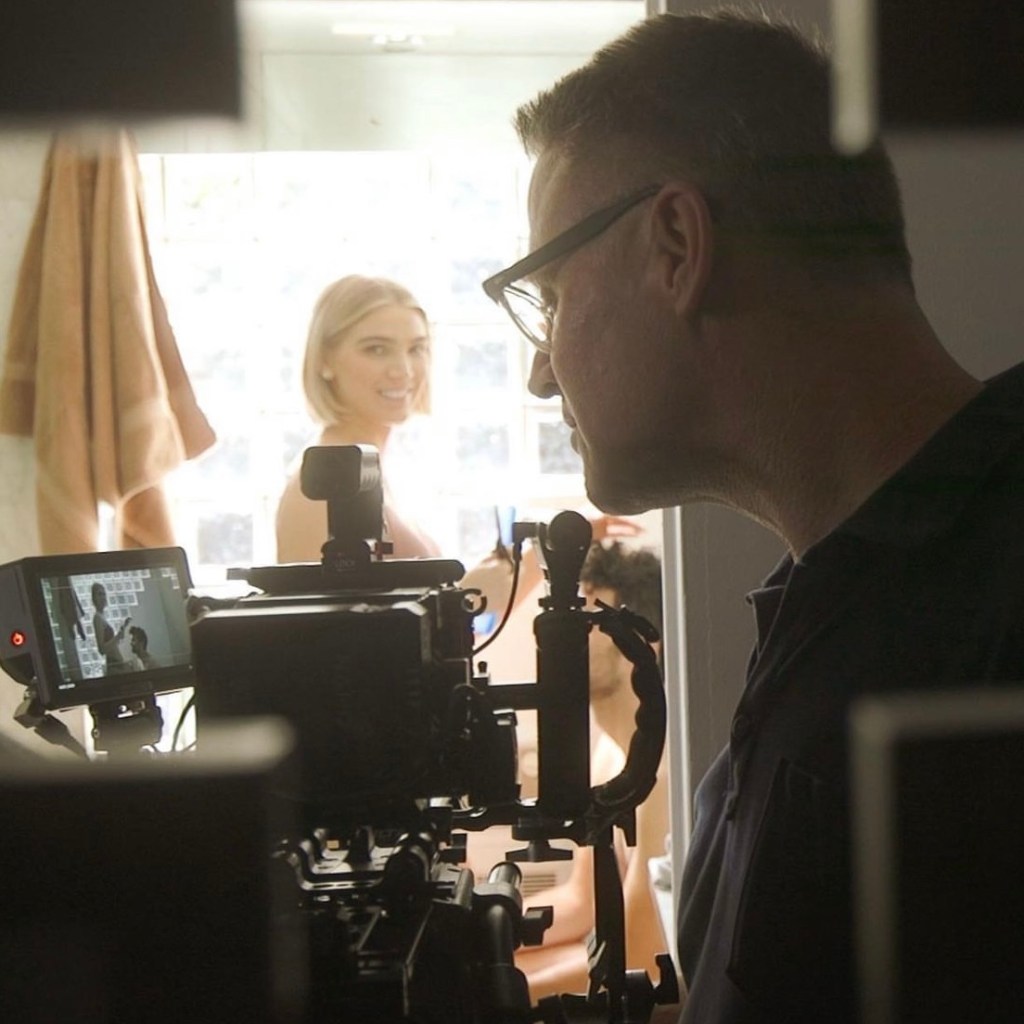
Many years ago we created the Imperative Pictures Internship Program in conjunction with Emerson College Film School, Boston/Los Angeles. As a result, when we are gearing up for a production we take on any number of young and inspiring interns who spend the semester learning how we approach filmmaking. Then, timing permitting, they roll into production for an actual feature film production experience. They truly get their hands dirty in the business.
They also walk away with IMDb credits for a feature film. It’s a great program and we love launching bright new students into the film world.
D. What a brilliant program. A win for everyone.
D. I have to say you have a knack for creating a story that has me on the edge of my seat from the start. I loved the opening scene in Blind Malice just as an example. Is suspense a favorite genre and method for telling the character’s story?
G. Yes, I love suspense. I also love psychological thrillers. I guess you can say I like when the mind has to work hard to understand another person’s mind. It’s the human connection I focus on to tell my story. If we can connect with the main character by creating a character who is both flawed and inspirational; undeniably human; the possibilities of where that character can lead us is endless.
D. Beautiful. I can definitely relate to this as a writer, and it’s something I strive for.
D. Your films bring an awareness to challenges many of us face in life, whether physical, cultural, or social. Was that an underlying purpose for making them, or a happy accident that became your trademark?
G. Happy accident. But not without some master planning. Making a film consumes many years of a filmmaker’s life, and after the film is done it runs over and over in perpetuity. So, I always want to be sure I’m making something that has meaning, purpose, and will be relevant and serve to better our society as the story is told. It needs to be worth my time.
The earliest of storytelling was to teach lessons for the community. Feature films have even more of an opportunity to inform its viewer and potentially a wider audience. A film garners a captive audience. What an opportunity it is to make a body of work that can provide insight, perspective, and clarity to a topic that could ultimately change another person’s life somewhere in the world. That’s the power of film.
We take film seriously. It can literally shape a person’s view of the world for a lifetime.
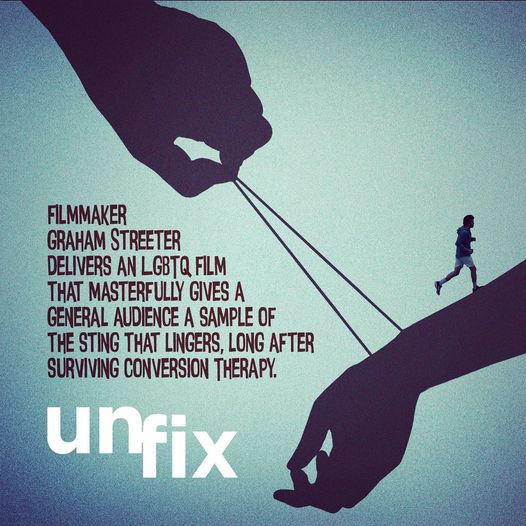
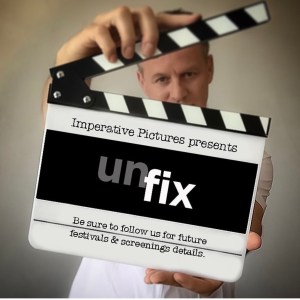
D. Tell us about Imperative Pictures’ latest film, Unfix.
G. Unfix. It’s my newest film. We’re currently doing sound design on it. It’s a story about a 35-year old man named Ari who, at age 11, following a brief encounter with another boy, was forced into the torturous practice of Conversion Therapy. But now Ari is 35 years old and happily heterosexual, and “fixed”. But when the pandemic hits, Ari’s world is turned upside down once again, awakening dormant questions about his fundamental authentic self; casting doubt he was ever really gay.
I stumbled upon the topic during my rabbit hole research phase. I knew a little about conversion therapy but the more I dove into the topic the more convinced I was that this was a topic that needed to break the walls of specific sexual orientation to make it universally relevant. We hope the story achieves that.
D. It’s hard to imagine parents putting their child through such trauma instead of nurturing the child’s discovery of where they fit in the world. Yet, it happens to a lot of us, sometimes in more subtle ways. I’m glad you’re telling the story.
D. I’m going to hark back to high school because for me, the most fascinating aspect of this interview is knowing you back then and having you share how you got here today. There were so many ways you expressed your creativity in those early years; music, art, drama, starting up social groups and small businesses to spread creativity to others, and finally traveling to Japan. When you were exploring all those ideas, did you have any inkling you would end up behind a movie camera?
G. Settling into film took some time. Maybe subconsciously I already knew when I bought my first video camera in Japan in 1980. It was a dinky little compact micro-cassette SONY camera and I took it everywhere and I made so many little movies. And then I started making “Santa Sightings” short films for my niece and nephew every year. Then short films. Then finally bigger and bigger films as my confidence grew.
But professionally, I was working in News. Then LIVE TV work. By being in the field, I was learning that I don’t like the chaos and uncertainty that accompanied that kind of production. I eventually discovered I am more of a planner. I like being organised. My dissatisfaction with LIVE TV and NEWS ultimately steered me toward film. Film is calculated. It is planned. It employs strategy. All the parts of the brain I like to exercise, while still being fully creative. The feature film medium found me.
D. I bet your niece and nephew adored those movies. My imagination is taking off thinking about how you told them.
D. How big a part did living in Japan play in forming your film career? Did you travel there with the idea there might be opportunities for your future, or did you simply set out on an exciting adventure?
G. Japan moulded a great deal of my work ethics. Japan also served as the foundation of my first 20 working years in production. Oddly, Japan also made me feel like an outsider, and I was okay with that. That feeling helped me make decisions for myself, not for others.
I owe so much of my creative autonomy to travelling outside my comfort zone, learning how to survive and flourish in another culture, chipping away at another language, using a part of my brain that would otherwise have gone unused, to who I am today. Especially in the 80s, Japan was as far one could get from the “Western” culture.
I grew immensely from those 10 years abroad and 10 more working for a Japanese TV network back in the states. It gave me a unique sense of confidence as I moved forward in life.
D. A great learning experience to pass on. Thank you for that, Graham. We were fortunate to travel there in an era when Japan was opening up to western culture. Even in my three-month visit, I ran the gamut from dealing with the challenges of being an outsider in a traditional Japanese family to being thrown into the middle of the family’s western growing pains.
D. What would you say is your biggest influence or turning point that got you where you are today?
G. There has never been one big influence or turning point that got me where I am today. It’s always been about achieving productive goals every day. Small bite-sized goals over weeks and years that lead to bigger daunting life-changing goals. Slow and steady progress requires staying on track, and not veering off my course. I did not know how I would get there, just that I wanted to get there. I am still “getting there”.
My father once gave me perhaps the greatest advice ever. I was 16. I was fixated on what I would do when I grew up and how I would get there. He asked me to take out a piece of paper. Fold it into four quadrants. He instructed me: in the first quadrant write DAY. The next one, write MONTH. Next, write YEAR. The last one, write ULTIMATE. He explained, to get to your ultimate destination you just need to set clear specific but small and easy goals that will lead you there.
Daily achievements will result in monthly success. Months quickly turn to years and as long as your ultimate goal is in view, you will move in that direction.
“But remember,” he said, “Set goals you KNOW you can achieve so you don’t set yourself up for failure. Give yourself tasks you know you can check off daily, so you feel like a winner everyday. Use it every day. Keep it folded up nicely in your back pocket. Constantly remind yourself of the ULTIMATE goal.”
I use this method to this day.
D. I love this! Thank you.
D. Who would you say most inspired you, or your works?
G. I love all art. I study art but not necessarily film artists. I am a consumer of movies but never try to emulate work I’ve seen. I try to let it come from within, depending on the story I’m telling and what I’m feeling.
One of my greatest inspirations has always been my father. He was an artist. I learned from watching him work.
D. When you talk to people about getting started in the film industry, what are your top pieces of advice?
G. My advice to anyone who wants to be in film? Get a business degree! Film and art and all the juicy creative things in life we will study our whole life long, but taking the time to get a solid business degree, so you can survive in the real world as you pursue your art is essential.
In the end, if you want to make a living in the arts, you need to remember art is a business.
D. Are there works in progress? Where can we follow you to see what’s coming next?
G. For now I’m still consumed with UNFIX. After sound design, we will go to festivals, touring for a year. Then I will slowly start the cycle again; indulging in research and asking myself what topic is out in the world that I don’t know anything about and is very important to learn more of. That will be the beginning of a new chapter in my life… a chapter that will, again, consume many years, and ultimately last a lifetime.
Like all my films. Actually making the film takes about 4 years. In 4 years time I can go to college and get a degree. It should be at least that powerful for me.
D. This is the most surprising insight, the amount of time and commitment to each film. Your analogy really puts that in perspective.
D. Where do you see yourself as a creator in the next ten years? Same question for Imperative Pictures?
G. I hope to never retire. I hope I can keep making movies deep into my 90s while I sit poolside in some resort! Haha. The topics that will be important in 10 years time are inconceivable at this time. I am an optimist. I trust the future will be amazing, and I’m sure the world will be, in many ways unchanged and in so many other ways, literally unrecognisable.
Ten years is just around the corner. I hope to have a few more films on the platter. I just want to keep doing what I love. I’m in a sweet spot right now, and I hope to continue this.
D. I have no doubts you’ll be making movies in your 90s. I hope the same goes for writing my stories. I’ve got enough planned to get me there! Poolside. Hmmm. I like it…
D. Thank you so much for visiting, Graham! Any parting words of advice to our readers on following their creative passions?
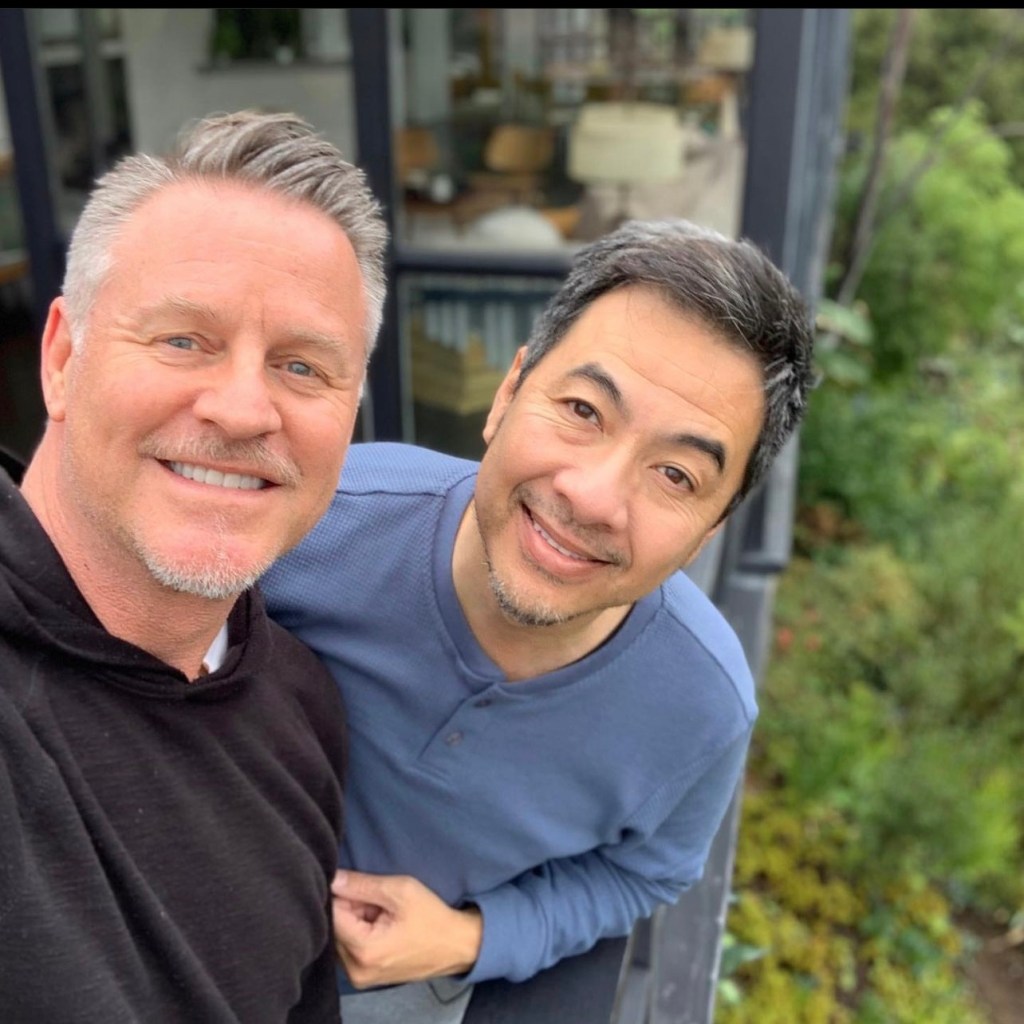
G. Filmmaking is a very long road to travel to make a film. If you aren’t operating from a place of pure passion you will eventually fizzle out. Find a partner in life that you can travel on that creative journey with. My partner is Alex. He is my producer, my advisor, my manager, my best friend, and the love of my life.
I will close with this. Thank YOU for doing this spotlight, for me and all the interesting stories of the inspiring people you share with your readers.
Like filmmaking, you are providing your own unique platform that can potentially give insight and inspiration to others, shaping a person’s view of the world for a lifetime – all through your Sunday Spotlight.
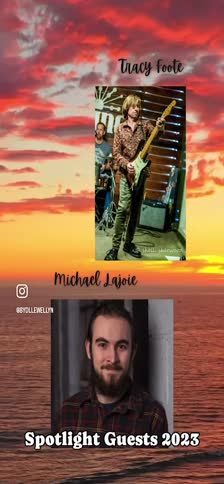
It’s a great treat when I get to interview someone I haven’t seen in a long time but knew way back when. Not only did we go to high school together, but Tracy Foote lived in my neighborhood. Even back then, all he wanted to do was play his music.
My best memory of hanging together was a jam session at my house after school. Well. Tracy was jamming. I was doing a poor job of playing the opening to Stairway to Heaven on my flute. What Led Zeppelin fan who played the flute in school wouldn’t want to play that gorgeous piece of music? But that was my struggle, band music didn’t translate well into Rock, for me anyway. I also wanted to play like Ian Anderson of Jethro Tull. I had big dreams.
Mostly what stands out was that Tracy was full of smiling conviction and a model of patience, and it was a lot of fun giving it a go.
The other thing that stands out is that he’s still jamming (I won’t say how many) decades later, and gets to make a living out of it.
Q. So Tracy, first let’s talk about your bands, your mates, and what you all hope to accomplish through your shared music.
TF. Hey Darci – what a great memory!
Imagine … today we could’ve recorded that for posterity on our phones!
OK – the bands:
I’m currently playing in a pair of bands that evolved from one (band).
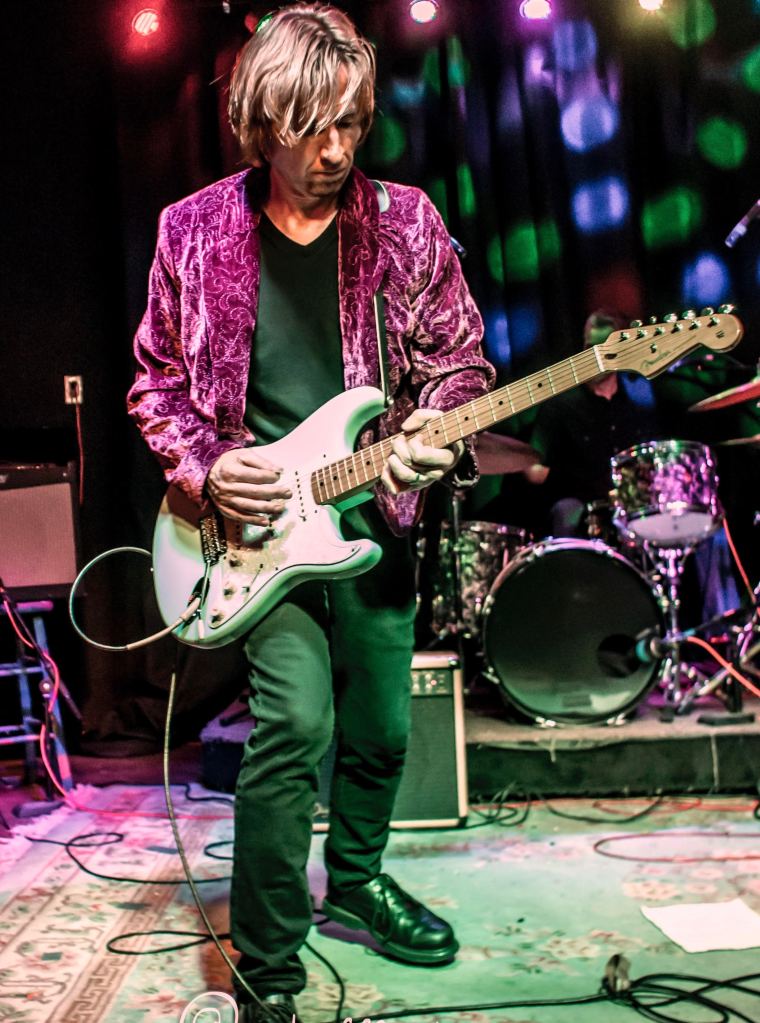
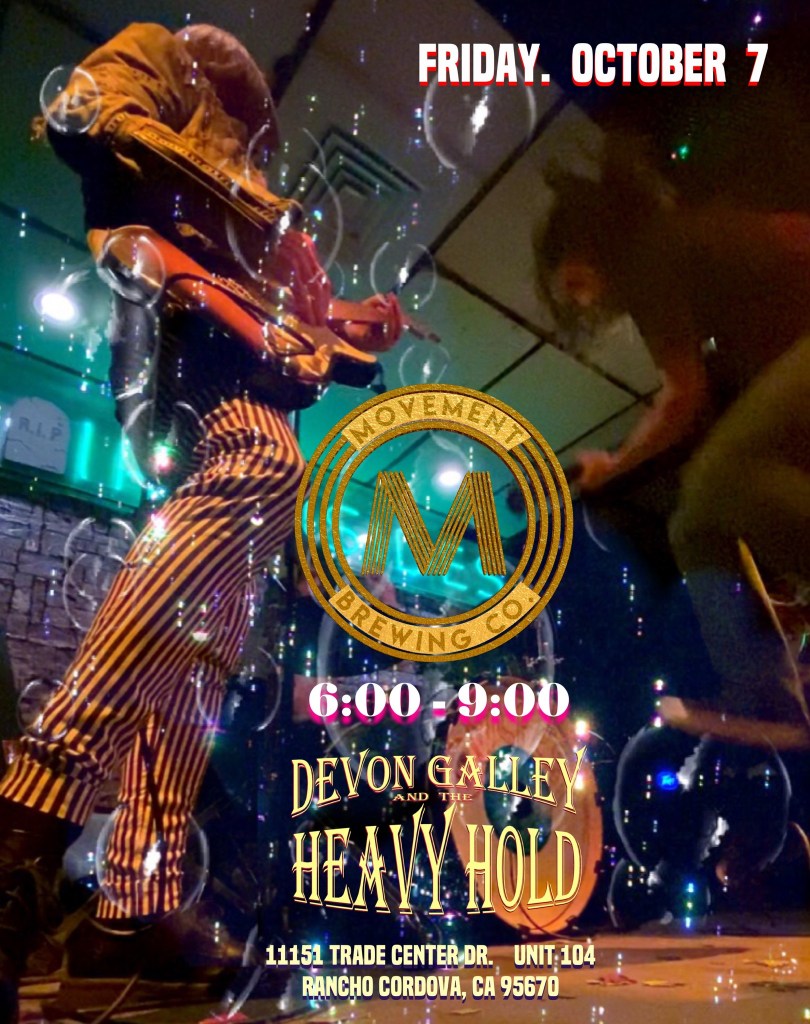
THE BREAKERS is made up of guys I’ve been playing with in various lineups for about ten years now. DEVON GALLEY AND THE HEAVY HOLD (DGHH) is a group of guys who are all about ten years younger than I am – I still like to run with what the “kids” are into 😂
I’ve been with both bands for about six years now, which, come to think of it, is about the longest run I’ve maintained with a group of musicians, ever.
My situation is unique to me, and so I don’t know how helpful my story can be to anyone else, but I am not alone. I have a wonderful family, and a wife who is eternally patient and has always been my foundation, along with our daughters, who are now all grown up. Not that I’m old, or anything!
So while I am happy to discuss the nuts and bolts of playing music, and the rigors of keeping in shape for live performances, I have to disclose that I couldn’t have done any of this without my family.
——-
I was living in Los Angeles (where I met my wife, Cecilyn) long ago, and at that time was active in the local scene. A good example of what we were doing can be seen here:
“ALL SO SIMPLE” – Dead in Spain (w/David Lindley)
This song featured David Lindley (who recently passed away), playing lap style slide guitar.
Once I returned to Northern California – Sacramento – and started a family, I stopped performing, and really went on about a 15-year hiatus. I never stopped playing, but I devoted my time to raising our daughters. After fumbling around with some other friends I met through my kids’ school, I decided to aggressively search for some guys who were performing on a somewhat professional level … which led me to where I am today.
I should add here that prior to my looking for others to play with, I spent a few years teaching myself the art of recording using all of this wonderful new technology.
And that would have been a lot of fun preserving that dive into Led Zeppelin in my living room. Hmmm. Now you got me thinking about what our selfies might have looked like back then... Nope… Never mind. I’m glad we don’t have to suffer our teenage mugs coming back to bite us. 😄
Your bands are both fabulous. Here are more great recordings on Spotify:
Q. Pinning you down for our chat provided a lot of insight into the busy schedule of a musician. Can you give us a rundown on what it’s like keeping up with all your performances? And maybe an idea of the geographical scale you cover in a week, month, or year?
TF. I’ve always been a regular commuter up and down California, but mainly because my wife’s family is down in Los Angeles, as well as many of our friends, etc. The bands I play with now cover mostly Northern California. I’ll be in Quincy this fall with THE BREAKERS, for instance. With DGHH, I was just way out in Wilseyville – I think – playing at OwlFest.
DLL. Ah. Calaveras County, and Plumas! This makes me want to get out to all the fabulous music festivals going on in the Sierra Nevada Mountains. I’ve neglected that activity. My books are set smack in the middle of them, starting in Quincy. I forget what rich music offerings and fun venues abound practically in my backyard.
Q. What kind of time investment is there in practicing with your bands and preparing for your appearances?
TF. I’m always in favor of time spent practicing and working on performance art, etc., but most of us have families and are involved in other commitments as well, so we get good at flying by the seat of our pants, as they used to say. It’s all about being as professional as you can be.
DLL. Perfect! And pretty much how I imagined it. 😊
Q. What would you say are the differences between a 9-5 job and working with a band? Is it like going to work with any other coworker or team? Along with that, playing with two bands must add an extra layer to the work dynamics. Does it merge together, or are there additional challenges, or benefits?
TF. Clearly those two things aren’t the same. I think (with the band) everybody has to be somewhat equally vested; you’ve got to have a dedication to the cause. If one doesn’t, it will work itself out eventually.
The benefits are getting to play with a variety of other band members, who all contribute to a sound, which works what the band sounds like …. and I get to do it twice!
Q. I’ve always had the idea that traveling a circuit playing music gigs is equal parts hard work and equal parts play. What’s your take on that? More of one over the other?
TF. I have never thrown myself “all-in” for a life on the road. But I know it’s brutal – especially the older we get. Talk to a Triple A Ballplayer … I’ve known two friends in my life who seemed to be perfectly suited for their life on the road – and they were (are) very successful with it, but that’s rare, I think. I wouldn’t want to be away from my family all the time.
DLL. I can imagine how tough it would be. There’s a draw to that nomadic lifestyle but it does require a lot of sacrifice. I’m really happy you’ve worked out such a great formula, thanks to your supportive family.
Q. How much does audience feedback feature in the above equation?
TF. Audience reaction/participation is always fun. After all, most of us playing up on a stage are just trying to get your attention … lol
DLL. I envy that direct feedback for sure, especially after spending the last several years trying to reach an audience with my stories. On those rare occasions when I do, it is such a boost!
Q. Any tricks you like to share on balancing it all with life and family?
TF. For all the guys I play with, and myself, family always comes first. So there’s not much balance necessary.
DLL. I’d say that might even be the definition of balance. Again, so happy you struck the right notes, Tracy!
Q. What are your favorite methods for staying organized and keeping energized?
TF. Ugh … you got any, Darci? Please share!
DLL. 😂 I ask all my guests this. I’m always hoping for ideas. But I think you’ve given us a sense of how you manage it.
Q. I’ve always thought it fantastic that you stuck with music and made it part of your life from such a young age. Can you describe a little of what that’s like? Is it the lifestyle you envisioned when you were a teenager?
TF. When we corresponded about this last week, I mentioned that I saw my life as 3 or 4 distinct “eras” – apologies to T. Swift – and it almost seems unreal to me. I knew that I wanted to use art in one form or another throughout my life – and hopefully figure out a way to earn a living without sacrificing that. I also knew that I really wanted to have a wife – which, no matter how much I saw myself happily married, that was no guarantee I would ever have it. Once I did, I knew I had what mattered most, and everything else became icing on the cake.
The business of music – writing, recording, performing – has completely transformed since I first set out on my life’s journey. The “lifestyle you envisioned when you were a teenager” could never have included carrying around all the knowledge in the history of the world via a smartphone. I wish I could have predicted it. Imagine what the year 2040 will be like … or, maybe don’t.
But back to “Retro”, I would be remiss if I failed to plug THE BREAKERS LP (a real VINYL LP!) :
DLL. That is a fantastic perspective. Thanks for sharing. I hadn’t really thought about comparing my dreams back then with how they might be affected by technology. It’s a totally fun exercise. I suppose when you get to be our age, it is easy to look back on life as separate layers. Love this! And wow! Love this vinyl! 🤩
Q. I remember some of your influences from our high school days, like the aforementioned Led Zeppelin, The Who, Jimi Hendrix, and I’m sure there are so many more guitarists who are my favorites too. But what or who was your biggest influence, the one that set you on the path to being a musician?
TF. THAT is a loaded question … those bands were big for me in high school, but when I was really being energized, and drawing inspiration from others, I would have to list Paul Westerberg (The Replacements), Tom Waits, and The Rolling Stones (1969-73, the Mick Taylor era) as my primary influences. I’m a big old-school blues and country guy, too. Think Hank Williams Sr., John Lee Hooker, Robert Johnson, Muddy Waters, B.B. King, etc.
DLL. This is why we hit it off so well, Tracy. I’ve gone on to appreciate so many fantastic blues guitarists like the ones you mention and love the Mississippi Hill Country artists like R. L. Burnside. I’m always anticipating new material from the musicians influenced by them all, like The Black Keys.
Tom Waits… hardly enough words for his amazing body of work. If you want a modern day interpretation of Robert Johnson, think Eric Clapton, who of course is a legend in his own right.
😄I’ll stop here. Thanks for letting me meander through my music list with you, Tracy…
Q. Besides music, what other interests or hobbies do you enjoy? I remember you traveling to Washington D.C. after high school and visiting the political scene. Did a fascination with politics stick with you?
TF. No.
DLL. Okay. I get it.😉Playing Music, and family. What more do you need?
Q. What advice would you give to young musicians about choosing a career in music? Looking back, would you do anything differently? Any other parting words of advice?
TF. I don’t even view it as a “career”; it’s not something to do, it’s more like something you are. Those who successfully navigate their way through life with only music are possessed with talent, ambition, and a healthy dose of luck along the way. However, I refer back to how the world has so radically changed – and the way we communicate and express ourselves has evolved right along with it.
Kids today would never believe the excitement that was once present when a big album was released – the last time it happened was probably when the last Led Zeppelin LP came out in 1980. There were lines around the block and down the street at Tower Records; I remember that same year waiting in a long line at Wherehouse Records in Sunrise Mall to buy AC/DC’s “Back In Black” album ($3.99 LP!) … our media is now so spread out far and wide, these scenes are likely never going to happen again.
Nevertheless, I would say practice and play, play out, and do it all again, and again.
DLL. I’m going to quote you on that first line. Love it!
I’m both fascinated and a little saddened by your second point. It is so true. I remember waiting for those record releases, too and spending hours in the record stores just browsing. It was a great place to spend a Saturday afternoon. The same for the movies… like Star Wars. There was nothing like waiting in a line that wrapped around a movie theater complex and getting jazzed about the experience with all the other fans. Now you plop something in a search engine and have it in your possession in seconds… all alone with your treasure…
That is why having bands like yoursto go see and hear in person at all the great venues is today’s saving grace.
Thank you so much for visiting my Spotlight, Tracy. All the best to you, your family, and your bands.
As a dedicated student of arts and crafts since I could hold a crayon, May is a special month. It’s Mermay! An entire month dedicated to mermaid art.
Since I write more than engage in any other creative activity these days, I’m offering a short story, Beneath the Prismed Light, in celebration. It features a selkie (another wonderful mythical sea creature) and a lighthouse keeper in a romantic dystopian fantasy. A brief history of the selkies is included in the end pages.
This story, with its surprise twist on the lore, is free to my newsletter subscribers. This month I’m sharing it here.
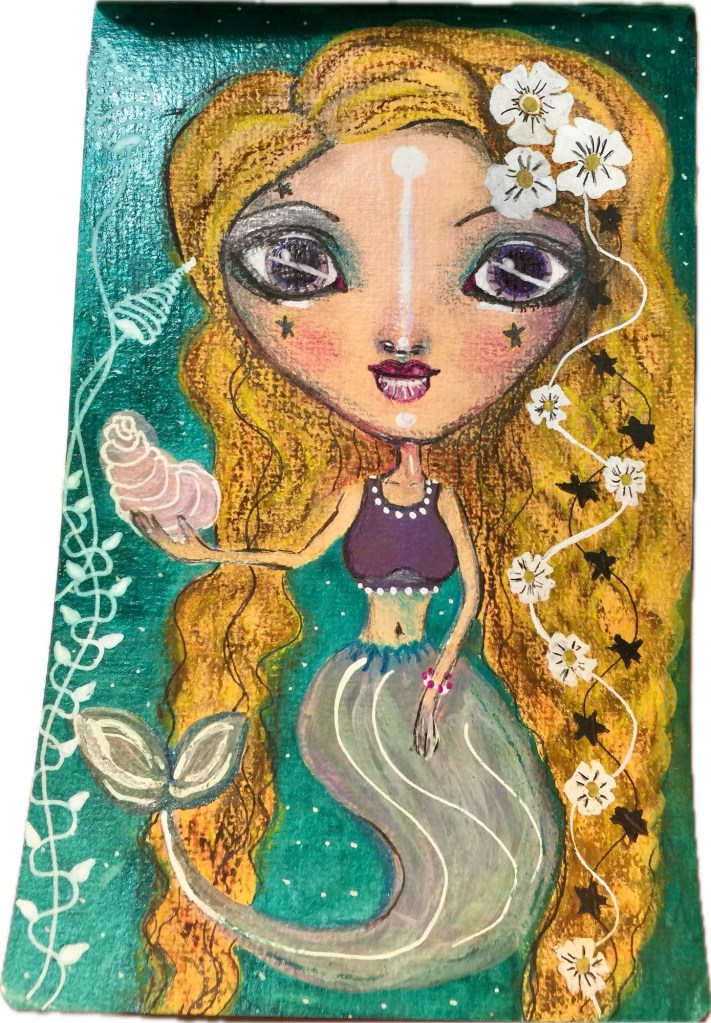
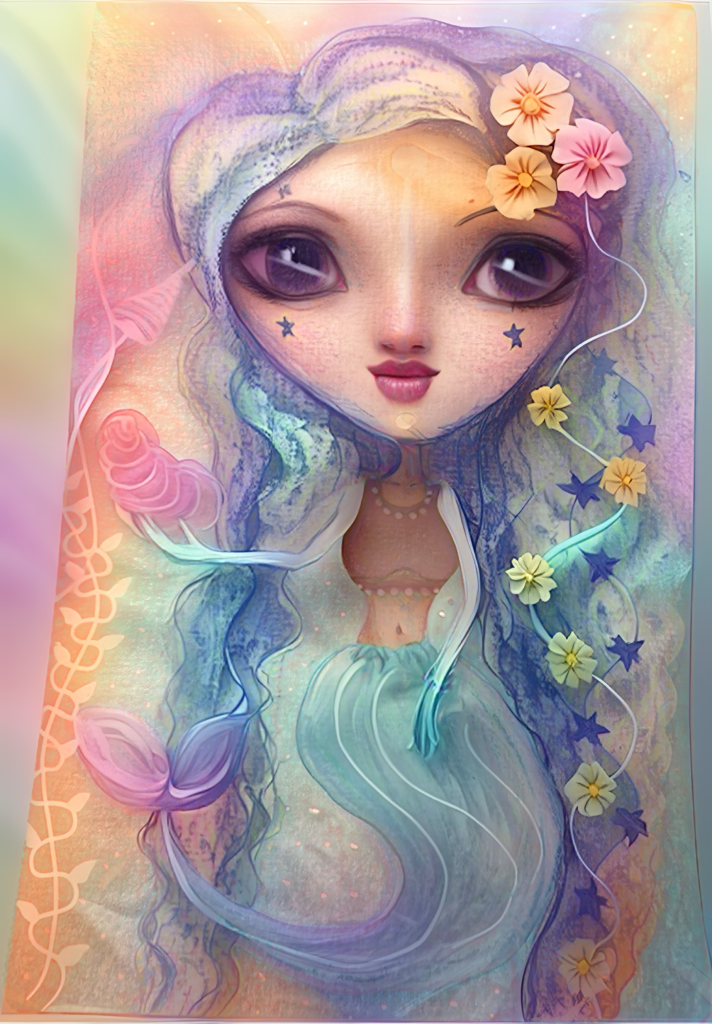
The center photo is one of my attempts at Mermay art, and I had fun trying some digital manipulation for different effects.
If you want to peruse some (much better) whimsical, fun art, hashtag Mermay or Mermay25 on Instagram or Facebook.
My friend, author J. K. Divia, is offering a Mermay, Selkie Takeover giveaway in collaboration with other authors. I participated last year, and will do so again in 2026. Check it out and good luck on winning some great books and swag.
I’ll leave you with a YouTube video from one of my favorite Mermay contributors, although I’m pretty sure mixed media artist James Burke creates mermaids all year long.
I have all of his Washi tape and use it liberally in my journals. Perhaps you’ll discover the wonder of watching this art come to life and be inspired to create some of your own.
I’ve been an indie author for three years now, and I’m here to say that publishing my own books has been the best way to go… for me. There are many pros and cons for going indie or trad. I encourage anyone to research both options as well as the various hybrid options as thoroughly as possible.
I’m a creator at heart and the control I have over every aspect of my product is necessary as a creative outlet as well as extremely satisfying and fun. That is not to say it isn’t a ton of work, but what better way to spend my time!
Check out these astonishing statistics at Wordsrated.com like the 300 million a year number in the title of this blog, or that the number of self-published books has increased by 264% in the last five years, and up to 34% of all books sold are self-published.
I started in a time when more amazing tools than ever are available to help authors publish on their own, and I’m extremely thankful for services like Amazon’s Kindle Direct Publishing (KDP), Draft2Digital, Reedsy, and BookBaby that offer so many resources for indie authors–many of them completely free.
The other fantastic resource for indie authors is us–our community and all the amazing collaboration opportunities. I’m taking part in one starting Friday, April 12, and running through April 15. The Indie Authors Spring Spectacular Event. Indie authors are amazing when it comes to supporting each other and you can be part of it. In addition to the volume of affordable reads for .99 or less, there will be fun giveaways and other events.
With all this said, nothing beats a reader’s review for spreading the word. That goes for all authors no matter how you publish. It always comes down to what our readers like and want. I’m an avid reader, so I can attest to that from a reader’s perspective as well. I’ve got my shopping list going. Happy reading!
I wanted to share my friend’s beautiful, haunting poem. Thank you for reading and supporting indie authors.
Memories of light, my sinister delight, Haunted vision, this is my life. In shadows I wander, lost in despair, A soul consumed by sorrow, beyond repair.
Each day unfolds with a somber hue, A symphony of darkness, my heart subdued. Echoes of laughter whisper in the night, But their warmth fades, swallowed by endless fright.
Gone are the days of innocent bliss, Replaced by a void, where darkness persists. A twisted dance of pain within my soul, A haunting melody that takes its toll.
The weight of sorrow, a burden I bear, A broken spirit, trapped in this despair. Silent tears fall like rain in the night, Drowning my hopes, extinguishing the light.
In the depths of my being, a mournful song, A requiem for a life that’s gone wrong. Loneliness clings to my every breath, A constant companion, the harbinger of death.
Oh, how I long for solace and release, To find a glimmer of hope, a moment of peace. But the darkness lingers, it won’t let me go, A perpetual torment, an eternal woe.
Memories of light, a distant memory, Lost in the shadows, where pain finds me. My heart, an abyss, forever confined, To this dark and sad existence, my mind.
Lucky Noma
Find Lucky Noma’s books and short stories on Amazon and Substack.
Enjoy this video Lucky created for his poem. More of Lucky’s dark fantasy video stories are on his YouTube channel.
Memories of Light by Lucky Noma
I love sharing works by so many wonderful creators. For more, sign up for my newsletter. As a thank you, you’ll get access to a free download of my story Beneath the Prismed Light.























 By D. L. Lewellyn