This month’s guest first came to my attention several years ago at an Autocrit short story workshop, and I’ve enjoyed her stories and lively newsletter ever since.
After participating in Rayne Hall’s latest writing contest, where she challenged writers to submit stories without any AI assistance, including editing (eek! No Grammarly!), I thought it would be fun to invite her to chat about her life as a writer (gardens, cats, and all), her works, and writing in the gothic horror genre. We will also discuss her work as a writing coach and her top five tips on the craft.
Let’s Meet the Author
I’m Rayne Hall, and I help good writers become great.
As the author of the bestselling Writer’s Craft guides, I answer writing-related questions on in the social media, post articles online, coach authors, edit books, speak at conferences and teach online classes.

I’ve been working in the publishing industry for three decades, as a trainee publishing manager, editorial assistant, magazine editor, investigative journalist, production editor, literary agent and publishing consultant.
In between, and often at the same time, I’ve been a museum guide, adult education teacher, development aid worker, apple picker, trade fair hostess, translator, belly dancer and tarot reader.
Now I’m a professional writer, with more than a hundred books published under several pen names (mostly Rayne Hall), in several genres (mostly fantasy, horror, historical and non-fiction), by several publishers, in several languages. I’m also a publisher, and these days I publish most of my own books, as well as anthologies with Gothic stories by other writers. After living in Germany, China, Mongolia, Nepal and Britain, I’m now based in Bulgaria where I enjoy visiting ancient Roman ruins and derelict abandoned homes, going for walks in the woods, organic permaculture gardening and training my rescued cats.
Let’s Get Started
Thank you so much, Rayne, for visiting with me on my Spotlight. I’d like to start at the beginning and ask: Who or what inspired you to become a writer and dedicate your life to the written word?
RH: I grew up in a conservative, restrictive home in southern Germany in the 1960s, when girls were expected to get married and become housewives. This didn’t appeal to me in the least. Cooking and cleaning all day long sounded boring.
My family was steeped in the Catholic religion, and they gave me a big book with the life stories of saints. I read the thrilling tales eagerly. Could I become a saint instead of a housewife, thus escaping the boring household drudgery?
Alas, sainthood seemed to require not only a pious life but a painful death. Most saints suffered martyrdom, pierced by arrows, devoured by lions or burned. I didn’t cherish an agonising demise.
Housewife or martyr? Both dreary options, and I didn’t look forward to growing up.
I started reading books when I was four, and by the time I was seven, I devoured all the kids’ books I could lay my hands on: fairy tales, illustrated animal stories, saints’ lives and more. When I discovered that there were women who wrote books, a window to a new world opened for me.
As a grown-up, I wouldn’t have to scrub floors all day, nor would I have to offer my feeble flesh up to torture. I could write books instead.
“When I grow up I want to be a writer,” I declared firmly, at the age of seven.
Of course, adults talked me out of this ‘nonsense’ and persuaded me to choose a more sensible career. But with twists and turns, my life path led me back to my vocation, and here I am, a writer of books.
DLL: How awesome to start life early with that gothic romance outlook. I appreciate how you knew what you wanted at the age of seven, or rather, what you didn’t want, and ended up where you aimed to be. Such a great story!
I find it fascinating to learn from different writers about how their journeys evolved. What inspired you to write horror? Tell us about your other favorite genres.
RH: Historical fiction was my favourite genre to read, and my first genre to write. I remember my first attempt at a novel – the adventures of a Venetian courtesan in the 1700s. Probably not a good choice of subject for a fifteen-year-old virgin who had never been to Venice.
After that came several more historical novels, each a notch better than the one before, because I became better and better at my craft. But success eluded me. I tried other genres, switched to short stories. Yet every manuscript I mailed out returned with a thud. In those days, submissions were on paper, and the envelopes with the rejected sample pages and stories were heavy. I learnt to recognise the sound of a rejected manuscript falling through the letter slot, a disheartening start to the day.
Then in one week, I got three acceptance letters. Acceptances – without manuscripts attached – whispered through the letter slot, what a cheering noise! All three were for horror stories. That’s when I saw a pattern. If Historical Fiction didn’t get me anywhere, but Horror did, maybe that’s what I should write.
At first, I baulked. I thought all Horror was Splatterpunk, with sadistic violence and gruesome stuff – again like the martyrs having their flesh torn with red-hot pincers – and that was not for me. But when I researched the genre, I discovered that it has subtler forms: Psychological Horror, Suspense, Gothic.
The Gothic especially appealed to me: more creepy than gory, more atmospheric than violent. I love it, and this has become my main writing category. I love creating the vibrant settings, the passionate emotions, the guilty secrets, the creepy atmosphere.

I tried to write other genres, too: Historical Romance, Cosy Mystery, Urban Fantasy, Science Fiction. But somehow, they all took a dark turn. Without my knowledge and consent, the characters hatched evil plans and hijacked the plots. So I ended up writing yet another Gothic Horror yarn.
Fortunately, Gothic fiction lends itself to layering with other genres. So I’ve created not just Gothic Horror, but Gothic Historical, Gothic Fantasy, Gothic Romance, Gothic Mystery fiction.
DLL: This is so encouraging, not only in terms of perseverance, but also in how one finds their niche. I love it!
What inspired you to teach the craft, and where do your craft books fall in your bibliography? What topics did you focus on in the beginning, as compared to now?
The Writer’s Craft books teach advanced-level writers specialist skills. They’re the kind books I would have needed years ago but couldn’t find because they didn’t exist. At the time, there were many how-to-write books for beginners. But for writers who’d mastered the basics, there was little guidance available.
Eventually, after I had reached a very high level with my own writing, I developed the series to fill the gap in the market.
Writing Fight Scenes was the first of the Writer’s Craft books. During my long learning journey, I’d been frustrated that there was no book available on this specialist subject.
When I saw online courses on this topic, I signed up at once – only to find that they were superficial and filled with platitudes instead of providing practical guidance. So I studied fight scenes in literature and developed my own system. Then I taught an online course, which was a tremendous success. Many authors needed fight scenes for their fiction and didn’t know how to go about it, and they loved my course and recommended it.
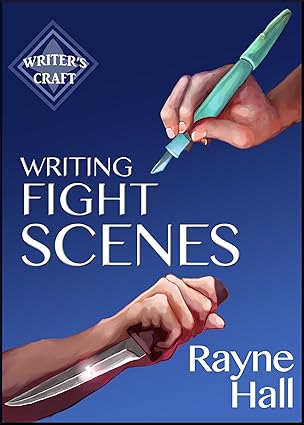
In 2011 I decided to expand my course into a book with the same title, and it instantly became a bestseller.
So I turned some of my other courses into books, too: Writing About Magic, The Word-Loss Diet, Writing About Villains. Before I knew it, I had a series with fans who wanted more.
The series now has almost 40 titles. Writing Scary Scenes, Writing Love Scenes, Writing Vivid Settings, Writing Vivid Dialogue, Writing Vivid Plots, Writing Vivid Characters, Writing Deep Point of View…
Which do you prefer to write, short stories or novels, and how can you tell when a story might evolve into a novel? What’s your top favorite answer when a reader asks you how to write a short story?
RH: I enjoy writing both short fiction and novels. My best work, the one I’m most proud of, is the dark-epic fantasy novel Storm Dancer.
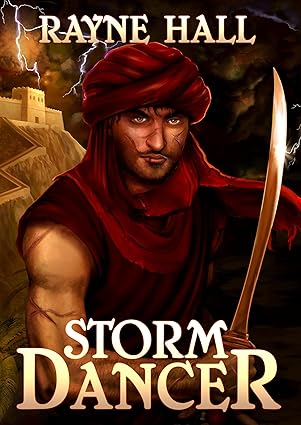
But overall, I prefer short stories, simply because they’re quicker to complete. I can finish a short story in a month, from idea to polished version, whereas a novel is a commitment for years. I have many half-finished novels lingering in my file folders, and it’s doubtful whether they’ll ever see the light of publication. With shorts, I can savour the thrill of completion more often.
Many short stories want to grow into a novel. As I write, they grow and grow, and it takes discipline and skill to keep them confined to a manageable length. My two favourite techniques for this: 1. Let the story play out in a single location. 2. Let it unfold within a short time, preferably in a single day.
DLL: Thanks for the great tips! I can totally relate to your experience. I often feel torn between finishing shorter pieces and working on novels that I might never complete. It’s frustrating when I have such epic endings and vivid scenes running through my head, all while feeling like time is slipping away. So many writers publish multiple novels in a year, and I really want to know their secret. That’s when I remember that the joy is in the writing—published or not, finished or not—and that really helps.
Speaking of getting our books out into the world, do you self-publish?
RH: My first twenty or so books were conventionally published by twelve different publishers, but now I’m my own publisher. I’m actually a trained publishing manager, that’s my career. I’ve worked in many different positions in the publishing industry, so I know the business well, and now I’m using my insider knowledge.
In the 20th century, publishing involved a big capital outlay, and the only way to reach book buyers was through a complex distribution system which only publishers had access to. In those days, self-publishing was almost inevitably doomed to failure, and at huge expense. I used to advise against it.
But the publishing industry has changed to much. With e-books and print-on-demand technology, the once exorbitant production costs have evaporated. Everyone can use online bookselling platforms to make their works available to the book-buying public.
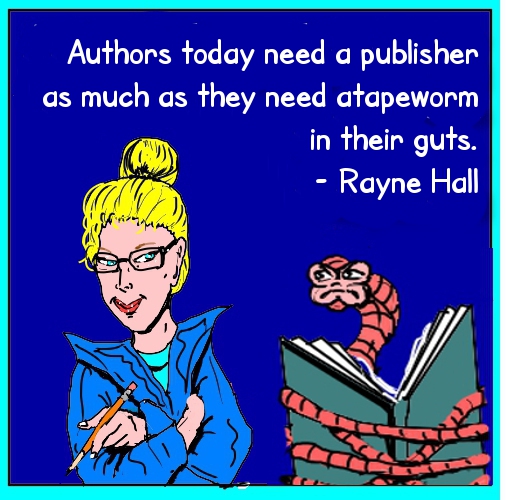
The literary agents and publishing houses, essential parts of the system in the 20th century, have become obsolete. Why should we writers – who mostly earn very little for our work – finance a big publishing apparatus we don’t need, and the salaries of multinational CEOs? Frankly, writers need publishers like they need a tapeworm in their guts.
Of course, you need to be aware that as a self-publishing author, you are a publisher as well as an author. If you want to be successful, you have to approach this as a business. You’re responsible for your own quality control, your own marketing, everything.
DLL: Ooh, great insights on traditional versus self publishing. It’s super helpful to hear from an author who’s been so immersed on both sides.
As promised at the outset, what are your top five tips for writers?
RH: Here you go:
- Write the kind of book you’d love to read. This way, you’ll create a great book, and you’ll enjoy the process.
- Write about what you know. This way, your won’t commit factual errors, and your book will ring with insight and authenticity.
- Use specific weather for every scene – a drizzle or a downpour, dry heat or a thunderstorm – to add realism and vibrancy.
- When you experience worries and problems, write about them. They make great fodder for your fiction.
- Revise your writing until it sparkles. Don’t be satisfied with good writing. Make it great.
- Be authentic. In this world of automation and fakery, people crave authenticity. This is your chance to stand out: instead of automating your social media, using AI for your writing and pretending to be someone you’re not, just be real.
DLL: Fantastic! Thank you for sharing those with us today.

Now, let’s dive into your writer’s life. One of my favorite aspects of your newsletters is the photos and stories about your gardens and pets. It’s clear that you find inspiration in the nature surrounding you. Can you share how these enjoyments help to balance life as a writer?

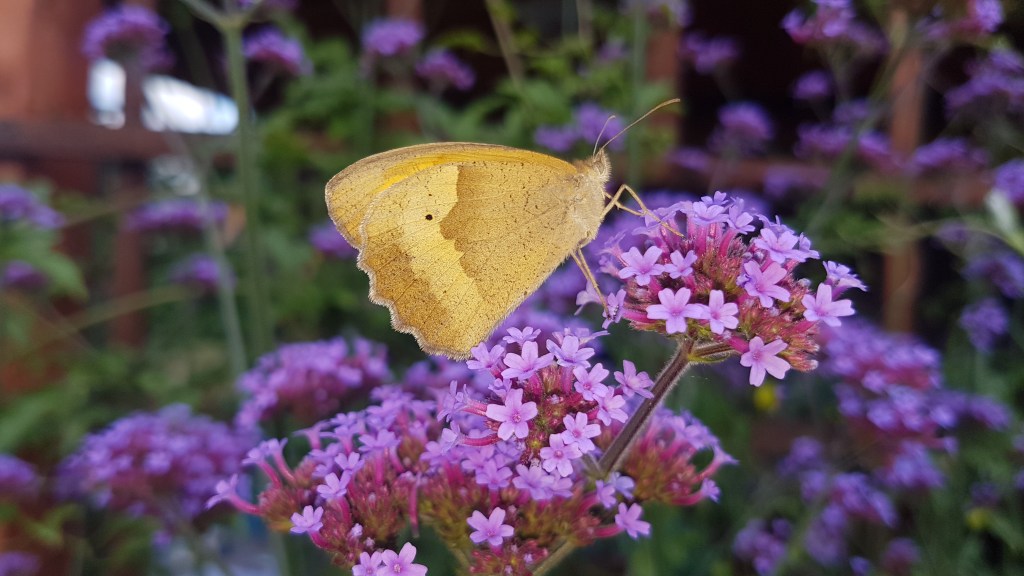
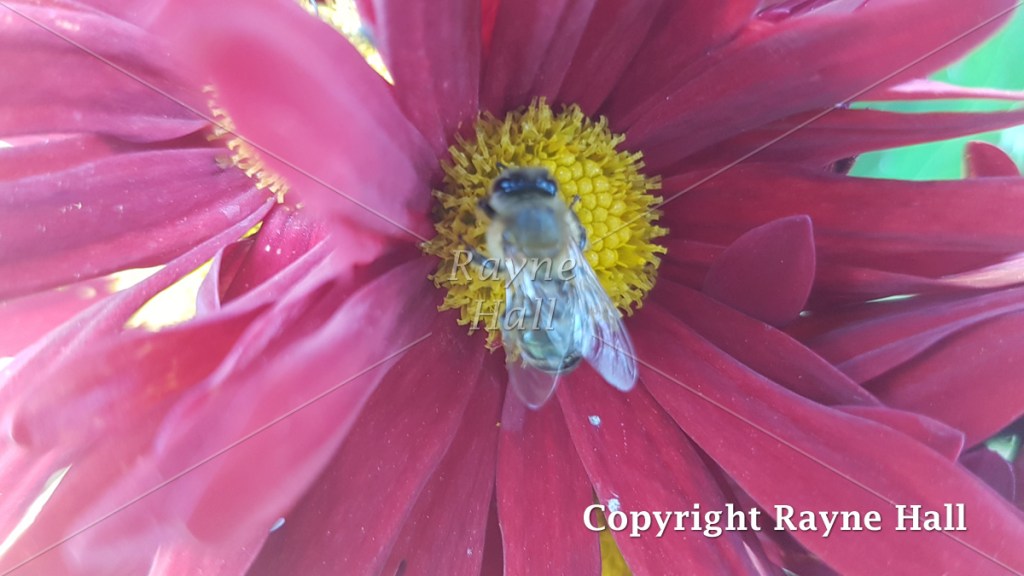
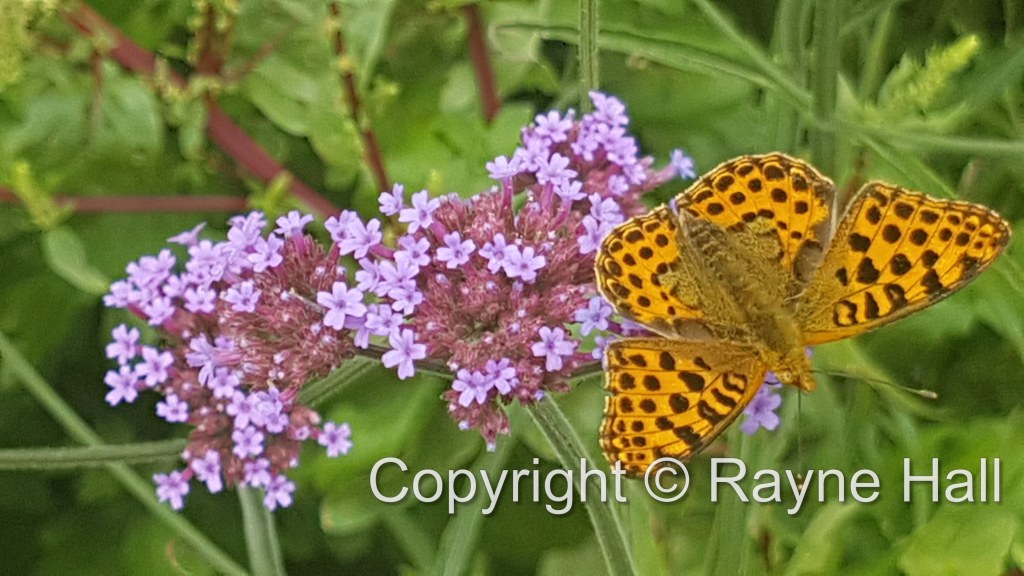
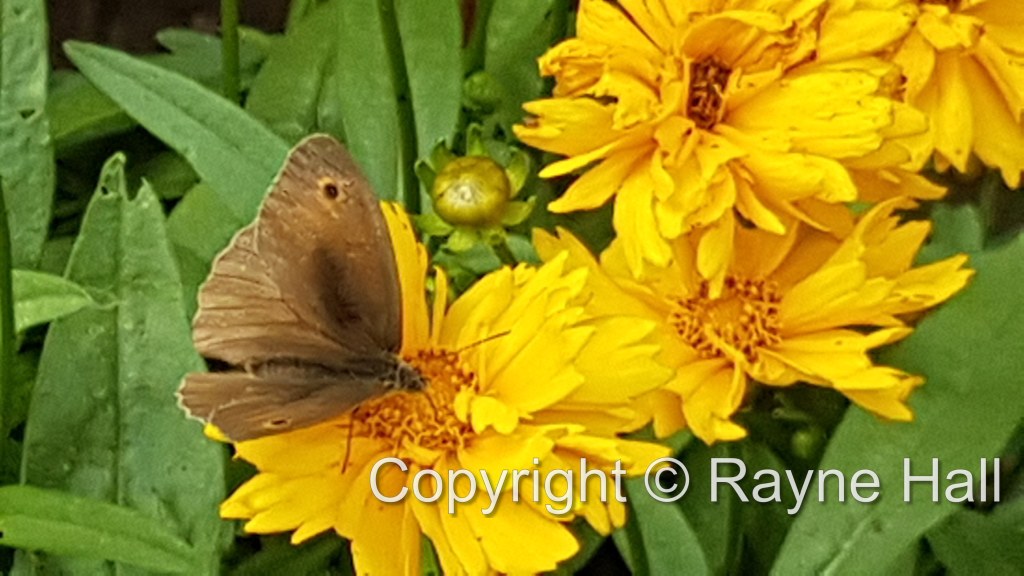
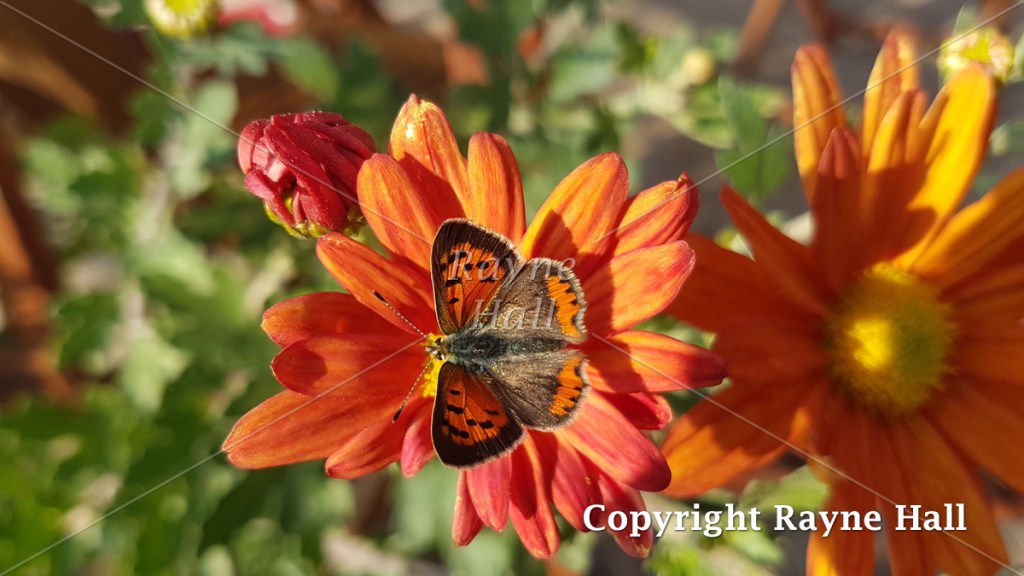
RH: I love nature, and I’ve created my personal garden paradise – 4000- square meters (that’s about 4800 square yards) filled with trees, shrubs, flowers, vegetables and fruit. It’s all organic, without use of pesticides, my private eco-project, a permaculture ‘food forest’. Bees, bumblebees and butterflies love the place. They flutter and buzz all around me. Sometimes, I see ten or more colourful butterflies in a single square meter (yard). Crickets chirp, birds twitter, storks rattle their bills.
I do my morning exercises amidst this lush abundance, and for breakfast and pick whatever fruit is currently ripe and eat it right away: peaches, nectarines, apricots, figs, plums, apples, pears, mulberries, cherries, pomegranates, grapes and more. This is my personal idea of paradise, and I feel blessed that I’ve been able to create it here in sunny Bulgaria.
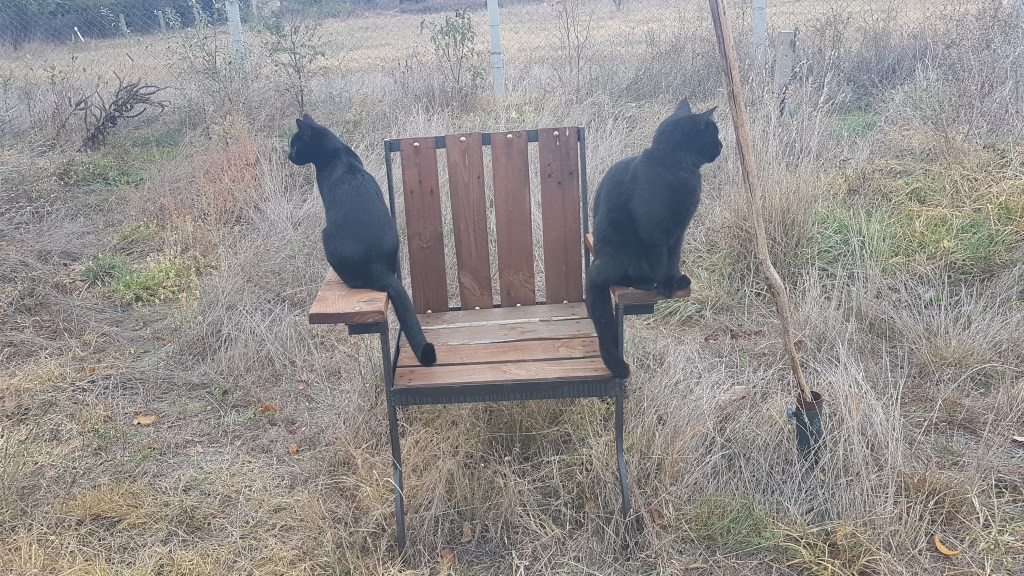
I’ve had a writing chair made for me – a sturdy chair made from reclaimed materials, with broad armrests for placing my notebook and a glass of water. I love sitting there in the morning, listening to the sounds of nature and jotting down my ideas and story drafts in a notebook. Often, my cats join me (they love those broad armrests), and my dogs lie at my feet.
I savour these moments with deep gratitude. I’m able to shut out my worries and the troubles of the world, and to focus on joyful creating.
DLL: So much of this shines through in your blogging and newsletter, which is incredibly inspirational to me as a writer and blogger focused on the writer’s life. Thank you for painting such a vivid picture we can immerse ourselves in today.
Besides working in your gardens, what are your favorite activities to inspire your fiction?
RH: I find inspiration in places. Wherever I go, I observe and take notes. What does the place smell of? What sounds can I hear in the background? How does the ground feel underfoot? How does that door knob feel to the touch, what noise does that door make when it opens?
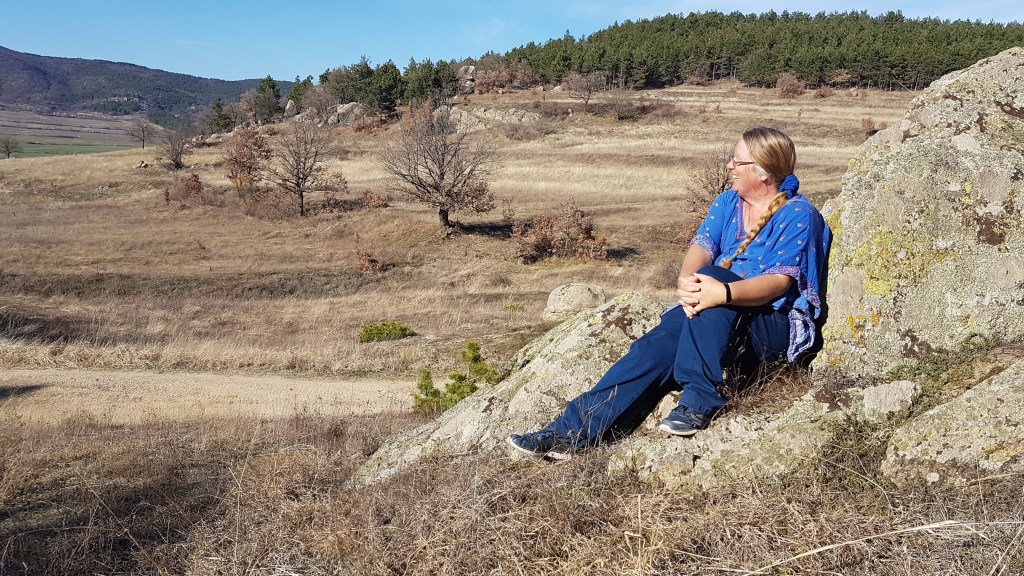
Whenever I have time to kill – at a bus stop, in a hospital waiting room – I use the opportunity to take setting notes.
Over the years, I’ve created detailed descriptions of hundreds of places, and I use can insert them into my fiction. Weather a scene takes place in a hospital, a church, a cemetery or a wildlife park, I have the vibrant details at my fingertips.
Here in Bulgaria, I like to visit places with history: ancient Thracian temples, the remnants of bath houses from the Roman period, deserted factories from the Communist era, and homes abandoned when the rural population dwindled. Each building has so many stories to tell, about the people who lived there, their loves, their sorrows, their dreams.
Those abandoned homes are my favourite spots to hang out to soak up atmosphere and inspiration. Even though the roofs have long collapsed and the window panes are broken, some still have remnants of lace curtains quivering in the breeze, cupboards are filled with dusty jars of canned fruit, and among the upturned furniture and rat-gnawed cushions I may find an old newspaper or an illustrated children’s Bible.
My pets love to accompany me when I explore these places. I’m always glad to have my dogs with me for protection, but it’s the cats who make the visits special. My black cat Sulu in particular adores entering spooky derelict buildings. He delights in walking across shattered roof tiles, scratching charred timbers and sniffing at long-abandoned hearths. Then he chooses a window-sill to lie on, and from there he watches what’s going on inside the house and in the outside world.
DLL: Have you ever thought about vlogging? I would love to follow you on your explorations. Thanks for this glimpse into life in the Bulgarian countryside.
Can you tell us about your cats, and what role they play in your writing?
RH: All my cats are rescues, and I’ve trained them. Yes, cats can be trained – if they want to. Mine love it. They can perform little tricks, shake hands, high-five and more.
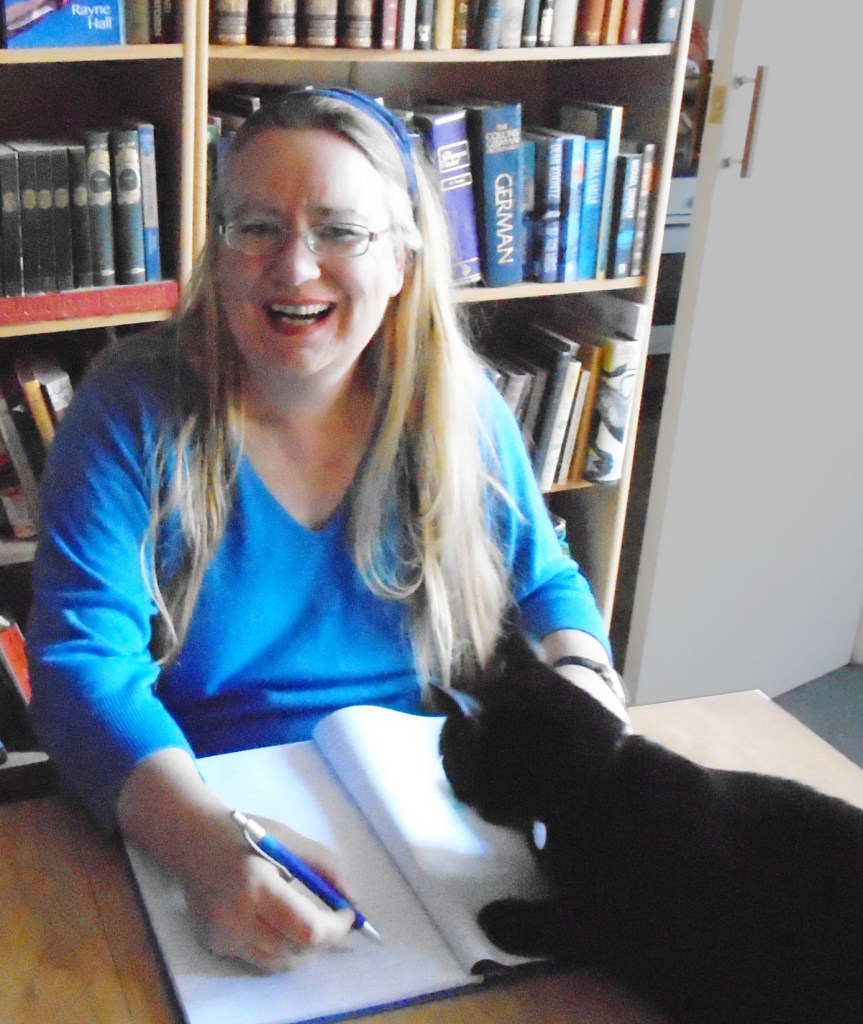
When I’m writing on my laptop, the cats often join me. One naps on the rug at my feet, one sits on the printer, another curls up in an open desk drawer, and there’s almost always one snuggling between my arms. This is so sweet!
My senior cat Sulu adores books. Whenever he sees an open book on the table, he lies down to ‘read’ it, with a paw on the page. This makes great publicity photos, because what could be cuter than a black cat reading a Gothic fiction book?


DLL: Thanks again for joining me today, Rayne! Check out Rayne’s craft books here. You can find Rayne and her works on her website, subscribe to her newsletter and blogs, which she shares on Substack, and follow her on Bluesky, Instagram, and Facebook.


 By D. L. Lewellyn
Leave a reply to bydllewellyn Cancel reply