I am so excited to have my dear friend and author, Lucky Noma, back on my Spotlight! And, wow, does he have an awesome new release to share!
Lucky was one of my first guests several years ago. Since then, we have regularly chatted, worked together on projects, and provided feedback on each other’s work. So, when I was recently blown away by his latest book, CHROMATIC CONCORDAT: Gray Rising, I jumped at the chance to feature it and visit with my friend for a fun Q&A.
Let’s Meet The Author
Lucky Noma is a writer who blends fantasy and horror to create immersive, multi-layered stories. His works, including Fractured Soul, Sand Scriptures, and African Horror Story, explore deep narratives with unique perspectives. Through novels and short stories, he continues to craft worlds that captivate and challenge readers.
About The Book
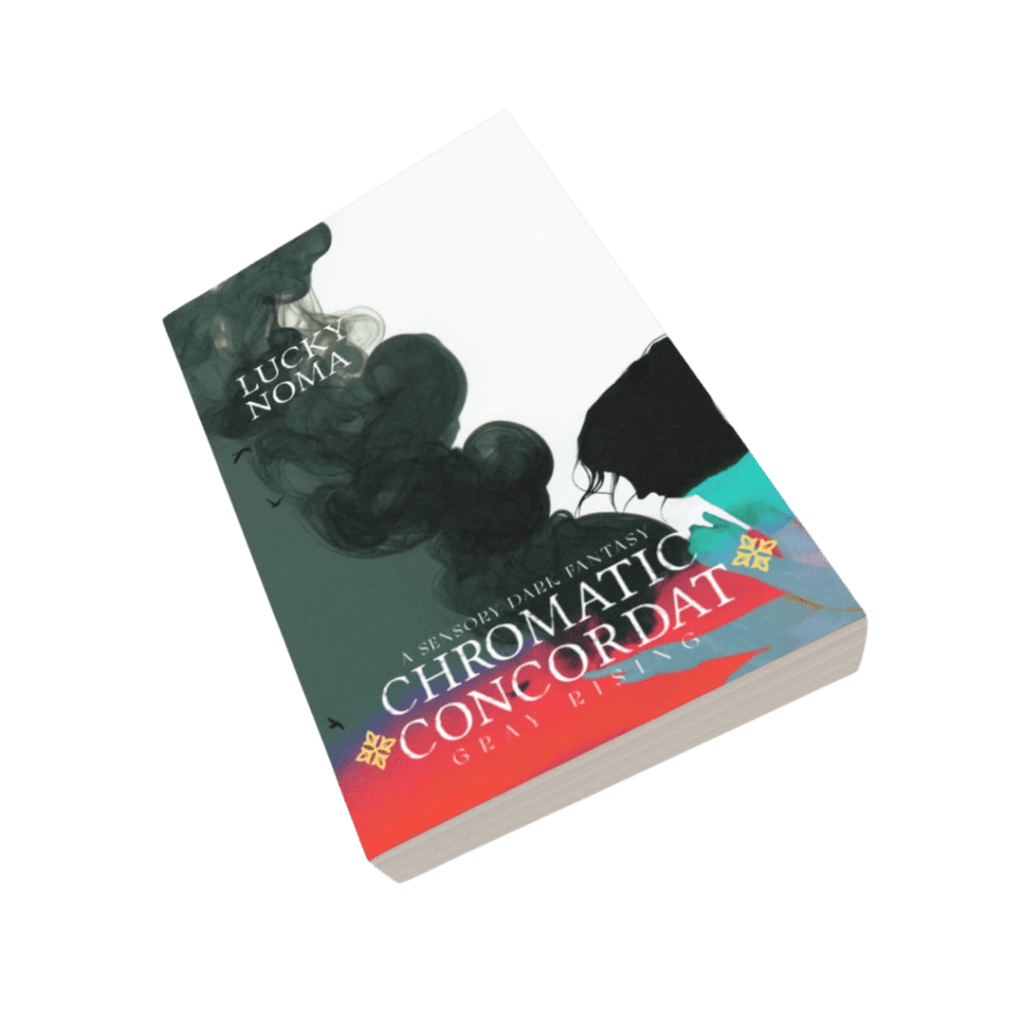
CHROMATIC CONCORDAT: Gray Rising
The first thing Havayah ever saw was gray.
Not the gray of clouds, or ash, or dusk, but the kind that eats at the edges of everything. Born silent in a Dominion where colors sing, burn, heal, and kill, the world called her a void. Her village called her cursed. And Havayah? She called herself no one, a hollow.
But a hollow is a dangerous thing to underestimate.
When the Ma’or Council brands her a threat for lacking Chromatic attunement—the sacred bond to color that defines life — an empathic investigator named Nefesh makes a choice: to protect her instead of condemning her. Together, they uncover the Council’s devastating plan — to use the shattered Prismatic Nexus, remnants of the world’s raw luminance, to achieve absolute control over the color spectrums while casting out those they deem “colorless.” The rebels fighting against them promise liberation, but their revolution holds its own darkness.
What no one realizes is that the girl they dismissed—the one born without a single thread of color—has no intention of playing savior. Through underwater cities and skies stained with power, Havayah will forge her own path. Because when the world gave her nothing, she learned to take everything.
This is not a story of saving the world—
Let’s Get Started
Thank you very much for joining us today, Lucky. First, I must say that this description is absolutely captivating! Makes me want to crack that beautiful cover and dive in. Which is what I did. Let’s begin by reflecting on the past. What inspired you to write fiction, and how long have you been writing?
LN: Thank you, Darci! Always great to be here—though if I make too many typos, let’s just call it creative spelling. That sounds like something Nefesh would say, but eh, well—where do I even begin?
I would say my journey into fiction started with falling in love with stories as a reader first. When I discovered City of Stairs by Robert Jackson Bennett, I was captivated by the world-building and how it blended fantasy with deeper themes. Then came A Dance with Dragons by George R.R. Martin and The Axe and the Throne by M.D. Ireman—both masterclasses in character development and moral complexity. Those books showed me that stories could be both entertaining and profound.
What drove me to write was an itch to create a unique world system—with diverse characters appearing in my mind, demanding to be put on paper. So I did what was necessary. As with most of my fantasy novels, I started by building the map, then gave the characters room to roam free. Sometimes, I see myself as nothing more than a scribe, just recording their deeds
—And, remarkably, this year marks a decade since I first sat down and started writing. It’s been quite the journey, filled with late nights, countless revisions, burnt manuscripts, and the realization that it would take two lifetimes to write all I intend to. My first novel, ‘A Kingdom Bleeds,’ is still unpublished—and it was the project that started everything for me. Sometimes, I think of it as my training ground, where I learned what writing demands of you. Perhaps one day it will see the light, but it holds a special place, though I fear my writing has changed, and I’d need to rework everything about it. That might take another year or two. Hmm.
DLL: I can hear Nefesh saying that, and I’ll be sharing a few of my favorite Nefesh quips later so we can enjoy his singular wit. Thank you for the fabulous book recs. The Axe and the Throne grabbed my attention, especially. I confess, I haven’t made it far through the Game of Thrones series. I haven’t had that sort of time for marathon reads, but they’re all loaded on my Audible app.
I love your “map first” inspiration technique! The world fleshed out before your characters begin to navigate it. Awesome. One of the things I enjoy most about interviewing writers is discovering all their unique processes, and this one really struck my imagination. I’m glad you found your training ground because we can benefit from your excellent progression with each amazing story and culminate our journey inside the captivating world of Chromatic Concordat.
Where do you find your mind bending story ideas?
LN: I’m drawn to the void, where I fight my existential demons and where everything feels surreal. My ideas often emerge from mundane life moments that can change in a heartbeat. Of course, this didn’t happen overnight. I was always drawn to thought-provoking stories that mess with your perception. Shows like Legion completely rewired my brain—or let’s look at Mononoke, not the Ghibli film, but the anime series—and just last December, a movie—have you seen it? The way it used abstract visuals and psychological horror to tell stories about human nature blew my mind open.


These stories taught me to look for the uncanny in everyday life. The natural world is already bizarre if you pay attention. Have you ever really looked at how trees communicate underground through fungal networks or considered what consciousness might feel like to a creature that lives only for a day? I collect these oddities like others might collect stamps.
And, to be honest, my best ideas come when I’m least expecting them. Sometimes, it’s when I’m stressed and need to press pause on reality by dreaming up sequences. Other times, and like with almost every other author or writer, it’s when I’m half awake, between sleep and needing to pee.
What’s wild is the feeling when you catch one of these ideas—There’s this rush of ‘wait, what was that?’ and then this compulsion to chase it down. Half the time, I’m terrified of what I might find, but that’s how I know it’s good. If it makes me uncomfortable to write it, chances are it’ll stick with readers, too.
DLL: Ooh, I love that about chasing it down and being afraid of finding it. This explains so much about your writing, Lucky, and makes me glad you didn’t give up the search. I could use a little rewiring, too.
Your earlier books focus on dark fantasy-horror. Your latest, Fractured Soul, Sand Scriptures, and CHROMATIC CONCORDAT: Gray Rising, explore the human condition through thoroughly multidimensional, abstract, yet relatable representations of life. Your storytelling is captivating in all your books. Can you discuss your evolution in storytelling from dark to esoteric fantasy, comparing the genres you’ve explored and sharing what you prefer?
LN: Evolution. Hmm. Well, let’s retrace my steps and see how that happened. Err, with African Horror Story, I was drawn to primal fears and survival instincts. I wanted to explore horror through a cultural lens, examining how fear manifests within specific traditions and beliefs. The story follows Onam’s desperate struggle against both human monsters and supernatural forces, creating tension through immediate physical and spiritual danger.
Fractured Soul marked my transition toward more conceptual storytelling. While still retaining dark elements, I explored more abstract concepts—the commodification of identity, the fragmentation of self, and the price of wholeness in a world where everything, even one’s soul, can be bought and sold. The surrealistic elements allowed me to build a world that serves as both setting and metaphor.
With Sand Scriptures, my work became even more metaphysical. I challenged myself to create a protagonist who begins as literally nothing—a grain of sand—and follows a journey of becoming. Sand Scriptures did represent my deepest dive into philosophical themes, using fantasy as a vehicle to explore existential questions about consciousness, purpose, and the nature of stories.
Chromatic Concordat represents my current ‘evolution’ like you said, blending the psychological depth of my earlier works with the abstract conceptualism of my later ones while making sure fantasy served as its backbone. Through Havayah’s story of a world where colors have power, I examined marginalization (as in Havayah’s case as she’s born without color attunement), power structures, and self-determination. The world-building is both concrete and symbolic, allowing readers to engage with the story on multiple levels.
While I love high fantasy and horror with psychological themes and great world-building, I also try to blend all three together. To choose my absolute favorite would be difficult, as I love writing across multiple genres. Each approach offers unique tools for storytelling—horror provides visceral impact, high fantasy allows for expansive world-building, and more abstract fantasy lets me explore complex themes through metaphor.
What drives me isn’t necessarily the genre, but finding the right narrative framework to explore the questions that fascinate me about human existence, identity, power, and the realization that even the damned can be great, as seen with all my characters.
DLL: Awesome! Thank you for sharing this insight into your talent for blending those three genres into something unique and compelling.
In Chromatic Concordat, your main characters, Nefesh and Hayayah, are incredibly compelling. They truly drew me into this intricate world, enticed me to follow their journey, and assisted me in navigating the fantastical realm you’ve crafted with such vivid detail while entertaining me. Can you share what inspired their creation and how it came to be?


LN: Havayah’s character came from exploring what it means to be defined by absence rather than presence. In a land where color determines everything about your place in society, your abilities, and even your worth. I wanted to create a protagonist who had to define herself without any of those external markers. Her journey isn’t about discovering some hidden power, but rather about recognizing that existing outside the system gives her a unique perspective and advantages that no one else can see.
Nefesh (Hebrew name for soul or breath — PS: Don’t check out the Hebrew meaning of Havayah) — was developed as someone deeply embedded in the color system developed by the Ma’or Council who begins to question it. His empathic abilities made him uniquely positioned to see beyond society’s prejudices. While most see Havayah as a void or a threat, he sees her as a person first. His character explores how privilege can either blind us or, if we’re willing, help us become allies to those without it.
The relationship between these two characters allowed me to explore themes of belonging, systemic oppression, and the false dichotomy between revolution and conformity. Neither character fits neatly into the roles their world has assigned them, which is precisely what makes them capable of challenging it.
DLL: And exactly why your story is hard to put down. So, of course, I looked up Nefesh. But I won’t add any spoilers!
I know I’m captured by the writing when I mark so many passages, and with your permission, Lucky, I would like to quote a few of my favorite lines.
“Hmm,” Nefesh said, tilting his head further until his ear touched his shoulder. “Tell me, do you believe coffee has political aspirations? This cup, for instance, harbors anarchist sympathies. Note the way it refuses to acknowledge established thermal conventions.
…
“[W]hen you heard about this case, did you feel like all the colors in the world took a single step to the left?”
“I… what?”
“Never mind. It’s not important. What’s important is that my coffee cup was right.” He turned to the cup, bowing. “I apologize for doubting your revolutionary insights. Clearly, the established order of things is more fragile than we thought.”
“Your anxiety, it resonates with salted caramel mixed with a hint of urgent telegram. You have a case for me. Something that made you skip breakfast – no, wait.” He leaned forward, sniffing the emotional residue around her. “Something that made you forget you skipped breakfast. Interesting.”
Havayah’s perspective:
Dr. Kerah approached with a reassuring smile, but the expression sat badly on her face like borrowed clothing that didn’t quite fit.
“Tell us about the first time you realized you were different,” Dr. Kerah said, her voice taking on the soft edge of a blade wrapped in silk.
Nefesh’s grip was firm. He pulled her from the tumult of her thoughts and into the razor’s edge of action.
“Why, indeed?” [Nefesh] said, his fingers brushing over his beard. “Perhaps I was lured by the irresistible charm of chaos. Or perhaps I thought someone needed to remind you that you’re not alone.
He approached the submersible like someone greeting an old acquaintance, his fingers brushing against its surface. “She’ll hold. Stubborn things like this always do.”
And here’s a bit of that amazing world-building that is easier to share than me trying to put words to it:
From the Seder Ha’Gev Codex,
“Reflections on the Edge”
Circa 890 CD (CHROMATIC DIVERGENCE)
The Spectral Frontier can’t be called just a place–oh no, I refuse to accept that, but it is a conversation between the colors that only those who dare abandon their attunement can hear…
It is said that to venture into the Frontier is to risk the Blanking. But Blanking is not death. It is becoming unmoored from the Prism, stepping beyond the comfort of color into the void where light breaks forever. To some, it is freedom; to others, damnation.
So, I have the same question, Lucky, regarding this highly imaginative yet strangely believable color-attuned futuristic society. Was it a dream? Where did this amazing place spring from?
LN: Thanks for sharing those quotes, Darci… Means a lot.
Well, Chromatic Concordat and its world, The Spectrum Dominion, came from a fascinating convergence of inspirations rather than a single source. It wasn’t exactly a dream, though I do keep a dream journal that occasionally feeds into my creative process.
However, the initial spark came during a period when I was interested in synesthesia—the neurological phenomenon where stimulation of one sensory pathway leads to experiences in another, like ‘seeing’ sounds or ‘tasting’ colors. I became fascinated by how differently people can perceive the same world based on their sensory processing.
This interest collided with my observations about social hierarchies and how arbitrary differences become the basis for systems of power and exclusion. I began wondering what a society might look like if color perception wasn’t just a personal experience but a tangible force that determined one’s place and power.
The Chromatic attunement system grew from there. The idea that colors had life became both a literal magic system and a metaphor for how societies categorize people. Havayah’s character emerged as the ultimate outsider—someone who exists outside this fundamental system of classification as she’s born gray.
I also drew inspiration from my tiny background in art theory and the emotional and cultural associations we have with different colors across cultures. The underwater cities as we have in the Azure Depths where Nefesh is from or Ruboria, the Sea of Fire, the Dead Deep, came from wanting to create environments where color wasn’t just visual but immersive and essential to survival according to its inhabitant’s attunements.
What I find most interesting about creating this world is how a fantastical premise—a society structured around color attunement—allows me to explore very real questions about belonging.
The world may be ‘strangely believable,’ as you put it, because beneath the fantastical color magic, the emotional and social dynamics are drawn from real human experiences of being classified, marginalized, or fighting to define oneself outside the categories others impose.
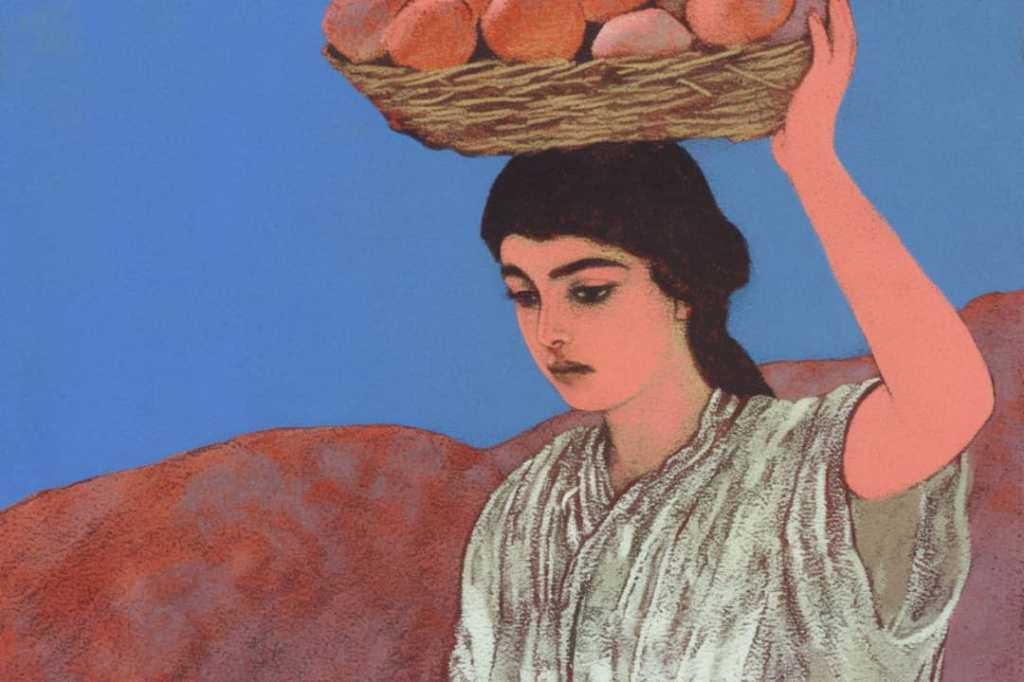
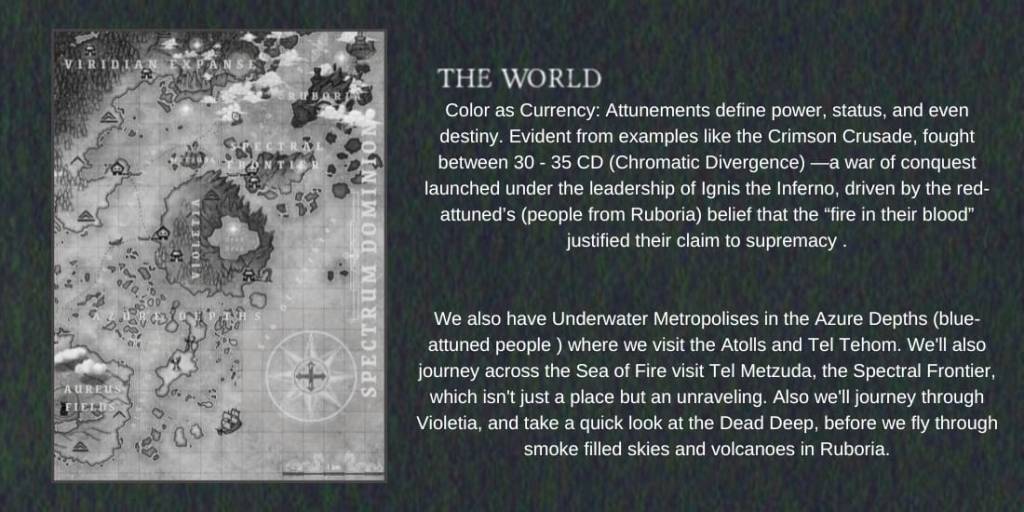
DLL: “This interest collided with my observations about social hierarchies and how arbitrary differences become the basis for systems of power and exclusion.” Yes! And how intriguing to use color. My love of art and color must be why this society speaks to me so strongly. Header art like these samples contributed to my immersion and enjoyment of the story.


I know that this complex story flew from your fingers in a relatively short time. How long did you live with it before you began writing it? What was it like to have something like this take off and grow such expansive wings? How did you go about developing the history?
LN: For a few weeks, just before I lost my KDP account (around late October), the core concept lived in my head. I kept returning to the Spectrum Dominion, adding layers and complexities during quiet moments and commutes.
I had to answer some questions, too—how would this society function? What would its history be? Who would be marginalized, and how would they resist?
And when I decided to commit my ideas to paper—or rather, to Google Docs—I spent about a week arranging the five color provinces and establishing the fundamental rules of this universe. Creating the map (which took about another week) was crucial. Seeing the physical layout of Ruboria, the Viridian Expanse, Azure Depths, Aureus Fields, and Violetia helped me understand how these societies would interact, where tensions would arise, and how my characters would navigate this world.
NaNoWriMo provided the perfect opportunity to dive in headfirst. I wrote about 40,000 words in November and solidified the story’s backbone. Next, I watched as Nefesh and Havayah built their relationship, uncovering their motives and ultimate goals.
Between December and early January, the world took on a more definitive turn, with Havayah and Nefesh realizing what they had to do to survive—and maybe even change things. What started as a narrative about a colorless child and her protector first evolved into an adventure. Then, I watched as it delved into action and noticed how attached Havayah was to Nefesh.
In Chapters Twelve and Thirteen, she proved this in ways that kind of left me stupefied. Alongside working on the plot, the history of the Spectrum Dominion also expanded during this phase, growing from a basic framework into a comprehensive timeline spanning 10,000 years—that is, from Before the Chromatic Divergence (BCD) through 1,000 years after, known simply as Chromatic Divergence (CD).
Notable time periods are: The Colorless Era (10,000 BCD – 0 CD) and it’s Early Civilizations (10,000 BCD – 5,000 BCD); The Golden Age of Philosophy (5,000 BCD – 3,000 BCD); The Age of Strife (3,000 BCD – 1,500 BCD); The Great Recovery (1,500 BCD – 500 BCD); The Dawn of the Luminary Collective (500 BCD – 0 CD); and The Chromatic Divergence and Its Aftermath (0 CD – 100 CD).

Developing the history was both methodical and intuitive. I started with the pivotal moment—the Chromatic Divergence—a time when the Luminary Collective, led by Iris, activated the Prismatic Nexus, a device that gave the world color and worked outward in both directions. What kind of world existed before colors became abilities? What immediate chaos would follow such a fundamental change to human perception? How would society eventually stabilize and structure itself around these new abilities?
I found myself creating key historical figures and events—the Luminary Collective, the Spectrum Wars, the formation of the Ma’or Council—and each development suggested others. When I created the Blanking Rebellion (450–455 CD), I had to explore its causes and consequences.
After that, I took a crucial two-week break in late January, stepping away so I could return with fresh eyes for February’s editing, spotting gaps and connections I had missed during the writing rush.
DLL: An astounding body of work in three months! I’m blown away. Do you want to share the strange journey called KDP? It might be something those getting started there should be aware of.
LN: Yeah Darci, I think The KDP journey can be unpredictable—one day you’re publishing, the next you’re navigating policies you didn’t even know existed! If you’re starting out, always keep backups of your work, explore multiple platforms, and remember: every setback is just a plot twist in your author journey. Stay creative, stay resilient, & post on substack!
Can you give us a rundown on your works and what’s coming?
I think I’ve talked about A Kingdom Bleeds, African Horror Story, Fractured Soul, and Sand Scriptures earlier. With that said, I’m excited to introduce my newest project, Bonewave Broadcast: Aural Inferno.
This one follows 17-year-old music producer Raya, who “borrows” her grandfather’s skull for a music video, only to witness it levitating and creating rhythms to her beats. Instead of panicking, she and her friend Tunde record these supernatural sounds, creating a track that’s compelling.
When Raya uploads the remixed track online, it triggers widespread hallucinations and physical transformations among listeners. The village becomes ground zero for horrifying metamorphoses—extra ears growing from necks, mouths forming on palms—as music industry representatives arrive with sinister, inhuman intentions.
They—Raya and Tunde–discover their recording has opened a channel to a dimension called The Aural Inferno, with an entity known as The Station Master using their track to cross over. Guided by her grandfather’s skull (which had been blocking these transmissions for decades), Raya and Tunde race across a changing landscape to find the frequency that will close this portal.
Bonewave Broadcast blends techno-body horror with cosmic terror, drawing from traditional folklore while updating it for the digital streaming era. It explores the dangers of broadcasting what we don’t understand and the terrifying consequences of hitting “upload” without considering what might be listening on the other side.
As I like to warn potential readers: WHATEVER YOU DO—DO NOT TOUCH THAT DIAL.
DLL: I adore it! From color to music. I can’t wait to explore more of your artfully shattering perspectives of the human condition. And what a fantastic genre blend. Someone said recently that creating and blending sub-genres is one of the biggest pros of being an independent author and publisher. You have definitely taken that to the next level.
Let’s explore more of the additional passions you’ve integrated into your writing journey: music and graphic art. The artwork, map, and cover in Chromatic Concordat are stunning. Now, you’re writing books in fantasy worlds inspired by color and music, respectively. You’ve even created a music album for Chromatic. Can you share a little about your exploration with these elements and how they influenced your process and final product?
LN: The intersection of different artistic mediums has always been the wellspring of my creative process. Writing never existed in isolation for me—it’s part of a broader artistic conversation where music, visual art, and narrative all inform each other.
With Chromatic Concordat specifically, I found myself creating musical pieces that captured the emotional tenor of certain chapters before I’d even finished writing them. This approach helped me maintain consistent emotional tones throughout related scenes. The album became a sort of emotional blueprint for the narrative arc, with specific leitmotifs representing character journeys and thematic elements.
The artwork evolved similarly, with scenes and landscapes helping me visualize the geography more concretely than words alone could achieve. There were several instances where a visual composition revealed narrative possibilities I hadn’t considered.
What I’ve discovered through this multimedia approach is that different art forms access different parts of my creative consciousness. When I’m blocked in one medium, changing to another often unlocks solutions. A melody might capture an emotional quality I’m struggling to express in prose, or a quick work using Krita or Procreate might resolve a spatial relationship between characters that wasn’t working on the page.
The final product benefits from this cross-pollination, I believe.
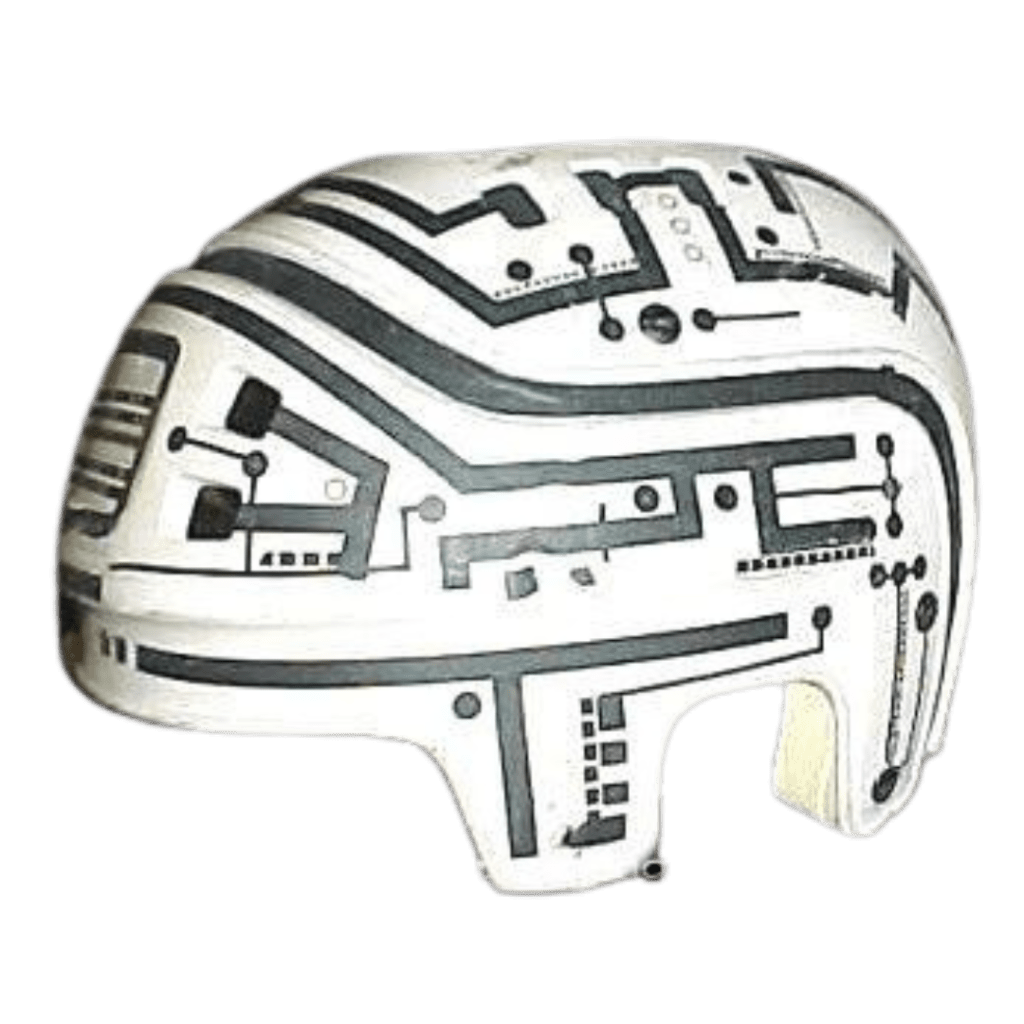
DLL: Your brain reminds me of the original Tron. Eeek. Dating myself here, but that just popped into my head. Those totally cool Light Cycles and those tricky grids.
Your video shorts are stories unto themselves, and I always enjoy your visual worlds on YouTube and Substack. And that is just a drop in the bucket for your content (which disappears to make way for new content, so you’d better follow Lucky to get the latest and greatest). Can you discuss how important these art and music endeavors are to your process and how they relate to your writing?
LN: Thanks for your nice words, Darci.
The video shorts have become an unexpected but vital extension of my storytelling practice. Often, they are experimental side-projects—visual haikus that distill ideas or rather just a little something extra.
I find there’s something liberating about the nature of having extra content. I can test concepts, styles, and emotional tones, all without pressure.
The relationship between these multimedia pieces and my writing works in both directions. Sometimes, a video can emerge from narrative fragments that don’t quite fit into my current manuscript but deserve their own expression.
Music functions similarly, as it’s both input and output. Creating soundscapes that help me access emotional states I need to inhabit for certain characters or scenes.
What I’ve come to understand is that these aren’t separate creative endeavors but different dialects of the same artistic language. They form a pact where ideas migrate between mediums, strengthening each in turn. The novel might be the most visible outcome, but these other expressions are essential to how I process and understand the stories I’m trying to tell.
DLL: Okay, you’re blowing me away again. “[D]ifferent dialects of the same artistic language… a pact where ideas migrate between mediums.” Wow!
When it comes to writing, art, and music, what techniques, tools, or methods have you found most helpful and enjoyable? Do you have any favorite tips to share?
LN: My creative toolkit has evolved through lots of trial and error, and I’ve found that having the right tools makes all the difference in translating imagination into tangible work.
For visual art, I’ve largely abandoned the Adobe ecosystem in favor of more specialized options. Krita has become my driver—it’s not only free and open-source, but its brush engine rivals premium software for concept art and illustration work. When I need to replicate traditional media effects with digital precision, Corel Painter’s realistic brush textures are unmatched. On the go, Procreate has revolutionized my workflow; its gesture controls and portability mean I have more to work with.
Music production has been transformed by some fascinating tools. RVC (Retrieval-Based Voice Conversion) has been a game-changer for creating character voices or exploring different vocal styles without needing multiple singers. I’ve started using Humtap on mobile to quickly translate melodic ideas. I can hum a tune while walking and have it transformed into a full instrumental sketch. Final production usually happens in BandLab for mastering and spatial effects, with WavePad as my mobile audio editing solution when I’m away.
As for writing, the mechanical process benefits from good analytical tools. ProWritingAid has become an indispensable revision partner—not just for catching errors but for identifying patterns in my prose I might not notice otherwise. AutoCrit is also excellent for genre-specific feedback that helps maintain the right tone and pacing.
The most valuable technique across all mediums has been learning to toggle between creation and editing modes—never trying to perfect while still generating. I’ll draft music or prose in complete free flow, then switch to a more analytical mindset for refinement. This separation prevents the inner critic from blocking initial creativity while still ensuring the final product meets my standards.
DLL: Have you considered teaching or inspirational speaking? I’ve expanded my knowledge not just a few times from our many discussions, and now I’m realizing we hardly scratched the surface of your experience.
You’ve mentioned how demanding the work is for all these creative pursuits, but I understand how that creativity motivates you, as you so articulately expressed. What would you say are the rewards for all the labor? What would you like to do better? Are there other things you want to try?
LN: The rewards of creative work go far beyond external recognition or success. For me, the most significant rewards include:
1. The deep satisfaction of bringing something new into the world that didn’t exist before
2. The flow state that comes during moments of pure creation
3. The continuous learning and growth that happens with each project
As for what I’d like to improve, I’m working on balancing perfectionism with productivity. It’s easy to get caught in endless revisions rather than completing and sharing work. I’d also like to better integrate different creative disciplines —
There are areas I want to explore further, like collaborative projects with other creators, experimenting with new mediums, and taking on challenges that push me outside my comfort zone.
DLL: I agree with focusing on finishing and sharing rather than revising to perfection, which we know is likely an unreachable state. We are always our own worst critics. It’s something I need to work on as well if I want to finish my novel by my goal. As you know, when I share a draft for feedback, I end up sending revised versions ad nauseam. It’s the strangest phenomenon. As soon as I hit send, I’m seeing things that I want to fix. Vexing!
I’ll take the opportunity to reveal that we’ve been sharing a fun collaboration, which I’m honored to take part in. I won’t give it away here, but I am so excited to add my writer’s voice in contrast with your mind-bending conceptual fantasy tales and see where it takes us, maybe by the end of the year. So, readers, stay tuned.
Can you share where we can find your stories, art, and music?
LN: Thanks, Darci! You’re awesome. If I had a dollar for every cool thing you’ve done, I’d be rich—but still not as rich as the experience of checking out your work.
Here’s where you can find my stories, art, et al:
Stories & Writing:
CHROMATIC CONCORDAT: GRAY RISING
News & Updates:
For Random Posts:
Music & More:
Everything in One Place:
Enjoy this gorgeous track from Chromatic Concordat.
Thanks so much for your kind words and for visiting today, Lucky! What parting advice do you have for aspiring writers and creators?
The truth is, I’m in no position to give definitive advice, but I think Edward Bloom from Big Fish offers some wisdom worth sharing:
“There’s a time when a man needs to fight, and a time when he needs to accept that his destiny is lost… the ship has sailed, and only a fool would continue. Truth is, I’ve always been a fool.”
“A man tells his stories so many times that he becomes the stories. They live on after him, and in that way he becomes immortal.”
“The biggest fish in the river gets that way by never being caught.”
DLL: Awesome! A favorite Tim Burton movie of mine, as you know, and so apt! Thanks for sharing. Congratulations on your latest release, and all the best to you.


 By D. L. Lewellyn
Comments welcome!