It’s getting harder to see all the events on this planet that make life overwhelming at best and genuinely depressing at worst. We’ve been re-watching Reacher. Lee Child’s stories effectively depict (in their dramatic and violent way) the human condition and the terrible things people who abandon their humanity can do to others.
They give us an exciting, larger-than-life hero who courageously seeks justice, often inspiring those he meets along the way to stand up to oppressors. Yet, they remind us that it’s okay not to fix every problem, but to do what we can for the ones close to home.
My sister and I both got diagnosed with cancer this year. We started chemo a day apart, and we lost our hair at the same rate. We experience bad days and good days in different ways, and we share our journeys weekly. I mention this because, while we share a lot, we are two very different people, and so are our choices about dealing with the world as we fight our personal battle.
It’s interesting how, when you’re caught up in survival, you begin to contemplate the meaning of life and your place in it, even as your attention narrows to your own physical struggle. I guess it’s natural for some to focus on what they can control and let the things beyond their control blur into the background.
For me, I can disappear into my writing, rewrite the world in speculative fiction. I can listen to my Cake radio station on Pandora (my adored hometown band) while I exercise, or watch the rare good entertainment like Reacher with my hubby while I knit. I’m very grateful for that.
Others do the opposite. Their personal struggle becomes less significant as they take a stand against the unsolvable and march with other brave people.
Despite my efforts at mindfulness and inner peace, events like the terrible mass shooting at a casino a couple of days ago bring chaos crashing back, and I grieve for the world, feeling helpless alongside my neighbors.
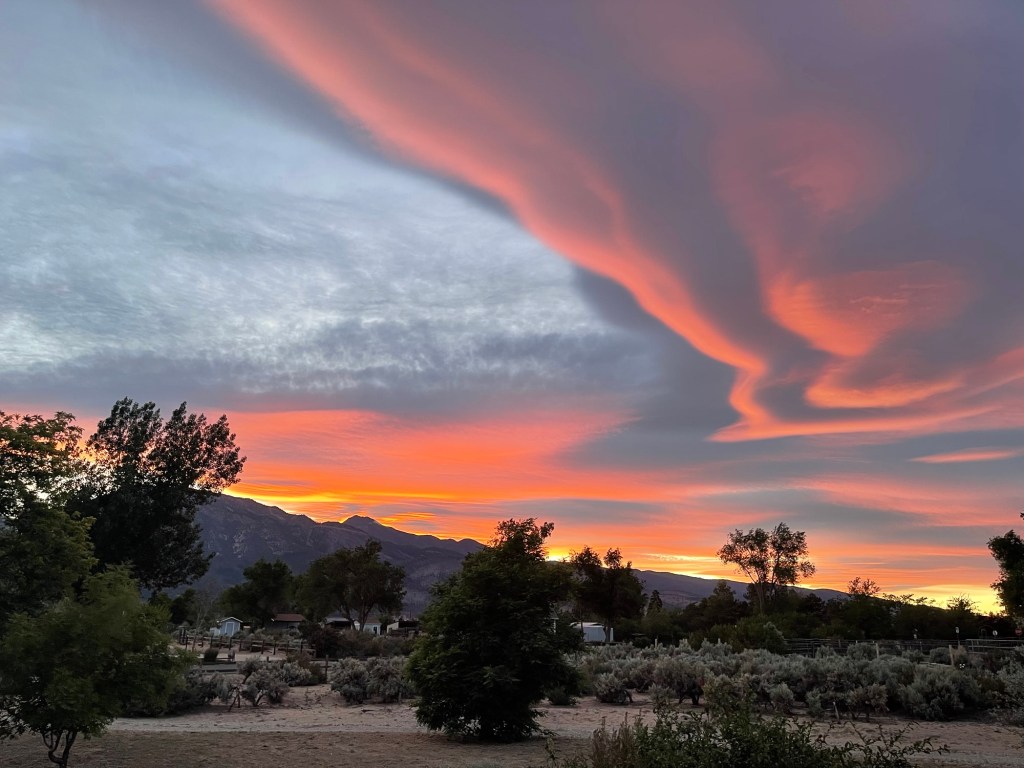
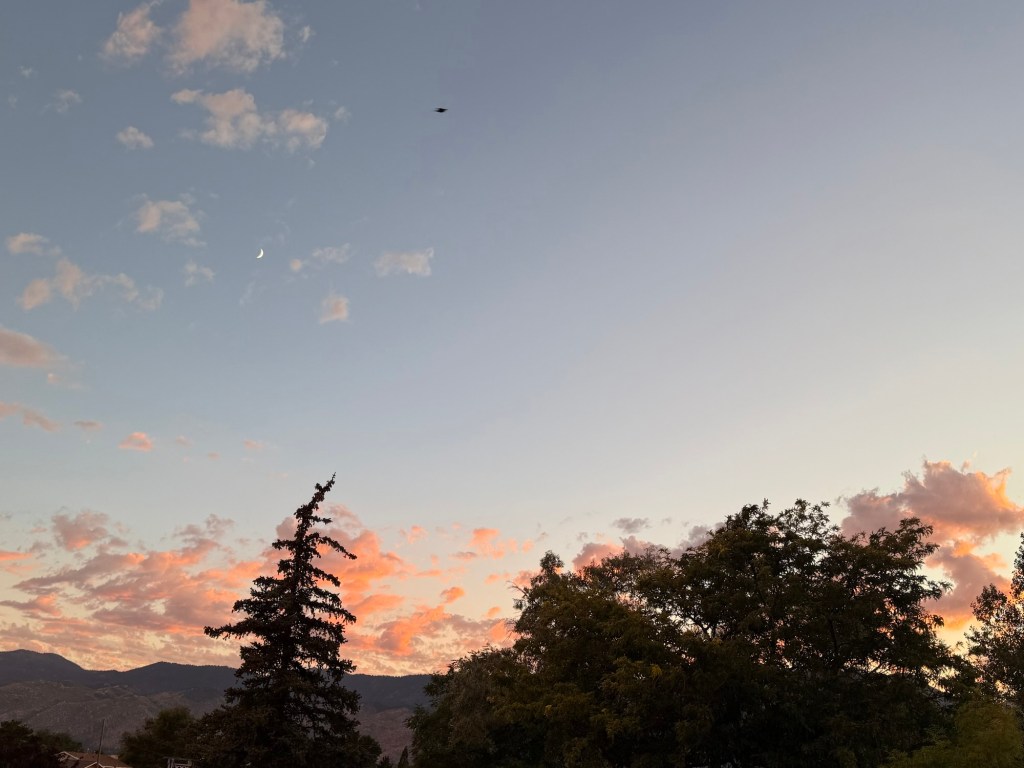
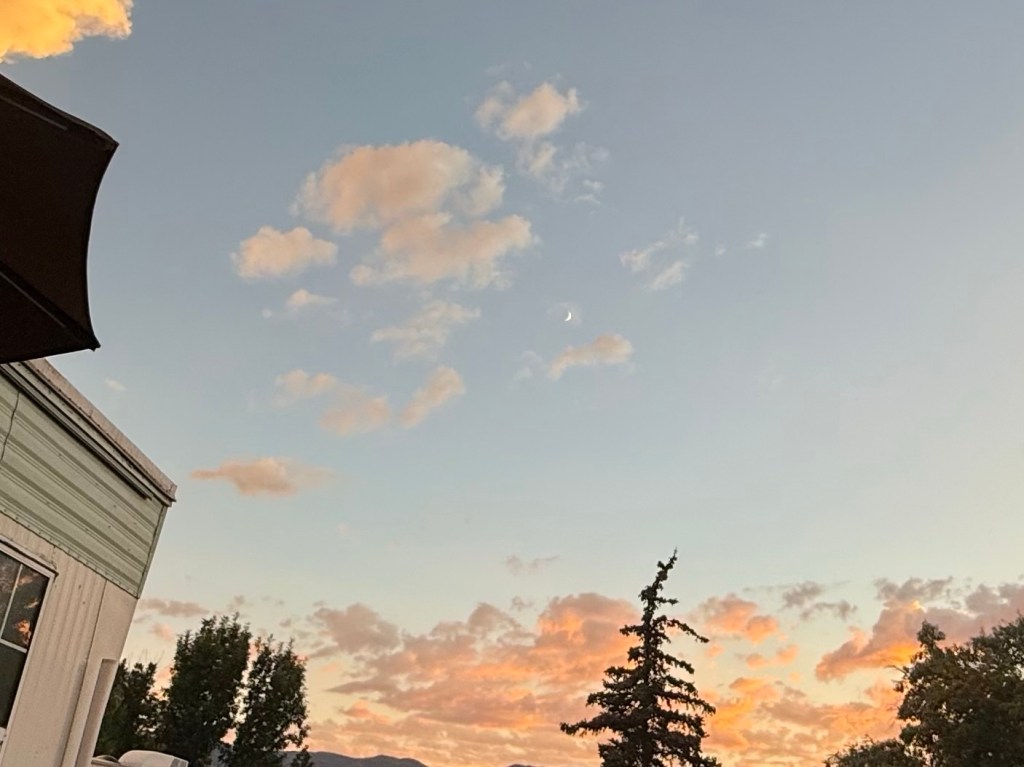
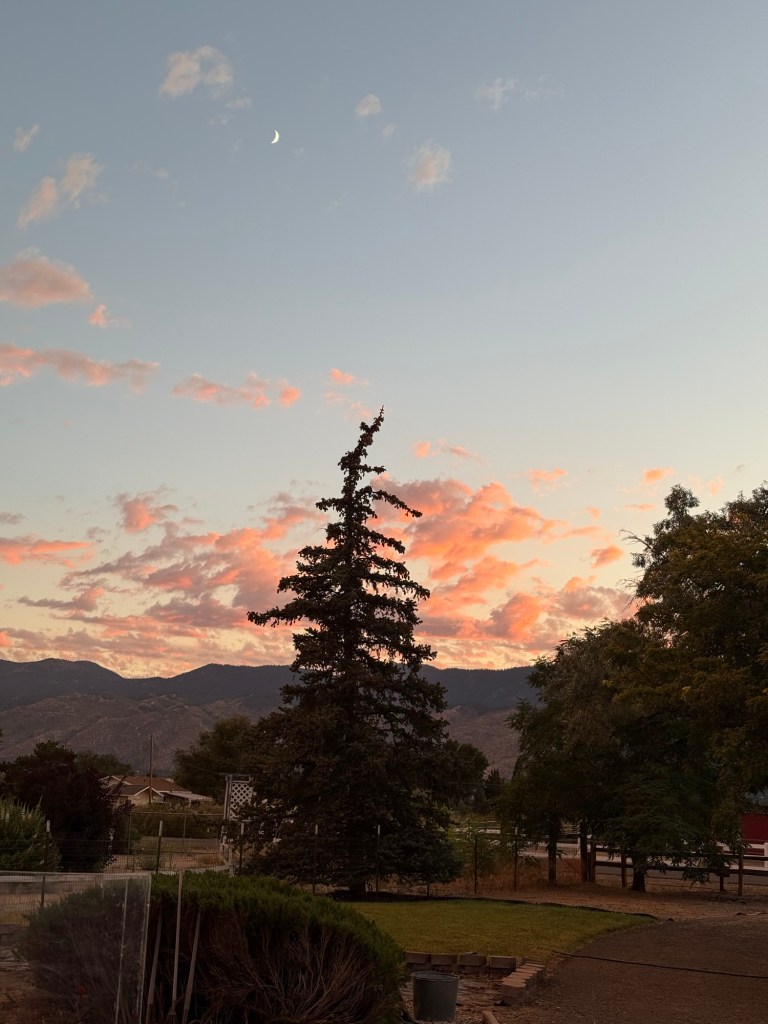
That’s when I look up. I’ve been doing that a lot lately. Northern Nevada skies are always inspiring and soothing to the soul, reminding me how tiny and insignificant events on this planet are in the grand scheme of things. Gazing up, away from the chaos on the ground, lets me just be.
No worries as the sinking sun paints the sky until the stars come out. The answers are up there, and someday I’ll understand.
Enjoy this lively chat packed full of great writing tips and resources on writing short stories with fellow northern Nevada writer, writing coach, and public speaker, Linda K. Hardie.
Linda led an engaging and informative short story workshop at a writing retreat I recently attended in Virginia City, Nevada, that truly inspired me to dive into my next small tale with a new perspective. Check out the highlights and photos of the retreat on my blog. That very day, I invited Linda to my Spotlight for a chat so that you can benefit too.
Let’s Meet the Author
Linda Kay Hardie is a freelance writer in Reno, Nevada. She writes short stories in many genres, including horror, dark fantasy, and crime. She also writes recipes and is the reigning Spam champion for Nevada (yes, the tasty treat canned mystery meat).
Her writing has won awards dating back to fifth grade, with first place for an essay on fire safety. In 2022, she was honored with the Sierra Arts Foundation Literary Arts Award for fiction. Linda makes a living as a writer, writing coach, teddy bear builder, and as staff working for purebred rescue cats.
Let’s Get Started
Thank you so much for joining me on my Spotlight, Linda. How did you become a writer, and what or who was your biggest inspiration?
LKH: Books in general were my initial inspiration. I remember looking at books, seeing the little black squiggles that held the magic of the story, and being determined to figure out that mystery. I had to learn all the mysteries, and I was full of questions. When I was 4, I followed my mom around the house as she cared for my 2yo brother, asking her questions. She finally sent me to kindergarten (not very common in those days), where I bothered the teacher. We had coloring time, recess, nap time, and storytime. I couldn’t nap because I was too excited for storytime. Finally, the teacher taught me how to read and asked me to read quietly on my nap pad on the floor. I wrote my first story soon after that.
DLL: That is definitely the youngest budding writer story ever shared with me on my Spotlight. Fantastic!
How did you find your genre in Crime Fiction? What other genres do you like to write?
LKH: When I was a teenager back in the 1970s, I devoured science fiction. Those were the days of the US Apollo space missions, and science was huge. Science fiction took me to all sorts of amazing places. I’ve always read almost every genre, as long as the writing was good. I still read middle grade novels, and that’s one of my favorite genres. That’s the age when we’re beginning to realize we need to become our own person, to look beyond what we’ve grown up with, and to plan for the future.
I discovered short crime fiction when I stumbled across a submission call for crime stories involving or inspired by collective nouns for animals. You know, like a gaggle of geese, a clowder of cats. Or a Murder of Crows, as the anthology was called, edited by Sandra Murphy.
I had just done research on what a group of jellyfish was called (that’s a long story involving a strange photo a friend posted on social media), and a crime story that used that research unfolded in my mind.
I also write horror, science fiction/fantasy, historical fiction, and literary fiction. I don’t write romance. I tried once, and everyone died. Tragic.
DLL: Haha. Death, for sure, puts the kibosh on the required Happily Ever After in a romance. Writing short stories is a great way to explore multiple genres. I’ve been able to experiment by participating in writing contests, where you don’t know what you’ll be called upon to write until the prompts are revealed. Writing Battle is the place to go for a wide range of genres and a fun competition. My favorites were ‘cannibal comedy’ and ‘inanimate romance.’
LKH: Ooo, that sounds very cool. A great challenge!
[You can meet the delightful creators of Writing Battle on my Sunday Spotlight.]
I thoroughly enjoyed your story in ‘A Killing at the Copa,’ stories inspired by Barry Manilow’s songs. ‘Rain as Cold as Ice’ (inspired by Mandy) drew me directly into the fascinating mind of the main character from the first paragraph, and as a local, I loved the downtown Reno setting. Even if I weren’t familiar with it, your world-building was incredible, and any reader could picture themselves on the streets of the seedy yet fascinating side of the Biggest Little City. Is writing local scenes your go-to?
LKH: Yes, I love to bring location into my stories as a character of sorts. In “Rain,” I was struggling with the story because (as I realized later) it wasn’t grounded anywhere. I mean, I had it set in a bus station, but it took me a while to see that I was writing a pair of “head on a stick” characters. My mentor, writer and former university professor Susan Palwick, calls it that when the writing is flat with just indistinct paper dolls saying words. The reader isn’t engaged because the writer is just lecturing and not showing a well-rounded story.
So, I knew what was wrong, but I couldn’t get a handle on how to flesh it out until I was in a workshop taught by my friend Suzanne Morgan Williams, who writes wonderful middle grade and young adult novels. This class–a part of Mark Twain Days in Carson City–focused on journeys to tie in with that author’s exploration of Nevada and the West.
In an exercise in the class, I was playing around with Suzy’s prompts, doing stream of consciousness writing to tease out my ideas. I take classes from Suzy every chance I get, because she’s a super teacher, and I always learn something new from her. She always pushes for writers to use more senses than just sight.
Here she’d asked us to think of five sensory words. I ended up with a long paragraph that became the beginning of “Rain as Cold as Ice.” The smell of the rain, the sound of bus brakes, the touch of the wind, the cursing of a drunk man. These specifics anchored my characters into a place and gave them room to be themselves.
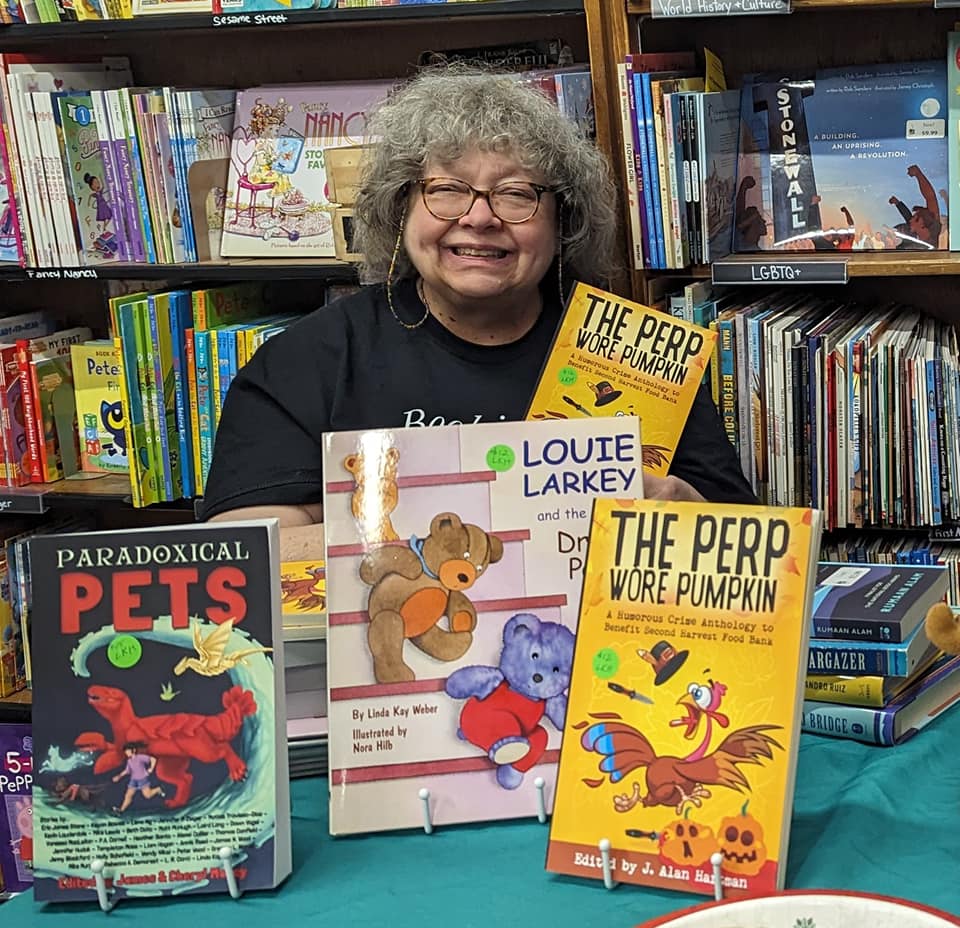
DLL: I love hearing how stories get their start, and this is fantastic, especially how it speaks to that compelling opening. It looks like Mark Twain Days are coming up in October! [That’s my signed copy in the photo! Available on Amazon.]
You told us in class that writing short stories is a great way to excise those annoying thorns in life, a true catharsis, which gave me a whole new perspective on developing story ideas. I sensed the axe being wielded in ‘Rain as Cold as Ice.’ Are we seeing parts of you come through? Can you share how real-life inspiration enhances your short story writing and how we can experience catharsis more directly in this format compared to our novel projects?
LKH: Writers are always told we should “write what you know.” As a journalist, I found many flaws in that cliche, mainly because my job was writing about stuff I DIDN’T know about and communicating these new ideas and situations to my readers and listeners. (I worked in newspaper and radio news for many years. My undergrad degree is in journalism from the University of Oregon.)
I came to realize that the admonition could better be written as “write what you emotionally know.” The answer to your question about whether you and other readers are seeing parts of me in my writing is “absolutely, yes.” Not necessarily the physical details, but definitely the emotional ones. For example, I haven’t been in a physically abusive relationship, but I’ve been in emotionally and verbally abusive ones, so I know the emotional blueprints.
None of my characters are ever me. First, I’m a born storyteller, and I go where the story needs to go. I get this quality from my dad, who loved telling great anecdotes about events and people. He always embellished the stories with exaggerated details and often stretched the truth because these flourishes made the story better. “Never let the facts get in the way of a good story,” Dad always said. That’s become my motto, too.
Of course, Dad never actually said that, but that just makes the anecdote more emotionally truthful. Besides, “Never let truth get in the way of a good story” is attributed to Mark Twain, who famously and wonderfully wrote that way.
So I mine bits of me and my emotions, digging for the precious gems that will make a character sparkle and come alive for the reader. Of course, the first reader is me, and I’m picky and hard to please when I’m reading.
DLL: I love this advice and your dad’s inspiration, and of course, Mr. Twain’s. “Write what you emotionally know” is getting tacked up on my pegboard. I hope I’m doing that, tapping into my emotions, as I get to know my characters. You can feel the magic when it happens.
I enjoy writing short stories that come out of those contests I mentioned, but I’ve had a hard time finding places to submit them once they’re released back to me. When I do, they often get rejected, which many of us cope with until we find the right fit. I eventually published them in a collection, and I offer many for free on my website. That’s two ways to get them out there. But the anthologies where your stories are accepted are so appealing in their design, clever themes, and content that they must attract a wonderful audience and just seem fun to write for. Tell us about the path you took to find the right publisher(s) and about writing stories that fit those engaging anthologies.
LKH: I think I fell into a couple of good opportunities by luck. I first got into writing for anthologies, as I mentioned above, with a crime story inspired by the name for a group of jellyfish. Since that anthology, I’ve worked closely with editor Sandra Murphy on two others. No, wait. More. There’s another one coming out soon, and I’m sure I’m forgetting another one. While I don’t recall for sure how I found the call for stories for the collective animal group names book, it was probably through Erica Verrillo or Authors Publish.
I also keep an eye out for the small publishers that are popping up like mushrooms after a rain. And I use that analogy in a totally respectful way (being a lover of both fruiting bodies of certain fungi and delightful showers of precipitation). Writers and Publishers Network is a great resource for keeping up with this. I write columns, opinion pieces, and other articles for them occasionally. I was recruited by my favorite editor Sandy Murphy, who coordinates the newsletter and more of the writing on the site. Sandy is the editor of several anthologies that I’m in, and I continue to work closely with her.
One of my award-winning stories was initially rejected for the anthology whose call I’d written it for, but some time later I thought it fit a different anthology call with a similar post-apocalyptic theme. I was correct. The editors accepted it, and later I won an award for it.
DLL: Again, so much great stuff, Linda! I have been way too sheltered in my recluse writing world. My eyes have been opened! Thank you for all the resources. I found a fun interview with Sandy Murphy, our visitors might enjoy at cam-writes.com
Can you also talk about building those publisher relationships and the awards you’ve won?
LKH: Yes! I have stories in four of the five volumes of From the Yonder: A Collection of Horror From Around the World, published by War Monkey Publications, a small publisher based in Utah. (I missed the deadline for Volume 5 because I was too busy writing other stories.) I enjoyed working with publisher/editor Joshua Sorensen. I got to meet with him when he came through Reno on vacation with family members. At that meeting, he helped me zone in on the story I was creating for Volume 3.
I met Sandy Murphy when she edited the collective animal names anthology for one small publisher, and I followed her over to another small publisher with another project, an anthology of stories inspired by songs of the 1960s, then to Misti Media, a new small publishing company, home of White City Press, which published my most recent stories. I work a lot with publisher and editor Jay Hartman, and he has invited me to contribute to some of his anthologies. It’s an honor to be invited to submit because it means the editor likes your writing style and feels they can count on you to submit something publication-ready. And they know you’re someone they can work with. That’s always important, because word gets around about writers who criticize every single comma that’s edited in their “perfect” work and refuse to do any promotion of the finished book. Many anthologies are invitation-only.
Last year (2024), I won a certificate of excellence from the Cat Writers Association for my SF/mystery story “Grenade Blows Up,” which is in Tales of the Apocalypse from Three Ravens Publishing. (Cats feature significantly in the story.)
My writing awards date back to fifth grade, when I won first place for fifth graders for an essay about fire safety that I wrote on my first day in a new school. My military dad had been transferred, and I walked into the classroom late, just as the teacher was explaining the writing assignment. I received a trophy, and the fire chief treated me and the other first-place winners to lunch and all the penny candy we wanted. In 2022, I was honored with the Sierra Arts Foundation’s Literary Arts Award for fiction here in Reno. That came only with a check. No candy.
DLL: Darn, candy always makes a great prize. Way to go, Linda. Truly inspiring.
You have stories published in 19 anthologies. Who is your favorite character you’ve written so far, the one you still think about the most?
LKH: Ooo. That’s a hard one. I’m not sure it’s even fair. Do you ask parents which is their favorite child? I like the narrator of “Smack” because I love her determination and kind heart. Then there’s Grenade (nee Renee) in “Grenade Blows Up,” who’s doing her best to get by after the apocalypse. Also, the narrator in “Rain as Cold as Ice” touches me deeply because she’s trying to survive in a harsh world, the best way she can.
I think Sarah and Sally, my married main characters in the story in the upcoming anthology edited by Sandy Murphy, might be the answer to your question. I had trouble getting into that story, so I did a lot of stream-of-consciousness freewriting about who these two older women are, why they were in Reno, how they reacted and thought, and why they were the best ones to solve this particular crime. Then, when I was having trouble with a novella I’d been invited to write, I realized that Sarah and Sally were exactly the people to fix my problems there. (Sorry that I can’t yet reveal any details about these projects.)
DLL: You did great with my zinger question. I love hearing the glow when authors talk about their children, um, I mean their characters.
I noticed that some of the anthologies edited by J. Alan Hartman benefit charities. Can you talk about that?
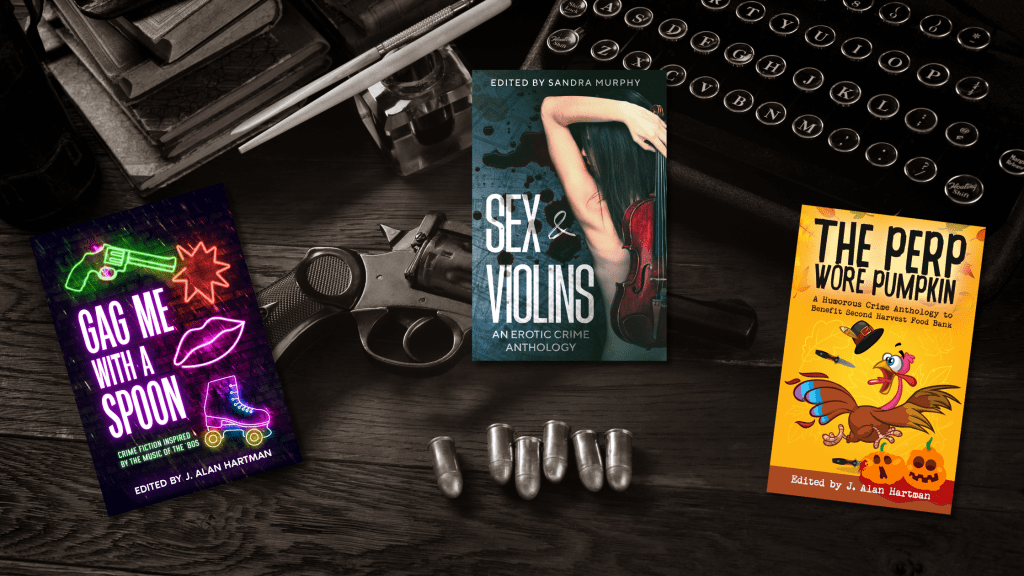
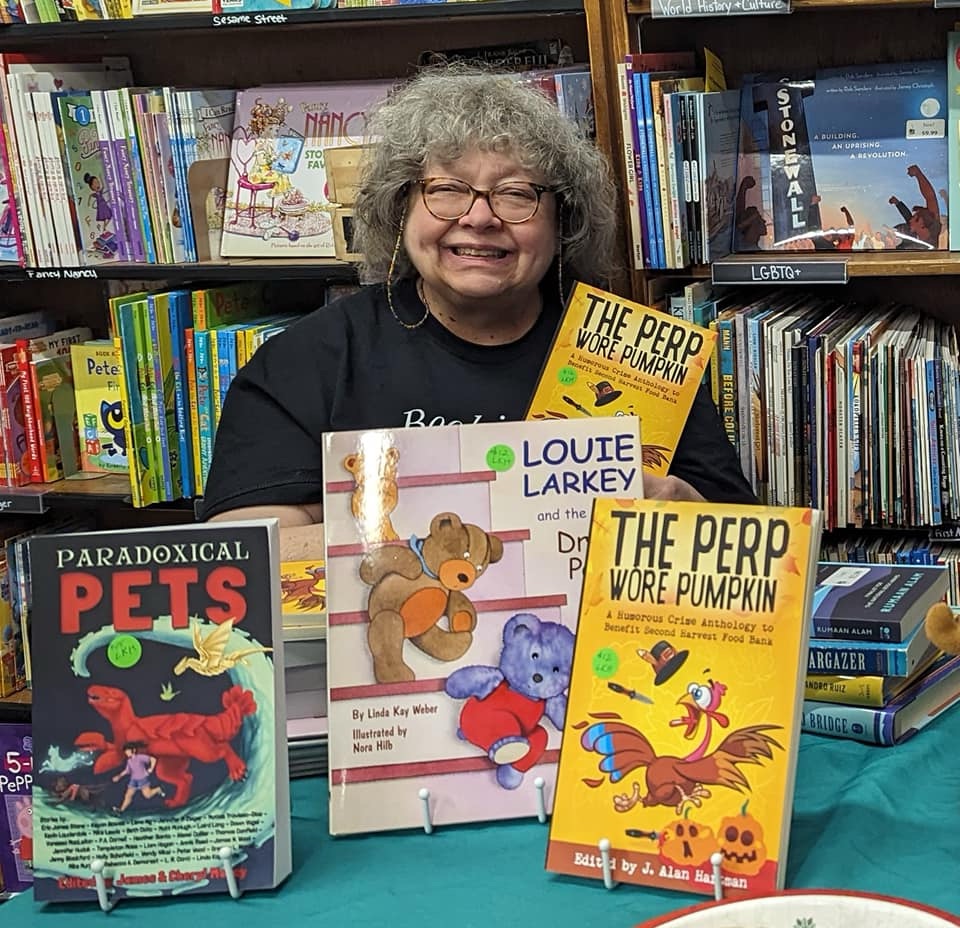
LKH: Definitely! At a previous small publishing company, Jay created and edited a series of Thanksgiving-related humorous crime anthologies, and when he formed Misti Media, he couldn’t use those ideas, so he created The Perp Wore Pumpkin, which carries on the spirit.
Proceeds from the editor and authors go to Second Harvest Food Bank locations. I turned in my story for volume 2 of this series a couple of weeks ago, and it will be released well before Thanksgiving this year to raise more money and awareness of food insecurity in America.
Plus there’s my poem in Under Her Eye: a Women in Poetry Showcase, vol. II, from Black Spot Books. Edited by Lindy Ryan and Lee Murray, this anthology partnered with The Pixel Project, a global non-profit organization focused on ending violence against women worldwide.
DLL: Fantastic organizations to support, and a fun way to support them!
Can you share your tips and techniques on staying productive and keeping that creativity flowing? Where is your favorite place to write? What’s your writing schedule like? Do you journal ideas as they come to mind, or do you otherwise note them down?
LKH: I journal every day, and I write about anything and everything. I write ideas or the seeds of ideas, often freewriting until my subconscious informs me there’s some great potential there, and then I copy and paste that into its own story file. I write diary-type stuff where I take a deep dive into my emotions and figure out why something made me feel and/or react how it did. I’ll write anywhere and everywhere. I even journal while riding the bus, typing emails to myself with a stylus into my phone.
I strongly believe that you need to write as much and as often as is possible for yourself in order to keep your skills healthy and ready. For me, that’s daily and usually many times each day. It’s often 1,000 words in a day. This does NOT have to be polished writing – it doesn’t even have to make sense! I play around with words. I mean that literally. But also figuratively. I’m a kid squishing the clay to see what it can look like, or coloring outside the lines because why should the coloring book artist get to have ALL the fun? Dancing and singing with the words.
DLL: My smile is huge right now. I love this! Great advice.
What are your writing goals? Do you have any novels in the works?
LKH: Yes. I’m trying to write a mystery novel. I’ve got so much of the idea work done on it, but I need to make time for the writing work. Plus the novella I alluded to earlier. I do have two finished middle grade novels, one of which is making the rounds on submission.
DLL: Your volume of work is truly inspiring, Linda.
Any other best practices for writing in the crime fiction genre, and/or writing short stories?
LKH: Don’t try to follow a trend. I would rather write what I love and let others follow me.
DLL: Ooh, yes! Learning about market trends proved to be a hitch in my stride. I started writing without any prior experience (other than legal writing in my career), learning as I went, including the publishing process and all the business behind it. In the beginning, my writing was raw, but my voice came through, my characters engaging (according to my readers). I was uninhibited, you might say. But in all that learning, I got caught up in all the endless rules (some I liked, some I discarded) and the admonitions about writing to market trends, even if it’s not the story you want to tell. Yuck! I love my readers, and I don’t think they need catering to.
LKH: Exactly!
DLL: It stymied me for a time, but I’m back to focusing on reading and hearing my favorite and newly discovered authors’ voices, honing my writing skills, and listening to my own writer’s voice. That, in turn, helps me find my audience, a small but growing one of which I am very grateful to have now. Thank you, Linda, for the great advice!
What is your parting advice for aspiring writers?
LKH: Write all the time. Whatever that means to you. Don’t follow anyone else’s advice unless your heart says, “Hey, that’s a good idea.” And read in your genre. That’s absolutely essential. When I was part of an annual writers conference in Fresno, I used to have wannabe writers show me their children’s book manuscripts for advice. I would read it. Most of the time, it was awful, with no sense of who their audience was. “What’s your genre?” I would ask. “I don’t know. I think everyone will love it,” they invariably answered. “What genre do you read?” I would follow up with. “Oh, I’m too busy writing. I don’t read,” they would answer. That’s when I would paste a fake smile on my face (anyone who has ever worked in retail knows this one) and make vague but helpful-sounding noises about their project. Because I knew they were never going to get published. Of course, that was decades ago, and now those people run off and self-publish.
That’s not to say self-publishing is not a valid way to go these days. I know many people who publish their own books, market them, and along the way, they work with professional editors and artists to make the books the best they can be. These writers get their work out to readers. But if the only thing you want is to be published and you don’t want to learn or to pay for professional editors and artists to make your work great, that’s fine for you! I want to be read. I want to touch people’s lives. That means I want to work with talented people who can help me improve.
DLL:Beautiful! Thanks again, Linda, for dropping by and sharing your inspiration, as well as all the fabulous tips and resources!
Let’s conclude by sharing where we can find you and your works. What events can we attend to hear you speak in person, book signings, or other ways to get out and meet you and our fabulous local authors?
LKH: I attend most of the monthly meetings of the Sierra Arts Literary Community, also called SALC. [Find Linda here] It’s generally the first Sunday of each month at the Sierra Arts Foundation’s Riverside Gallery on Virginia Street in downtown Reno. Feel free to approach me and say hi if you come! I’m always glad to meet new writers, prepublished authors, and other writers. No membership needed (although there are resources available to people who are artist members of Sierra Arts).
When I speak in person or have book signings, I publicize them on the Northern Nevada Writers group on Facebook, as well as on my own social media feeds [Facebook], plus on White City Press’s website.
I’m working on possibly having some writing classes through Sierra Arts Foundation, which is a great supporter of all arts, including literary ones.
DLL:The Sierra Arts Literary Community sounds wonderful. I would love to see you there, catch one of your classes. Thank you!
Here are links where you can buy the anthologies featuring Linda’s stories directly from the publisher.
Two brothers get swept into the Coral Sea by a wave to end all waves, but they have their surfboards and ride them out. Then, a giant, golden fruit bobs up on the horizon, carrying a motley crew of survivors and promising the strangest of rides.
~~~
Carter passed the binoculars to his brother as the two leaned against the railing at the top of the giant pineapple. The fiberglass fruit hadn’t originally been a houseboat, but it made a damn good one after being swept into the sea by the tsunami that devastated eastern Queensland. Before that, it served for decades as a popular photo-op entrance to a zoo.
“Still no sign of life in any direction.”
The dire report came with Flynn’s unflagging optimism, making Carter marvel and shake his head before responding.
“Miro thinks we’re mostly drifting in circles but says there’s a possibility we’re inching towards New Caledonia. What do you think?”
Flynn lowered the glasses. “If anyone has a clue, it’s Miro. He can read the sky. Going in circles isn’t good.”
“I know. Rations are thinning… like, to nothing, but us starving is not what worries me.”
Flynn chuckled, nudging his brother. “You still haven’t made friends with Bunji and Dainen?”
“It’s not a matter of making friends. What do you think the tigers will do when they get hungrier? Even to me, you look like a juicy steak.” Flynn laughed harder, lifting Carter’s spirits as always.
Nothing could shake his brother’s sense of adventure. It’s what kept them alive long enough to come across this absurd sanctuary.
The brothers were camping on Rainbow Beach when disaster struck across what turned out to be an unbelievable swath through Oceana. They survived the monster wave, the one everyone talked about but didn’t believe would come, only because they were excellent surfers.
They saw the huge swell on the horizon before it grew so massive, it blocked out the sun, and they grabbed their boards and prayed. Thanks to Flynn having snatched up his bugout bag with a flare gun and firing a shot, they managed to find each other again, though it took them half a day to reunite and lash their boards together. That had been a crazy, happy time.
After that miracle, they drifted for days as if they were the only two beings on the planet. On the night before their next miracle, the starry heavens had lulled Carter into philosophical dreams, and he’d given himself up to the big sleep when his brother’s hopeful voice penetrated his resignation.
“Am I seeing what I think I’m seeing?”
With an effort, Carter lifted his head towards the horizon and spotted through hazy eyes something that gave him a needed jolt. “Is that a pineapple?”
“It’s a BLOOMIN pineapple! And there are people on it, waving like mad. We’re saved, Carter, by a giant symbol of hospitality.”
The next surge rolled them close enough to paddle alongside the marvelous fruit, where helpful hands pulled them onto the lacquered rind. There, they lay on their backs and smiled into friendly faces, blocking out the morning rays.
When two massive furry heads nudged their way into the greeting, the brothers kept smiling. Why wouldn’t there be tigers on a floating pineapple?
Miro popped out of the makeshift hatch, returning Carter to the present when he demonstrated his uncanny hearing.
“Oi! You knocking my babies, mates?”
Bridie popped up next to him, her freckled face splitting into a grin. “I thought you blokes knew better.”
Thunderous growls followed. The cats’ offering their own indignant comments.
Carter grinned at the zookeeper who’d raised the orphaned beasts and the teenage girl who was the first to hitch a ride with him on this giant fruit, bobbing its way to… anywhere.
###
Five days later, Carter was in a staring match with Bunji. Was the cat drooling? He’d been sure that by now, he and Flynn would have been heaps of bones scraped clean and bleaching under the sun.
They were all starving. Nothing in the way of food had made an appearance in days, no matter how hard they searched. Even Miro, with his uncanny abilities, had been unsuccessful.
Purrs erupted from the massive cat as it plopped onto its haunches and lifted a hefty paw to lick it. Dainen draped himself beside his brother, joining him in a thorough grooming. Narrowing his eyes at the languid felines, Carter couldn’t decide whether to be amused or wary.
The longer he watched them, the more somber he got. Their predatory instincts could trigger without warning in an instant. Would they eat them all at once or spread them out over time? He jolted when the cats rose together in a baffling show of alertness. Then, he felt it.
Carter peeked over the rind at Miro, who was dangling a gull wing over the water. “Um… Miro, why is this pineapple bobbing like a giant version of your lure?” He was already queasy with the jerky motion.
The pineapple dipped again, drastically enough for Miro to grip onto the tiled surface.
“Come, boys! Inside.” Miro waved at his cats and Carter, and one by one, they shimmied down the hatch.
Flynn and Bridie were sitting cross-legged on their sleeping pallets, playing poker with homemade cards, which were actually more feathers from the gull Miro had managed to snare and prepare raw for them. The memory of choking that down made Carter’s stomach roil even more.
Bridie laid down her hand, calling out smugly, “Full house.” She gasped when the pineapple lurched again.
The rocking became so violent that Carter was thrown to the floor and couldn’t stop himself from rolling into Bridie, who was crouched on all fours, trying to hang on. They tangled up together and crashed into the wall.
Flynn slammed into them before their home tilted in the opposite direction, sending them all rolling to the other side. The tigers leapt around them, finding purchase at each tumbling motion, like hamsters on a wheel. Miro, as nimble as the cats, managed to stay upright until he could grab onto the ladder under the hatch.
By the fifth tilt, Carter was sure he was going to be sick. But the motion slowed, then halted altogether. Their relief turned to excitement when they realized the floating pineapple was bumping into something solid. Bridie was the first to recover and scrambled up the hatch to the surface.
Flynn called after her, then followed. Carter came up behind them and stood next to his brother. All three gaped at their surroundings. He couldn’t quite put his finger on it, but the vegetation seemed foreign. The air smelled unlike anything he’d ever smelled, and the sky was painted in odd shades of aqua, blending in with the sea.
Miro yelled for them to get inside because waves were rolling in behind them, ready to pound them into a cliff. But that wasn’t their worst problem. Swooping at them from a massive nest high above were a pair of humongous, winged creatures that did not fit this time. Wicked claws reached for them.
“No way!” Flynn cried excitedly.
Deafened by the screeches coming from the snapping, teeth-lined beaks, Carter dove back inside, right behind Bridie and Flynn. Miro dropped through the hatch and slammed it shut. They rode out the pummeling, maybe for an hour, until everything stopped. Had they been washed up on a beach?
“You three WILL stay inside,” Miro ordered, “and the boys and I will investigate.” Narrowed onyx eyes pinned them down until they relented.
After so many hours had passed listening to ominous noises, Bridie said, “That’s it. I’m going after him.”
The brothers didn’t say a word. Just geared up with their meager belongings and followed her out of the hatch. They climbed down and stood, gaping in disbelief at an unnatural paradise.
“It smells primal,” Flynn concluded after sniffing the air.
“I have no idea what primal smells like,” Bridie whispered as they crept up the beach on shaky legs, “but somehow I get you.”
Carter could hardly take in details fast enough because a lot of what he saw looked edible. His once roiling stomach growled—loud enough, Bridie shot him a sideways glance.
She jerked to a halt. “Do you hear that?”
Not only was the sound terrifying, but the ground vibrated. The tops of the trees rustled. Suddenly, the tigers pounced at them, and they cried out, throwing up their arms until they realized their feline heroes were after something much bigger behind them.
Carter could not believe his eyes. A two-story beast bore down on them with scales, gnashing teeth, and a terrible roar.
Stepping out of the trees, Miro beckoned them, and they ran for their lives. The tigers, having done their worst to a beast with a horrifically thick hide, bounded after them, while Carter entertained the useless thought that floating on the ocean in a pineapple, searching for food, wasn’t so bad.
~~~
How the Contest Works at Writing Battle
Writing Battle… Winter Flash Fiction Contest… What can I say? Okay, I’ll just say it. It feels just like I went ten rounds in a boxing ring! (Since I’ve never done that, I make conjecture here for dramatic purposes.) Only it’s a month long and a knock down drag out struggle through five rounds.
First, there’s the excitement of drawing my prompts with the fabulous flipping tarot cards. Then deciding within the very narrow timeframe of creating my story whether I want to stick with my draw, or try for a redraw. (This time, I did avail myself of the one redraw allowed for the genre, so I went from Winter Survival to Lost World and it felt like a bonus gift! I stuck with my character – zookeeper, and object – pineapple, but I could have redrawn up to 7 more times)
Writing a story in a Lost world with a zookeeper and a pineapple? No problem!
Then comes the writing, rewriting, begging friends and family to read it, rewriting, rewriting, then hitting that submit button. Whew! Surviving stage one… done!
Stage two… the duels. I get to go from writer to judge. The best part? I’m treated to some very good stories (in the three other genres I’m not competing in), and it is so very hard to pick between the two stories (for five duels)! I’ve discovered that offering feedback is not only a great way to give back to my community of writers, but it’s a super good learning experience.
While we wait for stage three, we can open our story to the community and read other stories, then give and get more feedback, or just chat. There are four genres. I mentioned two, Winter Survival and Lost World. The other two were Occult and Meet Cute. One of my favorite stories I read in the post-dueling rest period was from a male author who got Meet Cute and decided to go for it. It wasn’t in his wheelhouse. It was my favorite story. He nailed it. The characters were amazing, it was funny, and the ending delivered the perfect punch and left me grinning.
But the nail biting continues folks. Once the dueling is over and we’ve chilled for about a week and enjoyed more stories, the scoring begins. It’s quite an elaborate system, but I’ll try to capture the gist. There are four rounds of elimination based on the initial seeding round and subsequent dueling results, then the fifth round goes to the professional judge. Each day, we come back for the results. Yikes! I will mention at this point, the platform is pure genius, if you aren’t picking up on that already. All the stages are well laid out with a timer, so you know exactly what will happen next and when.
My goal is to make it to round five one day. I think (if I’m figuring things out right) I made it to round three this time before getting knocked out. My story in the 2022 Autumn Short Story Contest, The Passengers (edited here based on feedback), made it to round two. But that’s okay. The competition is fierce, and no matter the results, you get feedback from your peers. Talk about learning. The story above got enough consistent feedback to tell me exactly what to work on.
I’m signed up for the 500-word Spring Micro Fiction Contest. Registration is open! Then comes the 250-word Summer Nanofiction, then Screenwriting… and back to the 2000-word short story. Did I mention yet, there are cash prizes? Very decent ones, too.
Feedback is welcome on A Pineapple Ride to Anywhere. I’d love to see how it jives with my peers at Writing Battle.
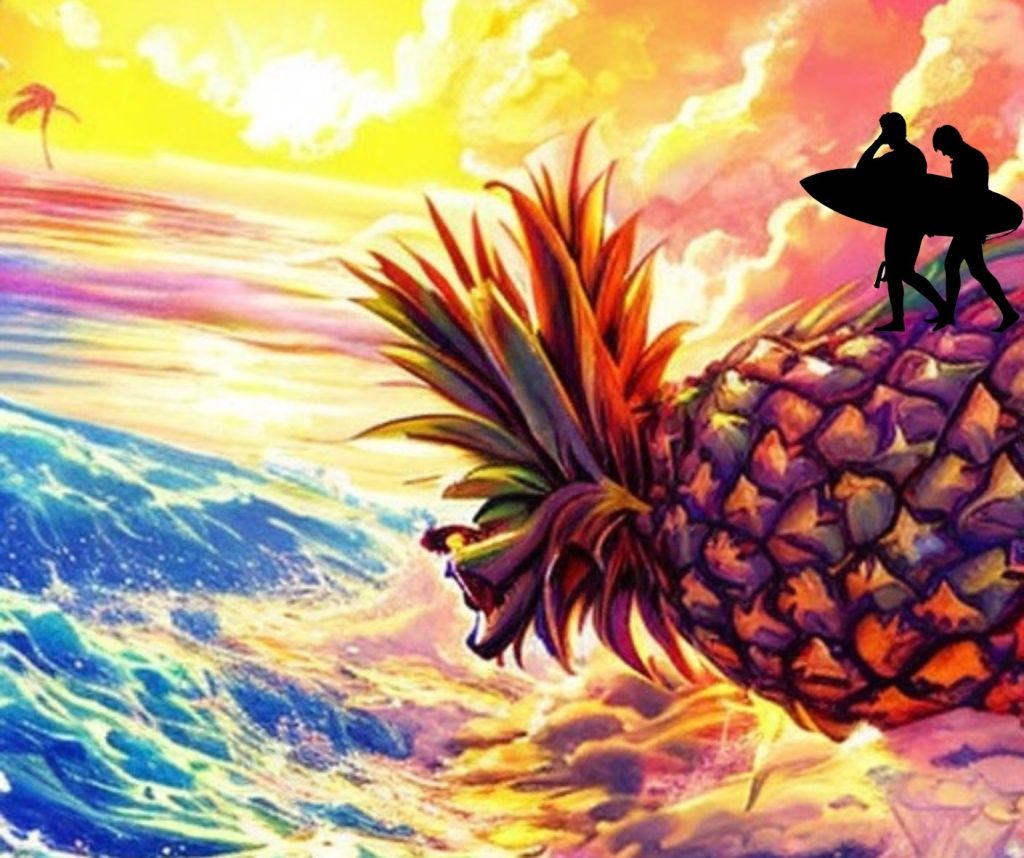
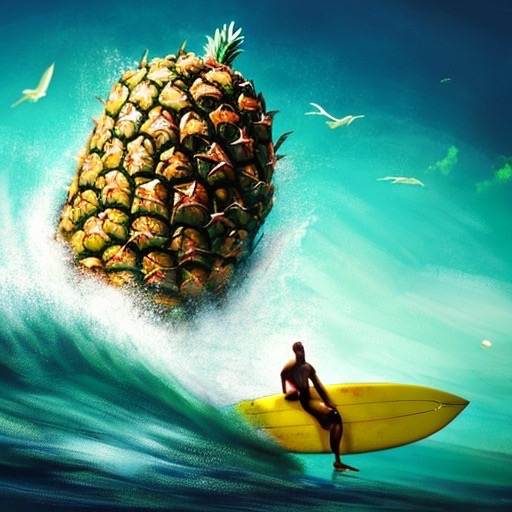
Enjoy a little computer generated imagery and thanks for visiting, and the read!
My Pineapple AI art, courtesy of Photoleap
The last photo is the real thing and inspiration for my story. A landmark in Queensland that captured my imagination before I even traveled there. How could I not use this awesomeness in a story with a pineapple prompt? 😉
Now for the big announcement!
You can meet Max and Teona, the team behind the Writing Battle platform, on my Sunday Creator Spotlight. See Post!
I am thrilled I was able to participate in the fifth annual Virginia City Writing Retreat. I have wanted to try it out for several years and meet some local writers. Registration is now open for next year. Our hardworking host, Kim Harnes, reports that the June 2026 retreat is already two-thirds full, so if you live in Northern Nevada, don’t miss checking it out.
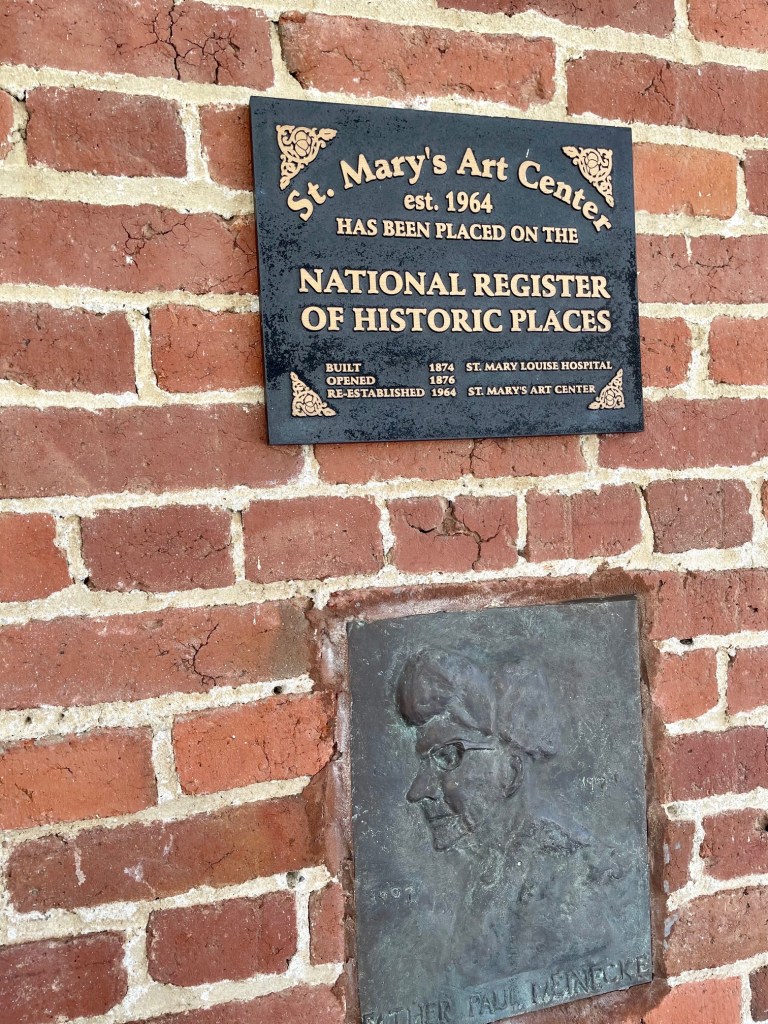
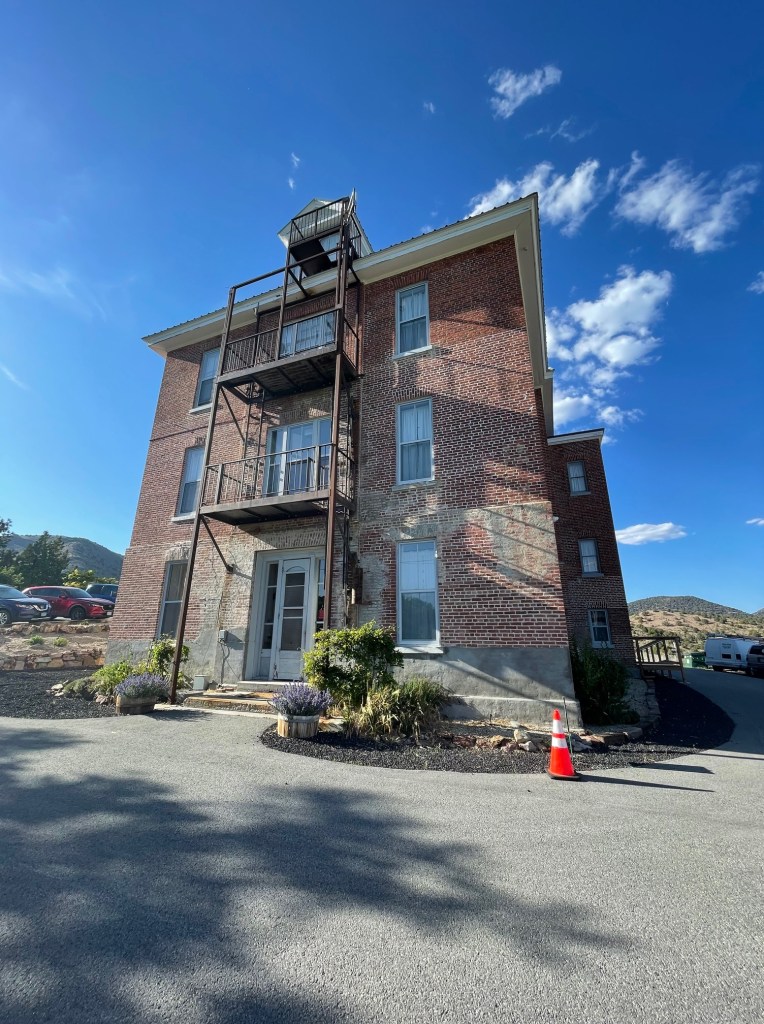
Here are my top five reasons why this wonderful Victorian-era hospital turned art center in Virginia City, Nevada makes a great retreat:
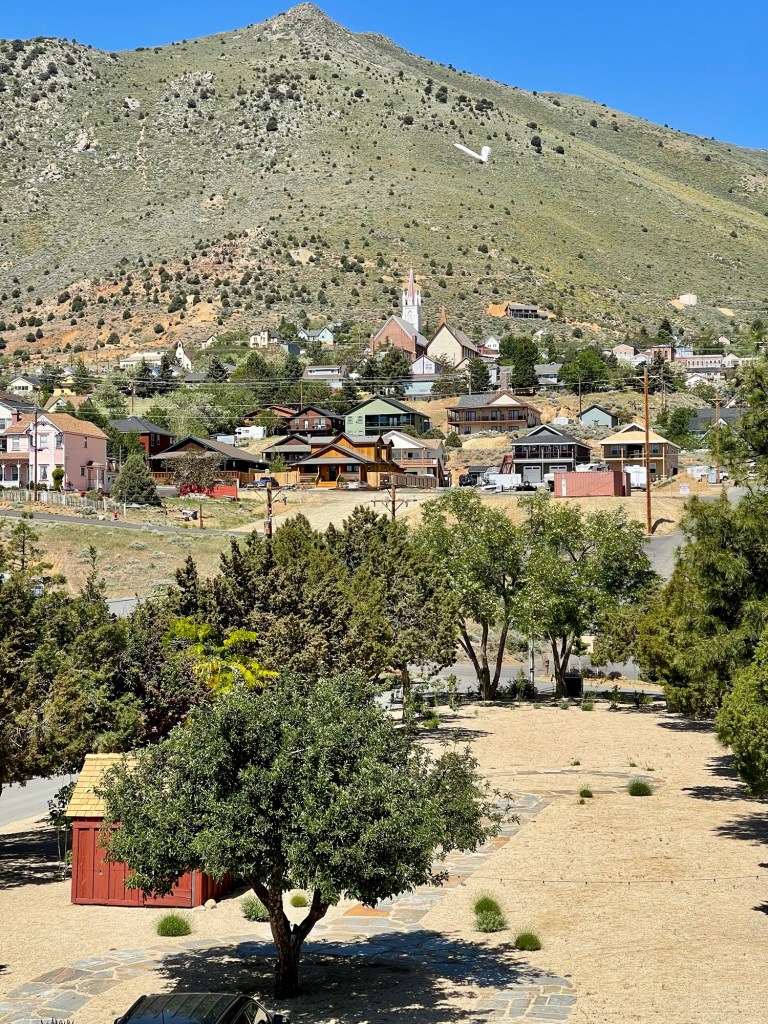
St. Mary’s Art Center is part of a fantastic pioneer town that, despite its 2 million visitors a year, retains its historic, out-of-the-way charm.
The creativity vibes are off the chart.
It is set against a fantastic backdrop and beautiful surroundings.
It provides just the right accommodations for an intimate gathering of strangers and friends eager to engage in creativity.
It’s haunted, yep, as in ghosts.
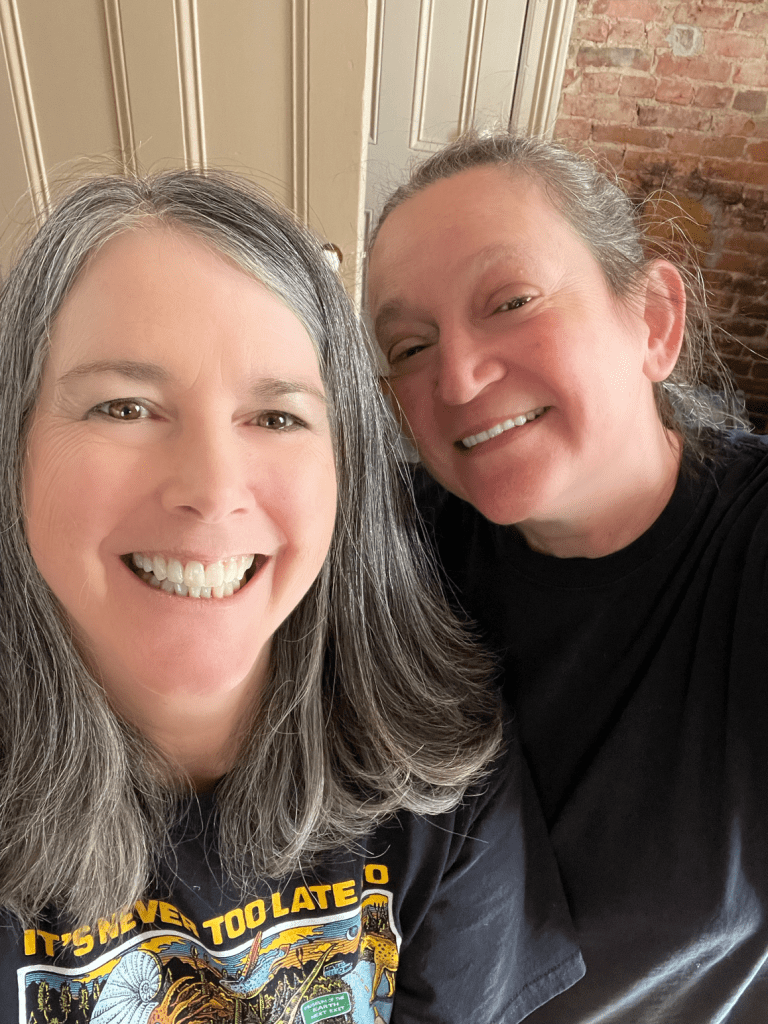
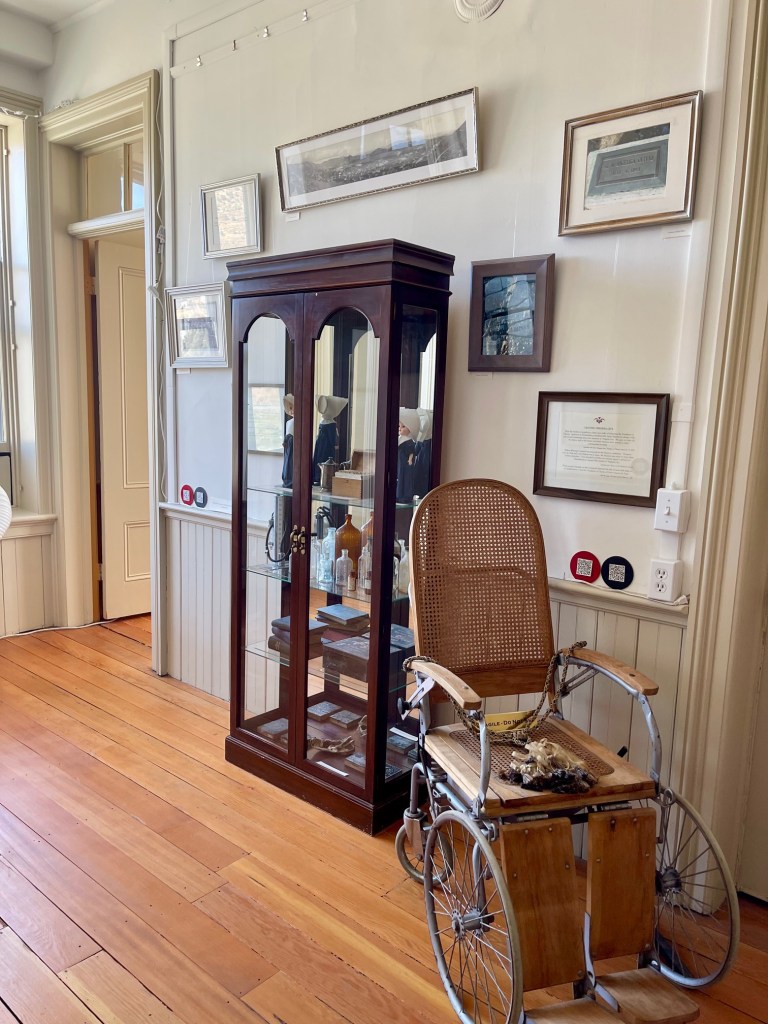
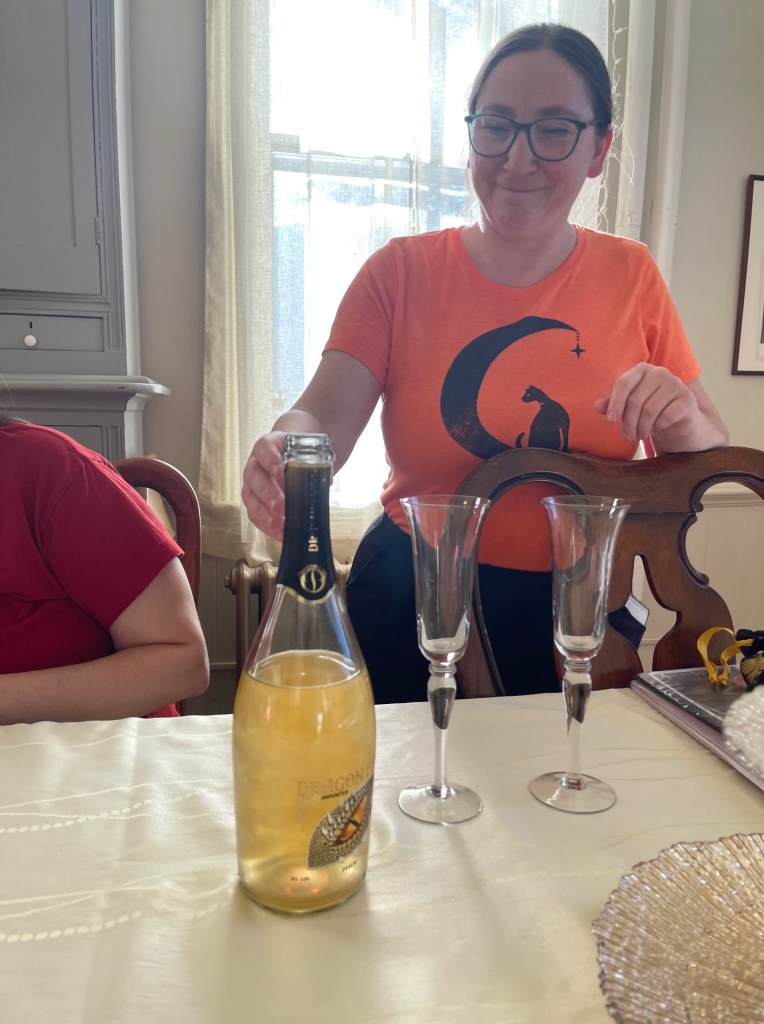
Here I am with our excellent host, Kim Harnes. Check out the comfortable, historical surroundings. You’ll notice many features and artifacts from the original Victorian hospital. Imagine how the rooms were once used for surgical and other treatments, or part of the recovery wards, and then add art. What a great combination.
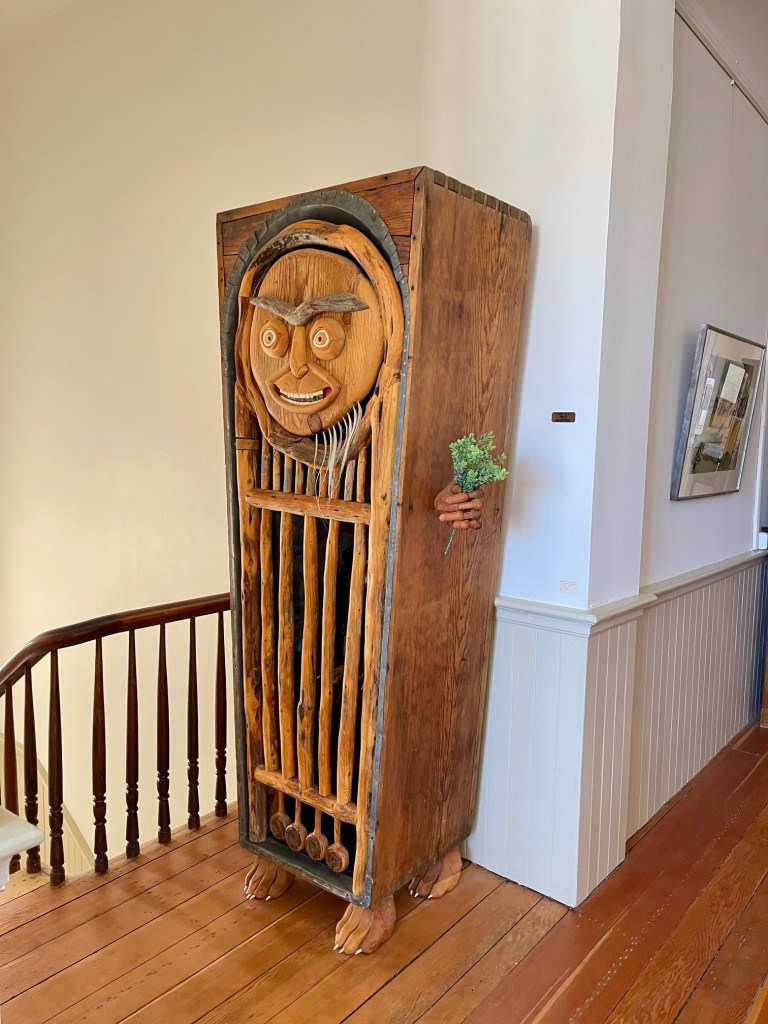
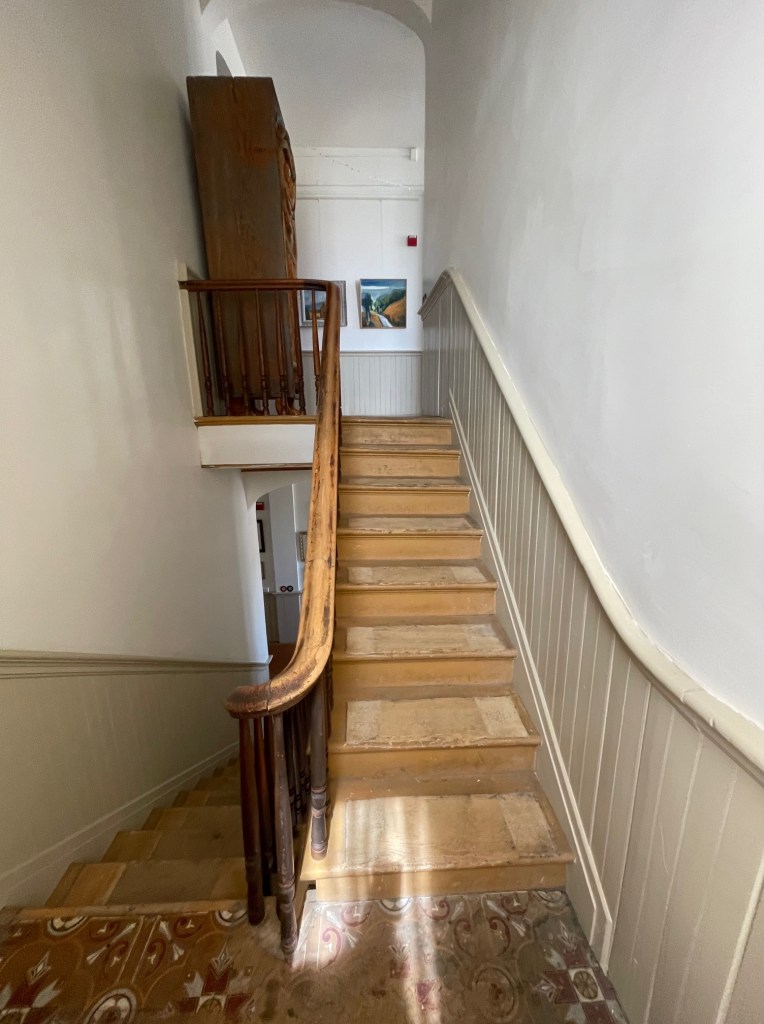
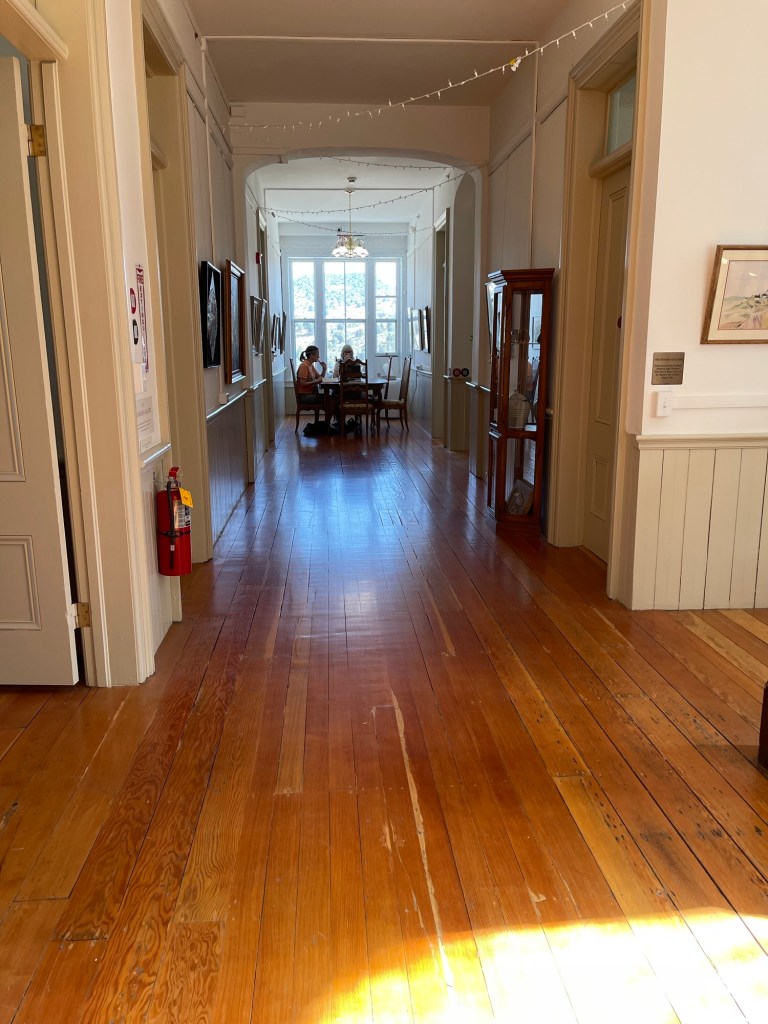
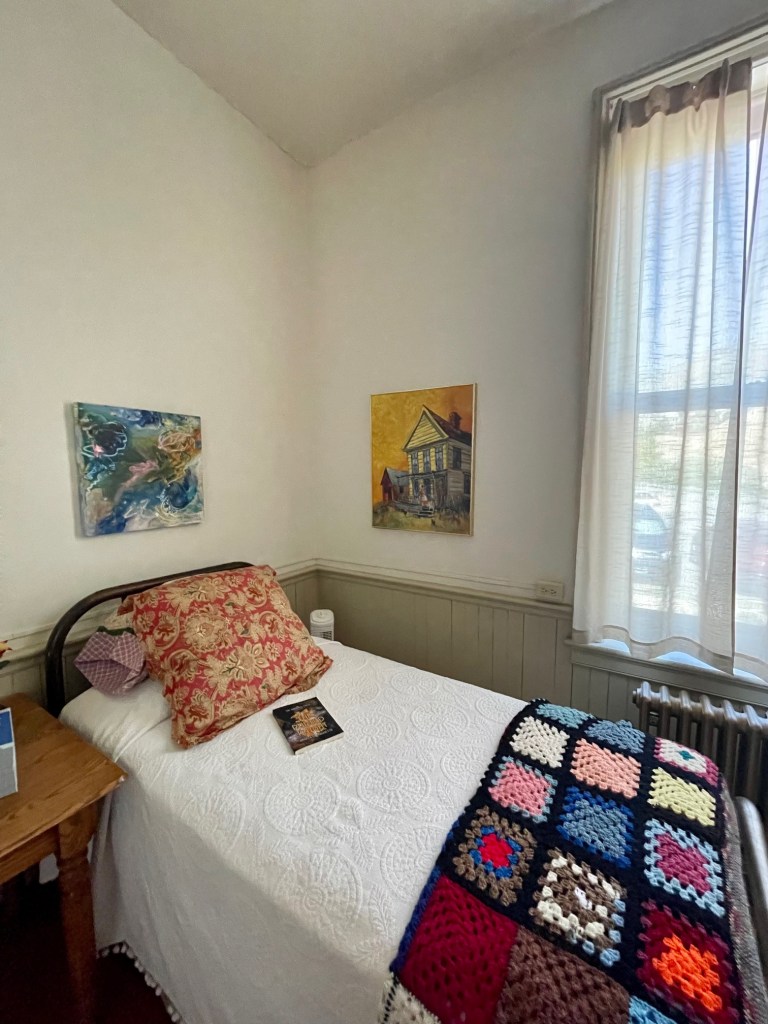
Second floor veranda, and the entranceThird floor balconyshows top three floors, entrance at 2nd floorlocal artThe art center’s side view showing first floorlocal artOur cozy room.I addition to the grand staircase, is this well-trodden utilitarian nurse’s accessA lovely gallery featuring local artThe long hallway on our 2nd floor. So much to see on each floor.A view to a preserved historical office
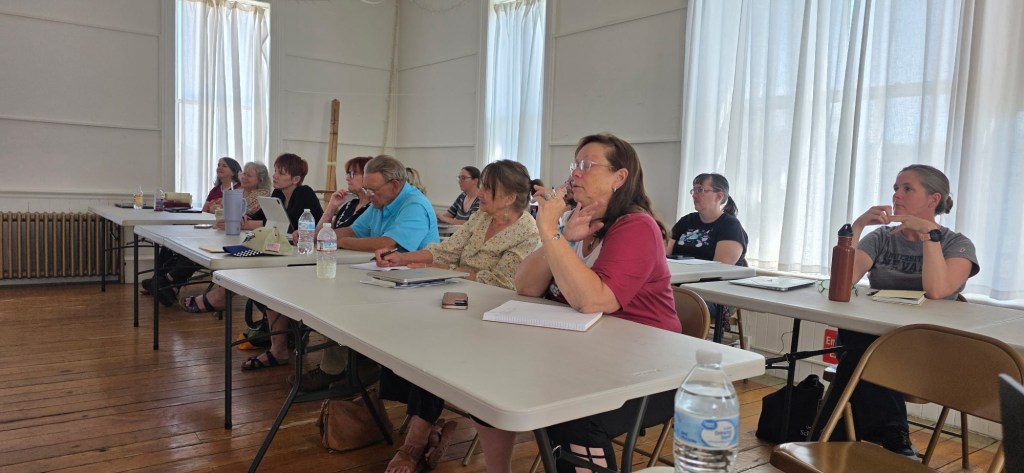
Besides meeting many amazing local writers and learning about their journeys with my friend Dee, the retreat offered several highlights. One of them was an insightful presentation on writing short stories by author Linda K. Hardie. Linda demonstrated how completing a short story can serve as an excellent catharsis for repressed emotions, such as killing off that annoying ex or the small press publisher who fails to honor contracts.
Linda writes humorous and delightful, yet eerily dark crime stories published in a variety of anthologies.
I loved her story set in downtown Reno in a glimpse of homeless life among the tourists and gambling enthusiasts in A killing at the Copa, crime fiction inspired by the songs of Barry Manilow.
To ensure you can benefit from her wisdom, I invited Linda to be my Spotlight Guest in July.
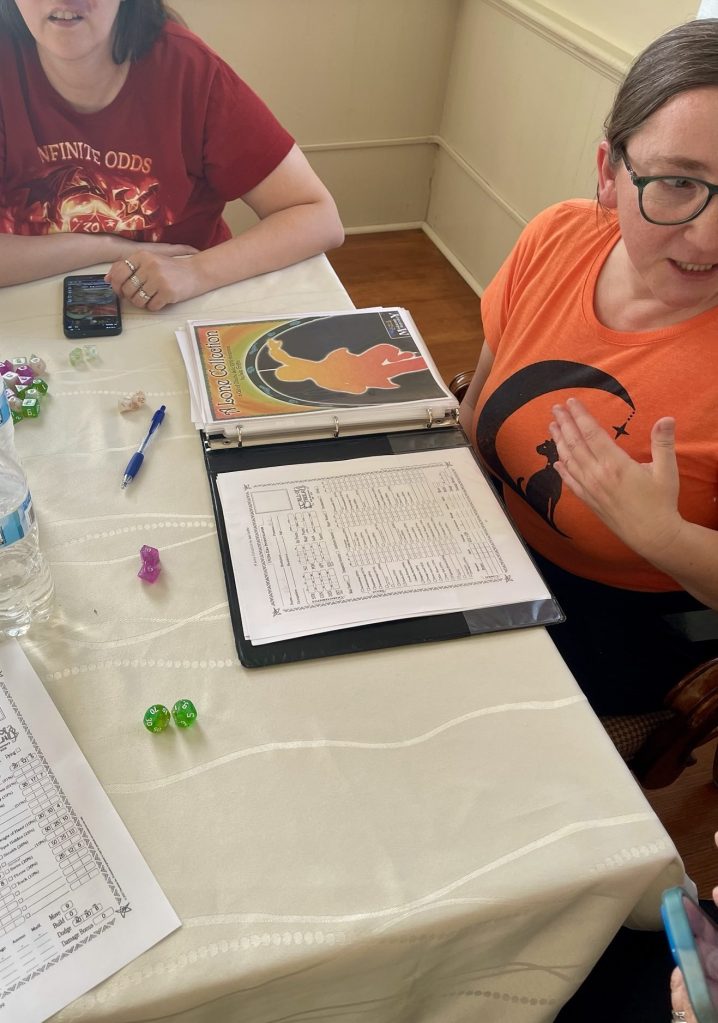
An unexpected highlight was the opportunity to play my first TTRPG! Author Jade Griffin writes companion novels to the Call of Cthulhu RPG series Amor Fati, which act as both a player handout and minor mythos tome. Dee and I got a beginner’s crash course as Mr. Wabash in 1896 Chicago. I’ve always wanted to play a tabletop role playing game, and it was way more fun than I even imagined, thanks in no small part to Jade’s excellent story. Jade will visit my Spotlight in September.
By the way, Dee will visit my Spotlight in August to discuss writing fan fiction, particularly stories that feature characters from the classic TV show, Bonanza. Virginia City was the stomping ground of the Cartwrights, and Dee wrote a story set in this very hospital. Stay tuned for more!
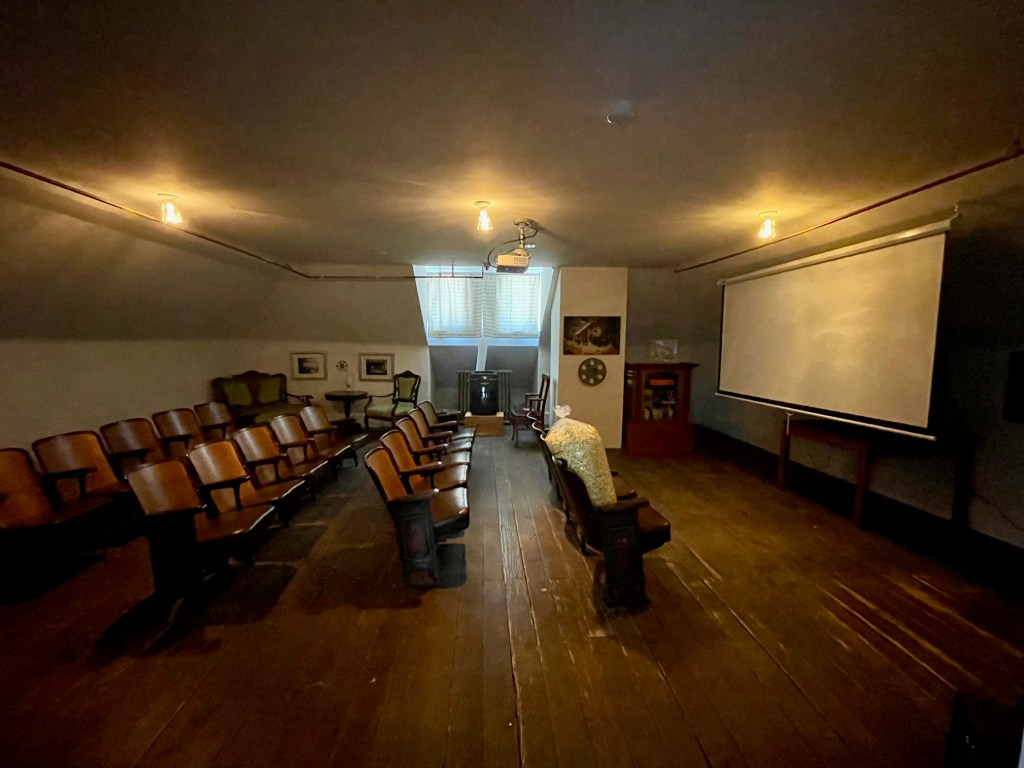
Then, there was “movie night” in the charming little theater on the haunted 4th floor, where we enjoyed popcorn and candy while watching “Old Henry,” a dark, twisty Western flick that was fitting for our stay in a historical Western town.
Meeting agent Hannah Andrade from Bradford Literary Agency was another excellent perk. I learned a great deal from her critique of the first ten pages of my novel-in-progress, as well as how to effectively pitch it to an agent.
Many attendees retreated into their rooms and cozy niches on every floor to write for much of the time, which was the main purpose of the retreat. As for me, I was too busy and anxious preparing my pitch. Next time, I’ll focus more on writing. Besides the overnight guests (since there are only a limited number of rooms available), quite a few came for the day on both Friday and Saturday.
The dining roomA writing niche on the 3rd floor hallwayDee and I did get some writing done in our roomClass time. Taken by Kim, Dee and I at the far end of front row.
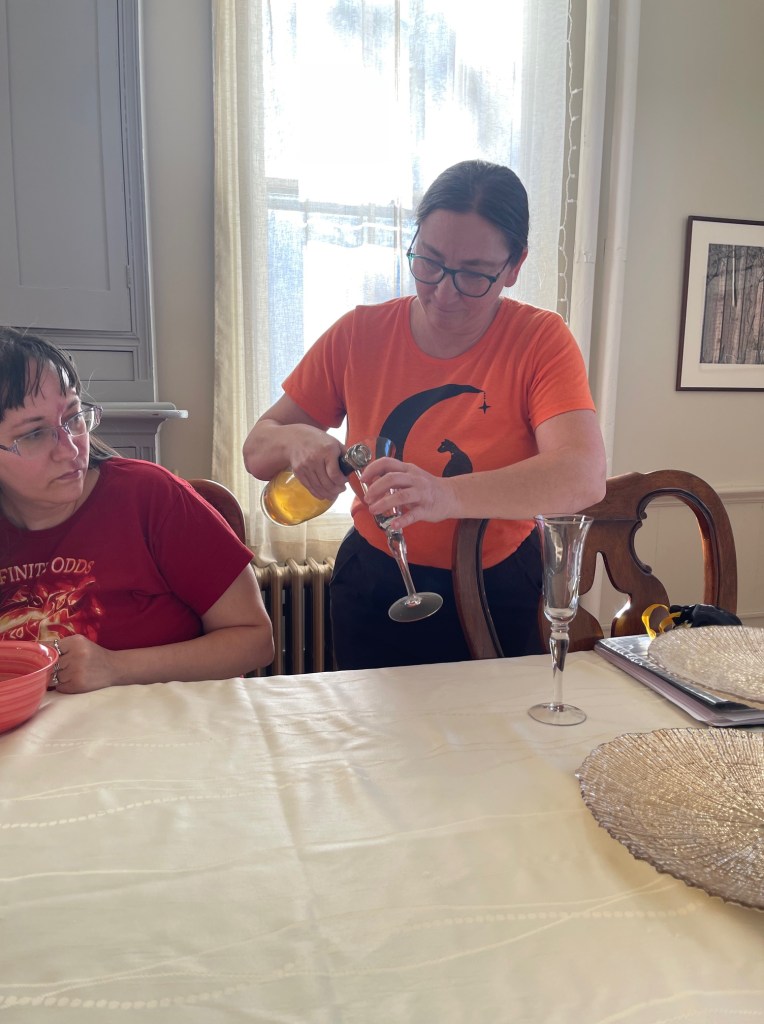
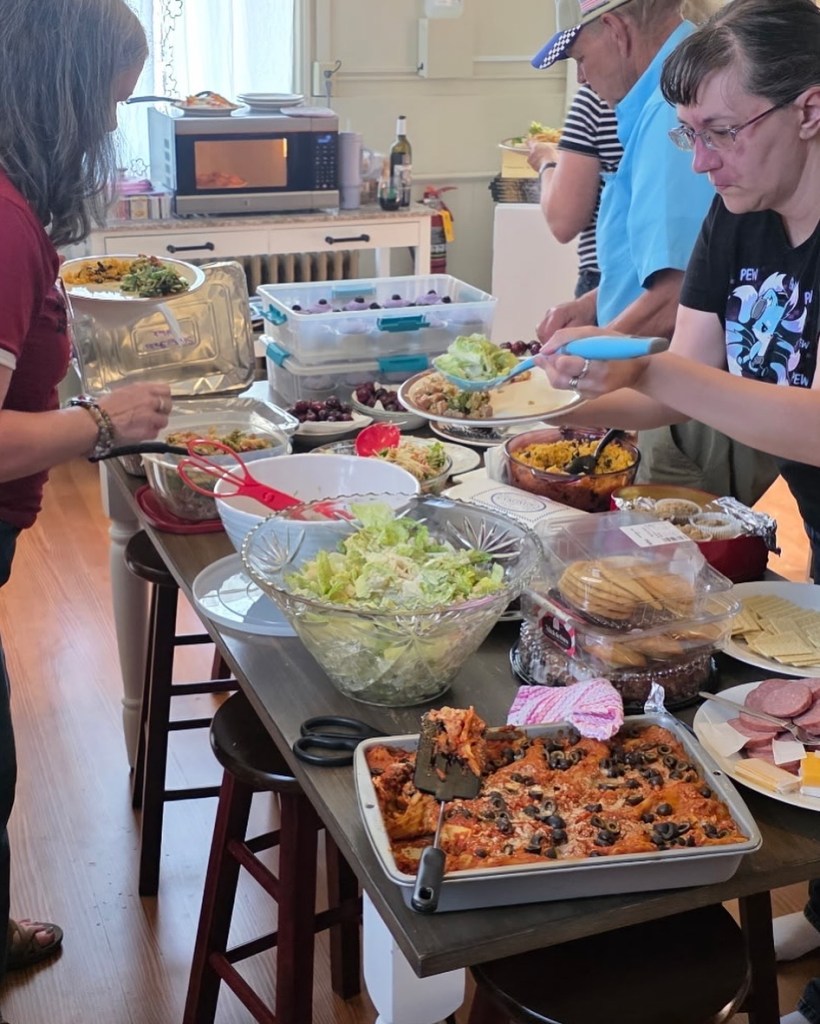
I’ll conclude by bringing things full circle—the socializing. The Art Center has two kitchens on the first floor: one features a large dining table for gatherings, and the other contains a massive iron cooking stove that, unfortunately, can no longer be used due to safety issues, but it is a sight to behold. Kim ensured there was plenty of excellent food and beverages. We all contributed dishes for the Friday night potluck, which provided delicious leftovers for our lively mealtime conversations throughout the entire weekend.
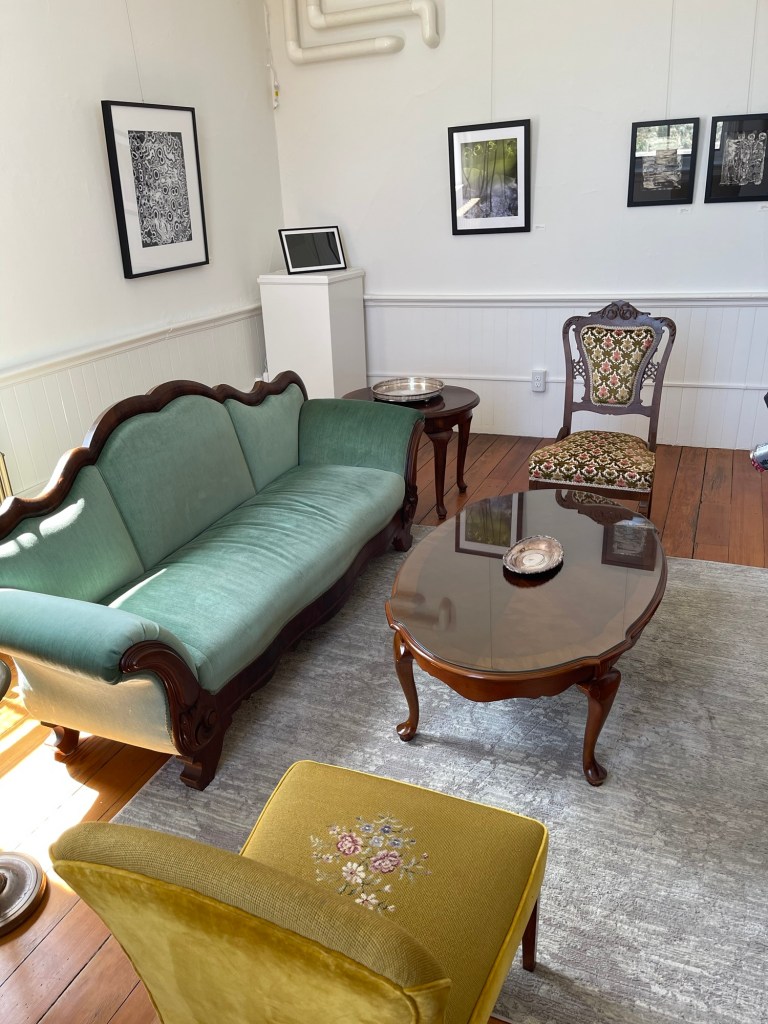
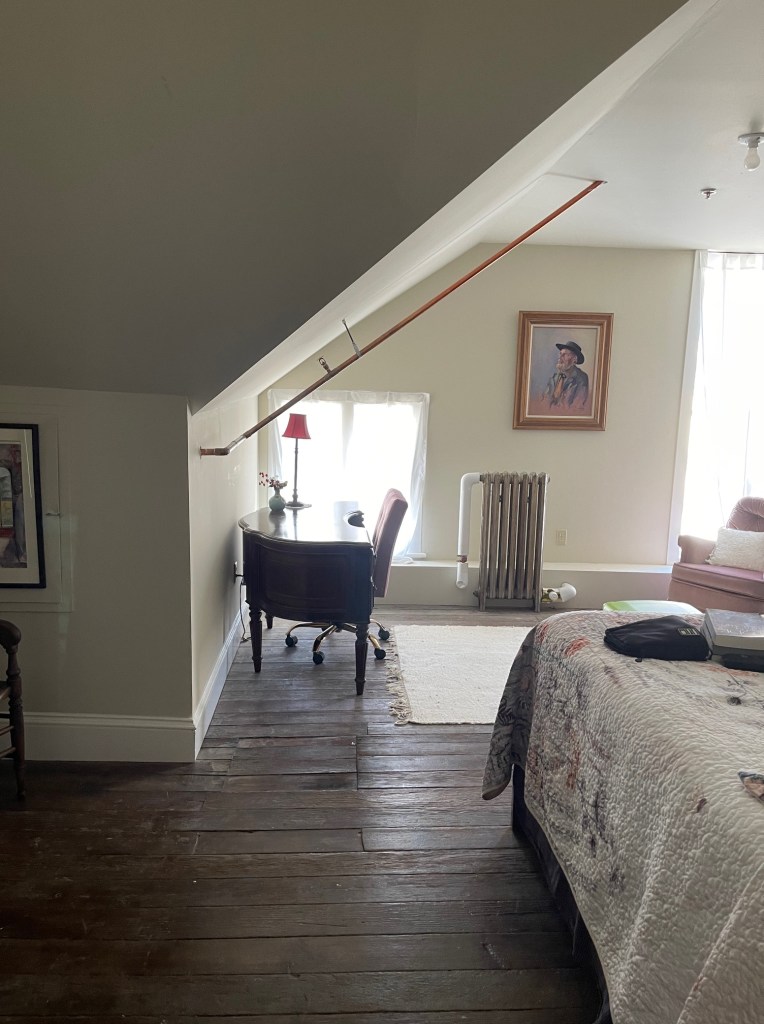
The wonderful Chocolate Nugget Candy Factory, Mound House, on the way up to Virginia City, where I got fudge for the potluck.View from the Art Center, which sits on its own hill east of town.A parlor across from dining room, where we played Jade’s TTRPG.One of the larger rooms, 3rd floor.



























 By D. L. Lewellyn