Enjoy A 500-Word Micro Fiction – Environmental Drama – Writing Battle Challenge
The contest is over, awesome feedback received and analyzed. A few spots adjusted based on it. Here you go… I hope you enjoy reading it as much as I did writing it. 😊
A Noble Wind
Salty, moist air blanketed Libby’s face, teasing out hesitant tears as she stood on deck, clutching a familiar tattered backpack to her chest. A beam of sunlight pierced the fog and shined on the letter trembling in her hand as if encouraging her to read it again.
Dear Ms. Warner. We regret to inform you your father was lost with his party during a confrontation in the North Sea…
An image she carried around like a treasured childhood book bloomed along with her sorrow.
She was a little girl, snuggled under her pop’s arm as he crammed himself onto her tiny bed and read aloud tales of the great behemoths that once ruled the seas. By the time she was eight, her pop had gone through Moby Dick three times.
“Are you okay, Libby?” She blinked and focused on her new shipmate.
“I just need to sit a minute.”
“There’s a bench by the bulkhead,” he said as he gestured to the spot. She stared at it, still gripping the bag to her chest, and managed to get her legs moving. He followed her.
Libby sat and looked up to find the features of his face obscured by dewy sunlight. She tried to remember his name and thought it was Joe. His voice was kind. “This seems like a private moment, but I’ll be around welcoming our crew and can hop right back here if you need me.” Libby nodded her appreciation, and he scooted away.
She eyed the pack, brought it to her face, and breathed in her father’s scent before settling it on her lap. The canvas was embedded with soil from every continent, stained, and smooth from use, its edges frayed.
Libby wondered what it might tell her about her pop, but she was afraid to look inside.
She was on this ship getting ready to embark on her first mission to the Faroe Islands in part to learn about her pop’s life aboard vessels just like this. She’d followed eagerly in his footsteps, becoming an eco-warrior dedicated to Earth’s oceans and the life contained in them, which meant she understood her father’s dedication.
What she didn’t understand was why he stopped coming home two years ago, or if he had any idea what his disappearance had done to her.
Joining this crew had given her a vague hope she might cross his path on a campaign though she’d lost track of him years ago and knew her chances were slim. But the courier rushing to deliver the news and her pop’s effects before they sailed had dashed her dreams and any likelihood of getting answers.
She twisted the fastener and pried open the main compartment. Her breath hitched. Libby stared at a familiar object. Questions flooded her mind. With a trembling hand, she pulled out the plushy white whale she’d gripped to her chest every story, and through every word of Moby Dick.
It crinkled… and she froze. Could it be? She ran her thumb along a seam on its belly. It split to reveal a piece of paper, just like the ones her pop hid for her in those days before a mission. Libby didn’t notice the toy falling off her lap as she read her message through tears she could no longer hold back.
Were I the wind, I’d blow no more on such a wicked and miserable world… Yet tis a noble and heroic thing, the wind!
You, my feisty shadow, are nobler. I’m proud of you for answering the call. But take care or you will find yourself with a target on your back. That’s why I stayed away, though I’ve been watching… and waiting for our time.
I’m sorry it took so long, and that I had to resort to such a cruel trick to sneak back to you.
A big, calloused hand laid the whale in her lap, and a beloved voice spoke above her head. “Hello, little shadow. Only my daughter treasures that line from Melville as much as her wayward father.”
If you would like to support an independent author who loves to share her stories, this story along with an eclectic anthology of more fun tales is available for $1.99 at your favorite bookstore. Thank you!
Elsie Johnson Belt, an ordinary woman living an ordinary life that wasn’t so ordinary in the early part of the 20th Century.
I am one of those privileged people who had four grandparents and three great-grandparents living nearby when I was a young child. They each passed on their unique wisdom and singular outlooks on life, and a day does not go by when I don’t appreciate their influence.
Today, I’m reflecting on what I know about my father’s mother’s mother, the oldest of my seven Grands who lived her life without apology. Elsie Johnson was an ordinary woman born in Salem, Indiana in 1895 who became extraordinary when she dared to do what she believed was right despite the morays of her time and her Methodist upbringing.
In 1914, at nineteen, Elsie became an unwed mother and refused to give up her daughter.
Elsie went on to work as a telephone operator for a dollar a day and, with the support of her family, raised Lorena Pearl on her own in the house her father built.
Despite having to leave school in seventh grade, Elsie ensured her daughter graduated high school.
Technically, Elsie was not a single parent. Lorena had four. Besides Elsie, there were Lorena’s grandparents Daniel and Eliza, and Eliza’s father, John Godby. But soon it was just Dan and a couple of Elsie’s younger siblings sharing the small single-story, four-square house with Elsie and Lorena.
The Johnsons. Elsie, littlest girl.
This is the Johnson house around 2007 when an Ancestry cousin visited Salem and with the owner’s permission took photos to share with me. Below are Elsie and her two closest-in-age siblings. Luis and Elsie in front of the shed shown on the right of the house above, and Ninnie and Elsie in front of the house in the 1920s.
When Dan decided to leave the memories of his wife behind and become a traveling salesman, Elsie, with her savings and help from her younger brother, bought the house from her father, ensuring Lorena continued to have a stable home close to aunts, uncles, and cousins.
This is how my grandmother Lorena became a happy-go-lucky, somewhat spoiled child, and my great-grandmother became my hero.
There was a man who loved Elsie but Elsie refused him for years, waiting until Lorena was on her own before she wed for the first time to Mr. Belt. By then, unknown to them, Mr. Belt had less than a decade left to live. Elsie sold her house and moved with her husband to Albuquerque, where they made the most of their eight years together.
Elsie lived in Albuquerque nearly twenty years after Mr. Belt’s death before moving to Northern California to be near her daughter. I helped her move. Well, sort of. My dad and mom picked her up on their way home from Tennessee at the end of Dad’s military service. I was riding along in my mother’s womb.
Here’s my chubby self with Elsie and Lorena.
The story is my folks also picked up a stray dog with a horrible case of flatulence. He shared the backseat with an uncomplaining Elsie who kept on smiling, she and the dog hanging their heads out of the car window.
In my mind, Gammy B, as the great grandkids called Elsie, is still a robust woman in a floral house dress and pin curls and never far from laughter.
This is Elsie, different year, same house dress, 😊 and my great Aunt Thelma (on the right in both photos), another special lady occupying many of my childhood memories.
I can still picture Elsie sitting at the table at family gatherings reveling in the conversation and getting that glint in her eye when she was about to share a dirty joke… or about to plead with someone to tell one.
Even before Ancestry became an obsession in 2007, my father’s lively grandmother filled me with a sense of perseverance and continuity. Thanks to years of research, I understand better how ingrained the pioneer spirit is on both sides of my father’s Indiana family. Elsie’s mother, Eliza Godby Johnson, hailed from the earliest American colonists to arrive in Jamestown, Virginia.
Her father’s mother’s family were colonists in North Carolina. Both sides followed Daniel Boone’s trail to Indiana Territory at the very beginning of the 19th century, hewing log cabins out of the dense woods that would become Washington County.
I will divert briefly to the story of Thomas Godby, who left Britain for the colonies on the Sea Venture, the ship that wrecked off the Bermuda Coast in 1609, inspiring Shakespeare’s The Tempest. The survivors, allegedly including Pocahontas according to a 1970s letter I have from one of her descendants sent to another Ancestry cousin, went on to build two new ships (under protest) from the wreckage and Bermuda cedar, The Deliverance, and The Patience.
The survivors wanted to stay on the island, but their commanders were determined to get to Jamestown and forced them to work on the ships and leave nine months later. Two men (deserters) stayed behind, and the rest forged ahead only to find the fledgling colony decimated.
There is conflicting information, which is why I linked to several accounts. But there are Jamestown musters recording arrivals. Thomas Godby is listed as arriving on the Deliverance and later as an “ancient planter.” His family tree is well-chronicled.
Thomas Godby was killed in a brawl with a “new planter.” After surviving a shipwreck, disease, and deadly raids, the man dies in a drunken bout of name-calling. Read about Thomas and his death here. The first link I provided includes better details but you have to scroll down. The account of the entire tragic evening 400 years ago survives since it was one of the first recorded trials in the colonies.
Memories of my grandmother and this aspect of her story surfaced after reading the December 2024 issue of The Smithsonian.
I wish I appreciated more as a child that my great-grandmother was born in a previous century and came from and lived through so much history. I wish I had asked more questions in that context. But I can look back on quality time and add up the pieces thanks to her homespun wisdom and the stories she lavishly shared during my many sleepovers.
When I knew Elsie, she lived in a tidy mobile home next to her daughter and son-in-law on their ten acres. Lorena wasn’t nearly as tidy. Mother and daughter were different in many ways but they adored each other. Lorena hoarded things, every room stuffed full of fun items to play with like ledger pads, pens, and decks of cards (Lorena worked for the county and taught me to shuffle), while Elsie’s tiny home was minimalistic, except for her hoard of Oleomargarine tubs stacked neatly in a kitchen cupboard.
Her staggering collection fascinated me for some bizarre reason. She reused every tub of Oleo she ever bought. I think she had a knack for appreciating multipurpose items and for making good use of small spaces. She told me once that she and her five siblings had to sleep on the same pallet in the attic room of their Salem house.
Elsie made the best persimmon pudding ever, and those tubs found their way to many homes when she doled out slices. She had a talking budgie named for her son-in-law, Joe. I can still see her pursing her lips and whistling to that bird. Her hair used to fall below her knees like it had since 1910, and she would braid it and wear it bound on her head. One of my fondest memories is helping her brush out her shockingly long tresses at bedtime. I was sad when she cut it in her later years, as sad as I was when JoeJoe the Budgie died.
We had Elsie with us until I was 22. Isn’t that awesome?! She made it passed 90 and never gave up her smile, her ready laughter, or her penchant for dirty jokes.
Me, Elsie, and Lorena.
My grandmother, Lorena, launched me on my Ancestry journey in 2007 when she pulled out boxes and boxes of very old photos and started talking about her mother’s history. Many descendants have benefitted from her collection. Through Ancestry, I was able to put Lorena in touch with her father’s family for the first time, along with many other long-lost cousins, which made her very happy. Lorena Pearl lived past 100.
This blog, honoring a remarkable woman, is for all those who have reached out and generously shared their history or appreciated what I had to share, which has resulted in a family tree of 2400 people, 1156 photos, and 3500 records. This chronicle is also for my niece and nephew so they know part of where they come from through someone who got to touch a piece of it.
I hope this inspires you to dig into your family history if you haven’t already. I can attest that even ordinary lives can be extraordinary and touch us no matter how far back they stretch into the past.
I like to tell people when I’m being dramatic that I was born under the shadow of Mount Shasta. It’s fitting that my writing passion was fueled by a visit to McCloud, California, which sits at the base of this mythical 14,139-foot-high stratovolcano.
I’ve been chatting with Introverted Indies dark fantasy author Lucy A. McLaren who was a guest on my Spotlight in 2023. Our conversation got me remembering the start of my writing journey in 2020 when I met my folks in McCloud, a small mill town on Highway 89 near Interstate 5, one of many historical mill and mining towns in Siskiyou and Shasta counties. A few miles down the highway, you’ll find Burney Falls. another scenic wonder President Theodore Roosevelt called “the Eight Wonder of the World.”
That first story I was typing away on (in photo below) never got past the first few chapters, but what a perfect setting for a paranormal romance! I’m only just now appreciating how much I was affected by the atmosphere, which I believe was the glue that cemented my writing passion.
An article in Big Think aptly describes Mount Shasta as “[a] mountain [is] associated with so many otherworldly, paranormal, and mythical beings—in addition to long-established Native American traditions—that it’s almost like a who’s who of metaphysics.”
I was super glad I booked a bed and breakfast room at the charming McCloud Hotel. I highly recommend a stay.
Check out Where I Live for more beautiful areas and photographs.
I hope you enjoy these tidbits shared in this month’s email newsletter.
Never once have I failed to find the education I’m looking for on YouTube. I wanted to know more about Norse magic and runes and came across YouTuber and professor Dr. Jackson Crawford who teaches that very subject. Here is the first video I stumbled upon in my search about Seiðr Magic and Gender:
Dr. Crawford has an entire course on runes.
That led me to rune song, which led to compiling a playlist of reinvented primitive music… pulsing, haunting, magical shaman stuff, great for fantasy inspiration. The first is an album by Munknörr. The second is a performance by Heilung.
Heilung’s music is described as “Viking metal,” in this charming article in a New Jersey high school newspaper. Heilung uses traditional instruments from around the world, including a horse skin drum, a Hindu ritual bell, and a buffalo horn rattle. They also sing in multiple languages, primarily Old Norse, Old English, and Old Saxon. This song, Krigsgaldr, translates roughly to battle magic.
I’ll finish this piece with two Chronicle documentaries that are lengthy but well worth watching. The first is the history of the Celts. You might be surprised by their origins and insights into a complex, creative culture built upon salt trading.
The second documentary is a history of the Dark Ages told through the art left behind. One major takeaway from both documentaries is the skewed writings of the historians, namely the Romans, who had no compunction about spinning history in their favor.
Art tells a different truth.
So, if you got this far, you might still be wondering about the real meaning of barbarian. It’s covered quite well in the video above, and you probably already know it refers to uncivilized people. Simply, it means other; those who don’t speak like us (according to the “civilized” Romans, it was everyone who lived outside of the Roman Empire).
I’ll link you to the Oxford Classical Dictionary, which goes into the definition at length. and says in part: The term was a social designation rather than a legal status, but could inform institutions and actions and, within certain contexts, the differential treatment of groups, in which case it can be appropriately described as racial thinking.
I hope you enjoy these tidbits shared in this month’s email newsletter.
As you might imagine, magic systems are an important literary device in fantasy writing. Choosing the right level on the High to Low Magic spectrum is crucial to shaping the plot and driving the characters whether the system features big in the plot, or is merely a gossamer thread. Check out 7 Ways to Create a Spectacular Magic System For Your Novel at Writers Write.
Click to Subscribe. Unsubscribe anytime.
Hard and Soft Magic is another way to look at it as my go-to fantasy writing guru, Richie Billing, brings out. He explains how Hard Magic requires detailing the system’s complexity and all its nuanced rules, whereas soft magic lacks clarity and leaves more to the imagination.
The Starlight Chronicles falls on the lower end of this spectrum, which is typical for writers with romance as their overarching genre. But even we must be serious about our magic system as we develop the plot, flesh out the logical details, and strive to make our fantasy elements vibrant no matter that the bulk of the magic is left unsaid. It still comes through. Readers must have enough believable substance to become immersed as much as they need captivating settings and compelling characters.
I want to nudge my current work in progress (my spinoff story for dragon shifter Michael Elliott) higher up the scale. Elliott’s dragon will be a major character and Onyx needs a backstory. To that end, after creating my antagonist and giving Spero his opening scene, I’ve taken a break from writing and turned to research.
Spero hails from a long line of Nordic witches who use rune magic. The runes are etched into his skin as a means to access and control their power. That’s both a painful handicap and a super strength, which will come out in interesting ways in the story. Suddenly, my mage’s backstory became paramount and needed much more work.
This epiphany led me down fascinating historical paths involving runes, the sagas written in them, their use in incantations, their songs. So, I pulled out long-neglected knitting and crocheting projects and stitched away while watching YouTube videos on Norse Mythology, Viking history, and the Dark Ages, including nuggets like the real meaning of the word barbarian. I also learned the surprising origins of the Celts and how they spread through Europe and competed with the Roman Empire in art, culture, and wow, even chariot racing!
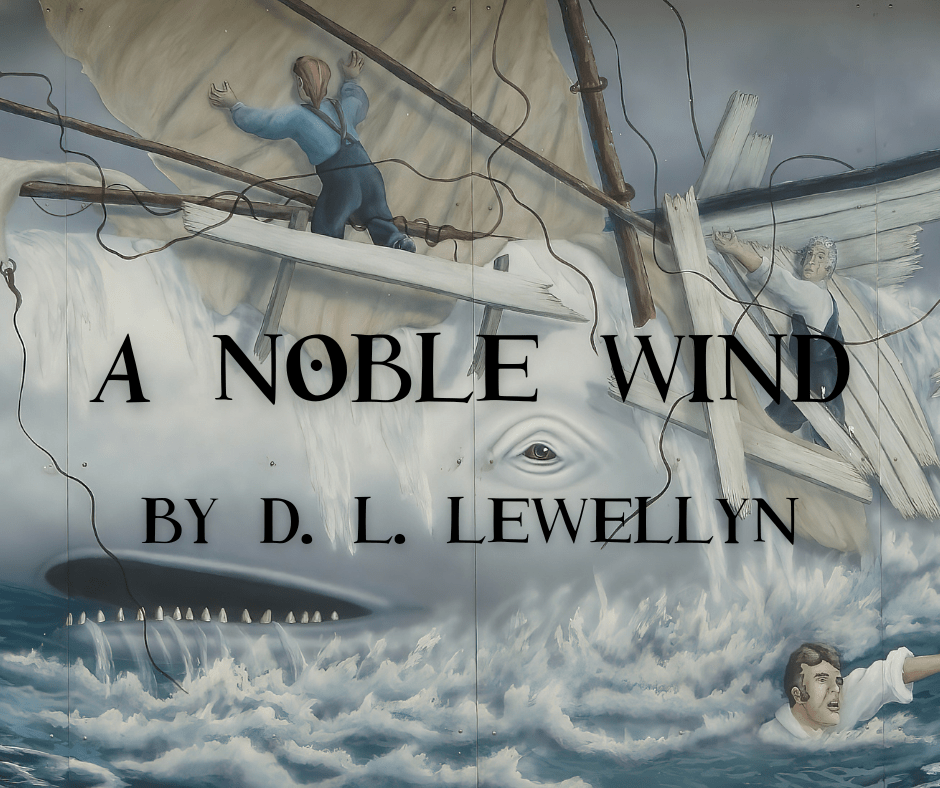


 By D. L. Lewellyn